
Bounce Home Test for Meniscus to Knee Joint
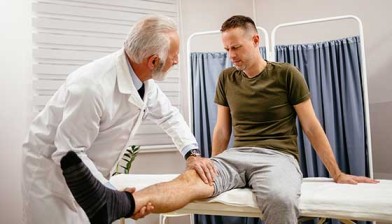
The bounce home test is a physical examination used to assess the integrity of the knee joint, particularly for detecting meniscal injuries or joint effusion. The test involves passively extending the knee from a flexed position to observe if it “bounces” or lacks a smooth, complete extension, indicating possible intra-articular pathology.
- This test is used to better understand meniscus injury.
- It is an orthopedic test to check the injury of the meniscus of to knee joint.
- It is a test to decrease knee extension.
What is the Purpose of the bounce home test?
- This test is used to check to integrity of to meniscus.
- It is also used to check for meniscus injury means a torn meniscus.
How do you perform to bounce home test?
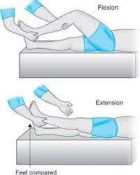
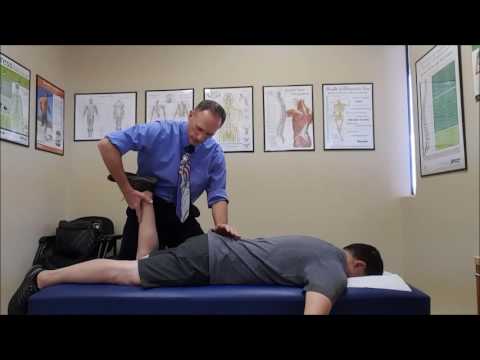
- Starting position for testing is supine.
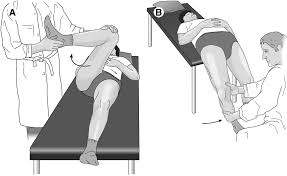
- Into supine position heel of to patient’s foot is hold in cupped manner in to examiner’s hand.
- Patient is knee is fully flexed & then the knee is passively allowed to extended.
- Knee is able to fully extend but with to sharp end feel.
Result of bounce home test?
- This test is positive when to full extension of to knee is not complete / rubbery end feel means springy block.
- In this time something is blocking for full extension.
- It indicates a torn meniscus & other intra-articular pathology.
Modification of the bounce home test?
- There a 2 modifications for to bounce home test.
First modification :
- It is described by Oni.
- Named of modification is a knee-jerk test.
- In this test, do the knee extension forcefully.
- So that pain occurs in to area of tissue injury.
Second modification:
- It is described by Shybut & McGinty.
- In this modification, do the simple force of knee hyperextension.
- The test is positive when to feels the blocking of forced hyperextension.
Evidence bounce home test?
- Original bounce home test = There are no studies for investigating to sensitivity, specificity & diagnostic accuracy.
- Bounce home test, which is described by Shybut & McGinty:
- Sensitivity of this modification = 47%
- Specificity of this modification = 67%
- Diagnostic accuracy of this modification = 51%.
- Knee-jerk test modification, which is described by Oni = not to investigate.