Delving into Delta Waves: The Unsung Heroes of Deep Sleep
Humans produce large-amplitude brain waves called delta waves, which are connected to profound sleep. An electroencephalogram (EEG) is used to quantify delta waves, which have a frequency between one and three hertz (Hz).
These brain waves, which are typically linked to slow-wave sleep (which starts during the third stage of sleep), are assumed to come from the thalamus. The time when delta waves are present is sometimes referred to as deep sleep.
How Delta Waves Are Measured During Deep Sleep?
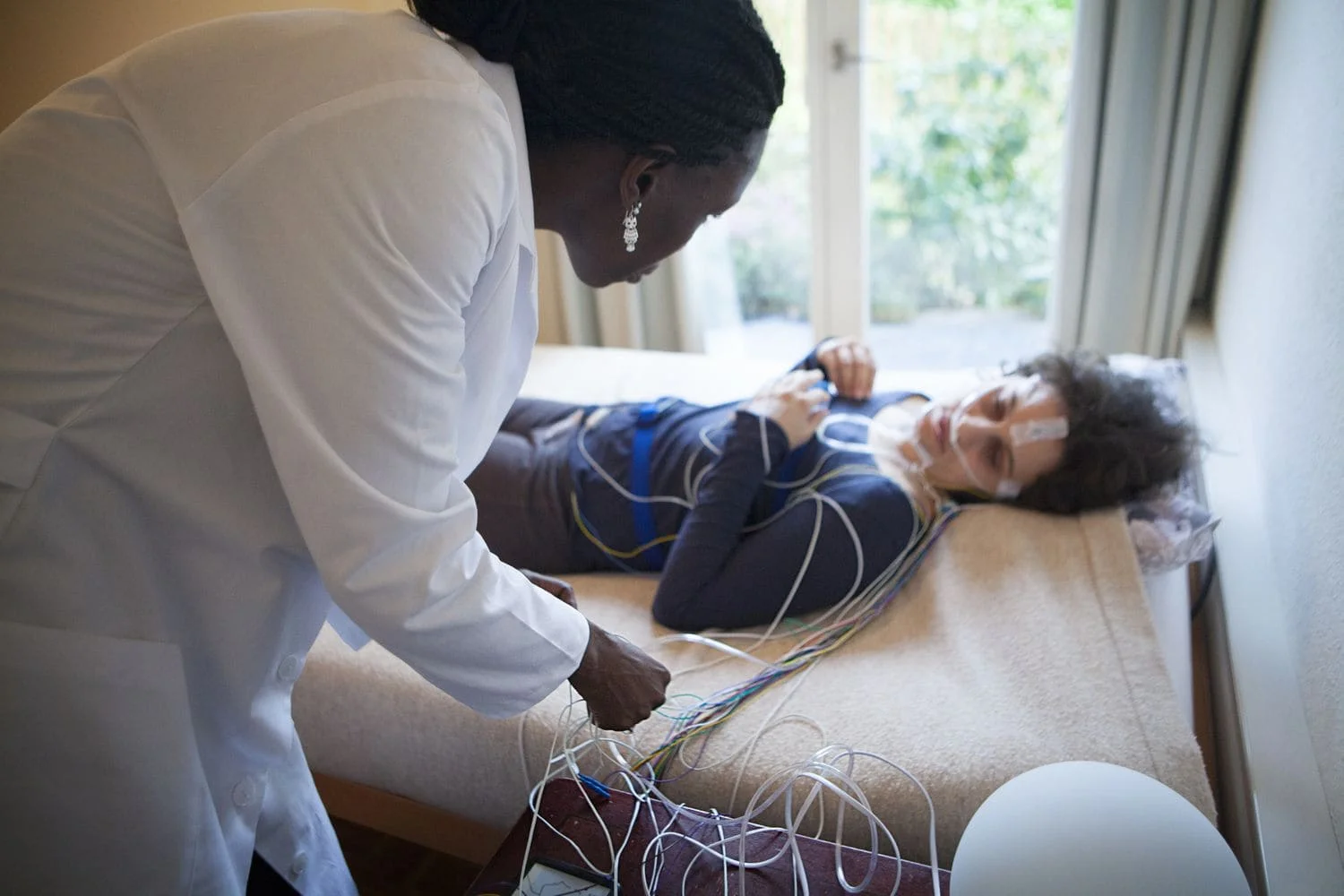
The early 1900s saw the discovery and description of delta waves as a result of the development of the EEG, which allowed scientists to study brain activity during sleep. The brain cycles through a variety of distinct stages of sleep that may be distinguished from one another by the brain activity that predominates throughout each stage.
People are still awake and relatively attentive throughout the early phases of sleep. The brief and tiny beta waves are now generated. Eventually, the brain starts to slow down, and an EEG may pick up slower waves known as alpha waves. The stages of sleep can start after falling asleep:
Stage 1 (N1)
Light sleep occurs in stage 1 (N1) and often starts soon after going into bed and lasts only a few minutes. The brain now produces theta waves, which are slow, high-amplitude waves.
Stage 2 (N2)
Sleep spindles and K-complexes are indicators of stage 2 (N2) sleep, which makes up around 50% of a night’s sleep. The duration of this level is a bit longer than the previous one.
Stage 3 (N3)
At least 20% of a night’s sleep should be in stage 3 (N3), which is deep sleep. The brain starts to make the slow, deep waves of delta sleep at this point. At this time, people are far less sensitive and conscious of their surroundings. It’s common to think of delta wave sleep as a stage between light and deep sleep.
Rapid eye movements and increased dreaming are signs of REM sleep. REM sleep starts around 90 minutes after you go to sleep, and you can go through many cycles of it each night.
Stage 3 and REM deep sleep phases are linked to delta waves. While more than half of brain activity occurs during REM sleep, delta waves make up less than half of brain waves during stage 3.
How to Get More Deep Sleep?
You may get more relaxing sleep each night by improving your sleep hygiene. Your regular routines that promote restful sleep are referred to as “sleep hygiene”. If you’re having trouble, try:
- Avoiding devices and blue light before bed is a good idea since it might interfere with your sleep cycle.
- getting enough daytime exercise
- Caffeine and alcohol should be used in moderation during the day as they both interfere with sleep.
- Creating a dark, cool, and quiet bedroom and spending money on a good mattress and furniture
- establishing regular bedtimes and wake-up times
Staying in bed while you’re having difficulties sleeping might occasionally result in irritation and tension, which can make it harder to fall asleep. If you’re having trouble sleeping, consider getting out of bed and engaging in something calming, like:
- Listening to music
- Meditating
- Reading a book
- Writing in a journal
Certain mental health concerns might make it difficult to sleep. A skilled mental health expert may be able to help you if you’re having trouble sleeping because of anxiety, depression, or another problem. You can acquire the rest you require by addressing the root problem with the aid of a therapist or psychiatrist.
Interesting Facts About Delta Waves
It’s interesting to note that women exhibit higher delta wave activity than males, according to the study. Most other mammalian species’ females exhibit a similar propensity, however, scientists are still divided on the precise cause. Delta wave increases can be brought on by ketogenic diets, which are very low in carbs and rich in fat.
Delta wave displays can be impacted by brain problems as well. Changes in delta wave activity may be indicative of Parkinson’s disease, schizophrenia, and narcolepsy.
Delta waves in the brain have been proven to be impacted by several medications and substances. Alcohol may affect delta waves as well, and chronic abuse can result in long-lasting alterations in delta activity.
FAQs
What is a delta wave in sleep?
Delta waves, the distinctive slow waves for which this stage of sleep is named, are the primary low frequency (1-4 Hz), large amplitude variations of stage IV sleep, the deepest level of sleep. It typically takes an hour to get from being sleepy to deep stage IV sleep.
Is it good to sleep with delta waves?
People who listen to a delta binaural beat go to bed earlier, wake up less often, and sleep through the night. Because they will be more happy with their sleep, they will feel better after using delta binaural beats. A higher level of sleep quality might enhance mood.
Do delta waves increase during sleep?
An examination of overnight variations in wave amplitude showed a substantial drop throughout the night that was non-regional (i.e., both frontal and occipital) and non-frequency-specific (i.e., for both faster and slower waves). There were no overnight fluctuations in wave density.
Do delta waves cause dreams?
Therefore, one of the most distinctive characteristics of human REM sleep, dreams, may be intimately associated with these delta waves. by showing that REM sleep in people causes local delta activity.
What causes a delta wave?
During the upstroke of the QRS complex, a delta wave is slurring. This happens because the auxiliary route allows the action potential from the sinoatrial node to conduct to the ventricles very fast, causing the QRS to happen just after the P wave and create the delta wave.
References
MSEd, K. C. (2021, October 6). Deep Sleep and the Impact of Delta Waves. Verywell Mind. https://www.verywellmind.com/what-are-delta-waves-2795104