How to Correctly Do Heel Touches?
What Are Heel Touches?
Heel touches are a side-bending, oblique-focused core exercise performed on the back with legs bent. You raise your shoulders slightly off the floor and alternately stretch one hand towards the same-side heel. Each rep is a tiny action, but your obliques must contract strongly to drive the reach while your abs remain braced.
The advantage of heel touches is that they scale nicely. Beginners might keep their range of motion small and concentrate on bracing. More skilled lifters might increase the range, decrease the speed, or add resistance. And, because balance and trunk control become more important as we age, frequently doing motions like this can help keep your stomach strong and stable.
Muscles Worked By Heel Touches
The abdominal muscles are made up of many elements that work together to make the body stronger and more solid.
- Transverse abdominis (TVA): A deep layer of core muscle that covers the abdomen. It helps to stabilize your spine and pelvis while also promoting efficient mobility in practically every lift and athletic exercise.
- Rectus Abdominis: This is the lengthy front abdominal muscle that many people equate with “abs.” During heel touches, it works isometrically to maintain your shoulders elevated and your rib cage under control.
- Internal Obliques: These muscles reside beneath the external obliques and help in side bending, rotation, and torso stabilization. They also assist in keeping your trunk stable when there is a slight yet constant movement, such as heel touches.
- External obliques are bigger, more superficial muscles that allow you to bend and twist your body. During heel touches, they engage in extensive side-to-side reach and squeeze.
- Hip Flexors: The hip flexors assist in connecting your legs and trunk. They are not the focus of heel touches; however, your setup and movement may cause them to be perceived.
Benefits of the Heel Touch
Heel touches can enhance both the function and appearance of your core. They may also be gentler on the lower back for certain people, making them ideal for at-home workouts. Here are the main advantages of heel touches.
- Improves core strength and stability
- Heel touches can help you with both core strength and core stability, which are two unique terms. Holding your upper body slightly up can strengthen your upper abs. During the primary action of the exercise, you will develop your oblique muscles on the sides of your body as you bend to touch your heels.
- Core stability is keeping your trunk tight and avoiding spinal motions when other muscles or limbs move. You’ll use all of your core muscles, particularly your lower abs, to keep your lower back still while you make heel contact.
- Targets Oblique Muscles
- Your oblique muscles contract during the heel-touch side bend. Bodybuilders and anybody trying to strengthen these muscles might benefit from isolating them during heel touches.
- Incorporating heel touches and side planks into a core exercise is an excellent technique to strengthen and stabilize the sides of your body. During heel touches, your oblique muscles help with the side-bending movement. In a side plank, you activate them to keep your body from laterally flexing or side-bending, which improves stability.
- Low-Impact on the Spine
- Heel touches are a terrific low-impact exercise that keeps the majority of your spine, particularly your lower back, in neutral posture. They may be safer for novices or those suffering from back pain than ab workouts such as sit-ups, which require you to move your whole spine during each repetition.
- Core exercises that keep your back on the floor, such as heel touches, are also excellent for strengthening your core, allowing you to complete sit-ups (if desired) without straining your lower back.
- Reduced Low Back Pain
- Low back pain is a frequent problem that affects more than 80% of individuals, ranging from slightly unpleasant to requiring an emergency care visit. Low back pain can be caused by a lack of core stability, as the abdominal muscles play a vital part in lumbar spine stabilization.
- The transverse abdominis, in particular, serves to support the lumbar spine, and strengthening it with heel touches may assist in lessening the risk of lower back pain.
- Improved Running Performance
- Although your lower body is critical for running speed and endurance, your upper body may also contribute to movement and efficiency. The core may support the spine while standing, but it is also required for force creation during athletic activity such as running.
- Injury Prevention
- Musculoskeletal injuries are prevalent, particularly among athletes, and can keep someone out for months at a time. Building a stronger core with workouts like heel touches will help you improve your mobility and control, which is especially important while doing forceful motions. Because of this, core stability exercises have been utilized to help avoid injuries.
- No Equipment Needed
- Heel touches are an excellent bodyweight workout that requires no equipment. If you perform home exercises, they are an excellent way to engage your oblique muscles and core. They provide diversity to traditional bodyweight core workouts like planks and crunches by focusing on the sides of the body.
How to Correctly Do Heel Touches?
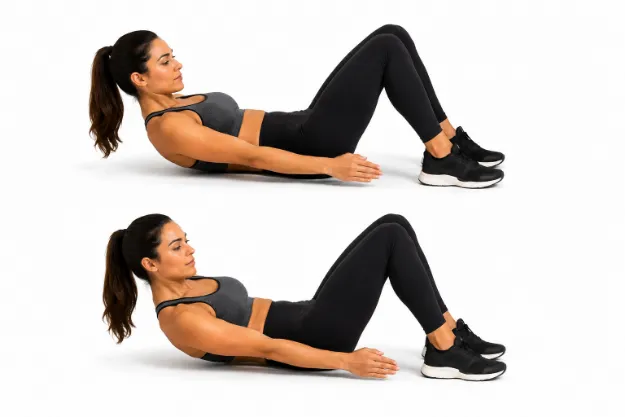
- Find a flat, comfortable surface to rest on. This technique does not require any equipment; however, you may use the floor or a yoga mat if necessary.
- Lie flat on your back, legs bent and heels placed on the ground.
- Squeeze your abdominal muscles to engage your core, and imagine pulling your belly button into your spine. Hold this position throughout, but remember to breathe.
- Using your abs, elevate your upper back slightly off the floor and relax your head to avoid neck pain. This is your first position.
- Lean to the right side of your body with your right hand reaching for your right heel. Touch your heel or extend as far as your range of motion allows.
- Since these are alternate heel touches, return to a neutral stance before reaching for the left heel on the left side. Continue to do reps.
Heel Touches: Variations and Modifications
Heel Touches and Crunches
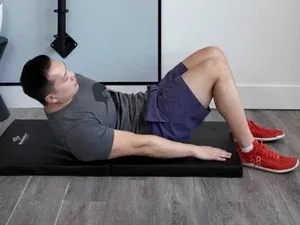
The usual method for performing heel touches is to acquire a semi-raised thoracic position and hold it throughout the set. The heel touches with a crunch is a variant in which you do a crunch between every two taps. Here’s how the sequence appears:
Semi-crunch ⇒ Tap left. ⇒ Tap right. ⇒ Semi-crunch, repeat.
Pause heel touches
The pause heel touch is the easiest approach to make the exercise more difficult and, ideally, increase abdominal engagement. Crunch to the side and hold for one to three seconds before returning to your original position.
Weighted Heel Touches
The weighted heel touch is an excellent approach to advance the action whenever the bodyweight version becomes too simple. The easiest method is to take a pair of light dumbbells and hold them while performing the exercise.
Side Bend
Dumbbells are commonly utilized for added resistance during side bends, and they can be particularly effective for targeting the obliques. They not only strengthen your sides, but they can also aid with spine mobility. This version might be useful for people wishing to increase muscle mass in that area in order to generate a broader appearance. Because you are flexing your spine, you should proceed with caution and ensure that you are doing it appropriately and safely.
How to do:

- Stand tall, holding one dumbbell in one hand and the other on your hip for support.
- Bend at the waist, dropping the weight as far to your side as possible while keeping your head up and your back straight.
- Return to your starting position.
- Repeat on the opposite side.
Spider Plank
How to do:
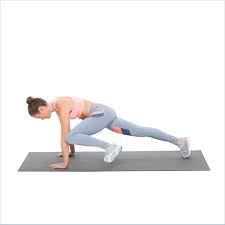
- Begin in a plank position at the peak of a push-up. Engage your abs to keep your core stable.
- Inhale, then exhale and use your right leg to touch your right triceps. Inhale to return to your starting position.
- Breathe out and repeat on the left side, touching your left triceps with your left leg.
- Engage your obliques with each tap. The spider plank is an advanced version of heel touches.
Heel Touch Alternatives
Leg Raise
The leg raise is a traditional core-building exercise for both beginners and expert athletes. By raising your legs, you will train yourself to utilize your core while also working your hip flexors. Keep your torso and upper body steady and relaxed to maximize core involvement.
How to do:
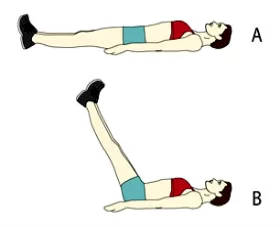
- With both legs on the floor, lie on your back. Press down on the ground while keeping your arms at your sides.
- Inhale to brace your core. Exhale and lift your legs as high as possible. Keep your lower back on the ground, your legs straight, and your hips straight. Inhale to controllably lower yourself back down.
- Resist any movement in your lower back or hips. For added difficulty, lift and drop both legs at the same time.
Side Plank
There’s a reason why this is such a popular core move. It’s a traditional isometric exercise that requires you to remain still while holding a hard position. Turning the plank on its side is an excellent endurance and oblique exercise.
How to do:

- Lie down on your side. Put your bottom forearm on the ground. Stack your top and bottom feet. Maintain a straight line with your feet, hips, and shoulders.
- Inhale to brace your core. Exhale and elevate your bottom hip off the floor, pressing into your bottom forearm and foot. Squeeze your glutes and keep your abs active. Hold your side plank for 15-30 seconds.
- Repeat on the other side after lowering with control. You may feel your oblique muscles on your lower side when you lift off the ground.
Bicycle Crunch
How to do:
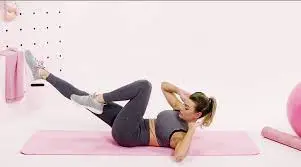
- Lie on your back, legs bent at 90 degrees, shins parallel to the ceiling. Place your hands behind your head, elbows wide.
- Gently lift your shoulders, head, and neck off the floor. To raise, engage your upper back to avoid straining your neck. Inhale, exhale, and rotate to bring your right elbow near your left knee. Straighten your right leg towards the ground.
- Inhale to return to your starting position. Exhale and rotate your left elbow toward your right knee. Straighten your left leg towards the ground. Continue to alternate sides in your bicycle crunches.
Mistakes to Avoid When Doing Heel Touches
When performing oblique heel touches, you should avoid a few common mistakes in order to optimize your exercise and minimize damage. This includes:
Moving too quickly
If you speed through this workout, you may swing with momentum rather than properly (and safely) targeting your abs. Move through the movements slowly, carefully, and with integrity.
Crunching inward
Heel touches include raising your head and shoulders toward the sky rather than rounding your body in a crunched stance.
Not Engaging Abs
If you’re really flexible, contacting each heel and quickly changing may seem effortless. However, unless you intentionally engage your obliques and feel your core muscles flex throughout each exercise, you may not gain as much core strength and stability. Slow down the movement and establish a mind-muscle connection. Use your deeper abs to keep your spine steady. Feel your oblique muscles contract with each heel contact.
Not breathing deeply
Deep abdominal breathing is essential in all forms of exercise. Focusing on deep breaths while completing a core exercise, such as heel touches, is critical for getting the most out of each rep. Breathing allows your muscles to contract more effectively while also supplying more oxygen.
Pulling from your Neck
Avoid pushing on your neck to maintain your upper body slightly raised. Straining your neck is a frequent way to compensate for upper body muscles. Instead, pull your head back and softly tuck your chin. To raise, engage your upper back, shoulders, and chest muscles.
How Many Sets and Reps Should You Do for Heel Touches?
Use heel touches as an accessory: focus on quality reps, stop before your form breaks down, and then develop over time. Your starting point is determined by your existing core strength and ability to maintain posture without straining your neck.
- Beginner: 2 to 3 sets, 10 to 12 repetitions each side.
- Intermediate: 3 to 4 sets, 12 to 15 repetitions each side.
- Advanced: 3 to 4 sets of 15 to 20 reps each side, or timed sets of 30-45 seconds.
Conclusion
Heel touches are easy, effective, and convenient, making them an excellent workout for beginners to intermediate lifters and athletes to practice. It is up to you to decide how to include them in your workout, whether it is warming up, cooling down, or anywhere in between.
However, you may create and achieve your goals by understanding and appreciating the proper form and benefits of this activity. If you have a current injury, ongoing pain, or a medical condition, speak with your primary care physician or a competent expert before beginning a new fitness regimen.
FAQs
What are heel touches?
Heel touches are a core workout that involves lying on your back with your feet on the floor, lifting your upper body slightly, and alternately touching each heel with each hand.
What exactly do heel touches do?
Heel touches develop and strengthen your oblique muscles on the sides of your body. They also work your other abdominal muscles, which improves core stability.
Do heel touches slim your waist?
Heel touches do not spot-reduce fat to shrink your waist. Instead, they build and tone the oblique muscles on the sides of your core.
How many heel touches should I do?
Aim for two or three sets of 12 to 20 touches each side. This focuses on your core and obliques. If you’re a newbie, start with fewer reps (10 to 12) to prevent stressing your neck or back.
Do heel touches reduce abdominal fat?
Heel touches can engage your obliques as part of an exhaustive task to burn abdominal fat. This workout requires you to lie on the ground, bend your knees, and keep your feet straight on the floor. Hold your arms parallel to the ground, palms facing downward.
References:
- Ross, M. (1970, January 1). Heel Taps (aka Heel Touches) Torch Your Obliques and Require Zero Equipment. https://www.onepeloton.com/blog/heel-touches
- Ryt, J. Z. N. C. C., & Ryt, J. Z. N. C. C. (2024, April 23). How to do heel touches — proper form, benefits, variations, and more. BarBend. https://barbend.com/heel-touches/
- Colletta, M. (2026a, January 20). How to do heel Touches (Form & Benefits). Steel Supplements. https://steelsupplements.com/blogs/steel-blog/how-to-do-heel-touches-form-benefits?srsltid=AfmBOoqiHW7mJuK-
- Stefanov, P. (2025b, November 7). Heel Taps: How-to, tips, variations, alternatives & mistakes. Hevy – #1 Workout Tracker & Planner Gym Log App. https://www.hevyapp.com/exercises/heel-taps/
- Coleman, S. (2026, January 23). Heel Touches: Correct form, tips, alternatives. SET FOR SET. https://www.setforset.com/blogs/news/heel-touches?srsltid=AfmBOopKph-cohKJDVZrUV2t8wJCK1eWZ63GoYMq_EGhOO1072gszkp-