
Plyometric Exercises
Introduction
Plyometric exercises are high-intensity movements that involve explosive actions like jumping, hopping, or bounding. They help improve power, speed, strength, and overall athletic performance by training the muscles to exert maximum force in short bursts.
As the patient approaches return to activity, plyometric exercise has emerged as a crucial part of late phase rehabilitation. Plyometric exercises, one of the many kinds of workouts accessible, help build power, which serves as a basis for the athlete to hone their sport-specific skills.
The number of strength and conditioning programs is equal to the number of physicians who create them. Over the past few years, rehabilitation programs have seen significant development. Plyometric training ought to be a crucial component of every program, regardless of its goal, be it performance improvement, strength and conditioning, or the latter stages of rehabilitation.
Plyometric exercises are frequently used to address power development, which is a crucial component of performance-based rehabilitation programs. Sports physical therapists work to help athletes avoid injuries, heal injuries quickly so they can resume their activities, increase their strength and conditioning, and help them perform better in sports. As a result, there is a growing need to advance performance as soon as possible. All of the previously mentioned benefits can be obtained by integrating plyometrics into a training routine. During the performance phase of recovery, there is a great need to build power because sports and athletics put enormous forces on the extremities.
The SAID (Specific Adaptation to Imposed Demands) principle and the uniqueness of rehabilitation both suggest that periodization programs, along with conditioning and performance programs, must be included in the latter stages of rehabilitation. Among the many different kinds of exercises that are accessible, plyometrics help with building power, which serves as a basis for the athlete to sharpen their sport-specific talents.
Definition
The Greek terms plythein or plyo, which mean to increase, and metric, which means to measure, are actually the roots of the word plyometrics. Thus, “to increase the measurement” might be considered the goal of plyometrics. Sports performance outcomes like throwing, serving velocity, jump height, or sprint speed that are displayed during testing or competition are usually used as the measurement.
Models of Plyometrics
Mechanical Model
According to this hypothesis, rapid stretching produces elastic energy in the muscle and tendon’s series elastic component (SEC), which is then stored. The concentric component (CC), which includes actin, myosin, and the muscle’s cross-bridges that contribute to force production, releases this stored energy when the stretch is immediately followed by a concentric muscular movement.
Neurophysiological Model
The stretch reflex is the foundation of this model. The body’s automatic reaction to an external stimulation that causes the muscle and stretch receptors to stretch is known as the “stretch reflex.” A reflex contraction of the stretched muscle occurs when the muscle spindles are stretched.
Phases of Plyometrics
What justifies the use of plyometric activities for sports performance improvement or rehabilitation? The plyometric idea is used in both lower extremity (LE) and upper extremity (UE) sports as a component of functional movement patterns and competence during competition. Plyometric training makes use of the stretch-shortening cycle (SSC), which consists of an eccentric extending action followed by a concentric shortening movement.
Eccentric Pre‐Stretch
The terms “readiness,” “pre-loading,” “pre-setting,” “preparatory,” “faciliatory,” “potentiation,” “counter-force,” and “counter-movement” have also been used to refer to the eccentric pre-stretch phase. The muscular spindle of the muscle tendon unit and the non-contractile tissue (series elastic components [SEC] and parallel elastic components [PEC]) within the muscle are stretched during the eccentric pre-stretch phase of a plyometric exercise.
The neurophysiological-biomechanical response is the term used to describe this stimulation of the muscle’s constituent parts. Numerous researches have shown that this eccentric pre-stretch will improve the concentric muscle contraction that follows. Three stretch variables serve as the foundation for the pre-stretch phase: the stretch’s magnitude, rate, and duration. The energy accumulated during the eccentric pre-stretch motion will be significantly impacted by changes to any of these variables.
Amortization Phase (Time to Rebound)
When the eccentric pre-stretch is over and the concentric muscle activity begins, the term “amortization” describes the interval of time that occurs. “Time to rebound” is the phrase that the authors of this manuscript prefer to employ. Plyometrics’ electro-mechanical delay phase is another common name for this stage.
The amortization phase is the interval of time between overcoming the eccentric pre-stretch’s negative effort and producing force, speeding up muscular contraction, and causing elastic rebound in the direction of the plyometric movement pattern. This stage is crucial to plyometric performance because the more efficiently the stored energy is used during the transition, the more strong and effective the plyometric movement.
The stretch reflex is not triggered, the stored energy is evaporated as heat, and the concentric contraction’s positive work is less effective if the amortization phase is postponed. Reducing the time to the rebound phase is one of the main objectives of plyometric training.
Concentric Shortening Phase
The resultant power production performance phase is another name for the concentric phase. This stage of plyometrics has also been referred to as the assisted or augmentation phase. In reality, the plyometric action is described by these phrases. The biomechanical response that makes use of the pre-stretched muscles’ elastic qualities is one of the numerous interactions that lead to this final stage of the plyometric movement.
To improve the muscle’s power performance, these three phases are combined to create a plyometric action. The key to the effectiveness of plyometric workouts in improving performance is the design of periodization plans and the execution of the actual drills, which are covered later in this article.
Benefits of Plyometrics
- Improved muscular power output
- Greater force during muscular contractions while using less energy and accelerating muscle contractions or speed overall
- Enhanced capacity for rapid direction changes, sometimes known as agility or nimbleness by fitness experts, and overall superior control while halting and beginning movements
- Greater jumping height
- Lower chance of joint and muscle damage
Indications
- To maintain a high level of functional activity.
- To improve balance and proprioception.
- To increase muscle strength and power.
- To maximize reaction time.
- to maximize the efficiency of movements.
Contraindications
- Unconditioned athlete – lack of foundational strength and training.
- Unyielding surface.
- Stress-related injury history.
- Acute or sub-acute sprains.
- Acute inflammation.
- Post-operative condition.
- Joint instability.
- acute or sub‐acute strains
Designing a plyometric program: training variables to consider
Neuromuscular Overload: Applied Loads and Distances
Neuromuscular overload from plyometric activities typically manifests as a quick change of direction for a limb or the complete body in the absence of external stressors. The total overload amount is influenced by the athlete’s range of motion (ROM) and/or the total amount of labor they perform in repetitions, sets, etc.
Spatial Overload:Range of Motion
From the perspective of range of motion, movements might have the effects of overload. An exaggerated movement pattern can be used to perform the ROM over a wider range. The idea is to use the stretch reflex and muscle activation within a certain range of motion. The reflex processes aid in facilitating the movement pattern to improve force production, as was previously mentioned.
Temporal Overload: Timing
One way to achieve temporal overload is to focus on performing the movement as quickly and forcefully as you can. One of the secrets of doing plyometric workouts for more power output is temporal overload, or minimizing the time to rebound (amortization phase). Effective force transmission from the eccentric pre-stretch to the concentric power performance phase of the plyometric movement is made possible by a reduced time to rebound and electro-mechanical delay.
Intensity
The actual proportion of effort needed by the athlete to complete the task is known as intensity. The intensity of plyometric exercises is determined by their nature. There are numerous variations and intensities of plyometric exercises. Lower level plyometric exercises include bilateral jumping to a box, while more tough exercises include single-leg jumps from a box. When creating programs for conditioning or rehabilitation, these factors need to be taken into account.
Volume
Volume is the total amount of work completed in a single periodization cycle or work session. The calculation of the load and the counting of the repetitions, sets, etc, of the particular activity (number of throws, leaps, etc.) are common methods used to assess volume in plyometric training. During a training session, fifty foot touches would be regarded as low volume, whereas 200+ would be regarded as high volume. To reduce the chance of injury or overtraining, volume should be gradually increased.
Frequency
The number of workouts that occur during the training or recovery cycle is known as frequency.
Recovery
In order to avoid injuries and overtraining, as well as to identify the main focus of the plyometric program, recovery is crucial. Plyometric exercise puts a lot of strain on the body; thus, it could be beneficial to take lengthier breaks between sets. Although there is little data on the ideal recovery periods, it is generally advised to recuperate for 48 to 72 hours between training sessions and plyometric exercise sessions.
Specificity
When possible, a plyometric program’s specificity should be tailored to the athlete’s position and sport in order to imitate the athlete’s sport-specific actions and improve the program’s specific aims. Plyometric training may be specific in terms of motions, angular velocities, loads, metabolic demands, etc.
Ideal Plyometrics Training Program
Targeted Muscle Groups
Lower Extremities:
- Gluteal muscle group.
- Hip flexor group.
- Quadriceps muscle group.
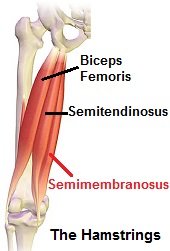
- Hamstring muscle group.
- Gastrocnemius.
- Anterior tibialis.
- Abdominal muscles.
Upper Extremities:
- Biceps.
- Triceps.
- Deltoids.
- Trapezius.
- Rotator cuff muscles.
- Scapular stabilizers.
- Latissimus dorsi.
- Spinal erector muscle group.
Mode
Lower Body Plyometrics
Athletic motions that combine strength and speed to produce the byproduct known as power are frequently necessary for both recreational and competitive sports. Strength and conditioning specialists, performance enhancement coaches, and athletic trainers are among the many clinicians who have been looking for ways to boost power in order to improve performance for years.
Sports physical therapists have recently started using these methods to help patients avoid injuries and perform better while recovering. Plyometric workouts have also been a staple among rehabilitation professionals who want to get players back to playing at their best. Jumping, leaping, and hopping are common ways to undertake plyometric exercises in the LE.
Examples of lower extremity plyometrics:
- Jumping in place.
- Box drills.
- Bounds.
- Drop jumps.
- Squat jumps.
- Split squat jumps.
- Single leg hops.
SPRINT SPEED
For sports requiring rapid bursts of speed or frequent direction changes, sprinting velocity is crucial. Sports like tennis, volleyball, handball, and soccer benefit from this. Different types of plyometric training with durations ranging from three to twelve weeks were included in these investigations. The weekly dosage varied from once a week to a maximum of four times a week. The most beneficial volume appears to be more than 80 jumps per session.
One constant conclusion is that when plyometric activities are conducted in combination with other types of workouts (e.g., plyometrics + weight training), the improvement in sprint performance is not significantly greater than when they are performed alone. Finally, compared to longer distances (>40 m), the effects of plyometric training for sprint-specific programs seem to be highest over the first 10–40 m of a sprint.
These findings imply that by including plyometric activities in their training regimen, athletes who are used to sprinting 40 meters or more could still increase their timings by getting better at the initial acceleration phase of sprinting.
BASIC LOWER EXTREMITY PLYOMETRIC PRE‐TRAINING REQUIREMENTS
Prior to starting a plyometric exercise program, a systematic functional testing protocol should be created to determine whether the patient or subject is capable of engaging in LE plyometrics. To properly complete these more difficult workouts, the athlete has to have a strong foundation. These requirements include having a full range of motion (ROM) and a sufficient foundational level of strength, endurance, and neuromuscular control to execute plyometric exercises without experiencing any symptoms or running the risk of getting hurt. Before starting an LE plyometric program, it has been suggested that you be able to perform a 30-second single-leg stance with your eyes open and closed.
Only after reaching basic strength levels, such as being able to complete a full, free-weight squat 1.5 to 2.5 times body mass and/or squat 60% of body mass five times in five seconds, could one begin LE plyometric exercise. The athlete should continue working on proper technique and strength training and postpone plyometric activities until they have a sufficient strength base if their strength is insufficient to pass these tests.
Lower Body Plyometric Exercises
The order in which you should complete each of these plyometric exercises during the workout will be specified. I’ll also include the sets and repetitions for each.
You decide when to take a break; make it challenging.
Before beginning the plyometrics program, make sure you finish a thorough dynamic warm-up. To get the most out of our entire session, we want your muscles and connective tissues prepared for rapid action.
Lateral single-leg broad jump
To begin, place your weight on your right foot while keeping your left foot slightly elevated off the ground. Leap laterally and land on both feet after spinning.
As you leap forward, consider raising your feet beneath your butt. This will enable you to extend your broad jump distance and gain some hang time.
Two sets of four repetitions (four on each side, alternating jumping off each leg)
Squat jumps
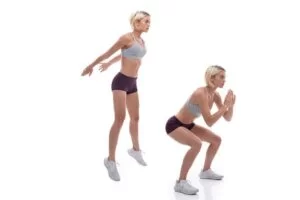
Your feet should be a little broader than your hips when you stand.
Squat down by lowering your body.
Jump up with force, contract your core muscles, and push up through your feet.
Lift your arms above your head as you start to jump.
After landing, return to the squatting position by lowering yourself.
Perform two to three sets of ten reps.
Reverse lunge knee-ups
Start with your left foot forward in a standing lunge.
Stretch your left arm straight back while placing your right hand on the ground beside your front foot.
Leap up as high as you can with your right knee while lowering your right arm back and down and raising your left arm.
Return to the initial lunge stance after landing.
Keep going for 30 seconds.
Next, work on the other side.
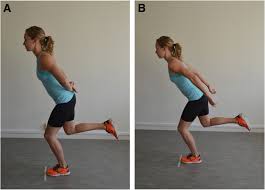
Single Leg Hops
Place your feet hip-width apart and begin standing. To stand solely on your right leg, raise your left foot behind you. To check if your hips are level, place your hands on them.
Then, in order to jump up and down on your standing leg for the necessary amount of time, raise yourself onto the toes of your leg and slightly flex your knee and ankle.
After that, change to standing on your left leg and hop on it for the necessary amount of time.
Bounds
Put one foot in front of you and lift your other hand to form a split stance.
Transfer your weight on the ball of your front foot and slant forward a little.
Maintain a straight back, a raised chest, and forward-facing eyes.
To jump forward, contract your quadriceps, hamstrings, glutes, and calves on your forward leg. Concentrate on moving yourself forward.
As your front leg cycles to the back, forcefully lift your opposing knee.
At the same time, make a dramatic running motion with your arms.
Drive your front knee toward the ground just before you hit it, then use the ball of your foot to impact the ground. Leap forward again by instantly extending your leg and ankle. For the rest of your set, keep switching legs.
Upper Body Plyometrics
Those who hit or toss balls may benefit from upper-body plyometric activities. Swimmers, boxers, martial artists, and anybody else who wants to increase the explosive strength in their arms, shoulders, chest, back, and core can also benefit from them.
Chest Pass
- For people who are new to upper-body plyometrics, the medicine ball chest pass is an excellent workout. You can either find a sturdy wall that can withstand the hit or work with a buddy to complete this exercise.
- How to do it: Start by standing up straight and comfortably with your feet shoulder-width apart and your face about three meters away from your companion. With your elbows bent, raise the medicine ball to chest level.
- Before the throw, start by shifting the arms a little backward. Throw the ball to your partner by extending your elbows with both arms.
- To improve the exercise’s intensity, the ball’s weight can be raised.
Overhead Throw
The muscles that expand your shoulder joints are worked by the two-handed overhead throw. Many of the muscles used in overhead motions in sports, including basketball, baseball, swimming, tennis, and volleyball, are worked by this exercise.
- How to do it: Maintain a staggered stance by placing one foot in front of you and bending your knees slightly.
- Throw the medicine ball as hard as you can into the wall after pulling it back behind your head.
- Repeat after catching the ball as it bounces against the wall.
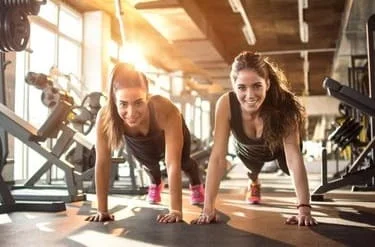
Plyo Push-Up
An advanced workout that targets the shoulders, triceps, abdomen, and chest is the plyometric pushup. The greatest candidates for this workout are those with strong upper bodies.
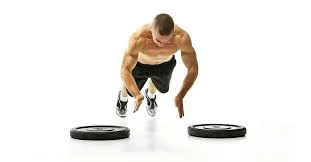
- How to do it: With your hands beneath your shoulders, your spine in a neutral position, and your feet shoulder-width apart, begin in the push-up position.
- Lower your chest to the floor to execute a countermovement, then push off the floor with an explosive force to raise your hands off the ground. In midair, clap your hands together.
- Return to the initial push-up position and start the subsequent exercise right away.
- You can make the exercise a little bit easier by pushing off the floor without clapping your hands together, or you can make it more difficult by clapping more than once.
Medicine Ball Slams
Medicine ball smashes are an excellent way to build strength and power overall.
- How to do it: Place your feet shoulder-width apart, bend your knees slightly, and stand upright.
- Throw the medicine ball as hard as you can onto the ground after pulling it back behind your head.
- Repeat after catching the ball as it bounces off the ground.
Medicine Ball Drop
The lying medicine ball power drop will strengthen your shoulders, core, and chest explosively. You will need someone to catch the ball throughout this workout; thus, you will need a partner.
- How to do it: With your feet on the ground, knees bent, and arms raised, lie on your back. Have a companion hold a medicine ball above your head.
- A medicine ball should be dropped at your chest by your partner. Throw the ball back to your partner as soon as you catch it.
- You can make this workout more intense by having your partner stand on a box or by increasing the weight of the ball.
Trunk Plyometrics
The outer core muscles facilitate dynamic movement, whereas the deep core muscles provide strong static stability. The core frequently serves two purposes. Therefore, in addition to the upper and lower extremities, these muscular groups also require training.
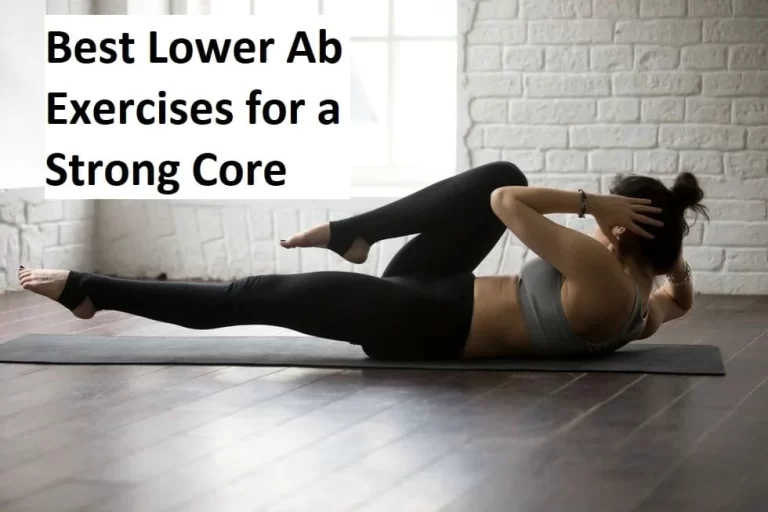
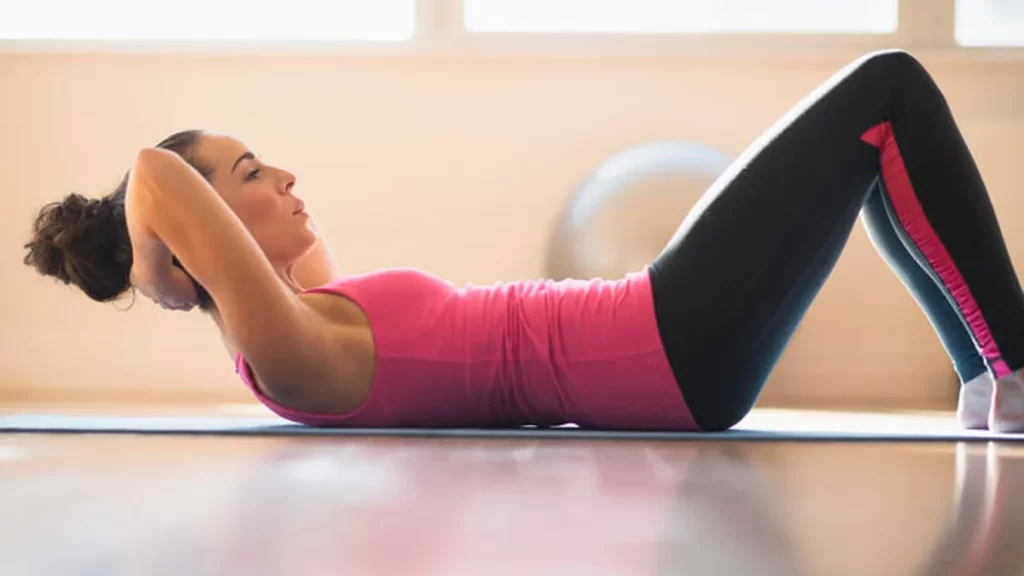
Crunches
On the floor, the typical crunch is performed. You can perform it on a yoga or fitness mat to make it more comfortable.
- How to perform it: Place yourself on your back. Place your feet hip-width apart on the ground. Place your arms across your chest and bend your knees. Breathe in and contract your abs.
- Exhale and raise your head and neck while maintaining a comfortable posture.
- Take a breath and go back to where you were before.
Russian twists
- How to perform it: With your feet on the mat and your knees bent, take a seat on the floor.
- Lean back a little while keeping your back straight by using your core muscles. Raise a weight parallel to your chest or clasp your hands together. If you want to be in a tabletop position, lift your feet so they are off the ground.
- Turn your body to the right, lowering your hands to the floor by your right hip and turning your shoulders to the right.
- Untwist until your torso is facing forward once more. After that, twist to the left such that your hands are lowered toward the floor next to your left hip and your torso is facing left.
- Keep your back straight and your core tight as you continue to rotate from side to side in a controlled manner. Throughout the workout, keep your breathing steady.
Standing rotational ball pass
- How to perform it: Hold a medicine ball at chest level with both hands while standing with your feet shoulder-width apart.
- Transfer your weight to your right foot by rotating your torso to the right.
- Move the medicine ball across your body to your right side while you rotate.
- Move your weight to your left foot and quickly swivel your torso to the left.
- Use your core muscles to produce strength as you circle and toss the medicine ball across your body to your left side.
- Repeat the exercise until you reach the required number of repetitions, catching the medicine ball as it returns to your chest.
Combination Plyometrics Exercise
Combining motions is crucial for better preparing players for the demands of their respective sports. An athlete must be trained to perform these combinations of motions since a normal athlete can sprint, change directions, jump, and throw a ball in a handful of seconds. These combinations not only result in noteworthy outcomes but they also add enjoyment to the training session.
Some examples of combinations:
- Combining a variety of jumps.
- Jump and throw.
- Throw and sprint.
- Jump and sprint.
- Jump and throw, etc.
Progression
Since plyometric exercise is a type of resistance training, the progression should adhere to the progressive overload concept.
The progression should be:
- Bilateral to unilateral.
- Stable to unstable.
- Symmetrical to unsymmetrical.
- Simple to complex.
- Low intensity to high intensity.
- Combination of movements.
- Change of surface.
- Add barriers (such as cones, hurdles, boxes, etc).
Equipment, surfaces, and footwear
Equipment
Exercise type and intensity must be taken into consideration while choosing plyometric training equipment. Since every athlete is unique, equipment should be able to be adjusted to meet their needs.
Examples of equipment:
- Plyometric boxes.
- Hurdles.
- Medicine balls.
- Barbells/dumbbells/kettlebells.
- Resistance bands.
- Weighted vests.
Surfaces
The benefits of plyometric exercises on training specificity and injury prevention are significantly influenced by the training environment. By altering the ground-contact time, a softer training surface results in a longer contact time—the surface’s hardness can have an impact on the amortization phase. In order to absorb the shock and avoid harm, the body softens the connective tissue on a harder surface while stiffening it on a softer one. To avoid soft tissue injuries and preserve optimal health throughout the high-volume preparatory phase, athletes are recommended to spend the majority of the training season on a comparatively softer surface.
Some examples of training surfaces:
- Sand.
- Grass.
- Artificial turf.
- Indoor wooden courts.
- Rubberized track and flooring.
Footwear
For any training program, selecting the right shoes can have a significant impact on both performance and health.
Functions of footwear:
- Protect the feet from daily wear and tear.
- Deliver impact that produces strides, jumps and changes in direction.
- Sensory feedback.
- Shock absorption.
A good footwear should consist of:
- Proper covering of the foot.
- Proper cushioning.
- Thicker heel.
- Good ankle stability.
Training must be done in the shoes that will be worn for the sport as one moves from the early preparatory phase to the pre-competitive phase. For instance, cleats for baseball, rugby, and soccer players, spikes for track and field athletes, court shoes for racket sports like basketball and volleyball, etc.
Safety and pre-training considerations
Pre-training considerations
Requirements for starting plyometric exercise:
- Strength: MMT of 4/5 for injured muscles and 5/5 for all other muscles, with 80% to 85% of strength.
- Range of motion: 90% to 95%.
- Load: 30% of 1 RM must be the starting load.
- Speed: Drills need to be carried out quickly but securely.
- Rate: The stretch’s rate is more significant than its length.
- Frequency: You should only do plyometric exercises four times a week.
- Intensity: Lower the volume when the intensity is strong.
- Body awareness: Balance, control, and coordination.
Safety
- Examine the athlete in detail.
- Make sure that the equipment, surroundings, and facility are safe.
- Set goals suited to sports.
- Give the athlete the right technique.
- Do the exercises under supervision at all times.
- appropriate program development.
Risk
- The body must absorb a lot of impact when landing on the ground or catching medicine balls during lyometric exercises, which are high-intensity exercises.
- This indicates that there is a chance of musculoskeletal harm, especially if the volume, frequency, and intensity are all too high.
- If you’re overdoing it, you could land awkwardly and crush your ankle, miss a landing and tumble, or rupture a muscle.
- These workouts are high-impact, and if done incorrectly or excessively, they can cause sprains, strains, and stress fractures. Plyometric exercises can be problematic for people with pre-existing diseases since they put a lot of strain on the joints, especially the knees and ankles.
Conclusion
- In summary, plyometric training consists of a sequence of powerful workouts using resistance and body weight.
- The three steps of the stretch-shortening cycle are concentric contraction, amortization, and eccentric contraction.
- The trunk, lower extremities, and upper extremities can all benefit from plyometric training.
- There must be enough time for recovery.
- It is necessary to create a program specifically for sports.
- Training ought to be conducted on suitable terrain while using the appropriate footwear and gear.
- For the athlete’s safety, precautions must be taken.
FAQs
What is the primary goal of a plyometric exercise program?
By conditioning the neural system and increasing the automaticity of movements during exercise, plyometrics improve neuromuscular coordination (training effect).
What are plyometrics’ prominent features?
Ballistic training is not the same as plyometric training, which uses jumps, hops, bounds, and/or skips. The stretch-shortening cycle, sometimes referred to as the reversible action of muscles, controls this type of training.
What is the volume required for plyometrics?
Conversely, low volume (3-6 sets of 2–5 repetitions) and low frequency (2–3 sessions per week) are ideal. Doing a lot of plyometric activities is not required. Mastering the exercises’ motions is essential to getting the most out of a program.
What is the ideal duration for a plyometric workout?
A session would likely take around 30 minutes after a thorough warm-up and a series of targeted firing and movement pattern drills for the relevant muscles. Depending on your level of fitness, each plyometrics drill would be brief and intense, lasting anywhere from 1 to 20 seconds with 1-2 minutes of break.
Is anaerobic or aerobic plyometric exercise?
Anaerobic exercises include plyometrics. Anaerobic workouts frequently require maximal effort through rapid, high-intensity energy bursts, such as sprinting or jumping.
References
- Plyometrics, physio pedia, https://www.physio-pedia.com/Plyometrics
- Davies, G., Riemann, B. L., & Manske, R. (2015, November 1). CURRENT CONCEPTS OF PLYOMETRIC EXERCISE. https://pmc.ncbi.nlm.nih.gov/articles/PMC4637913/
- Bounds, fitbod, https://fitbod.me/exercises/bounds
- Sworkit Health. (2020, March 1). Single Leg Hops – Sworkit Health | On-Demand Fitness, mindfulness, recovery, and nutrition. Sworkit Health | On-Demand Fitness, Mindfulness, Recovery, and Nutrition. https://sworkit.com/exercise/single-leg-hops
- Cronkleton, E. (2019, January 23). How to do 8 different plyometric exercises. Healthline. https://www.healthline.com/health/exercise-fitness/plyometric-exercises#leg-exercises
- Khore. (2024, April 16). Upper body plyometric exercises. Australian Fitness Academy. https://www.fitnesseducation.edu.au/blog/fitness/upper-body-plyometric-exercises/