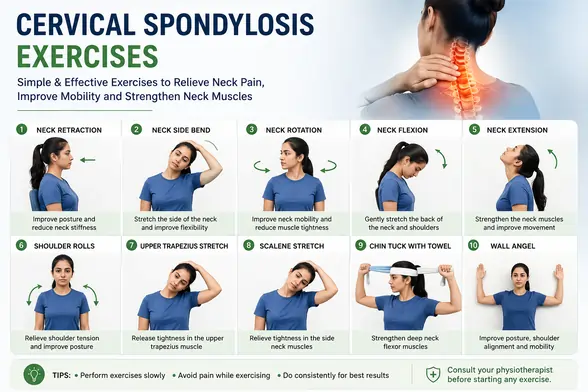
Top Home Exercises for Cervical Spondylosis
What is Cervical spondylosis?
Cervical spondylosis is the term for age-related degeneration of the neck’s spinal disks. When the disks dry up and shrink, osteoarthritis symptoms, including bone spurs—bony protrusions along the edges of bones—develop.
Cervical spondylosis is a common medical condition that worsens with age. More than 85% of those over the age of 60 suffer from cervical spondylosis.
Most persons with cervical spondylosis do not experience any symptoms. When symptoms do appear, nonsurgical therapies are often effective.
Symptoms
Most cervical spondylosis patients have no symptoms at all. When symptoms do appear, they often include stiffness and soreness in the neck.
The spinal canal inside the bones of the spine may occasionally narrow due to cervical spondylosis. These bones are called vertebrae. The spinal canal is the space inside the vertebrae that the spinal cord and nerve roots pass through to reach the rest of the body.
Symptoms are:
- Weakness, tingling, and numbness in the hands, feet, legs, or arms.
- Poor coordination and trouble moving.
- Loss of control over the bowels or bladder.
Causes
Cervical spondylosis is caused by alterations to the structures forming the neck and backbone. As we age, the backbone and neck get weaker. These changes might include:
- Dehydrated disks: Disks act as cushions between the vertebrae of the spine. By the time they are forty years old, the majority of people’s spinal disks begin to dry up and shrink. The vertebrae have increased bone-on-bone contact when the disks narrow.
- Herniated disks: Cracks also appear on the outer layer of the spinal disks. The soft interior of a disk can be accommodated by these cracks. Sometimes the nerve roots and spinal cord are squeezed.
- Bone spurs: The body may make more bone as the disks break down in an unsuccessful attempt to strengthen the spine. Occasionally, the spinal cord and nerve roots may be pinched by these bone spurs.
- Stiff ligaments: Ligaments are the tissue strands that join two bones. Age-related stiffness of the spinal ligaments may reduce neck flexibility.
Risk factors
Age: Cervical spondylosis is common as people get older.
Occupation: Jobs that involve a lot of overhead labor, improper postures, or repeated neck motions put extra strain on the neck.
Neck injuries: Cervical spondylosis appears to be more common in those who have had neck trauma.
Genetic factors: Over time, some individuals of specific families will experience more of these changes.
Smoking is linked to increased neck pain.
Complications
If cervical spondylosis significantly compresses your spinal cord or nerve roots, it may cause irreparable harm.
Who Can Do These Cervical Spondylosis Exercises
- People experiencing neck pain as a result of improper posture or age-related degeneration.
- People with mild cervical spine spondylosis
- Desk workers are experiencing neck stiffness and headaches.
Benefits of Cervical Spondylosis Exercises
- Reduces neck pain
- Gentle stretching helps to release muscular tension in the cervical spine, which reduces stiffness and pain.
- Improves flexibility.
- Regular mobility keeps the neck from becoming stiff and limited.
- Strengthens supporting muscles.
- Strong neck and shoulder muscles relieve stress on the cervical spine.
- Improves posture.
- Poor posture dramatically worsens cervical spondylosis symptoms.
- Exercises strengthen the muscles that keep the head and neck aligned.
- Enhances daily activities.
- Improved movement makes driving, reading, working, and sleeping more pleasant.
Home Exercises for Cervical Spondylosis
Stretching exercises
Neck Flexion (Chin to Chest)
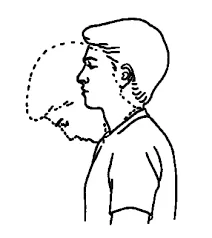
- Keep your back straight whether sitting or standing.
- Lower your chin softly toward your chest, allowing the back of your neck to gradually extend.
- Maintain this posture for 10 seconds.
- Return to the starting position carefully.
- 5–10 times over.
Benefit: Stretches the muscles in the back of the neck, reducing stiffness and tension.
Neck Extension (Look Up)
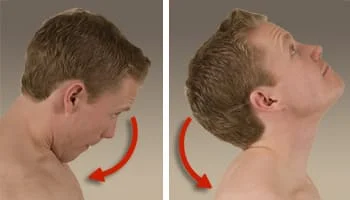
- Maintain a straight posture even while sitting or standing.
- Look up toward the ceiling and gently tilt your head back.
- Maintain this pose for 10 seconds.
- Slowly return to the starting position.
- Repeat this 5 to 10 times.
Benefits: Improves mobility by strengthening supporting muscles and extending the front of the neck.
Neck Side Tilt (Ear to Shoulder)
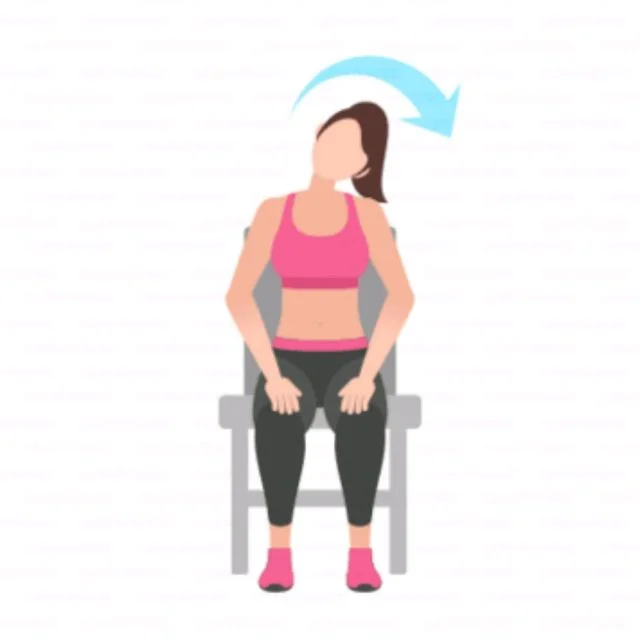
- Maintain a neutral head posture.
- Bring your ear closer to your shoulder while slowly tilting your head to one side.
- Keep your shoulder relaxed on the other side.
- After 10 seconds of holding, swap sides.
- Repeat five times per side.
Benefit: Improves side-to-side flexibility and relaxes tight neck muscles.
Neck Rotation
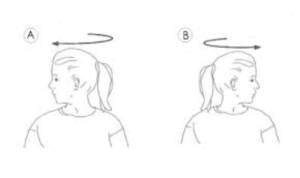
- Sit up straight and turn your head as much to one side as is comfortable.
- Maintain this pose for 10 seconds.
- Rotate to the other side after returning to the center.
- Each side should be done five times.
Benefit: Reduces stiffness while increasing range of motion and flexibility.
Upper Trapezius Stretch
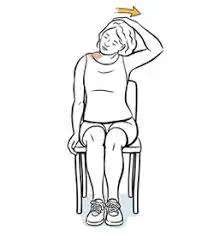
- Take a seat and grab it with one hand.
- Bring your ear closer to your shoulder while tilting your head in the other direction.
- Hold for 10 seconds, allowing your neck and upper shoulders to extend.
- Repeat, swapping sides.
Benefit: relieves shoulder and neck pain by relieving tension in the upper trapezius muscle.
Strengthening Exercises
Chin Tucks
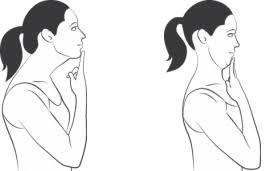
- Take a seat or stand upright.
- Keeping your head level, flex and pull straight back to form a double chin.
- After five seconds of holding, release.
- Ten times, repeat.
Benefits: Reduced neck strain, improved posture, and strengthened deep neck muscles.
Isometric Cervical Flexion
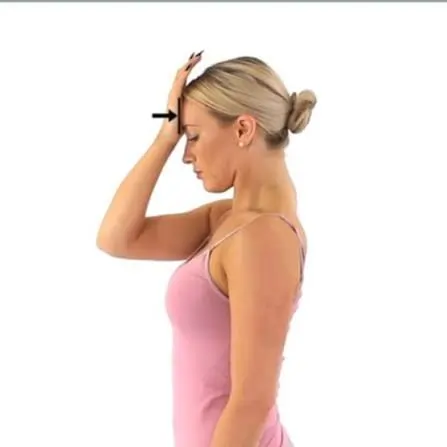
- Place your hand over your forehead.
- Gently press your head forward, opposing the action with your neck muscles.
- After 5-10 seconds of holding, release.
- Repeat three to five times.
Benefit: Stabilizes the cervical spine by strengthening the front neck muscles without producing excessive motion.
Isometric Cervical Extension
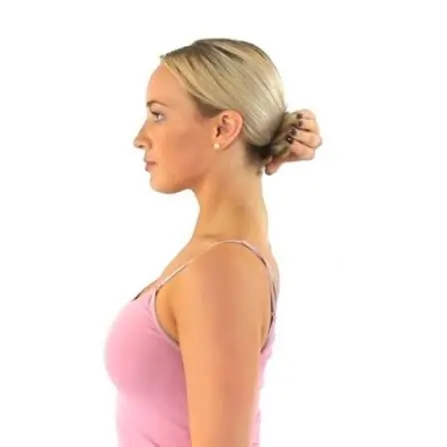
- Your hands should be behind your head.
- Gently squeeze your head back into your hands, using them for resistance.
- Hold for 5–10 seconds, then repeat five times
Isometric cervical side flexion
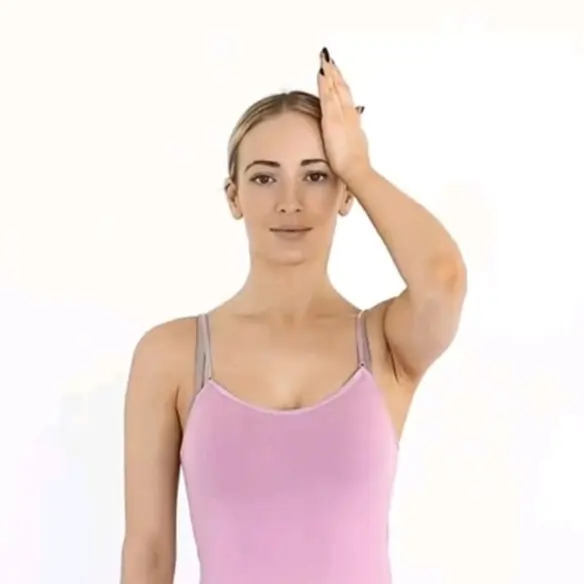
- Reach the side of your head with your hand.
- As you press your head into your palm, resist the action with your neck muscles.
- After 5-10 seconds of holding, switch sides.
- Repeat 3–5 times on each side.
Benefit: Improves head stability and support by strengthening the side neck muscles.
Wall Angels
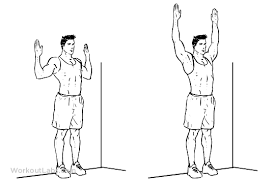
- Place your feet slightly apart from the wall and lean back against it.
- Maintain contact between your head, upper and lower back, and the wall.
- Create a snow angel by lifting your arms to a 90-degree angle and slowly moving them up and down.
- Do ten repetitions.
Benefits: reduces neck tension, strengthens upper back, and improves posture.
Mobility & Postural Exercises
Shoulder Rolls
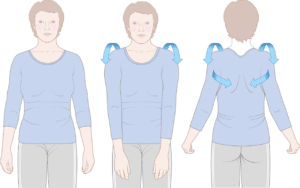
- Take a seat or stand upright.
- Ten times, roll your shoulders forward in a circle.
- After that, roll them ten times backwards.
Benefits: reduced stress, increased blood flow, and decreased neck and shoulder stiffness.
Scapular Squeeze
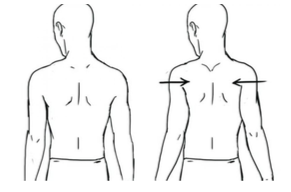
- Take a seat or stand upright.
- Squeeze your shoulder blades together to hold a pencil in place.
- After five seconds of holding, release.
- Ten times, repeat.
Benefit: Improves posture and strengthens the upper back muscles.
Thoracic Extension
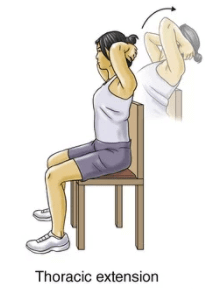
- Place both hands behind your head while sitting up straight.
- Maintain a stable lower back while slightly arching the upper back.
- After 10 seconds of holding, return to neutral.
- Repeat this 5 to 10 times.
Benefit: Reduces hunching and increases upper-back flexibility.
Seated Cat-Cow Stretch
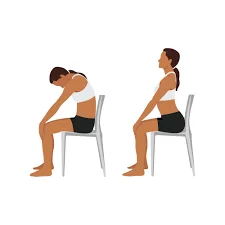
- Sit up straight and place your hands on your knees.
- Take a deep inhale, elevate your chest, and arch your back in Cow Pose.
- Breathe out, bury your chin in your chest, and round your back (Cat Pose).
- Perform five repetitions.
Benefit: Reduces neck and upper back strain while increasing spinal mobility.
Common Mistakes to Avoid
- Exercising with severe pain.
- Moving too fast.
- Jerk the neck
- Skipping warm-up motions.
- Poor seating position during exercise.
- Holding your breath.
- Ignoring numbness or weakness.
- Exercising without professional guidance after an acute injury
Precautions to Take While Exercising for Cervical Spondylosis
Start slowly and gently
- Always begin your strengthening activities with some mild stretching.
- Avoid quick, rapid movements that might cause neck pain.
Maintain proper posture
- When exercising, keep your back upright and your shoulders relaxed.
- Avoid slouching, since it could worsen neck pain.
Do not overstretch
- Never stretch to the point of discomfort; instead, stretch to the point of minor strain.
- If you’re feeling uncomfortable, reduce your range of motion and ease back.
- No hyperextensions or severe neck rotations.
- Avoid workouts that require you to lift large amounts of weight with your neck.
Avoid high-impact movements
Take breaks and rest as needed.
- If you feel exhausted or your discomfort is worsening, stop and rest.
- Overuse of the neck muscles may cause increased stiffness.
Use proper support.
- When seated, utilize a chair with enough lumbar support.
- If needed, place a small cushion behind your neck to provide more support.
Warm Up and Cool Down
- Before stretching, always do some simple warm-up exercises.
- To end your workout, use relaxation and deep breathing exercises.
Avoid forward head posture
- Whether sitting or standing, keep your chin slightly tucked in.
- Do not spend too much time looking at screens or books.
Stay hydrated
- Drinking enough water helps to keep your joints and muscles flexible.
- Dehydration may exacerbate stiffness and pain.
Listen to your body
- If you get acute discomfort, dizziness, or numbness, stop exercising immediately.
- Consult your doctor or physical therapist before starting any new plan.
- By adopting these measures, you may effectively treat cervical spondylosis while also increasing your neck’s strength and flexibility.
Cervical Spondylosis Exercises to Avoid
- Heavy overhead weightlifting.
- Behind-the-neck shoulder press
- High-impact jumping workouts
- Contact sports in between painful flare-ups.
- Forceful neck circles
- Sudden twisting or jerking motions
- Heavy shrugs with an extreme weight.
- Headstands and unsupported inversions
- Exercises that cause numbness, tingling, or weakness.
Conclusion
Despite being a common medical condition, cervical spondylosis does not have to control your life. A complete exercise routine that incorporates mobility, strength, and stretching will help you minimize pain, enhance flexibility, and strengthen your neck muscles. Frequent practice keeps you active and pain-free by improving posture and preventing future injury.
Consistency and proper technique are necessary for long-term relief. Even while these workouts can have a significant impact, it is critical to listen to your body, avoid overdoing it, and take the necessary precautions to avoid strain. It is best to modify any action or see a healthcare specialist if it causes discomfort that goes beyond basic stretching.
By adding these exercises into your regimen, you are taking a proactive approach to improving neck health, mobility, and quality of life. Continue to exercise, focus on your posture, and enjoy the process of building a stronger, healthier neck!
FAQs
What is the most effective therapy for spondylosis?
The best treatment for cervical spondylosis is a combination of physiotherapy, posture correction, ergonomic adjustments, stress management, and focused exercises, rather than only pain medication.
Is cervical spondylosis serious?
Cervical spondylosis is often moderate and treatable. Serious consequences are uncommon when symptoms are treated immediately with physiotherapy and lifestyle changes.
How long does physiotherapy take for cervical spondylosis?
The main treatment for cervical spondylosis is a systematic, progressive physical therapy regimen that lasts four to six weeks. In the early phases, pain management, inflammation reduction, and progressive restoration of mobility activities should be the primary goals.
What is the underlying cause of cervical spondylosis?
The primary cause of cervical spondylosis is age-related wear and strain on the bones, discs, and joints in your neck. As you age, your spinal discs gradually dry and lose flexibility, causing them to shrink. Increased friction, the formation of bone spurs, and cervical spine stiffness are the results of this
Can the legs be affected by cervical spondylosis?
Cervical spondylosis can definitely impact the legs. When the spinal canal narrows due to age-related wear and tear in the neck, the spinal cord may get compressed. This disorder is known as cervical myelopathy, and its development commonly causes problems in the lower limbs.
References:
- We Are Spine. (2025, July 16). 15 Cervical spondylosis exercises to relieve neck pain. https://wearespine.in/cervical-spondylosis-exercises/
- Physio, S. (n.d.). Best 5 Exercises for Cervical Spondylosis – Surrey Physio. Surrey Physio. https://www.surreyphysio.co.uk/top-5/best-5-exercises-for-cervical-spondylosis/
- Cervical spondylosis exercises for neck pain relief. (n.d.). The Spine Foundation. https://thespinefoundation.org/cervical-spondylosis-exercises/
- Chauhan, L. (2026, February 12). Top 7 Best exercises for cervical spondylosis to reduce pain and improve mobility. Resolve360 No.1 Online Physiotherapy Clinic. https://resolve360.app/treatment/top-7-best-exercises-for-cervical-spondylosis-to-reduce-pain-and-improve-mobility/