
Neck Stiffness
Introduction
Soreness and trouble moving the neck, particularly when attempting to shift the head to the side, are common signs of a stiff neck. Additionally, it might be accompanied by arm, shoulder, neck, or headache pain. A person may need to turn their complete body rather than just their stiff neck in order to look sideways or over their shoulder.
The majority of individuals are aware of the pain and aggravation of having a stiff neck, whether it started in the morning or grew later in the day following a physically demanding activity like moving furniture. Pain and stiffness usually go away on their own after a week. However, pain levels, healing duration, and the chance of a recurrence can all be impacted by how a person treats and manages their stiff neck symptoms.
What are the Common Causes of a stiff neck?
Rarely does a stiff neck occur for no apparent reason. It usually results from everyday routines, poor posture, or lifestyle choices that put stress on the neck muscles. Occasionally, it could also be a sign of an underlying illness affecting the cervical spine or surrounding tissues. Some of the most typical reasons for a stiff neck are listed below:
- Poor posture
- The muscles in your neck and shoulders may gradually get strained if you spend a lot of time bent over your phone, computer, or desk. Often referred to as “tech neck,” this forward-leaning posture compels the muscles to sustain the head in an uncomfortable position for extended periods of time. It eventually causes pain, stiffness, and limited mobility.
- Overuse or strain on the muscles
- The neck muscles can be overworked by minor, repetitive motions like reading in bed for extended periods of time, carrying a large bag on one shoulder, or rotating the head too fast. Constant tension can result in microtears in the muscle fibers, which can cause stiffness and inflammation that may persist for many days.
- An uncomfortable way to sleep
- The muscles can remain twisted or strained for hours if you use an unsupportive pillow or sleep with your neck bent unnaturally. You can have aches, pains, or decreased range of motion when you wake up. In particular, sleeping on your stomach may worsen the strain by forcing the neck to bend sideways for extended periods of time.
- Tension in the muscles and stress
- Your body naturally tenses up when you’re under stress, and the neck and shoulder area are frequently affected. Persistent tension can make your muscles tense even when you’re not moving, which can result in pain, stiffness, and pressure in the back of your neck.
- Injury or sudden impact
- Muscles and ligaments can be stretched or torn by a quick shock or impact to the head and neck, such as in an automobile accident or sports injury. This illness, called whiplash, sometimes results in excruciating pain and stiffness as well as occasional headaches or lightheadedness. In order to rule out injury to deeper systems like nerves or vertebrae, prompt medical intervention is essential.
- Inadequate workplace ergonomics
- The cervical spine may be continuously compressed by improper workstation configuration, such as a low display, an unadjustable chair, or a lack of back and neck support. Muscle fatigue, stiffness, and even chronic posture issues result from this over time. This strain can be considerably decreased by adjusting the display level and chair height.
- Cold or direct airflow exposure
- The muscles in the neck may naturally contract when exposed to chilly air from an air conditioner or fan. Long-term exposure causes stiffness and soreness, which are frequently apparent the following morning. Although this kind of stiffness is temporary, it may be prevented by maintaining indirect airflow.
- Dehydration
- For optimal performance, the neck muscles and the cushioning discs between the cervical vertebrae require sufficient water. These tissues become less flexible and more vulnerable to strain when the body is dehydrated, which worsens pain and stiffness.
- Age-related wear and damage
- With age, the cervical spine’s discs and joints degrade, limiting cushioning and flexibility. Cervical spondylosis and osteoarthritis are two conditions that can cause stiffness, restricted mobility, and, in rare cases, nerve compression, resulting in pain spreading to the shoulders or arms.
- Underlying medical conditions
- In rare circumstances, neck stiffness may indicate a more significant health problem. A herniated disc or nerve compression can cause chronic pain and numbness, whereas infections like meningitis induce neck stiffness, fever, headache, and nausea. Such symptoms necessitate immediate medical attention to avert consequences.
Symptoms
A stiff neck can have far-reaching consequences. In many situations, the soreness spreads to neighboring muscles and joints, resulting in a range of symptoms that differ depending on the origin and intensity. Below is a list of the most typical symptoms of a stiff neck:
- Ache and tightness: On one side of the neck, you may have a dull or severe ache that worsens when you move your head. Muscles may be stiff or painful to the touch, especially after waking up or sitting for extended hours.
- Limited range of motion: Turning, tilting, or bending your head may feel painful. Some describe it as a tugging or locking sensation that makes it difficult to do things like drive or look over one’s shoulder.
- Muscle spasms: The neck or shoulder muscles may unexpectedly stiffen, resulting in severe, shooting pain. These spasms are frequently the body’s natural way of preserving the affected region from more tension or harm.
- Tenderness or swelling: The muscles and tissues surrounding the neck may become inflamed or swollen, making it painful even to light pressure. This may also cause a heavy or throbbing feeling in the neck.
- Headache: Pain from a stiff neck can travel upward to the base of the skull and into the brain, resulting in tension headaches. These headaches are often mild and continuous, rather than throbbing.
- Shoulder or upper back pain: Because the neck muscles attach to the upper back and shoulders, stiffness frequently spreads to these areas. You may experience stiffness or weariness across your shoulder blades.
- Fatigue or stiffness after rest: If you remain in the same posture for a long time, such as when you wake up or sit at your desk, the discomfort may get worse. Gentle exercise can help relax the muscles momentarily.
- Numbness, tingling, or weakness: Nerve compression, such as from a herniated disc or cervical spondylosis, can cause tingling or weakness in the shoulders, arms, and fingers. These symptoms necessitate medical evaluation.
Diagnosis
To diagnose neck pain, your doctor will inquire about your symptoms and medical history. This is followed by a physical examination to look for soreness, numbness, or muscular weakness. Your healthcare practitioner will assess how far your head can go forward, backward, and side to side.
Imaging tests
- X-rays. X-rays can reveal regions of the neck where bone spurs or other abnormalities have compressed nerves or the spinal cord.
- A CT scan. A CT scan uses multiple X-ray images taken from various angles to create a detailed picture of the inside of your neck.
- MRI. An MRI produces complete pictures of bones and soft tissues by using radio waves and a powerful magnet. The soft tissues consist of the disks, spinal cord, and nerves.
Other tests
- Electromyography, often known as EMG. This test determines whether a pinched nerve is causing your pain. A healthcare specialist inserts little needles into muscles to assess how effectively your nerves function.
- Blood testing. Blood tests can occasionally reveal evidence of infection or inflammation, which may be contributing to or worsening neck pain.
Treatment for Neck Stiffness
Home Remedies
Apply heat or cold
For the first 24 hours, use a cold pack wrapped in a small towel to decrease swelling and pain. After that, use a warm compress or heating pad to relax the muscles and increase blood flow. Some people find that rotating between the two relieves pain and stiffness.
Practice moderate neck stretches
Controlled stretching exercises performed under supervision assist to release tight muscles and increase flexibility. Slowly tilt your head to the side, spin it left and right, or roll your shoulders in circular motions. These little motions can help regain range of motion. Stop immediately if any stretch causes you pain.
Massage the affected areas
Lightly rubbing the aching location can relieve muscle tension and promote relaxation. Use your fingertips to gently press in circular movements. To promote comfort and relax stiff muscles, apply a warm cloth to the neck before the massage.
Improve your sitting posture
A stiff neck frequently worsens due to bad posture, particularly if you spend long hours at a desk or on your phone. Keep your screen at eye level, sit with a straight back, and take small breaks every hour to stretch your neck and shoulders.
Adjust your sleeping arrangements
Sleeping in an improper posture might cause additional pressure on your neck. Use a cushion to support your neck’s natural curvature and maintain your head in line with your spine. Sleeping on your back or side rather than your stomach helps to reduce neck twisting overnight.
Apply pain-relieving ointments
Over-the-counter topical lotions or gels containing menthol or other moderate pain relievers can give brief comfort by warming or cooling the affected region. Apply them carefully to the afflicted muscles, as directed on the label.
If the stiffness does not improve or increases after a few days, you should seek medical assistance to rule out any underlying reasons, such as a pinched nerve or muscle damage.
Medical Treatment for a Stiff Neck
Medications
To treat pain and inflammation, nonsteroidal anti-inflammatory medications (NSAIDs) may be administered. In certain circumstances, muscle relaxants are prescribed for short-term usage to ease muscular spasms.
Physical Therapy
A physiotherapist can create particular exercises to increase flexibility, strengthen neck muscles, and correct posture. They may also use heat treatment, ultrasound, or gentle manual approaches to reduce stiffness and restore normal mobility.
Cervical collar support
Fatigue or stiffness after rest: If you remain in the same posture for a long time, such as when you wake up or sit at your desk, the discomfort may get worse.
For a brief period of time, a soft cervical collar could be used for severe discomfort or stiffness caused by an accident. It reduces neck mobility and supports the muscles while they recover. However, long-term usage is not suggested since it might weaken muscles.
Corticosteroid Injections
Injections may be used to treat severe muscular inflammation or nerve irritation by targeting pain directly at the affected region. This strategy is often considered when previous therapies have failed to offer adequate relief.
Best Exercises for Neck Stiffness
Chin Tucks
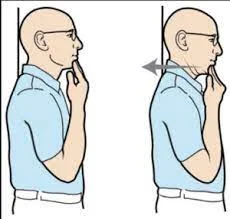
- Stand with your feet approximately three inches from the bottom of a door frame and your spine pressed up against it.
- Keeping your spine on the door jamb, pull your head and upper back back until your head touches it. To draw the head straight back and avoid looking up, it is essential to ensure that the chin is down.
- Press your head against the doorframe for five seconds.
- Do this ten times.
Benefits:
- This exercise stretches the scalene and suboccipital muscles and strengthens the upper thoracic extensors, which bring the head back into alignment over the shoulders.
Neck Rotation Stretch
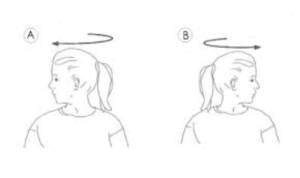
- You can stand or sit while doing this.
- Keep your head exactly over your shoulders and your back straight.
- Slowly turn your head to the right until the side of your neck and shoulder begin to stretch.
- Hold the stretch for five to ten seconds, then slowly bring your head forward once again. Do the set one to three times.
- On your left side, repeat.
Benefits:
- Neck rotations are essential for reducing neck stiffness and improving total neck area mobility, as they can help the cervical spine rotational range of motion.
Side Neck Stretch
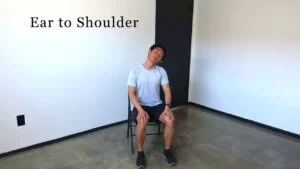
- Keep your feet hip-width apart and your arms at your sides as you stand.
- As you gradually tilt your head in that direction, try to touch your right shoulder with your ear.
- When you sense a stretch, stop. Avoid lifting your shoulder.
- Hold the stretch for five to ten seconds, then return to the beginning position. Repeat the set one to three times.
- On your left side, repeat.
- For more stretch, place your hand on the side of your head that is tilted over your head and use your fingertips to gently pull.
Benefits:
- The sides of the neck tilt the muscles placed there while relaxing and stretching the stiff ones, thus promoting flexibility. This is the most basic method for relieving discomfort caused by extended sitting at a desk.
Neck Flexion and Extension
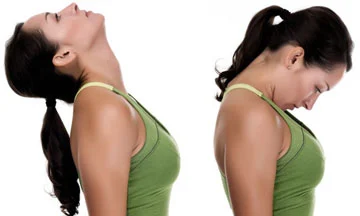
- This may be done while sitting or standing. Keep your movements slow and smooth.
- Begin with your head directly above your shoulders and your back straight.
- For fifteen to thirty seconds, lower your chin to your chest and hold it there. Relax and slowly raise your head back up.
- Tilt your chin up toward the ceiling, and bring the base of your skull to your back. After holding for five to ten seconds, go back to the position you were in.
- Repeat the set 1–3 times. Try it every day.
Benefits:
- Strengthen cervical muscles, enhance posture, and relieve stiffness caused by “tech neck”. They increase your functional range of motion and lower the risk of strain and degenerative changes in the spine.
Shoulder Rolls
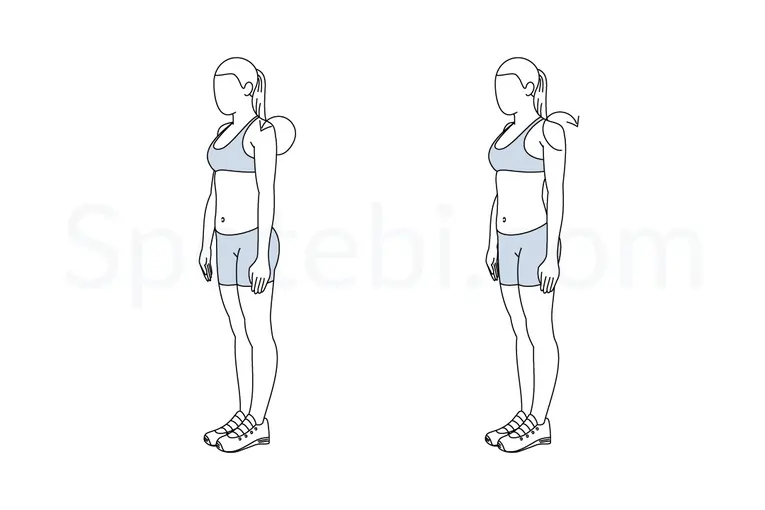
- This is best done while standing up.
- Straighten your shoulders and move in a circular motion. Do it six times.
- Return to the starting point and draw six more circles, this time going backward.
Benefits:
- Moving the shoulders might help relieve neck stiffness. It can also help relieve headaches caused by pinched nerves and muscular tension.
Scapular Retraction
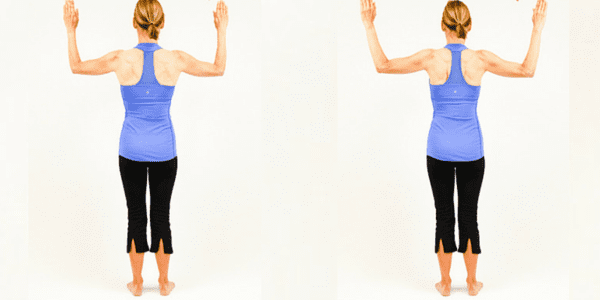
- Sit or stand upright, with your shoulders lowered. Bring your shoulder blades closer together, as if a pencil is between them, and you’re trying to crush it. Hold the posture for 5 seconds, then exhale to return to your previous position. Repeat this roughly ten to twelve times.
Benefits:
- The scapula muscles’ retraction strengthens the muscles between the shoulder blades. This promotes a more upright posture by preventing the body from tilting forward, which may cause neck and shoulder discomfort.
Levator Scapulae Stretch

- With one hand gripping under the edge, sit upright in a chair.
- Turn your head to the opposite side, look down at the opposite knee, and tuck your chin to your chest. Gently push your shoulder blades together and downwards.
- Place the other hand on the back of your head and gradually pull downward toward the knee until a stretch is felt. Hold for 30-40 seconds.
- Make sure your back is straight, and you are sitting up straight.
Benefits:
- Stretching the levator scapulae—the muscle that runs from the neck to the top of the shoulder blade—relieves upper-body stress, reduces tension headaches, and improves posture by correcting forward-head and rounded-shoulder postures. It is especially useful for desk workers to avoid everyday stiffness and soreness.
Upper Trapezius Stretch
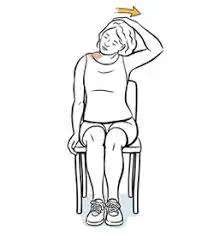
- Sit or stand straight, with one hand on the opposite side of the head.
- Gently bring the head towards the shoulder until you feel a stretch in the shoulders and neck.
- Repeat on the other side after holding for 20 to 30 seconds.
Benefits:
- This stretch is beneficial because it focuses on the upper trapezius, which is one of the muscles most likely to carry shoulder strain. Its target audience, on the other hand, is mostly those who are under stress.
How to prevent neck stiffness?
You can help avoid a stiff neck by making lifestyle adjustments and using ergonomic workplace equipment, as explained in this section.
Prevention can also include breaking bad habits, such as persistent poor posture. Regular exercise can also strengthen your muscles, making them less prone to strains and injuries.
Reduce stress
Your back, shoulders, and neck may become tense due to stress. Stress reduction can assist to cure and prevent neck pain and stiffness.
You may manage stress in a variety of ways, including:
- Listening to music
- Practicing a sort of meditation.
- Taking a vacation or break, even if it is only a brief day trip.
- Doing something you like, such as a hobby.
Exercise regularly
Regular exercise has several health advantages. Many of these can assist to avoid injury and pain caused by weak neck muscles, as well as relieve stress.
Overall advantages of exercise include:
- Strengthening muscles and bones
- Enhancing your immune system
- Helping you sleep better.
- Improving Your Mental Health
- Relieving Stress
- Increasing your life expectancy.
Creating an ergonomic workplace
Ergonomics is the process of modifying a person’s workplace, schedule, or duties to meet their specific needs. Essentially, ergonomics is the process of making modifications to your profession in order to perform it more effectively. Ergonomics is frequently used to modify employment to accommodate those with chronic health issues or impairments.
Ergonomics can provide a variety of management alternatives and remedies for neck pain.
This includes:
- Purchase or order a high-quality chair for your office. An adjustable desk chair is great.
- Adjust your chair to a comfortable position. Maintain your knees just below your hips and your feet flat on the ground.
- Using appropriate posture when sitting. Maintain correct posture by keeping your back straight and your arms level with the desk.
- Adjust your computer so that it is at eye level. Make sure your neck is not craning up or down.
- Use an adjustable or standing desk if possible. This enables you to alternate between standing and sitting while working. Changing your position might assist relieve the pressure that extended hours of sitting put on your body.
- Using an ergonomically designed keyboard and mouse. This may resemble a split keyboard or a mouse that positions your hand vertically. These adjustments can help with posture, shoulder cramps, and hand and wrist pain.
- Every hour, we stand up to stretch and move. When taking a break, consider walking about to loosen up.
Limit how long you look at a smartphone
Constantly looking down at your phone might strain your neck muscles and cause pain. Tech neck, sometimes known as text neck, is a phrase created for this problem.
If you need to use your smartphone frequently, consider these strategies to decrease neck strain:
- Hold your phone at eye level.
- Do not hold your phone between your shoulder and your ear.
- Use earphones or headphones.
- Take regular breaks from your phone.
- If you are experiencing pain, adjust your position or take a break.
- Stretching after using your phone will help to relax your muscles.
Don’t drive for long periods at a time without breaks
Your neck may be affected in the same way by driving a car as it is by spending all day at a desk.
If you have to drive for a long time, here are some methods for preventing a stiff neck.
- Take pauses to stand and stretch. To remind yourself when to stop, think about setting an alarm.
- Make sure your seat is appropriately set. Set the driver’s seat and headrest to give the best support and promote excellent posture.
- Never text or drive. It is unlawful, unsafe, and terrible for your neck to constantly glance up and down from your phone to the road.
Change your sleep position
Your nighttime sleeping posture might also have an impact on your neck. Sleeping on your side or back (supine) may place less strain on your neck than sleeping on your stomach (prone). However, side sleeping requires proper thoracic and cervical spine alignment to avoid neck pain.
Certain pillows promise to offer additional neck support. These claims are not necessarily supported by science, yet many people feel that the correct pillow may improve their neck’s comfort when sleeping. You could also consider replacing your mattress.
When to see a doctor?
If your neck pain is interfering with your normal daily activities, you should consult a doctor.
If you are experiencing neck pain, you should seek medical attention immediately.
- Your pain began following an injury or a vehicle accident.
- You experience pain that radiates down your arms or legs.
- There is numbness or weakness in your arms, hands, or legs.
- You have a headache with neck pain.
These signs might point to a more significant underlying medical issue.
Conclusion
Neck pain is a prevalent condition that affects millions of individuals annually. Typically, a stiff neck with minimal pain may be managed at home with ice, over-the-counter pain medications, and gentle stretching.
Lifestyle changes can also help relieve and prevent neck pain. Try to take a break from your computer or phone and be more aware of your posture. If you often wake up with a painful or stiff neck, consider changing your sleeping position or trying a different pillow.
If your neck pain continues, worsens, or is accompanied by other symptoms, consult a doctor. This is especially critical if you’ve just had an injury. Taking action as soon as you discover a problem will help you prevent it from escalating and build preventative strategies.
FAQs
Can dehydration or insufficient fluid intake lead to neck stiffness?
Yes. Dehydration reduces muscle flexibility and joint lubrication, making stiffness more probable. Low magnesium or calcium levels may also lead to muscular tension or cramps.
Is it usual to experience headaches and a stiff neck?
Neck muscular stress can occasionally cause tension-type headaches. However, if the headaches are severe, frequent, or accompanied by nausea, dizziness, or fever, see a doctor to rule out other reasons.
Can long-term neck stiffness cause irreparable damage?
Occasional stiffness is not hazardous, but prolonged or untreated stiffness can strain the muscles and joints, resulting in decreased mobility or postural concerns over time. Early therapy helps to avoid such consequences.
Is it safe to wear neck braces or collars without medical advice?
It’s recommended not to wear a neck brace on your own. Prolonged or incorrect usage can weaken neck muscles. A doctor should advise how long and when to use one, if needed.
Can eye strain or bad screen settings induce neck stiffness?
Yes. Constantly tilting your head or squinting at a screen can generate stress in the neck and shoulder muscles. Adjusting your screen height, illumination, and posture can lessen this strain.
How can I sleep peacefully while my neck is stiff?
Sleeping on your back with a supporting pillow is typically ideal. Avoid sleeping on your stomach since it twists your neck. You may also try putting a small wrapped towel under your neck for more support.
Can a stiff neck be associated with jaw pain or tightness?
Yes. Muscle tension in the neck can occasionally spread to neighboring areas such as the jaw and shoulders, particularly if you clench or grind your teeth at sleep. If this happens frequently, see a dentist or doctor.
References:
- Staehler, R., MD. (2017, March 21). Stiff neck causes, symptoms, and treatment. Spine-health. https://www.spine-health.com/conditions/neck-pain/stiff-neck-causes-symptoms-and-treatment
- Demir, S. E. (2023, October 10). Physiotherapy for Stiff Neck | Prof. Dr. Saliha Eroğlu Demir. Prof. Dr. Saliha Eroğlu Demir. https://drsalihaerogludemir.com/en/uncategorized/physiotherapy-for-stiff-neck/
- Wells, D. (2026, January 22). How to fix neck pain: Stiff neck causes, treatment, and prevention. Healthline. https://www.healthline.com/health/how-to-get-rid-of-a-stiff-neck#other-causes
- Promotions, P. (2020, July 28). 6 exercises to reduce stress and strain in your neck. IMPACT Physical Therapy & Sports Recovery. https://impactphysicaltherapy.com/blog/6-exercises-to-reduce-stress-and-strain-in-the-neck/
- Exercise for neck and shoulder pain. (n.d.). https://www.sportsphysioireland.com/post/exercise-for-neck-and-shoulder-pain
- Burtka, A. T., & Dumain, T. (2026, May 13). Neck stretches for pain relief: How to stretch your neck. WebMD. https://www.webmd.com/fitness-exercise/fitness-neck-stretches