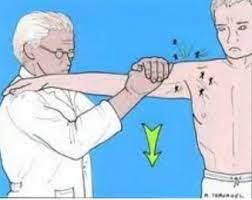
Feagin Test
The Feagin Test is a clinical examination used to assess anterior shoulder instability, particularly inferior glenohumeral instability. It involves applying an inferior force to the humerus while the patient’s arm is abducted to 90 degrees and resting on the examiner’s shoulder. A positive test may indicate laxity or instability of the inferior glenohumeral ligament.
- It is also known as to Inferior Drawer test.
- This test is a modification of to sulcus sign test with the arm abducted to 90 ‘ instead of being at to side.
- Some authors consider this test as the second part of to sulcus test.
What is purpose of the test?
- This test is used to check inferior shoulder instability.
- It is assesses to inferior subluxation of the humeral head.
How to perform the feagin test?
- Starting position of the test is standing.
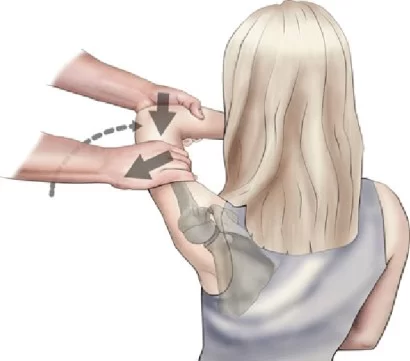
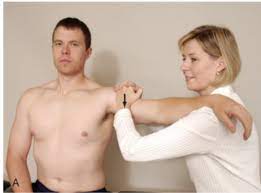
- In to standing position with to arm is abducted to 90′ & the elbow is extended.
- Elbow is resigning on to top of the examiner’s shoulder.
- The examiner’s hands are clasped together over to patient’s humerus between to upper & middle thirds .
- Then pushes to humerus down & forward.
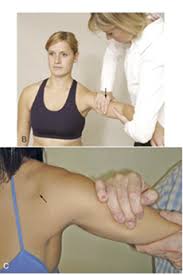
- This test is also perform in sitting position.
- In this position the examiner hold the patient’s arm at the elbow.
- Then examiner is do 90 ‘of abduction of the arm with one hand & second hand is holding the arm against the examiner’s body.
- Other hand is placed just lateral to the acromin over the humeral head.
- Ensuring the shoulder musculature is relaxed, the examiner pushes the head of the humerus down & forward.
- Doing tests in this way often give to examiner greater control over when to doing of to tests.
- A sulcus is also be seen above the corocoid process.
What is the result of this test?
- Look of the apprehension on the patient’s face indicate to positive test.
- Also presence of inferior capsular laxity .
- If to sulcus sign & feagin test both are to positive ; it is to greater indication of to multi directional instability rather than of just laxity.
- But it is only be considered positive if the patient is symptomatic.
- The test position also places more stress on the inferior glenohumeral ligament.