Hughston’s Posteromedial & Posterolateral Drawer Test
- This test is used by doctors the check knee rotatory stability.
- It is performed in to examination part of the assessment.
- This test is performed when the patient complains of knee pain.
What is the purpose of this test?
- This test is used to check the posteromedial & posterolateral rotatory instability of to knee.
How to perform this test?
First part of this test :
- Test position of patient is supine.
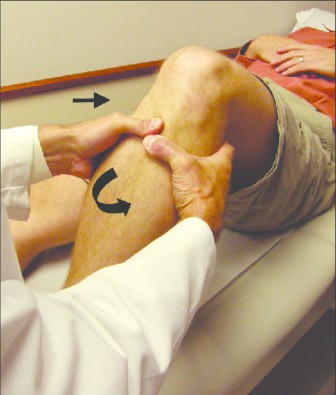
- Into supine positive with to knee is flexed up to 80’to 90′ & hip flexed to 45 ‘.
- Then examine medially rotates to patient’s foot slightly & sits on to stabilize it.
- Examiner is pushes to tibia posteriorly.
- If to tibia move/rotates posteriorly onto medial aspect an excessive amount relative to normal knee.
- Medial tubercle rotates posteriory around the PCL means posterior cruciate ligament when the tibia is in mild medial rotation.
- If the posterior cruciate ligament is also torn, the posteriormedial movement is greater & tibia subluxates posteriorly.
Second part of this test?
- This test is perform for the posterolateral rotary instability.
- This test is perform in same way of the posteromedial rotary instability test technique .
- But different is that patient’s foot is sightly laterally rotated.
- It the tibia rotates posteriorly on to lateral side an excessive amount relatives to uninvolved leg , when the examiner pushes the tibia posterioly.
- Examiner is palpate to fibula while doing the movement to feel for excessive movement.
- This test is also perform in sitting position .
- Into sitting position flex to knee & sit to edge of the examining table.
- Then the examiner is pushes the knee posteriorly while holding the patient’s leg in medial rotation .
- After that watch the same excessive movement.
Result of this test?
First part of this test:
- This positive test indicates postero-medial rotary instability.
Second part of this test :
- This positive test is indicate to to posterolateral rotary instability.
- This test is positive only if the posterior cruciate ligament [ PCL ] & lateral collatral ligament is torn.
What is the structure injured when the test is positive?
In to first part of this test:
- Posterior cruciate ligament
- Medial collateral ligament
- Posterior oblique ligament
- Anterior cruciate ligament
- Medial meniscus
- Semimembranosus tendon
- Posteromedial capsule