Siting Root Test
The Sitting Root Test is a neurological assessment used to evaluate sciatic nerve irritation or lumbar nerve root tension. Performed with the patient seated, it involves extending the knee while keeping the hip flexed at 90 degrees. A positive test, indicated by pain or discomfort in the back or leg, may suggest nerve root compression or sciatica.
- This Siting root test is a modification of the slump test.
- This Siting root test is applied in the clinic to check the neurological dysfunction.
- This clinical test is applied by the therapist when the patient complains about back pain + radicular pain in the leg.
What is the purpose of the Siting root test?
- This test is used to check the tension on the sciatic nerve.
How do you perform the Siting root test?
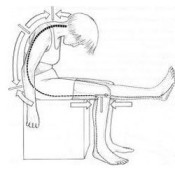
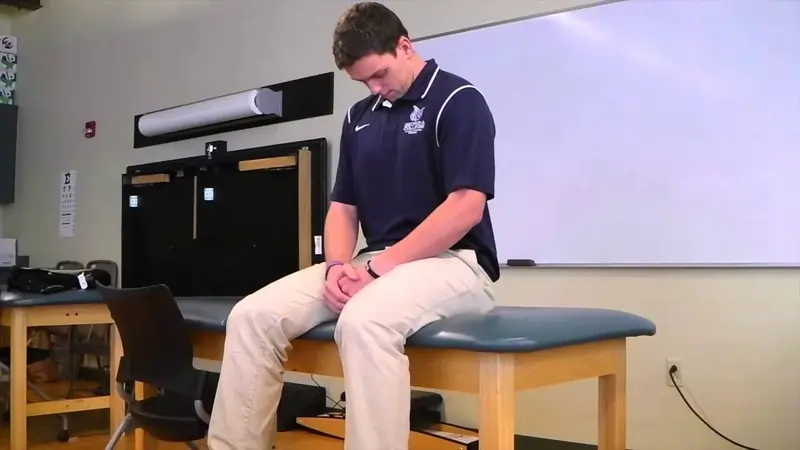
- The starting position for the test of the patient is in the sitting position.
- The patient sits with a flexed neck.
- The therapist instructs the patient to actively extend the knee while the hip joint remains flexed up to 90′.
- If the patient feels increased pain, it indicates tension on the sciatic nerve.
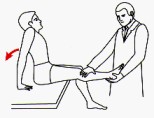
- This Siting root test is sometimes used to catch the patient unaware.
- In this situation of the case, the examiner (therapist) passively extends the knee joint while pretending to examine the foot.
- Davis et al. reported that pain should occur before 22′ of knee extension remains for the test to be positive if knee extension is the last part of the test performed.
- Patients with true sciatic pain arch backward & complain of pain into the buttock, posterior thigh,& calf when the leg is straightened, indicating a positive test.
- The Bechterewis test follows a similar pattern.
- The examiner has instructed the patient to extend one knee at a time.
- If in the result, no presence of symptoms, then asked the patient for doing to extend both legs simultaneously.
- Symptoms in the back or leg indicate a positive response.
Valsalva maneuver test:
- The seated patient is asked to take a breath, hold it, & then bear down as if evacuating the bowels.
- If pain increases, it indicates increased intrathecal pressure.
- The symptoms may be accentuated by having the patient first flex the hip to a position just short of that causing pain.