Nordic Hamstring Curl Exercise
Introduction
The Nordic Hamstring Curl Exercise is a highly effective bodyweight movement designed to strengthen the hamstring muscles through controlled eccentric contraction.
The Nordic hamstring curl can offer comparable advantages while lowering the risk of hamstring injuries. Exercises like the leg curl and deadlift are well-liked for increasing strength and mass in the back of the legs.
Unlike other hamstring exercises that concentrate on both contraction and eccentric, the Nordic ham curl concentrates on the eccentric portion of the exercise.
Why Are Eccentric Exercises Important?
The lengthening of a muscle under load, like lowering the weight in a bicep curl, is referred to as an eccentric contraction, also called negative work. On the other hand, shortening a muscle, like curling the weight in a bicep curl, is referred to as concentric contraction, or positive work.
Because the hamstring muscles lengthen as you gradually lower your body weight to the floor, the Nordic Hamstring Curl is an eccentric exercise.
While both types of contractions are essential for developing muscle and strength, eccentric contractions are particularly advantageous for hypertrophy, improving athletic performance, and lowering the risk of injury.
Eccentric exercises are used in sports training to enhance strength and coordination because they are thought to generate greater force with less energy. They can help those with diabetes, cardiorespiratory conditions, and muscle loss in addition to athletes.
Muscles Worked By The Nordic Hamstring Curl
As an isolation exercise, the Nordic Hamstring Curl works just one muscle group. This can strengthen muscles that might be neglected during compound exercises and help develop muscle in a particular area.
HAMSTRINGS
The hamstring muscles are located in the rear of the leg and contribute to the posterior chain. The Nordic ham curl activates the biceps femoris, semitendinosus, and semimembranosus. Hip extension and knee flexion are the main functions of this muscle group.
For exercises like walking, running, and squatting, hamstring strength is extremely important.
SECONDARY MUSCLE GROUPS:
Secondarily, the Nordic hamstring curl works your lower back (spinal erectors), upper back (rhomboids), and gluteal muscles (gluteus maximus, medius, and minimus).
Your lower body is stabilized by your glutes during the Nordic hamstring curl, while your upper body is stabilized by the activation of your lower and upper back.
How To Do The Nordic Hamstring Curl?
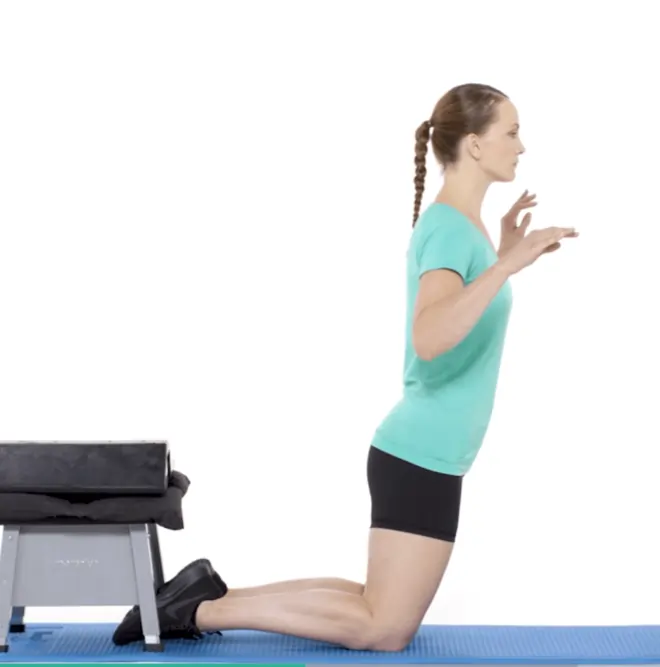
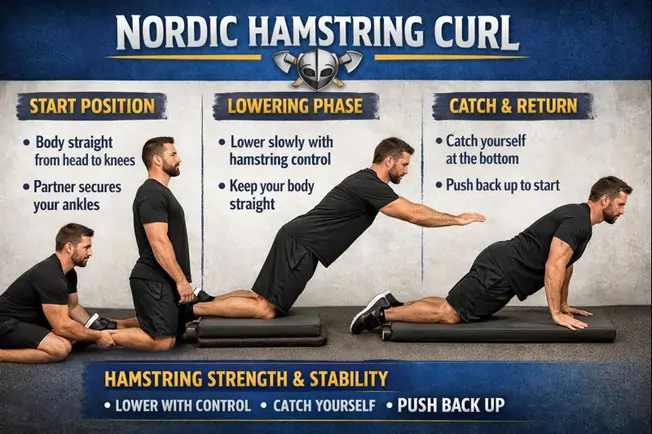
- Begin by securing your lower legs to a safe surface.
- Once secured, kneel on the ground with your feet flexed and hips almost fully extended.
- Once in position, begin slowly lowering your body to the ground by extending your knee joint. Throughout the movement, keep your spine neutral and your core tight.
- Lower as much as you can and, if necessary, catch yourself with your hands before you hit the ground.
- Once you’ve reached the ground, relax your body and push up to return to your starting position.
Variations
Banded Nordic Hamstring Curl
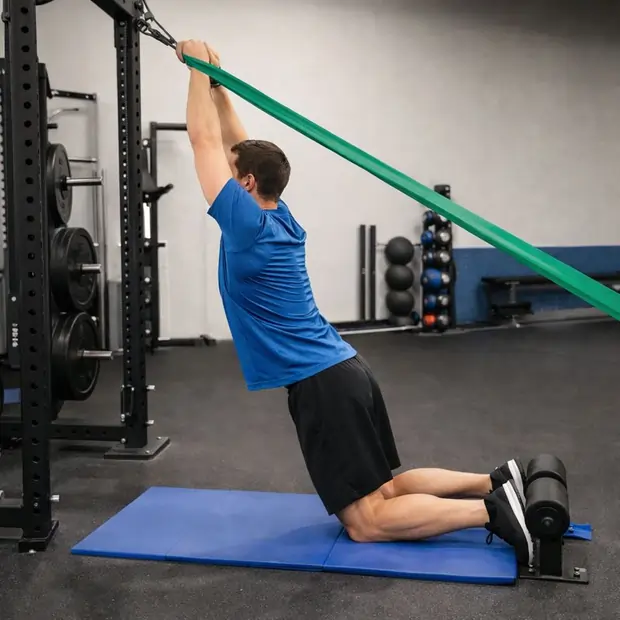
Use a resistance band to facilitate the Nordic hamstring curl. Hold the band above your head with your hands close together while attaching it to an elevated hook or piece of equipment.
As you start to develop hamstring strength, the band will act as a supporting force to help you master the form and perform more repetitions.
Weighted Nordic Hamstring Curl
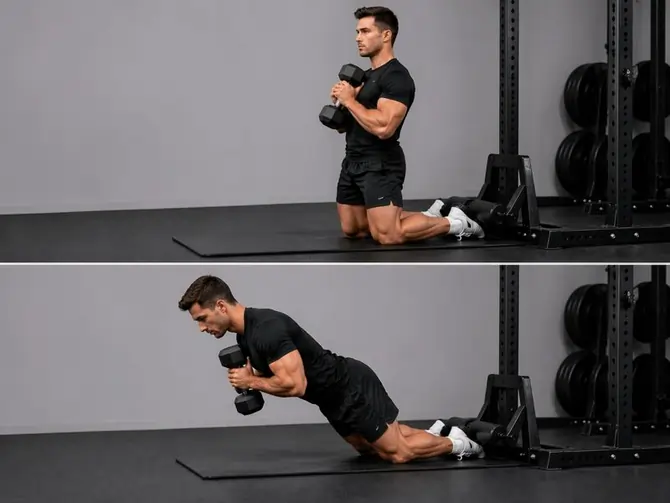
Try using dumbbells or a weighted vest as resistance if you are already skilled in the body weight version of the Nordic hamstring curl.
If you must push yourself off the bench or ground, be sure to select a resistance method that still permits you to use your hands!
Nordic Hamstring Curl Alternatives
Glute-hams Raise
On a glute-ham raise machine, place your feet firmly against the foot plate and let your calves press against the ankle hooks. Your knees should be precisely on or slightly behind the knee pads. Your upper body should be perpendicular to the ground at first. You should have the impression that you can draw a straight line from your head to your knees.
Lower yourself gradually until your body is level with the ground. Next, use your hamstrings (with some assistance from your glutes) to raise your body while pressing your toes into the foot plate. To maximize contraction, tighten your glutes and hamstrings at the top.
Lying Leg Curl
To support your upper body, lie on your stomach with your elbows planted on the floor. Put a dumbbell between your feet while extending your legs. To keep it in place, squeeze your feet together. Next, bring your feet closer to your buttocks by contracting your hamstrings. Repeat after slowly returning to the starting position!
Standing Tension Leg Curl
Put yourself in a standing position. With your heel off the ground, place one foot behind the other. Bring your trailing foot closer to your buttocks by contracting your hamstrings. Repeat after slowly returning to the starting position!
Nordic Hamstring Curl Benefits
Size and Strength Gains
Without using large weights, the Nordic hamstring curl increases leg strength and size. Therefore, the Nordic hamstring curl can be used as an additional exercise to help you perform better during weight-bearing exercises like the deadlift and squat.
This exercise will undoubtedly help you develop larger, stronger hamstrings, whether you are an athlete, bodybuilder, or just someone who appreciates fitness.
Injury Prevention
One of the body’s most susceptible muscle groups to injury is the hamstrings. Even the greatest athletes can miss weeks at a time due to a strained hamstring. However, you can lower your risk of injury by incorporating the Nordic hamstring curl into your training.
Because the Nordic hamstring curl is an eccentric exercise, the hamstrings contract as the leg muscle lengthens. This contributes to the development of a more stable hamstring, which may account for the exercise’s ability to prevent further hamstring injuries.
Improved Vertical Jump And Speed
Your hamstrings and glutes are important muscles for jumping and running. To increase your vertical leap and sprinting speed, their development is essential. Your explosiveness and athletic performance will definitely improve with regular hamstring training.
Improved Flexibility
You’ve undoubtedly heard the importance of maintaining flexibility, and lower-body flexibility can lower your risk of injury and enhance your overall performance. Lower back pain, bad posture, and muscle tightness and imbalances are all possible to bring on by a lack of flexibility.
When you’re feeling tight or stiff, static stretching has probably been your first choice. However, eccentric training can also increase flexibility, and it works best when done through a full range of motion.
Common Mistakes To Avoid In Nordic Hamstring Curl
Rushing The Movement Downwards
When performing the Nordic hamstring curl, many lifters just quickly fall to the ground and push themselves back up. Even though this exercise is difficult, hurrying through it won’t strengthen your glutes or hamstrings.
To maximize the amount of time under tension during the Nordic hamstring curl, try to lean forward as slowly as you can before falling.
Bending Too Much at The Hips
When lifters raise their bodies from a horizontal position, they frequently bend their waists forward. Since bending releases tension from the hamstrings, this is probably the result of weak hamstrings.
The Nordic hamstring curl typically involves a small bend at the hips. However, you won’t see the greatest improvements in your hamstrings if you overbend. Instead, to make the exercise easier, practice correct form with a variation!
Hyperextending The Back
Many people have the ability to hyper-extend their back as they rise upward after bending down until the body is parallel to the floor. The Nordic hamstring curl simply results in a hyper-extended back because the hamstrings are weak.
You are most likely overextending your back if you experience severe lower back pain while performing this exercise. Don’t give up! The Nordic hamstring curl is a challenging exercise. You will quickly become skilled in the form with consistent practice.
Nordic Hamstring Curl Tips
- To prevent the workload from shifting to the glutes, keep your hips fully extended.
- Use smaller sets and, if necessary, reset your hips in between reps.
- Pay attention to your form and take your time.
- Make your movements fluid and deliberate.
- Prioritize quality reps over quantity, just like with any strength training.
Conclusion
One of the best exercises for eccentric contraction is the Nordic hamstring curl, which can be included in a regular exercise regimen or a sports training program. Eccentric exercises have many advantages, but it’s important to know when and how to use them.
They can contribute significantly to muscle growth and performance enhancement, but they can also cause more muscle damage and delayed-onset soreness than concentric contractions, which may take longer to heal.
FAQs
What is the purpose of Nordic hamstring curls?
Nordic curls, which emphasize eccentric strength, mainly target the hamstring muscles through isolated knee flexion. However, because of the fixed ankle position, the exercise also heavily works the gastrocnemius (upper calf) muscle, which may result in not beneficial movement patterns for athletic performance.
Do Nordic curls increase the size of the hamstrings?
Focusing on your hamstrings in addition to your quadriceps is one of the best strategies for developing large legs. They will significantly contribute to the appearance of thicker legs from both the front and the side.
Are Nordic curls effective for knees?
Nordic curls are among the best exercises for strengthening the back of the knee, which is essential for balanced knee health. In addition to working the hamstrings, they also strengthen and stabilize the tendons and ligaments directly behind the knee.
What makes Nordic curls so successful?
Because they have been shown to have the highest hamstring activation, Nordic curls are regarded as an effective exercise for working the long head of the hamstrings.
How often should you perform Nordic curls each week?
It is advised that beginners include Nordic curls into their routine one or two times a week. Focus on form and controlled movements as you begin with two to three sets of four to six repetitions. Your hamstrings can strengthen and adapt at this frequency without running the risk of overuse injuries.
Will I get faster with Nordic curls?
The Nordic hamstring curl is incredibly effective in sports like football and track, where explosive speed and power are essential. The exercise improves the hamstrings’ capacity to produce force quickly, which is essential for quick acceleration and deceleration. These curls are especially helpful for basketball players.
References:
- Colletta, M. (2026, January 20). How to do Nordic hamstring curls (Form & Benefits). Steel Supplements. https://steelsupplements.com/blogs/steel-blog/how-to-do-nordic-hamstring-curls-form-benefits?srsltid=AfmBOoq2IPIYFrQE7xumqJfpMcupjayvLA5pSK4C-62n6BvgZrSB2tg5
- Coleman, S., & Coleman, S. (2021, February 12). The Definitive Guide to Nordic hamstring curls. SET FOR SET. https://www.setforset.com/blogs/news/nordic-hamstring-curl?srsltid=AfmBOooDazCV8IsBKnqzDrcaTlmXZNzi04n_QJbR7N0mGDJY9nVysprv
- Nordic Hamstring curl: A complete guide | Form, benefits & variations! (2020, June 4). Anabolic Aliens. https://anabolicaliens.com/blogs/the-signal/nordic-hamstring-curl-a-complete-guide-form-benefits-variations?srsltid=AfmBOorvK6zKT_aT9Ujimd3–u0u7vr-d5BOcbI7OMPJTw0XpyMuSq2K