Water Aerobic Exercise
What Is Water Aerobics?
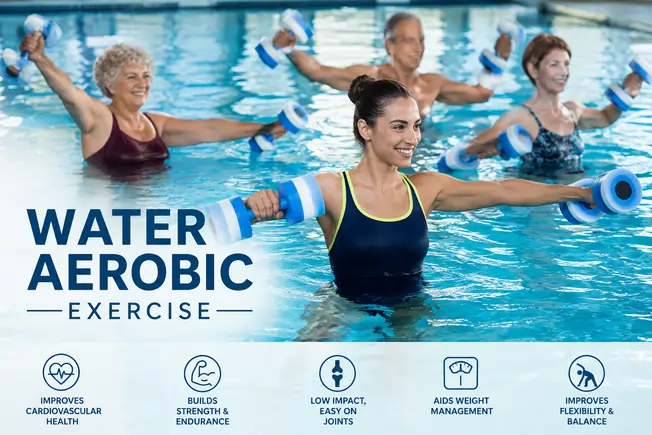
Water aerobics is a low-impact, water-based workout. Water naturally pushes against you (resistance), which helps you create stronger muscles. You may exercise in your swimming pool or take a class.
This water workout is ideal for people of all ages and fitness levels. Aqua aerobics may be as tough as you want.
Water aerobics is gentle on the bones, joints, and muscles. However, it still improves your heart health, strength, and flexibility. It’s a great method to boost your everyday energy level.
How does it work?
A water aerobics class normally lasts one hour. Your teacher (instructor) will guide you through a sequence of movements. Music is often used to stimulate you.
Each class begins with a warm-up. Then, you’ll perform cardio and strength training. Finally, you will chill out. Exercises include water walking, bicep curls, leg lifts, and kickboard motions.
This pool workout incorporates deepwater walking, arm workouts, and water weights. You will not actually be swimming. Most training takes place in the shallow part of the pool. So it’s an excellent water workout for beginners.
The water supports you (buoyancy). The buoyancy makes pool activities gentle on your joints.
Water aerobics is a good choice if you:
- Have joint problems
- Have chronic pain
- Are recovering from an injury
- Are pregnant
Although the workout is low-impact, you may increase the intensity. Try adding extra sets (repetitions) or increasing the speed.
Water provides resistance (more than air, for example) that can challenge the muscles and increase strength.
An advanced lesson may incorporate underwater interval training. You’ll raise your heart rate without hurting your joints. Here are some important things to know:
Cost. You will need to sign up (register) for classes at the gym. You can check with your local community center or YMCA. You might be able to discover free or low-cost courses. If your doctor prescribes aquatic exercise, your insurance or Medicare may pay the expense.
Outdoors. Water aerobics can be done in outdoor pools if the weather permits.
At home. If you have a pool, you may do water aerobics at home.
Benefits of Water Aerobics
Pool aerobics is an excellent way to exercise your whole body in one session.
Water aerobics is not a competitive activity, but it still provides a whole-body exercise. Targeted workouts can train many muscle groups simultaneously. Fitness pool activities may help almost anyone.
Areas it targets
Lunges and side leg lifts are exercises that can help you build core strength. Underwater bicep curls help to tone your arms. Pool noodles and kickboards, for example, can help make sets more challenging.
Participating in water aerobics can have a good effect. It can help you build stronger muscles, improve your balance, and increase your cardiovascular fitness.
Jogging, jumping jacks, and underwater kicks are examples of swimming activities that will train your legs. Pool workouts help tone and build your lower body. Squats, lunges, and high-knee kicks strengthen your hip and leg muscles (glutes).
These low-impact exercises help you gain strength. Gentle activities might also help relieve back pain.
You move more slowly through water since it inhibits your movement. This allows you to manage your motions more smoothly.
Squats, for example, can cause arthritis. However, water aerobics is more manageable since you float and are supported. Water’s buoyancy provides a cushion for your joints.
Water aerobics also increases calorie burn. Land workouts are less physically demanding than water exercises. It’s also wonderful for relieving tension and calming you down.
This workout is suitable for almost everyone. It’s mild and safe for your joints. You can perform water aerobics if:
- Have joint issues.
- Experience persistent pain, especially back pain.
- Have a sport-related injury.
- Are recovering from an orthopedic surgery.
- Have weaker muscles.
- Have balance issues.
- Are pregnant.
Physical Benefits Of Water Aerobics
- Increased cardiovascular fitness
- Improved balance and coordination
- Reduced risk of injury
- Weight loss and healthier metabolism
- Increased muscle strength
Mental Benefits Of Water Aerobics
- More social interaction
- Lower stress levels
- Cognitive stimulation
- Better sleep
- Improved mood and overall mental health
Water Aerobics for Seniors
If you’re older and looking for a safe, energetic workout, water aerobics is an excellent option. This water workout might benefit your entire health. It may also help avoid typical age-related problems, including pain in the joints and falls.
Buoyancy and joints
The water may actually help your joints. Water reduces stress on joints in elderly persons. This makes water workouts appropriate for people who have arthritis or restricted movement.
If you have sore joints or arthritis, water aerobics is an excellent choice.
Combining decreased joint pressure with exercise will benefit you:
- Strengthen your muscles.
- Improve your range of motion.
- Function better.
The water supports you while you work out, causing less strain on your body. You may gradually increase the difficulty of your workout by using more equipment or resistance. You will get increased strength and muscular mass.
Some research found that after approximately 12 weeks of water aerobics, older persons had:
- More flexibility
- Better heart health.
- More agility
- Stronger muscles
- Water aerobics may also reduce body fat.
Fall prevention
Muscle weakening, joint instability, or limited mobility can all contribute to falls in older persons. Water aerobics can help avoid falls by increasing muscle strength.
Water aerobics can help relieve pain and stiffness in people with osteoarthritis (OA). In fact, it may relieve pain more effectively than land workouts.
And if you have a chronic disease, water is a low-impact choice that may alleviate symptoms like pain and fatigue. It may also enhance your quality of life.
Water Aerobics Equipment
Here are some ideas to help you advance your water aerobics. These differences in equipment can make a significant impact. Here are some excellent resources for a more challenging aquatic routine:
Pool water
Water is the most vital aspect of your training. The water current will be adjusted to the appropriate level by physical therapists.
The water may be utilized to press against you. It is similar to a soft flow in a fitness center. This allows you to have a better workout.
Water dumbbells
The dumbbells float in the water. But don’t be fooled—they give considerable resistance. Push them down while you work out. You can stroll or jog with them. They also strengthen your arms. It will assist you in making your water aerobics exercises more intense.
Kickboards and pull buoys
You may concentrate on your kick technique by using a kickboard. They also allow your upper body to relax.
Pull buoys, on the other hand, let your legs rest. These let you concentrate on arm and upper-body strength.
Pool noodles
These are flexible foam cylinders. The increased buoyancy improves your pool workout.
Pool noodles are ideal for those who are unsure about deeper water. They will keep you floating and assist you in maintaining your equilibrium.
Water jogging belt
Deepwater jogging is an excellent aerobic workout that does not put stress on your hips or knees.
A water jogging belt can keep you afloat. The belt makes it easy to float and jog. It’s like running on a treadmill, but without the impact.
Ankle and wrist weights
Foam ankle and wrist weights provide additional resistance. They aid in toning and developing your muscles. You may also perform water squats with them.
Other water aerobics equipment
Aquatic webbed gloves, foot pads, and water shoes are also an option. Each piece of gear increases resistance. They also increase the intensity of your pool workouts.
Water Aerobic Exercises
There is a large variety of water aerobic workouts. You may customize any of them to meet your specific needs and goals. You can pick from low-impact movements to more difficult ones.
Water walking
You’ll begin by walking through waist-deep water. You’ll swing your arms by your side. It’s like walking on land.
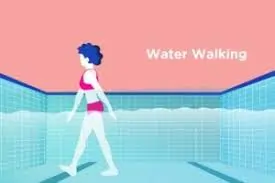
- Keep your back straight. This helps you keep good posture. If you want more resistance, try hand webs. This helps your upper body muscles stay strong.
Tip. On the pool floor, keep your feet flat. This helps you avoid walking on tiptoes. You may be able to increase your traction by wearing water shoes.
Deepwater walking (using hand webs)
- Deepwater walking implies entering the water at waist level. Next, sweep your arms to your side. Then, keep your core strong while walking through the water.
- Avoid tilting or moving from side to side. You may add hand webs to increase resistance. This exercises your arms, hips, and other muscles.
Tip. If you are unsure about deeper water, consider utilizing a flotation device. To keep floating, use a water noodle or vest. Maintain a higher back between your legs when utilizing a water noodle. This helps you stay upright.
Water Jumping Jacks
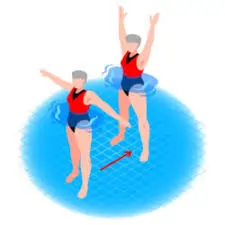
- With the water level at your chest, stand upright in the pool.
- Put your feet together and your hands at your hips.
- Jump by moving your legs outward and raising your arms above your head.
- Repeat as many times as possible, taking rests between each one.
Arm strengthening (using hand webs)
- Keep your elbows close to your trunk when swimming in water at a lower waist level. Keep your palms facing forward.
- Lift your forearms to the water’s surface, maintaining your wrists straight. After that, swap directions. Push your hands down to the pool floor.
- Next, straighten your arms as you go.
Tip: Perform 12-15 repetitions, or until you’re exhausted. Keep your wrists straight and your elbows close to your torso. This will allow you to target your biceps and triceps while developing your muscles.
Water weight arm exercises

- Stretch your arms out to the sides while holding the water weights. You may use foam barbells to work out in the water.
- Lift your arms, palms facing up, to the water’s surface. Then rotate your weights so that your hands are facing downward. To fully extend your arm, push down against the water.
Tip. Bend your elbows close to your body and straighten your wrists. Repeat 12-15 times, or until your arms are fatigued.
Flutter Kicks
Flutter kicks can assist in developing your core and leg muscles.
- Hold on to the poolside.
- Lie down on the water, face up, with your legs together.
- Move your feet up and down in a regular, controlled manner.
Leg Lifts
This water aerobic workout is great for strengthening your legs and hip joints. It can improve your balance and mobility.

- Stand in the pool and use the handrail to support yourself.
- Extend your leg from your hip and raise it sideways.
- Repeat five repetitions and then swap legs.
Standing Push-ups
Standing push-ups are a great way to strengthen your arms without putting too much stress on your joints.
- Stand in the pool, facing the wall.
- Position your arms on the wall, shoulder-width apart.
- Lean lightly against the wall and push back out as if performing a push-up. Repeat as many times as you feel comfortable.
Calf Raises
This exercise is wonderful for stretching and strengthening your calf muscles.
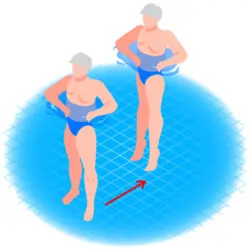
- When the water is at a safe depth, stand in the pool.
- Keep your arms at your waist
- Keep your feet flat.
- Slowly push up with your feet and lift your body. Hold this posture for eight to ten seconds.
- Gently descend.
- Repeat as many times as you feel comfortable.
High Knee Lifts
High knee lifts might assist in developing the muscles in your core and legs. Feel free to use ankle weights in your regimen for a more rigorous exercise.
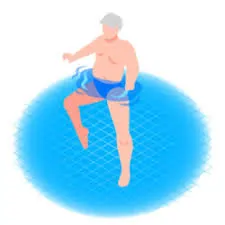
- With the water at your waist level, stand upright in the pool.
- Lift your right leg and keep your core tight.
- Hold your knee in place for three to five seconds after bending it until it is level with the water.
- Switch legs and repeat.
How to Participate in A Water Aerobics Program.
Now that you understand the benefits of water aerobics for seniors, here are a few recommendations to get you started:
- If you have a pre-existing health issue, see your doctor before beginning any new workout regimen.
- As a beginner, start softly and gradually increase the intensity of your workouts.
- Warm up, then cool down.
- Stay hydrated.
- Pay attention to your body.
Conclusion
Water aerobics is a pleasant and low-impact workout. The water resistance enhances your strength, flexibility, and cardiovascular health. It’s also mild on your joints. Aqua exercise is beneficial to people of all ages, including seniors, whether they are beginners or experts. Speak with your doctor about the ideal pool fitness regimen for your health.
FAQs
What exactly does water aerobics involve?
Participants in water aerobics engage in aerobic exercise while submerged in water. The majority of water aerobics classes are held in a group exercise environment with a certified professional teaching for around an hour. The lessons emphasize aerobic endurance, resistance training, and creating a fun atmosphere with music.
Is water aerobics a better option than walking?
Swimming, as opposed to fast walking, helps you to achieve your fitness goals with less impact on your joints and muscles. It’s hard to find a more convenient form of exercise than brisk walking.
How often should I perform water aerobics each week?
The best results will come from water aerobics five times a week, and your body will have plenty of time to recover and calm down in between.
Can you become fit with water aerobics?
Increased muscle strength and endurance, less stress, and improved heart health are just a few of the health benefits of aquatic exercise. One of the best ways to incorporate physical activity into your life is to work out in the water.
Why has water aerobics left me so exhausted?
It’s very natural to feel weary after a hard one-hour water aerobics workout. This occurs because, during a good water aerobics workout, you stimulate many muscle groups while burning calories. This is also an excellent cardiovascular workout, as it raises your heart rate.
Which is better: deep or shallow water aerobics?
Because deep water aerobics is more intense and challenging than shallow water aerobics, it can burn more calories, making it an effective way to lose weight and maintain good health.
References:
- Chris. (2024, October 21). Water cardio exercises you can do at home – H2X Blog. H2X Swim Spas Blog. https://www.h2xswimspa.com/blog/water-cardio-exercises/
- Olenick, C. (2025, April 17). Water aerobics. WebMD. https://www.webmd.com/fitness-exercise/water-aerobics
- StoryPoint Group, StoryPoint Group, StoryPoint Group, & StoryPoint Group, Senior Care Experts. (2024, April 3). 10 Best Water Aerobic Exercises for Seniors. StoryPoint Group. https://storypoint.com/resources/health-wellness/water-aerobics-for-seniors/