How to Get Strong Hands and Fingers?
Introduction
Hand and finger strength is a fundamental yet often overlooked aspect of fitness. It has to do with your hands and forearms’ ability to exert force, which enables you to grasp, lift, and carry objects with ease. Whether you’re opening a jar, carrying groceries, or swinging a golf club, hand and finger strength play an important role in daily activities and athletic performance.
Despite its importance, many people don’t actively train their hands and fingers, even though it impacts overall strength, coordination, and injury prevention. Weak hands and fingers can impede weightlifting growth, shorten endurance in sports such as tennis or rock climbing, and even suggest general health and lifespan.
What Is Grip Strength?
Grip strength refers to the force produced by the muscles in your hands, fingers, and forearms. Understanding and strengthening grip strength may boost athletic performance, minimize injury risk, and make daily chores easier.
Muscles involved in grip strength
Your grip force comes from many important muscle groups in the forearms and hands:
Forearm and Hand Flexors – These muscles on the palm side of your forearm enable you to curl your fingers and flex your wrist. The flexor digitorum superficialis and profundus bend the fingers, whereas the flexor pollicis longus flexes the thumb.
Forearm Extensors – Unlike flexors, extensor muscles, such as the extensor digitorum, allow you to straighten and extend your fingers and wrist. They play an important role in maintaining grip.
Thenar Muscles – These smaller thumb muscles, such as the abductor pollicis brevis and opponens pollicis, regulate thumb movement and opposition to the fingers. This is necessary for pinch grasp.
Intrinsic Hand Muscles – Muscles such as the lumbrical, interossei, and thenar enable fine motor control of the fingers and hands, resulting in a strong grasp.
All of these muscle groups work together to achieve maximum grip strength from various angles. Individual training is essential, however.
Factors that affect hand strength
- Age
- Hand length, width, and span
- Upper arm and Forearm length
- Subcutaneous percentage of the arm
- Muscle mass percentage of the skeleton
- Hand circumference
- Free Testosterone level
Benefits of Strong Hands and Fingers
- Improved Athletic Performance – Ideal for activities such as golf, tennis, weightlifting, and rock climbing.
- Better Functional Strength – Aids with everyday tasks, including opening jars, carrying bags, and lifting items.
- Reduced Injury Risk – A stronger grip can help to reduce wrist, elbow, and shoulder injuries.
- Grip strength has been associated in studies with lifespan, cardiovascular health, and a lower risk of falling in older persons.
- Strength training and enhanced lifting are necessary for exercises like kettlebell workouts, deadlifts, and pull-ups.
Common Causes of Weak Hands and Fingers
Your hands and wrists may become weak because of:
- Age: As you age, your grip strength gradually declines.
- Disuse: If you do not use your hands and wrists frequently, your grip strength will decrease.
- Overuse: Repeated motions with your hands and wrists can cause irritation, pain, and weakness.
- Medical disorders include cubital or carpal tunnel syndrome, hand arthritis, diabetes, stroke, multiple sclerosis, ALS (Lou Gehrig’s disease), tendonitis, and trauma.
- Medications that cause weakness in the hands and wrists.
Best Exercises to Strengthen Hands and Fingers
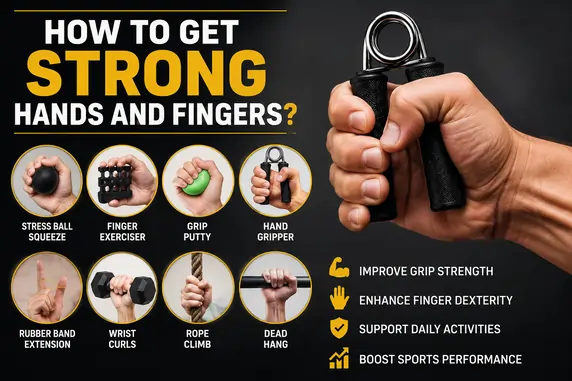
Stress ball squeeze
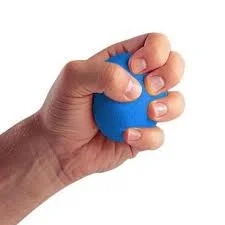
Squeezing a stress ball is a simple method for strengthening your grip. It can also help reduce tension and anxiety.
How To Do It:
- Hold a stress ball with one hand.
- Squeeze the stress ball as hard as possible for five seconds.
- Let go of the stress ball and relax your hand for five seconds.
- Repeat 10-15 times.
- Switch hands and repeat.
Wrist curls
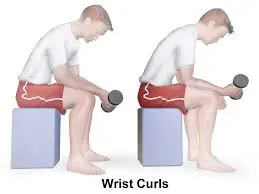
Wrist curls develop the muscles in the wrists and forearms, improving wrist stability and range of motion. Choose a hard dumbbell weight that will allow you to retain proper form.
How To Do It:
- Hold one dumbbell in each hand.
- Rest your forearms on a seat or table, palms facing upward.
- Use your wrists to curl the dumbbells up towards your shoulders.
- Pause for a second.
- Slowly drop the dumbbell back to its starting position.
- Repeat 10-15 times.
Finger exercises
Strengthening the muscles in your fingers can help you play musical instruments, type, and write more easily.
How To Do It:
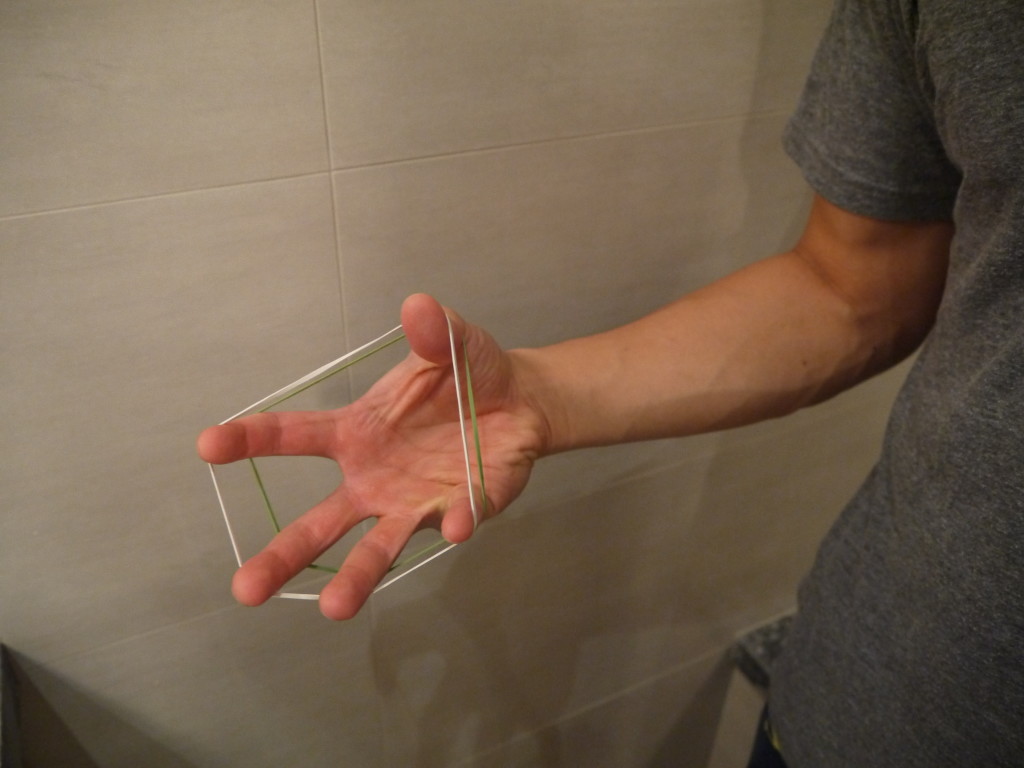
- Wrap the tips of your fingers with a rubber band.
- Spread your fingers as wide as you can.
- Hold for 10 seconds.
- Relax your fingers.
- Repeat 10-15 times.
Wrist Circles
This exercise might be especially beneficial if you have stiffness or soreness after extended periods of desk job or physical exertion.
How To Do It:
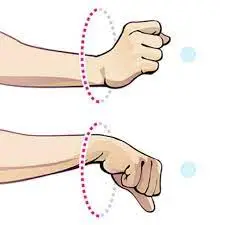
- With your hands facing down, extend your arms in front of you.
- Slowly spin your wrists in tiny circles for 30 seconds, then reverse direction.
- Repeat with both wrists.
Towel Wringing:
Twist a tiny towel at both ends, as if wringing out water. This useful workout strengthens the grip and works the forearm muscles.
Pinch Strength Exercises
Pinch Grips: Hold a weight plate, a thick book, or many sheets of paper between your thumbs and fingers. Hold for 10–30 seconds, progressively increasing the duration as you gain strength.
Clothespin Exercises: Place many clothespins around the border of a container or your garment. Remove them one by one, using different finger combinations to build pinch strength and dexterity.
Hand Therapy Putty Exercises:
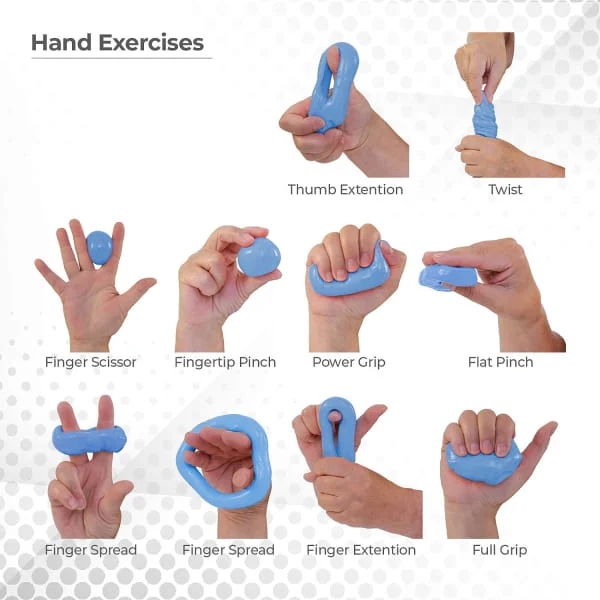
Putty is an alternative to the therapeutic balls and instruments discussed above. Hand therapy putty exercises are similar to the ones mentioned above, but the putty is more malleable and hence may be graded to different skill levels. Furthermore, putty enables certain creative activities, as detailed below.
Fingertip Pinch
Pinch the putty between your thumb and fingers. This also increases finger strength and dexterity while reaching the small muscles in your hand.
PowerGrip
Squeeze your fingers into the putty. This strengthening exercise targets the muscles in your forearm that govern your hand.
Flat Pinch
Pinch the putty into your thumb with straightened fingers. Only the knuckles should be flexed, leaving the fingers straight. This improves your dexterity.
Finger Spread
Wrap putty around two fingers and stretch them apart. This strengthens muscles within the hand rather than the forearm muscles that power the hand.
Finger Extension
Wrap the putty over a hooked finger and straighten it against the putty.
Finger Spread
Wrap the putty around your hand, then spread your fingers apart to expand it. This addresses all of the forearm muscles responsible for finger extension.
Full grip
Press your fingers into your hand and apply pressure to the putty.
Grip Strengthening with a Hand Gripper
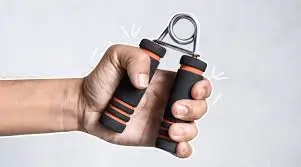
Strengthen your grip using a hand gripper.
Hand grippers are an excellent way to improve both your grip and wrist muscles. This exercise improves general hand strength, which helps with everyday tasks like carrying groceries or grasping tools.
How To Do It:
- Squeeze a hand gripper firmly with one hand.
- Hold the grip for 5–10 seconds before releasing.
- Repeat 10 to 15 times per hand.
Wrist Roller Exercise
This workout uses a wrist roller to strengthen both the forearms and the wrists. It is perfect for athletes, manual laborers, and anybody looking to improve wrist endurance.
How To Do It:
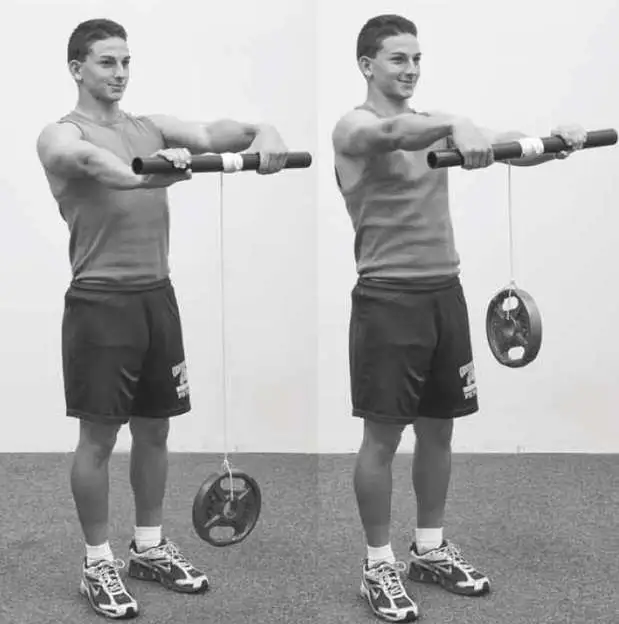
- Use a wrist roller to fully stretch your arms before rolling the weight up.
- When the weight reaches the top, carefully drop it back down.
- Repeat the movement 5 to 10 times.
Stretches for Hand and Finger Health
Finger Stretch
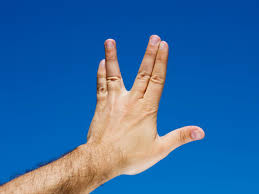
- Bring your pinky and ring fingers together.
- Separate the middle and index fingers from the ring fingers.
- Hold the stretch for 1–2 seconds.
- Repeat the stretch ten times.
Wrist Flexor Stretch
- Rest your palms and fingers comfortably together in front of your head, fingers pointing up toward the ceiling.
- Move your hands down to approximately chest level, keeping your elbows apart and your fingers pointing up toward the sky.
- Keep your palms together while you hold this stretch.
- Bring your hands up to the starting position.
Wrist Extensor Stretch
- Place the backs of your hands and fingers comfortably together in front of your waist, fingers pointing down toward the floor.
- Move your hands up toward the ceiling, separating your elbows while keeping your fingers pointing down toward the floor.
- Hold this stretch and then return your hands to their initial position.
Prayer Stretch
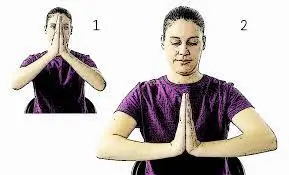
- While standing, clasp your palms together in a prayer pose. Make sure your elbows touch. Your arms should be touching from the tips of your fingers to the elbows.
- Spread your elbows apart slowly while keeping your palms squeezed together. Do this while lowering your hands to waist level. Stop when your hands reach in front of your belly button, or you sense a stretch.
- Hold the stretch for 10 to 30 seconds before repeating.
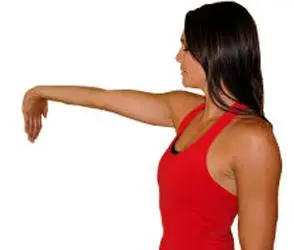
- Raise one arm to shoulder height in front of you.
- Keep your palm down and face the floor.
- Release your wrist so that your fingers point downwards.
- With your free hand, gently grip your fingers and draw them back towards your body.
- Hold for 10-30 seconds.
Thumb Stretch
The thumb is one of the most often utilized and susceptible portions of the hand. Regular stretching can help prevent strain and stiffness.
How To Do It:
Place your hand flat against a table or surface.
Gently extend your thumb backward away from the palm, using your other hand to help.
Hold for 15-30 seconds, then repeat.
Safety Tips When Training Hands and Fingers
- Start slowly, with lighter resistance and shorter hold durations. Gradually increase your strength over several weeks.
- Maintain proper form by focusing on controlled motions rather than speed. Poor form can cause injury or encourage undesirable movement habits.
- Listen to Your Body: While slight soreness is acceptable, intense pain or worsening symptoms indicate that you should stop and see a healthcare expert.
- Be Consistent: For maximum outcomes, work out three to four times each week. Consistency is more crucial than intensity.
- Warm up first: Gentle motions and stretches will prepare your hands for strengthening activities and limit the danger of damage.
- Cool down: Finish your practice with easy stretches to preserve flexibility and minimize stiffness.
Mistakes to Avoid
- Training too frequently
- Ignoring finger extensors
- Using excessive resistance too soon
- Skipping recovery
Conclusion
Hand strengthening exercises are a simple yet effective technique to preserve function, minimize discomfort, and avoid injury. Whether you have a specific illness or simply wish to keep your hands healthy as you age, doing these exercises consistently can improve your quality of life significantly.
Remember that everyone has different needs. What works for one person may not be suitable for another, particularly if you have underlying medical concerns or are recuperating from an accident.
FAQs
What causes hands to weaken?
Muscle exhaustion, tendon problems, arthritis, and nerve compression (such as carpal tunnel syndrome) are common causes of hand weakness. But it can also be a sign of more serious conditions, including peripheral neuropathy, a stroke, or a pinched nerve in your neck.
How can hands be strengthened?
Do strength training exercises for each of your primary muscle groups at least twice a week. Try to finish one set of each exercise, using a weight or resistance level that is challenging enough to wear out your muscles after 12 to 15 repetitions.
Can weak hands be caused by sleep deprivation?
Your circulation and nerve system are impacted by sleep deprivation, which can result in tingling or numbness in your hands and feet. Anxiety, sleep apnea, and bad posture can all be factors.
References:
- Shapcott, E. (2025, October 3). Grip Strength 101: Why It Matters & How to Build It. Sheddon Physiotherapy Sports Injury Clinic, Oakville. https://www.sheddonphysio.com/grip-strength-101-why-it-matters-and-how-to-strengthen-it/?srsltid=AfmBOorGsJzLVZ83BYQd6XznDOS-TJdmVE8ym0_sx7qYaOhvLRu7ojVa
- Exercises for building your grip strength | Banner Health. (n.d.). https://www.bannerhealth.com/healthcareblog/better-me/why-and-how-you-should-be-strengthening-your-hands-and-wrists
- Roland, J. (2020, June 17). Can you increase the size of your hands? Healthline. https://www.healthline.com/health/can-you-increase-the-size-of-your-hands
- Hook hands. (n.d.). [Video]. Hingehealth. https://www.hingehealth.com/resources/articles/hand-strengthening-exercises/
- Grip Genie. (2024, May 17). The anatomy of grip strength. https://gripgenie.com/blogs/grip-zone/the-anatomy-of-grip-strength?
- The Healthline Editorial Team. (2026, January 28). Stretches for wrists and hands. Healthline. https://www.healthline.com/health/chronic-pain/wrist-and-hand-stretches
- The top exercise for strengthening your hands and wrists. (n.d.). https://lokmanyahospitals.com/blogs/top-exercise-for-strengthening-your-hands-and-wrists
- Blogs, & Blogs. (2025, December 16). Hand Strengthening Exercises: Build Grip Strength & Prevent Injury. DPT Physical Therapy & Performance. https://dpttherapy.com/hand-strengthening-exercises-build-grip-strength-prevent-injury/