Fall Prevention Exercises For Seniors
Introduction
Age-related balance changes, muscular weakness, and visual issues can all raise the risk of falls and injuries in older adults. Regular balance, strength, and aerobic activities can help lower this risk.
Falls at any age can have an impact on quality of life, but for those 65 and over, even a simple fall can result in serious injuries such as fractures, head trauma, or broken bones.
Key Risk Factors
Several risk factors might lead to falls. Some of these include.
- Muscle weakness: decreased strength in the lower body (together with balance and walking issues).
- Foot difficulties may include foot discomfort, lack of feeling, or even inappropriate footwear (slippers with no traction, high-heeled shoes, etc.).
- Medical diseases and drugs: Examples include dizziness, vertigo, drowsiness, hypotension, prescription and over-the-counter medications, among others. Refer the client to their doctor and/or pharmacist to address these concerns.
- Our eyesight has to evolve as we mature. There may be a need for additional light or a change in vision/eyewear prescriptions.
- Environmental risks include trip and fall dangers in the house, such as unsecured throw rugs, slick or uneven floors, and even dogs walking underfoot. Secure or remove loose carpets, clear clutter, quickly dry spills, and add handrails in bathrooms and on stairs.
Why Falls Prevention Matters for Seniors
Falls are more than simply accidents; they may frequently be avoided with regular exercise and mindfulness. According to health surveys, one in every four persons over the age of 65 falls each year, with many of these accidents resulting in injuries that limit independence.
Important reasons to promote elder fall prevention include:
- Reduced risk of injury: Stronger muscles and improved balance result in fewer slips.
- Increased independence: Seniors who stay on their feet can live more confidently.
- Improved general health: Exercises that promote balance and strength benefit cardiovascular health, joint flexibility, and mental wellness.
- Families can have peace of mind knowing that their loved one is taking precautions to prevent falls.
How Exercises Prevent Falls in the Elderly
The most effective fall prevention activities for older individuals focus on three areas:
- Strength Training – Stronger leg and core muscles allow elders to rise from seats, climb stairs, and walk without instability.
- Balance training for the elderly helps them keep control throughout regular tasks.
- Flexibility and Mobility – Gentle stretches help joints move smoothly, eliminating stiffness that can lead to errors.
Safety Tips for Seniors Before Beginning Any New Exercise
- Consult a doctor, especially if they have any current medical disorders, balance issues, or previous injuries.
- Start slowly: Begin with easy workouts and progressively raise the intensity.
- Use assistance if needed: A chair, wall, or rail can be used to offer support during workouts.
- Wear correct footwear, such as nonslip shoes or supportive sneakers, to help lessen hazards.
- Stay hydrated: Even a little exercise needs hydration.
Best Falls Prevention Exercises for Seniors
Chair Stands (Sit-to-Stand Exercise)
Why it helps: It increases leg and core strength by simulating the motion of standing from a chair, which is a daily need.
How To Do It:
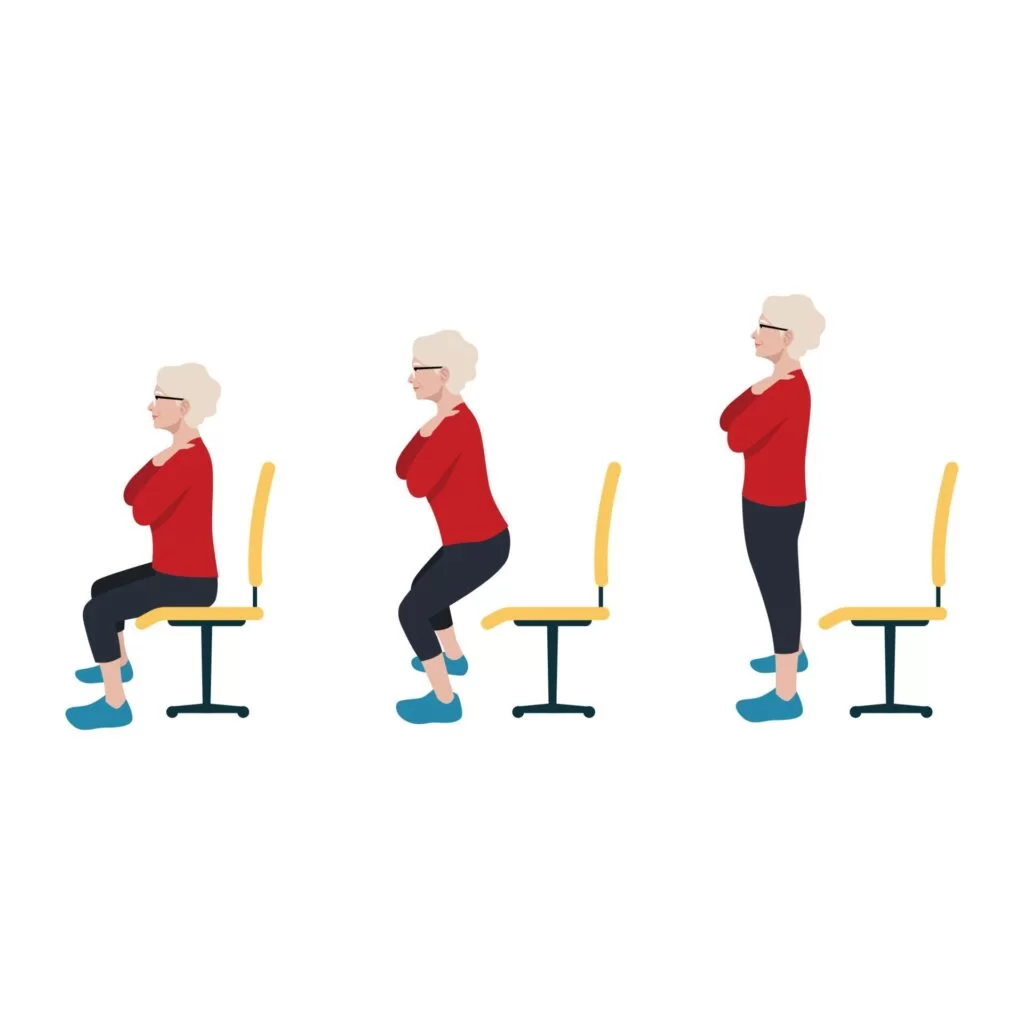
- Sit on a solid chair, feet flat on the floor.
- Cross your arms across your chest or rest your hands on the chair for support.
- Slowly stand up and then sit back down.
- Repeat 10 to 15 times.
- Tip: Begin with fewer reps and progress as your strength develops.
Heel-to-Toe Walk
How To Do It:
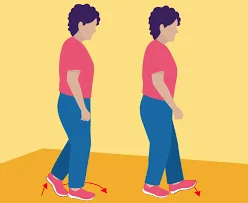
- Place one foot directly in front of the other, heel to toe.
- For balance, keep your arms extended to the side.
- Take 10 to 20 steps forward.
- Repeat twice a day.
Standing Leg Raises
Why it helps: It strengthens the hips and thighs while also improving stability.
How To Do It:
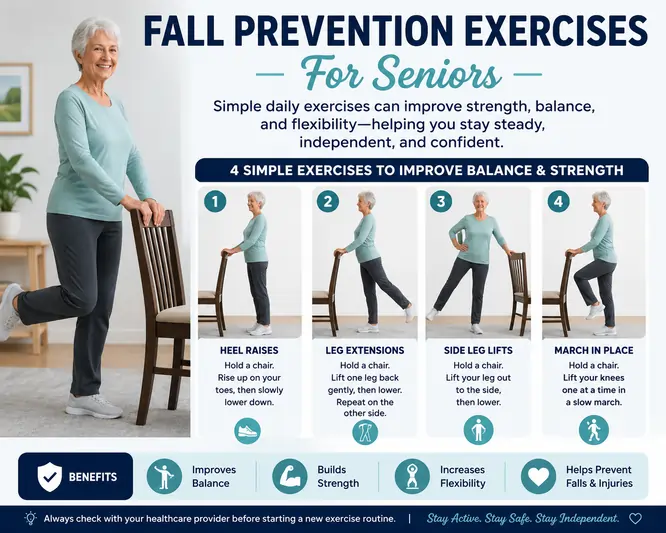
- Stand behind a chair for support.
- Keeping one leg straight, slowly raise it to the side.
- Hold for 2-3 seconds and then descend.
- Repeat 10 to 15 times per leg.
- Variation: Lift your legs backward to target your glutes.
Marching in Place
Why it helps: Improves balance and cardiovascular endurance.
How To Do It:
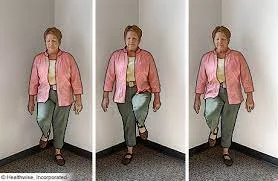
- Stand tall and march in place, knees raised high.
- Continue for 1–2 minutes.
- Rest, then repeat.
Wall Push-Ups
Why it helps: Increases upper body strength, which aids with movement and prevents falls during stumbles.
How To Do It:
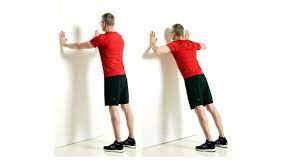
- Stand facing a wall, arms straight at shoulder height.
- Place your hands on the wall, shoulder-width apart.
- Bend your elbows, lean toward the wall, and then push back.
- Repeat 10 to 15 times.
Side Stepping
Why it works: It improves lateral mobility, which is essential for negotiating obstacles at home.
How To Do It:
- Stand tall and take one step to the side, then bring the other foot to meet it.
- Continue moving sideways across the room.
- Repeat for 2-3 passes.
Calf Raises
Why it’s beneficial: It strengthens the ankles and calves, promoting stability while walking.
How To Do It:
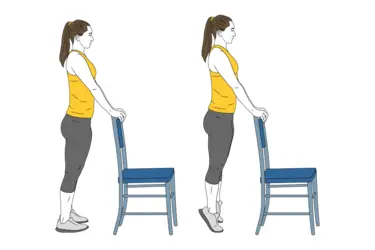
- Stand behind a chair for support.
- Slowly raise onto your toes, hold for 2-3 seconds, and then lower.
- Repeat 10 to 15 times.
Seated Knee Extensions
Why it works: It is safe for elderly people with movement problems and improves thigh muscles while seated.
How To Do It:
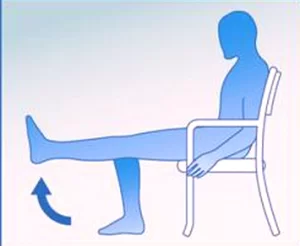
- Sit in a firm chair with your feet flat.
- Straighten one leg out, hold for 2-3 seconds, and then descend.
- Repeat 10 to 15 times per leg.
Squats
How To Do It:
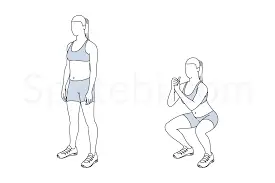
- Stand in front of a sturdy chair, feet slightly wider than shoulder width, arms outstretched. Lower gently toward the chair for four counts, then raise for two counts while keeping your back straight and your knees aligned.
Floor bridges
How To Do It:
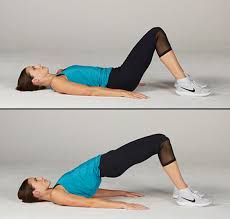
- Lie on your back, knees bent.
- Tighten your abdominal muscles. Raise your hips off the floor so that they align with your knees and shoulders. Hold for three deep breaths.
- Return to your starting place and repeat.
Bird Dog Exercise
How To Do It:
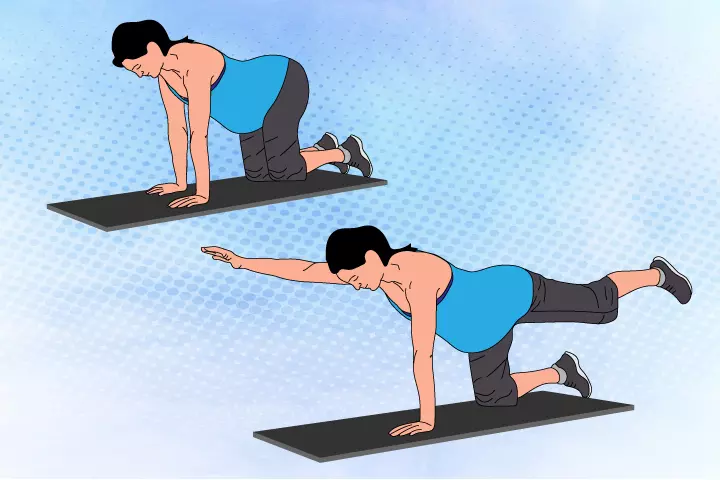
- Kneel on an exercise mat or other cushioned surface, keeping your knees hip-distance apart, and your hands firmly planted on the ground, around shoulder width apart. Engage your abdominals.
- Point one arm straight out in front of you and extend the opposing leg behind you, creating a straight line from your extended hand to your extended foot. Keep your hips squared to the ground. If your lower back starts to droop, elevate your leg as high as possible while maintaining your back straight.
- Return to your hands and knees after holding for a few seconds. Keep your core engaged throughout the exercise, and try to reduce any additional motion in your hips during the weight transfer.
- Switch to the opposite side.
- Aim for five reps on each side, totaling ten. Add up to three sets of ten exercises. As a variation on the bird dog exercise, execute a set of ten on one side before switching to the other side.
Stretching for Flexibility
Why it helps: It relaxes tight joints and muscles, increasing mobility.
Examples:
- Neck rolls.
- Shoulder shrugs.
- Ankle circles.
- Hamstring stretches.
Creating a Falls Prevention Routine
- Strength Training: 2-3 days per week.
- Balance Training: Every day (even a few minutes count).
- Flexibility Exercises: After each workout.
- Aerobic Activity: At least 3-4 days each week.
Making the Home Safer Alongside Exercise
While exercise is important, a safe atmosphere helps to prevent falls. Consider:
- Remove loose carpets and garbage.
- Install grab bars in the restrooms.
- Use nonslip matting.
- Ensure proper illumination throughout the home.
- Keep frequently used items within easy reach.
What other strategies can anyone use to help prevent falls?
- Other lifestyle adjustments, such as frequent exercise, can help prevent falls and injuries. First and foremost, you should see your doctor on a regular basis and discuss any symptoms you are experiencing. This will assist you in identifying any chronic diseases or eyesight abnormalities that may increase your risk of falling.
- If you require treatment, your doctor will make appropriate suggestions and evaluate your medicines for any that may increase your risk of falling.
- Your doctor can also determine whether you have low bone density or are at risk of getting it, and recommend therapies to help preserve or enhance your bone density. This can help lessen the possibility of fractures during a fall.
- In the meantime, you can make minor safety changes at home.
- Furthermore, it is critical to obtain enough sleep, since insufficient sleep can have a detrimental impact on your balance, attentiveness, and response speed.
- When going about, leave at least one hand free when carrying objects so you can catch yourself if you fall. If you live in a house with stairs, try storing your laundry downstairs or using a backpack to get it up and down.
- Scooters, walkers, and canes are examples of supportive equipment that can boost your freedom and offer extra stability.
Conclusion
Physical ability often declines with age. In certain situations, this can result in a progressive loss of muscle strength, mass, and function, making it more difficult to maintain stability and balance.
However, regular exercise can help counter these effects. Lower-body strength training is particularly useful for increasing mobility, balance, and fall prevention, and core workouts provide additional stability.
However, a well-rounded fitness plan that combines balance, strength, and cardio activities will help maintain your body fit and robust as you age.
FAQs
How often should older people do fall prevention exercises?
Seniors should aim for 2-3 times per week of strength training, daily balancing exercises (even if they are just 5-10 minutes long), and flexibility stretches after each session. Consistency is more crucial than intensity—even moderate quantities of regular movement can help avoid falls in the long run.
Can elders who have restricted mobility benefit from fall prevention routines?
Yes. Even seniors with mobility difficulties or who use walkers and wheelchairs can perform seated fall prevention activities. Examples include sitting knee extensions, ankle circles, and chair-assisted marches. These workouts maintain strength and circulation while promoting safe mobility.
Are balancing exercises appropriate for elderly persons who are at high risk of falling?
Balance exercises are safe to practice with sufficient assistance and supervision. Seniors can practice beside a wall, a strong chair, or a countertop for extra safety. For individuals at higher risk, beginning with chair-based balancing exercises or supervised sessions in assisted living facilities is a wise decision.
How long does it take to observe improvements from fall-prevention exercises?
Most seniors see increases in strength, balance, and confidence after 4-6 weeks of daily exercise. Small increases, such as rising up more readily from a chair or taking firmer steps, are common within the first few weeks. Long-term consistency leads to the best results.
Is walking sufficient to avoid falls in the elderly?
Walking is great for cardiovascular health and endurance, but it’s insufficient for complete fall prevention. Walking should be paired with strength training, balancing exercises, and stretching to effectively lower the chance of falling.
References:
- Sharon, A. (2025, September 9). Fall prevention exercises for seniors. Healthline. https://www.healthline.com/health/fall-prevention-exercises-for-seniors#other-fall-prevention-strategies
- Penney, S. (n.d.). Balance training for seniors: fall prevention exercise tips. https://blog.nasm.org/fitness/exercise-tips-fall-prevention
- Bsn, J. R., & Bsn, J. R. (2026, May 8). Falls prevention exercises for the elderly: Stay strong, steady, and independent. Two Hearts Home for Seniors. https://twohearts.care/blog/falls-prevention-exercises-for-the-elderly/