Benefits Of Home Physiotherapy For Seniors
Introduction
Some people have trouble leaving their homes to attend physical treatment. A physical therapist may visit these people’s homes to help them regain normal functional mobility.
If you have a condition that impairs your functional mobility, or ability to move around in your everyday life, physical therapy (PT) may help. The goal of physical therapy is to enable you to return to your favorite activities by helping you regain your usual mobility.
A physical therapist will work with you to develop a tailored program to restore mobility, enhance stability, and increase strength, as well as rehabilitate from medical illnesses or injuries.
Home Physical Therapy
In-home physical therapy is described as physical therapy services provided in a person’s house. This sort of treatment is designed for those who are unable to leave their homes to get physical therapy in a clinic environment. This can happen for a number of causes, including but not limited to:
- Your illness is either acute or severe, and leaving the house poses a health risk.
- You have limited functional mobility and are unable to travel to therapy.
- You do not have appropriate transportation to arrive at your physical therapy appointment.
- You want a private PT session at your house.

Another advantage of home physical therapy for many older persons is the option to focus on strengthening exercises and skills that will help them remain independent in their homes. A physical therapist, for example, may work with a client to increase their strength so that they may safely climb their home’s stairs.
This type of targeted, customized treatment increases the likelihood that the patient will complete their rehabilitation since they feel secure, at ease, and competent.
Why Home Physiotherapy Is Ideal for the Elderly
Accessibility and Convenience
- As individuals age, mobility constraints frequently make it difficult to attend a physiotherapy facility often. Traveling with arthritis, low stamina, or balance issues may be both physically and psychologically demanding.
- Home physiotherapy eliminates this barrier, allowing elderly people to obtain necessary care without leaving their homes. This convenience can help patients stick to treatment programs and have a more favorable therapeutic experience.
Personalised Assessment in a Familiar Environment
- Physiotherapists who do home visits obtain vital insight into their patients’ daily lives. This enables them to identify possible dangers such as slick flooring, insufficient lighting, or inadequate furniture that might lead to falls or injuries.
- Observing patients in their homes allows therapists to customize exercise regimens and offer home safety changes, increasing safer mobility and independence.
Enhanced Safety and Fall Prevention
- Falls are the primary cause of harm among elderly people. Home physiotherapy frequently involves focused balance and strength exercises that are intended to lessen the chance of falling.
- Therapists can also provide advice on assistive equipment and provide practical suggestions to improve home safety, such as adding grab rails or reducing trip hazards.
Emotional Comfort and Reduced Anxiety
- For many older people, getting care in a familiar location reduces worry and stress. This emotional comfort can lead to increased involvement in treatment sessions and improved overall outcomes.
Conducting Physio Sessions at Home
In-clinic physiotherapy uses specialized equipment and offers one-on-one supervision. However, older patients must travel back and forth. Physio at home for the elderly removes this load while still providing individualized treatment. Home physiotherapy for the elderly offers several advantages.
Here are some important factors to consider while doing physiotherapy sessions at home:
- Safety: Maintain a safe and clutter-free atmosphere to avoid mishaps during activities.
- Appointment: Schedule a virtual or in-person appointment with a competent physiotherapist to analyze your requirements and develop a tailored treatment plan.
- Equipment: Gather any equipment or props suggested by your physiotherapist, such as resistance bands or therapy balls.
- Set up a designated location with plenty of room for workouts and motions.
- Routine: Make a regular timetable for your sessions and follow it.
- Warm-up and Cool-down: To avoid injury, always incorporate suitable warm-up and cool-down activities.
- Proper Technique: Pay special attention to your form and technique to maximize the benefits while minimizing the chance of harm.
- Progression: As your strength and flexibility improve, gradually increase the intensity of the workouts.
- Maintain open contact with your physiotherapist, offering comments on your progress and any challenges you may experience.
- Patience: Understand that becoming better takes time, and persistence is essential to achieving your objectives.
- Documentation: Keep a record of your workouts and progress to measure progress and make required changes.
- Family Support: Inform your family members about your sessions and solicit their assistance in establishing a positive environment.
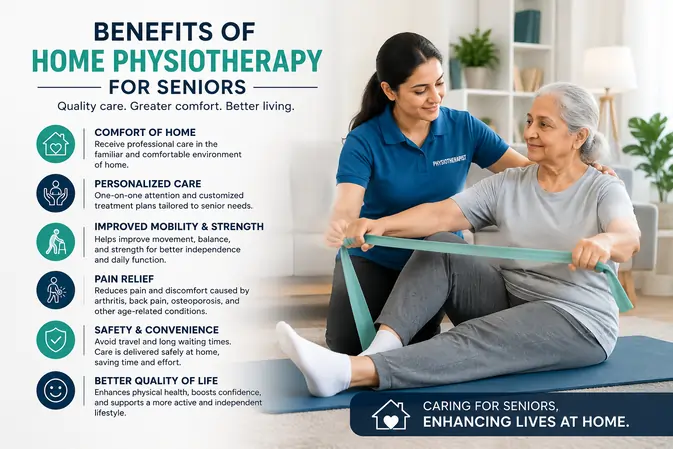
Benefits Of Home Physiotherapy For Seniors
- Elimination of Travel: With in-home physiotherapy, people may say goodbye to long trips to clinics or hospitals, saving them from the hazardous trek through unknown neighborhoods or the prolonged wait at bus stations.
- Enhanced privacy: Patients can engage in physiotherapy activities at home without fear of being watched or judged, creating an environment conducive to vulnerability and personal growth.
- Time Saved, Time Gained: The exhausting process of commuting to clinics or hospitals is replaced with the option to devote those valuable minutes to other activities, such as spending quality time with loved ones, pursuing hobbies, or indulging in much-needed rest.
- Enhanced mobility and balance: Exercises that target specific muscles improve their strength, flexibility, stability, and coordination. This minimizes the chance of falls, which are a significant cause of hospitalization and disability in the elderly. It also keeps the capacity to move freely.
- Reduced stiffness and pain: Stretching, massage, and range-of-motion exercises can help with painful illnesses such as arthritis or low back pain. Strengthening also helps to lessen tension. This makes everyday activities less unpleasant.
- Credibility and independence: Seniors who can walk smoothly and confidently in their balance are more inclined to be active in life rather than hiding at home. This promotes independence and emotional health.
- Quicker Recovery: Professional follow-up therapy helps those suffering from surgery, sickness, or accident regain function more quickly. Guidance for safe home exercise helps to move beyond basic hospital discharge recommendations.
- Enhanced Overall Wellness: Mobility, strength, and flexibility all contribute to overall fitness and stamina. Consistent use of physio methods benefits elderly bodies. This simplifies everyday chores while improving long-term health.
What home physiotherapy treats
Post-surgical rehabilitation
- Hip or knee replacement
- Other joint surgeries
- Fracture repairs
- Spinal surgery
- Cardiac surgery
Neurological conditions
- Stroke recovery
- Parkinson’s disease
- Multiple sclerosis
- Peripheral neuropathy
- Balance disorders
Musculoskeletal problems
- Arthritis
- Back and neck pain
- Joint pain
- Muscle injuries
- Chronic pain
Respiratory conditions
- COPD
- Post-pneumonia
- Breathlessness management
- Chest infections
General deconditioning
- After illness
- Prolonged bed rest
- Hospital discharge
- General weakness
- Falls prevention
Exercises In-Home PTs Offer
In-home physical therapy allows patients to practice a variety of exercises in their own homes. While this might be advantageous, it is sometimes impossible for patients to have the same technology at home as they would at an outpatient clinic.
If you choose in-home PT over outpatient treatment, you may want to improve your mobility and strength around the house. Your physical therapist may help you with therapy such as:
- Exercises to Improve Balance and Prevent Falls
- Exercises to improve dizziness due to vestibular (inner ear) problems
- Teaching you how to utilize an electrical stimulation device to relieve pain.
- Strength training and equipment suggestions for home safety.
For example, if you want to improve your balance, you may include sit-to-stand and stand-to-sit exercises in your program. If you are rebuilding strength or endurance after a stroke, your physical therapist may recommend aerobic activities to help you walk better. Improving walking might also help people stay sociable and prevent isolation.
Despite the fact that you may not have access to all of the equipment found in an outpatient PT clinic, you and your physical therapist may still work together to build an effective treatment plan.
Comparison With Clinic-Based Physiotherapy
While clinic-based physiotherapy offers access to specialized equipment and a variety of treatments, it may not be suitable for everyone. Home physiotherapy has various specific benefits, particularly for the elderly and post-surgery patients.
- Reduced travel stress: Avoids exhausting or hazardous travel.
- Tailored Environmental Assessment: Therapists identify real-life obstacles and tailor care accordingly.
- Flexible Scheduling: Appointment hours can be adjusted to better meet the needs of patients.
- Enhanced Privacy: The comfort of receiving treatment in a private, intimate setting.
Many patients feel that having therapy at home increases accessibility and results in better overall outcomes.
Conclusion
Home physiotherapy is a significant and effective treatment option for the elderly and those recovering from surgery. Its advantages include more accessibility, personalized treatment, increased safety, and faster recovery.
Home physiotherapy promotes higher engagement and adherence to treatment by offering therapy in a familiar and comfortable setting, resulting in an enhanced quality of life.
FAQs
Which kind of patients benefit the most from home physiotherapy?
Home physiotherapy is especially beneficial for elderly people with mobility challenges and post-surgical patients who find it difficult to travel.
How does home physiotherapy vary from clinic-based therapy?
Home physiotherapy provides individualized care while decreasing travel-related limitations.
Can home physiotherapy help elderly patients avoid falls?
Yes, therapists emphasize balance and strength exercises designed to lower the risk of falls in senior individuals.
References:
- Patel, N. (2023, June 15). Exploring the benefits of home physiotherapy in Ahmedabad. Om Physio Plus Nutrition & Yoga Therapy – https://physiotherapistahmedabad.com/benefits-of-home-physiotherapy-in-ahmedabad/
- Thornton, L. (2025, July 24). Home-Based physiotherapy benefits for seniors. Mobile Physiotherapist Blog. https://mobilephysiotherapist.co.uk/blog/home-based-physiotherapy-benefits-seniors.html
- Bayti Home Healthcare. (2025, December 11). Physiotherapy for Seniors: Safe & Effective care at home. https://baytihealth.com/blog/physiotherapy-for-seniors-safe-effective-care-at-home/
- Antony, V., & Antony, V. (2025, August 22). How can home physiotherapy services benefit elderly or Post-Surgery patients? River Physio. https://www.riverphysio.sg/how-can-home-physiotherapy-services-benefit-elderly-or-post-surgery-patients/