Osteoporosis Exercises For Seniors
Introduction
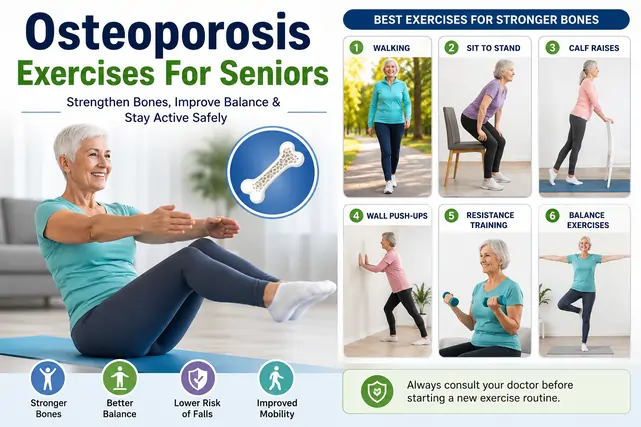
Osteoporosis exercises for seniors are designed to improve bone strength, enhance balance, increase muscle strength, and reduce the risk of falls and fractures. Regular participation in safe, weight-bearing, resistance, and balance exercises can help maintain mobility, independence, and overall quality of life.
When performed correctly and consistently, these exercises play an important role in managing osteoporosis and supporting healthy aging.
What is osteoporosis?
Osteoporosis is quite common in women, affecting 25% of women over 75 and 10% of men over 75.
Osteoporosis (OP) is a disorder in which bones become frail and brittle, increasing the risk of fractures compared to an ordinary individual. Osteoporosis develops when bones lose minerals like calcium faster than the body can refill them. This causes a reduction in bone thickness (density).
As a result, bones grow thinner and less dense, and even little bumps or falls can result in catastrophic fractures.
Osteoporosis affects both men and women; women after menopause are at the highest risk.
There are generally no indications or symptoms in the early stages of OP, and it can go untreated for decades. Unfortunately, bone fractures might be the first indication for some people. Seniors are also at an increased risk of fractures since they fall more frequently.
This develops due to:
- Age-related changes
- Hormonal changes
- A sedentary lifestyle
- Poor vitamin intake
- Genetics and family history
How Osteoporosis Affects The Body?
Osteoporosis does more than just raise the chance of fractures. When bones lose strength, even a minor fall or bump can create long-term issues. Osteoporosis mostly affects the hips, spine, and wrists, although it may weaken any bone in the body.
Some frequent indicators and consequences are:
- Back pain due to a fractured or collapsed vertebra.
- Loss of height with time
- Stooped posture.
- Bones break more easily than predicted.
Aside from physical symptoms, osteoporosis can impair a person’s everyday activities and mental well-being. Many older persons may avoid specific motions for fear of falling, resulting in decreased activity levels over time.
What can I do if I have osteoporosis?
Good diet and regular exercise are vital for maintaining bone health throughout your life. While you may be concerned about the impact exercise might have on your body, studies have shown that it can considerably benefit bone health, enhance balance, and prevent falls.
How does exercise build healthy bones?
While most forms of exercise are beneficial to your health, not all of them are healthy for bone strength. Weight-bearing workouts, for example, can help you grow strong bones, but aerobic exercises cannot. Swimming or biking may benefit your lung and heart health, but they will not necessarily strengthen your bones.
Weight-bearing workouts test your muscular strength against gravity while placing strain on your bones. As a consequence, your bones will urge your body to make more tissue to strengthen them. This category contains the following types of exercises:
- climbing stairs
- jogging or running
- dancing
- weightlifting
- bodyweight exercises (push-ups)
- balance training exercises
Benefits of exercise
- Increase muscle strength.
- Improve balance.
- Decrease the risk of broken bones.
- Improve posture.
- Lessen pain.
Before you start
Before beginning an osteoporosis exercise program, consult with your doctor. You may require certain tests in advance, including:
- Bone density measurement.
- Fitness evaluation.
What is the best type of exercise to do if I have osteoporosis?
To affect bone, exercise should be regular (preferably three times per week) and reasonably strenuous. Doing a range of workouts is ideal since it puts tension on the bone in different ways. Short, intensive bursts of activity (such as 15 minutes of weight lifting or brisk walking) are better for bones than a sluggish one-hour stroll.
Strength training activities combined with weight-bearing and balancing exercises have been demonstrated to produce the most effective effects.
Weight-bearing exercises are those in which your body must support its own weight, such as walking, running, dancing, tennis, and weightlifting. These load the bones, allowing new bone to form and preventing bone loss.
Fall prevention activities should also include activities that improve muscle strength, balance, and coordination.
Osteoporosis exercises for seniors to try at home
Walking
Walking is one of the simplest ways to support bone density and overall healthy aging. It enhances mobility and aids in fall prevention.
To assist a loved one with this activity, urge them to:
- Wear supportive and non-slip shoes.
- Begin with shorter distances and progressively expand.
- Walk on flat, even surfaces whenever possible.
This workout is simple to include in everyday routines and strengthens leg muscles while improving bone health.
Foot stomps
The purpose of this exercise to lower the risk of osteoporosis is to challenge the important regions of your body where osteoporosis is most typically seen, such as your hips. Foot stomping is one technique to work out your hip bones.
- Stomp your foot while standing, as if crushing an imaginary can beneath it.
- Repeat the exercise four times with one foot, then with the other.
- If you struggle with balance, hold on to a railing or a heavy piece of furniture.
Biceps curls
Biceps curls may be performed with either dumbbells weighing 1 to 5 pounds or a resistance band. They may be done seated or standing, whichever is more comfortable for you.
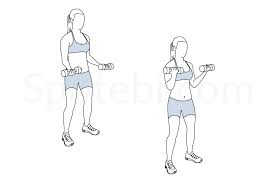
- Take a dumbbell in each hand or tread on a resistance band while holding one end in each hand.
- Pull the bands or weights in toward your chest, allowing the biceps muscles on the front of your upper arms to tighten.
- Lower your arms to get back to your starting position.
- Repeat 8-12 times. If possible, take a break and then repeat the second set.
Shoulder lifts
Shoulder lifts need the use of weights or a resistance band. This exercise may be done either standing or sitting.
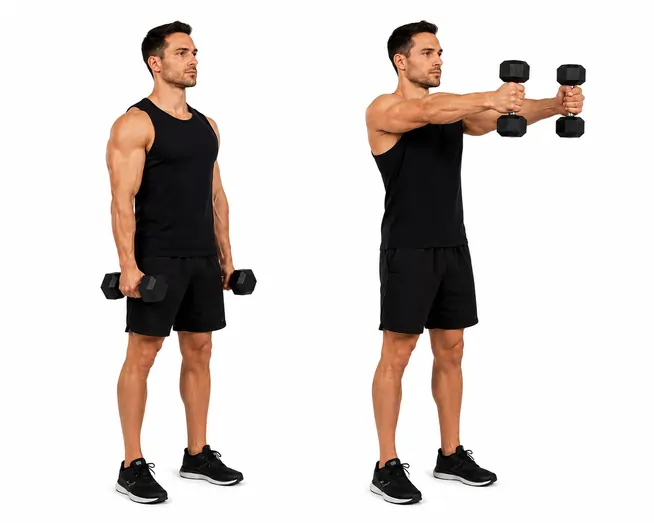
- Take a dumbbell in each hand or tread on a resistance band while holding one end in each hand.
- Begin with your arms down and your hands by your sides.
- Slowly lift your arms straight in front of you, but do not lock your elbows.
- Lift to a comfortable height, but not higher than shoulder level.
- Repeat 8-12 times. If possible, take a break and then repeat the second set.
Hamstring curls
Hamstring curls help to develop the muscles at the rear of your upper legs. You practice this workout while standing. To enhance your balance, place your hands on a heavy piece of furniture or another firm item.
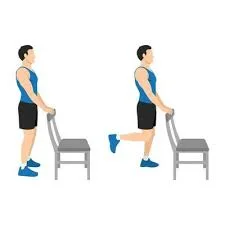
- Stand with your feet shoulder-width apart. Move your left foot back until only your toes are on the floor.
- Contract the muscles in the rear of your left leg to raise your left heel toward your buttocks.
- Slowly drop your left foot back to its original position.
- Repeat 8-12 times. Rest and repeat the exercise with your right leg.
Hip leg lifts
This exercise develops the muscles surrounding your hips and improves your balance. To enhance your balance, place your hands on a piece of heavy furniture or another firm item.
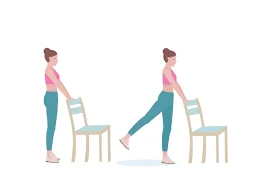
- Begin with your feet hip-width apart. Shift your weight to the left foot.
- Flex your right foot and keep your right leg straight while lifting it to the side, no more than 6 inches off the ground.
- Lower your right leg.
- Repeat the leg lift 8-12 times. Return to your starting position and complete another set with your left leg.
Squats
Squats can help strengthen both the front of your legs and your buttocks. This workout is beneficial even if you don’t squat deeply.
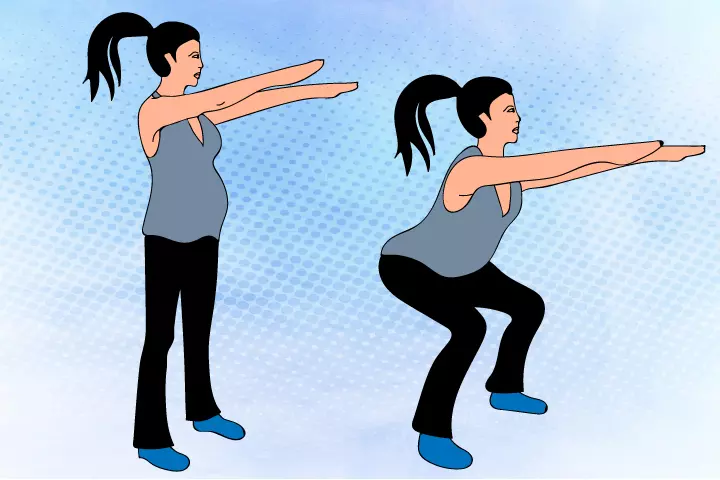
- Begin with your feet hip-width apart. To maintain balance, place your hands gently on a firm piece of furniture or counter.
- Bend your knees and stoop down slowly. Maintain a straight back and lean slightly forward, feeling your legs move.
- Squat just till your thighs are parallel with the ground.
- Tighten your buttocks to get back to an upright position.
- Repeat 8-12 times.
Lunges
This exercise might help you gain balance and develop your leg muscles. Lunges engage muscles in the hips, knees, and ankles. You can alternate or do one leg at a time.
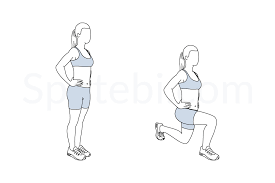
- Begin with your feet hip-width apart. If you need aid with balance, grab a counter or piece of furniture.
- Take a slightly longer stride forward than you would while walking. Stand with one leg in front of you and the other behind. Keep your front foot flat on the ground. Your rear heel will come off the ground.
- Bend your knees roughly 90 degrees, making sure your front knee is aligned with your ankle and behind your toes. Maintain a consistent height for your hips and engage your core. Your rear knee should not contact the ground.
- Push off your front leg to go back to a standing posture.
Standing on one leg
This workout will enhance your balance. If you need to grip anything for balance while performing this exercise, keep a firm piece of furniture nearby.
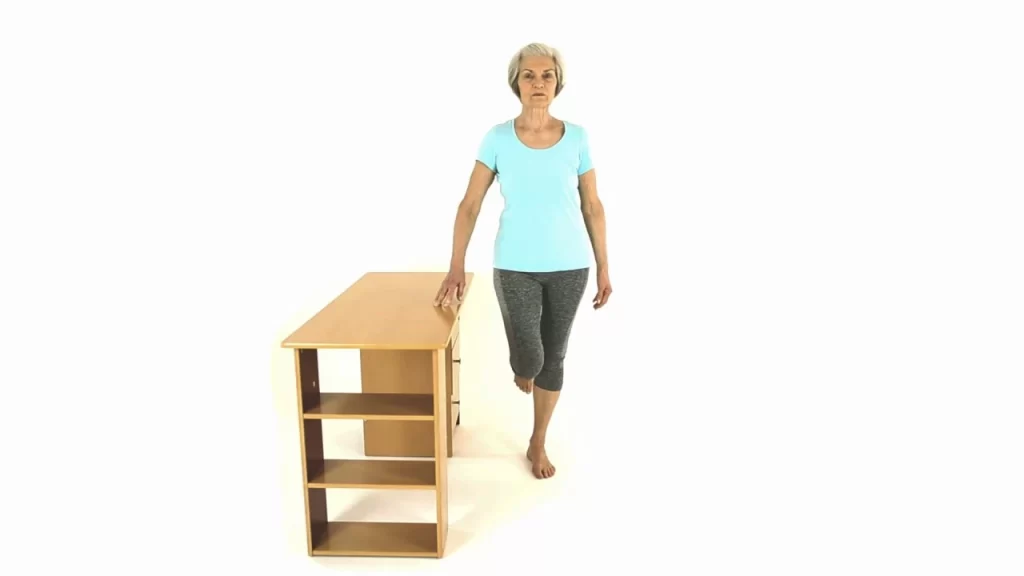
- Stand on one foot for 30 seconds to a minute, if possible.
- Repeat three repetitions for each leg.
Standing Heel Raises
Standing heel lifts exercise strengthens the calves and gives stability for more stable walking. They’re a readily accessible exercise, making them ideal for older individuals.
To attempt this exercise, have them perform the following:
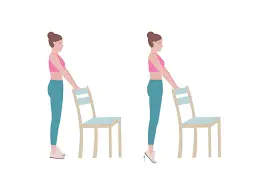
- For support, hold onto a strong chair or tabletop.
- Slowly pull their heels off the ground and stand on their toes.
- Lower their heels with control.
- This technique is simple to practice and improves flexibility over time.
Stretching
Stretching increases flexibility and decreases stiffness, which is especially beneficial for those who have osteoporosis.
To include this in their routine, recommend safe alternatives such as:
- Gentle shoulder rolls might help relieve stress.
- Hamstring stretches are performed by extending one leg and leaning slightly forward.
- Side stretches to improve posture.
- Stretching helps to maintain basic mobility and prepares muscles for other exercises.
Exercises to avoid
- High-impact exercises: Jumping, running, and jogging can all cause fractures in weaker bones. Overall, avoid jerky, quick motions. Select workouts requiring slow, controlled movements. If you are typically active and robust while having osteoporosis, you may be able to engage in higher-impact activity than someone fragile.
- Bending and twisting: Bending forward at the waist and twisting at the waist can increase the risk of fractures in the spine in persons with osteoporosis. Avoid exercises such as touching your toes and doing sit-ups. Golf, tennis, bowling, and various yoga postures are examples of sports that require you to bend or twist forcibly at the waist.
Conclusion
One of the several health advantages of exercise is the development and maintenance of healthy bones. This is especially crucial in preventing osteoporosis or slowing bone loss in people who currently have the disorder.
There are bone-strengthening exercises you may do at home, but consult with your doctor or physical therapist first. They can assist you in developing an exercise plan that is appropriate for your specific health demands.
FAQs
Does climbing stairs help build bone density?
Stair climbing boosts bone density, especially in postmenopausal women, by forcing your body to resist gravity while strengthening the leg and hip muscles that support your pelvic bones. Use a handrail as required, and consider adding an occasional stomp for additional bone activation.
What are the three best exercises for osteoporosis?
Weight-bearing aerobic exercises, such as walking. Flexibility exercises. Stability and balance exercises.
Which organ is the most impacted by osteoporosis?
Osteoporosis affects the entire skeletal system by reducing bone density and mass, resulting in brittle bones. However, it has the most severe and frequent impact on the spine (vertebrae), hips, and wrists.
What not to do with osteoporosis?
If you have osteoporosis, avoid high-impact activities, bending at the waist, and twisting your spine. These motions greatly enhance the likelihood of spinal compression fractures. Instead, concentrate on controlled, low-impact weight-bearing exercises and contact a physical therapist for a tailored regimen.
How does physiotherapy assist people with osteoporosis?
Individuals with osteoporosis benefit from physiotherapy to lower the risk of trips and falls, which can lead to fractures. Physiotherapy is vital for those who have previously suffered a fracture to preserve range of motion, strengthen muscles, and aid in the restoration to their prior level of mobility and functionality.
References:
- Crna, R. N. M. (2024, July 19). 8 Exercises to Strengthen Your Bones When Living with Osteoporosis. Healthline. https://www.healthline.com/health/managing-osteoporosis/exercises-to-strengthen-your-bones#exercises-to-try
- Co, P. (2024, October 15). Five simple exercises for Aussie seniors with osteoporosis. The Physio Co. https://www.thephysioco.com.au/osteoporosis-exercises-for-seniors/
- Coss, S., & Coss, S. (2025, August 20). 7 great Osteoporosis Exercises for Seniors | Clinton. Meadow View |. https://meadowviewassisted.com/7-great-osteoporosis-exercises-for-seniors/