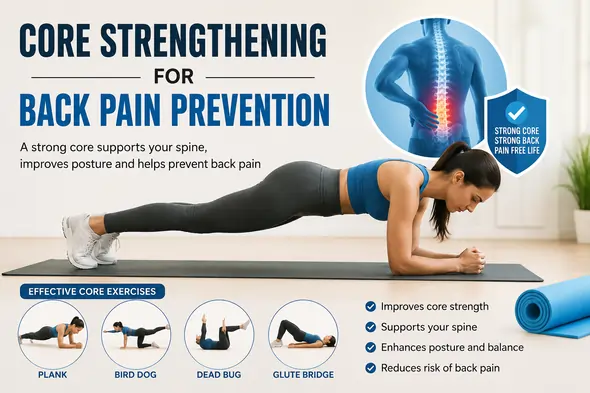
Core Strengthening for Back Pain Prevention
What is your core?
Most people think of the six-pack or abdominal region just under the ribs when they think of the core of the body. While the abdominal muscles are a vital component of the core, many believe that other regions are as significant.
Your core contains:
- The rectus abdominis is one of the main front abdominal muscles.
- The internal and external obliques are muscles located at the sides of your body.
- The transverse abdominal is a deep muscle that
- Wraps the front.
- The erector spinae and multifidi are back muscles that are placed between the bones of your spine and run down your spine.
Additionally, your diaphragm, hip flexors, gluteal muscles, and pelvic floor muscles form your core.
What connection exists between back pain and core strength?
Theoretically, if your muscles surrounding the low back region are weak, your body will depend more on passive structures for support, including ligaments — the tissue that binds bone to bone — as well as the spinal bones or discs which lie between the spinal bones. This can cause pain.
Exercise in general is known to be beneficial, and concentrating on the core muscles may offer some further advantages.
Why Core Strength Matters for Back Pain
Your “core” is more than simply your abdominal muscles; it includes the abs, obliques, lower back, pelvic floor, and deep stabilizing muscles such as the transverse abdominis and multifidus. Together, these muscles improve posture, support your spine, and facilitate more effective movement.
Your body responds by putting stress on your back muscles and joints when your core is weak. Strengthening the core can:
- Improve spinal alignment
- Reduce strain on the lower back
- Enhance balance and stability
- Prevent further injury or flare-ups
Core Strengthening Exercises for Back Pain Prevention
Pelvic Tilts
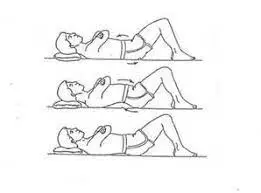
- Lie on your back, legs bent, feet flat on the floor.
- To flatten your back, contract your abdominal muscles and tilt your pelvis upward.
- Hold for 5 seconds and then release.
- Repeat 10 to 15 times.
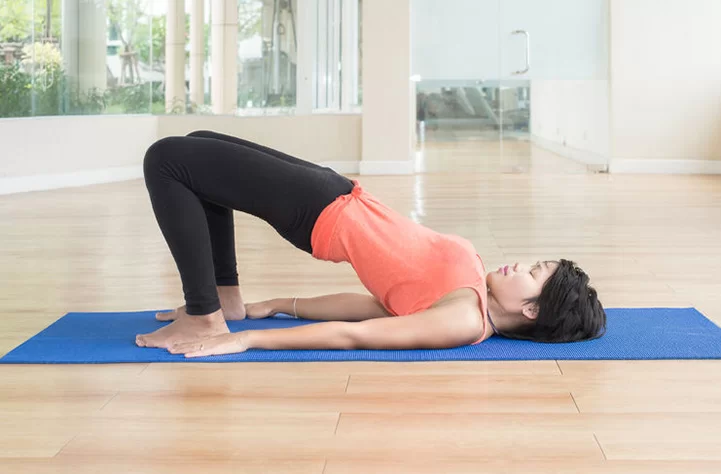
Bridge
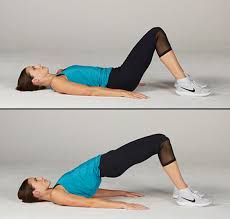
- Lie on your back on the ground, legs bent and arms placed by your sides.
- Clench your buttocks and gradually lift them up and away from the floor, keeping your body straight from your knees to your shoulders.
- Hold the bridge position for 8 to 10 seconds before slowly lowering to the beginning position.
- Perform two sets of ten to fifteen repetitions.
Plank
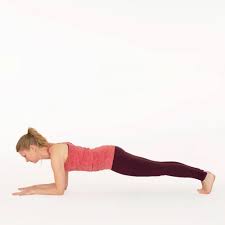
- Kneel on all fours.
- Pull your abdomen in and step your feet behind you to make your legs straight. Keep your hands directly behind your shoulders and your neck erect.
- Hold your abdomen and legs firm, and don’t let your lower back drop.
- Hold your breath for 30 seconds. You may adjust this position by lowering your knees.
Side plank

- Sit on the floor, right hand beneath your right shoulder, and feet stacked.
- Lift your body with your legs extended, abs engaged, and feet stacked.
- Hold. Repeat on the opposite side.
- To add support, lower your bottom knee to the floor.
Bird dog
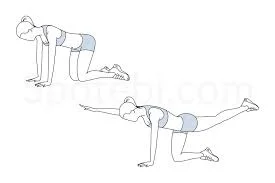
- Begin with hands and knees, shoulders over wrists, and hips over knees.
- Extend your right arm and left leg simultaneously while maintaining your hips level.
- Hold for 3–5 seconds
- Return
- Switch sides.
- Repeat ten repetitions per side.
Dead Bug (Modified)
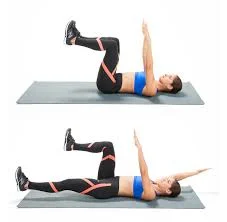
Dead bug Exercise steps:
- Lie on your back, arms straight up and knees bent 90 degrees.
- Slowly drop your right arm and left leg while maintaining your back flat.
- Return to your starting location and exchange sides.
- Perform 8-10 repetitions per side.
Wall Sits

- Stand with your back to a wall, feet shoulder-width apart, and about 2 feet away from it.
- Slide into a sitting position, knees at 90 degrees.
- Hold for 10–30 seconds.
Bridging Marches
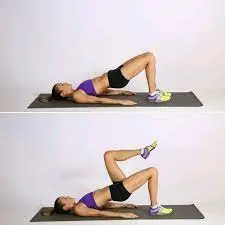
- Lie on your back, knees bent.
- Take a deep breath in and out, drawing your abdominal muscles in as if tightening a belt. As you do this, elevate one leg a few inches off the floor.
- Return to the starting location and exchange sides.
- Repeat 8–10 times on each side. 3 sets.
Incorporating Core Work into Your Routine
Long, intensive workouts are not necessary to strengthen your core. Consistency is essential. Perform these exercises 3-5 times per week for 15-20 minutes. Over time, you’ll probably notice:
- Reduced stiffness and tightness in the lower back
- Enhanced balance and mobility
- Better posture for daily tasks
Core exercises that you should avoid doing that may hurt my back?
The first exercise we advise against is crunches. Most individuals start with crunches, stretching their neck, throwing their head/shoulders forward, and utilizing momentum to lift oneself up. First and foremost, this can cause persistent pain in the neck and headaches owing to overactivity of the surrounding neck muscles, but it also puts a lot of strain on the discs in your low back from constant forward bending.
Another workout to avoid is swimmer kicks/scissor kicks. Patients arch their backs off the table and hyperextend their backs in an attempt to stabilize their hips, allowing them to kick up and down or side to side. This results in inadequate core muscle activation and compressive pressures across the low back, which can possibly cause back injury.
The final core exercise we recommend avoiding is the traditional sit-up. This is akin to a crunch. Many patients with low back pain will have their symptoms worse by this frequent forward bending of the low back. It places an immense amount of stress on the spine’s structures and has the potential to cause a low back injury.
Conclusion
A strong core is a powerful tool in the fight against back pain. With safe, basic exercises and regularity, you may help stabilize your spine, relieve pain, and enhance your quality of life. Always move carefully, with good form in mind, and within your own limitations. Your back will thank you.
FAQs
Why is strengthening the core important?
Because it serves as your body’s center of stability, core strength is essential. It enhances your posture, supports your spine, and facilitates effective movement of your limbs. A strong core, which includes your hips, pelvis, lower back, and abdomen, improves everyday mobility and sports performance while preventing injury and lowering back pain.
How much time does it take to develop core strength?
In just two to four weeks, you can begin to see gains in stability and core strength. However, it usually takes four to eight weeks of regular, focused exercise to develop considerable, long-term core strength and obvious muscular definition.
Which three physical indicators point to a weak core?
Chronic slouching or bad posture, persistent lower back pain from spinal overcompensation, and regular balance problems when standing or walking on uneven ground are all physical indicators of a weak core. Weakness puts additional tension on other muscles since the core serves as the body’s stabilizing core.
References:
- Living with back pain? 5 core exercises you need. (n.d.). Henry Ford Health – Detroit, MI. https://www.henryford.com/blog/2023/09/back-pain-core-exercises
- Clinic, C. (2020, May 29). Why a strong core can help reduce low back pain. Cleveland Clinic. https://health.clevelandclinic.org/strong-core-best-guard-back-pain
- Core-strengthening exercises that help with back injury rehab. (2014, October 30). https://www.acefitness.org/resources/everyone/blog/5131/core-strengthening-exercises-that-help-with-back-injury-rehab/?
- Melvin, J. S., MD. (2019, December 2). 7 Core exercises to relieve back and hip arthritis pain. Arthritis-health. https://www.arthritis-health.com/blog/7-core-exercises-relieve-back-and-hip-arthritis-pain
- The role of core strength in back pain prevention. (n.d.). OrthoSouth. https://orthosouth.org/core-strength-back-pain-prevention
- valethealth & valethealth. (2025, July 30). Back pain & core strength: exercises you can do safely. North Lakes Pain Consultants. https://northlakespain.com/back-pain-core-strength-exercises-you-can-do-safely/