Box Breathing Exercise
Inroduction
Box Breathing Exercise is a simple yet powerful breathing technique that helps calm the mind, reduce stress, and improve focus. It involves slow, controlled breathing in four equal steps—inhale, hold, exhale, and hold—making it ideal for relaxation, anxiety control, and mental clarity in daily life.
The goal of box breathing, a potent yet straightforward relaxation method, is to restore breathing to its natural pattern following a stressful event. It entails holding your breath when you inhale and exhale. It could facilitate attention, physical relaxation, and mental clarity. Box breathing is a deep breathing method that can assist in managing discomfort or COPD and reduce blood pressure.
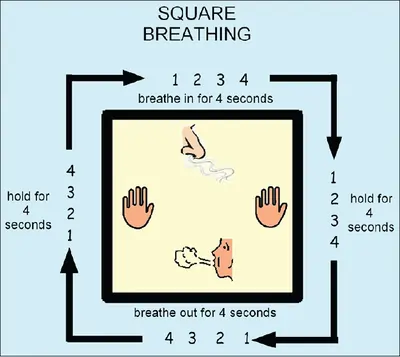
A deep breathing method that involves taking slow, deep breaths is box breathing, often referred to as square breathing. Another name for it is four-square breathing.
When their bodies are in fight, flight, or freeze mode, people in high-stress occupations like police officers and military personnel frequently practice box breathing. Anyone who wants to improve their attention or recenter themselves should also use this approach.
How to do box breathing?
Box breathing involves:
Four basic steps, each lasting 4 seconds:
- breathing in
- holding the breath
- breathing out
- holding the breath
Box breathing is an easy method that can be performed anywhere, even at a cafe or at a workplace. Box breathing is a technique that encourages people to visualize a box while they breathe.
To attempt box breathing, one should:
- sit with their feet on the ground and their back supported in a cozy chair.
- After closing their eyes, they inhale through their nose and slowly count to four while feeling the air enter their lungs.
- Trying not to close their lips or nostrils, they hold their breath while they count slowly to four.
- Exhale gently for four seconds.
- After four seconds, repeat steps one through three at least three times.
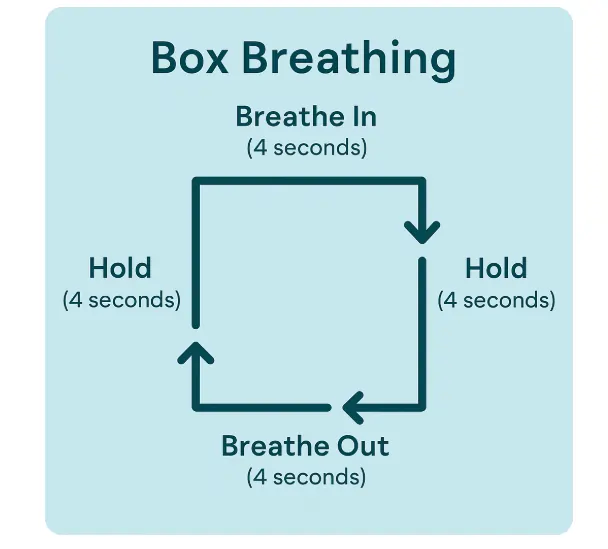
One should ideally continue the three techniques for four minutes, or until they feel peaceful again. Instead of counting to four, kids can try counting to three if they find the method difficult. After becoming accustomed to the method, kids can decide to count to five or six.
Why breathing is vital to the body
It is beneficial for the body and mind to reset one’s breathing amid stressful situations.
The autonomic nerve system, sometimes known as the unconscious body, is responsible for the bodily processes that occur without conscious thinking, including the heart pumping or the stomach breaking down food. This system may be in a condition of “rest and digest” or “fight, flight, or freeze.”
The body responds to threats by going into fight, flight, or freeze mode, which helps the person get away or stay safe. The hormones noradrenaline and adrenaline are released by the body, among other things. These trigger a series of responses that include elevated blood sugar, accelerated breathing, and an accelerated heartbeat.
Long-term or frequent exposure to this stressor can have detrimental effects on one’s health. Every bodily system may experience wear and tear as a result of the physical effects of this condition.
Chronic stress can raise the chance of:
- high blood pressure
- headaches
- heart attacks
- stroke
Benefits of box breathing
Box breathing could provide a number of benefits to those who use it.
Reduces physical stress symptoms in the body
- Deep breathing exercises have been shown to dramatically lower the production of stress-related chemicals like cortisol.
- In addition to relieving excess tension, box breathing provides you with a convenient, on-demand technique to help you avoid taking on more stress than you can manage.
Positively affects emotions and mental well-being.
Stress, anxiety, and sadness may all be lessened with the use of breathing exercises.
Improves future reactions to stress
- Box breathing could be able to alter how a person responds to stress in the future.
- Researchers hypothesized that by altering how specific genes are turned on, relaxation response techniques like yoga, meditation, and deep breathing might change how the body responds to stress.
- The body uses genes for a variety of purposes. According to the study, relaxation response techniques decreased the activation of genes connected to stress and inflammation while increasing the activation of genes linked to insulin and energy.
- The study found that both short-term and long-term users of these methods experience this impact. Long-term users, however, see a more noticeable impact.
Tips for box breathing
For the most part, box breathing is safe. However, consult your physician before doing it if you:
- have a heart condition
- have a severe health condition
- are pregnant
A person may make box breathing simpler by doing a few actions. An individual can:
- To start box breathing, locate a peaceful area.
- Putting one hand on the chest and the other on the lower abdomen can help you feel the air entering and see where it is going.
- When you breathe in, concentrate on feeling the stomach expand, but try to relax the muscles rather than contract them.
Stop right away and start breathing normally if you start to feel lightheaded or out of breath. If, after quitting, your dizziness or dyspnea persists, get medical help right away.
Other deep breathing techniques
Deep breathing and diaphragmatic breathing are two categories of a variety of breathing techniques. One of the simplest breathing techniques to learn is box breathing, which is also a wonderful way to start using breathing techniques.
Other breathing techniques that are frequently employed to promote alertness, soothe anxiety, and attain relaxation include:
- pranayama breathing
- alternate nostril breathing
- Shaolin Dan Tian breathing
Conclusion
A deep breathing method called box breathing, sometimes known as square breathing, can help you feel more at ease, reduce tension and blood pressure, and elevate your mood.
Its steps, which resemble a square or box, give it its name.
Although box breathing is typically safe, if you are pregnant or have a serious medical problem, such as a heart issue, see your doctor first.
FAQs
How long does it take for box breathing to start working?
Starting with only a few minutes is often a good idea, particularly if box breathing is new to you. You can prolong your sessions as you get more comfortable. While some enjoy 10 to 15 minutes, others find a 5-minute session to be extremely rejuvenating.
What is the box breathing technique’s main advantage?
Using the breath control method known as “box breathing,” you take a breath, hold it in, release it, then hold it out for four equal counts. According to research, box breathing can help with sleep, attention, and stress reduction.
What dangers come with box breathing?
Box breathing: Instructions, advantages, and advice
For those who have trouble holding their breath, box breathing might not be the best option. Before attempting it, people with high blood pressure or those who are pregnant should consult a physician.
Which position is ideal for box breathing?
It is ideal to sit with your back straight in the Easy Pose, Lotus Pose, or Thunderbolt Pose. Another option is to sit on a chair with your feet flat on the ground and your spine straight.
What are the effects of box breathing on the brain?
The long, slow exhale is crucial because it activates the vagus nerve. The vagus nerve, a key element of the parasympathetic nervous system, is stimulated by this portion of the breath. The brain receives a signal from the vagus nerve that slows the heartbeat, lowers blood pressure, and encourages relaxation.
Why is it referred to as box breathing?
One method of attentive breathing is the box breathing technique. It is named for the fact that it uses the ‘count-to-four’ rule and is a four-step breathing exercise that resembles the four sides of a box. Another name for it is ‘four-square breathing’.
References:
- Gotter, A. (2025, February 4). Box breathing. Healthline. https://www.healthline.com/health/box-breathing#takeaway
- Stinson, A. (2024, May 13). What is box breathing? https://www.medicalnewstoday.com/articles/321805#faq