Top 9 Exercises to Fix Flat Back Syndrome
Introduction
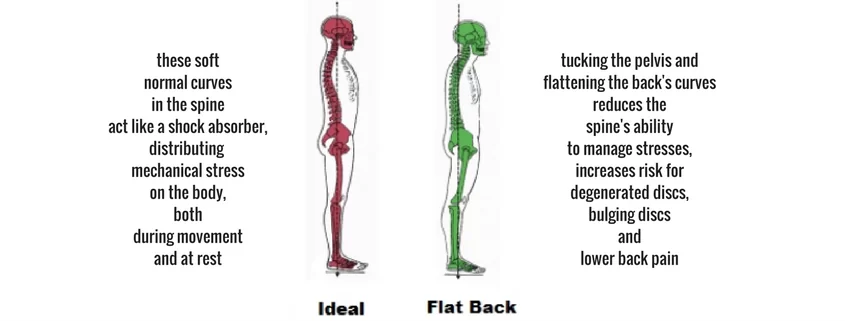
The spine is stronger, more flexible, and better able to sustain body weight equally because of its natural and healthy curvature. The spine’s general biomechanics are disrupted, and its function is affected when it loses its natural curvature and becomes abnormally straight.
The spine’s natural, healthy curvature must be preserved and balanced in order for it to remain in alignment. When the spine becomes too straight and loses its natural curves, flatback syndrome develops.
What is a Flat Back Syndrome?
Flatback syndrome is a disorder in which the spine becomes abnormally straight due to the loss of lordosis, kyphosis, or both.
The biomechanics of an abnormally straight spine are disturbed, making it difficult to maintain a straight and balanced posture and giving the body a pitched-forward aspect.
Muscles Involved
The muscles linked to flat back posture are listed here, some of which are weak or tight.
a) Thoracic Spine: Tight and/or Overactive Muscles:
- Spinalis Thoracis
- Iliocostalis Thoracis
- Longissimus Thoracis
- Posterior Intercostals
b) Lumbar Spine/Pelvis: Tight and/or Overactive Muscles:
- Hamstrings
- Abdominals
- Gluteal muscles
- Lumbar Spine Erectors
- Hip Flexors
Factors that can lead to a flat back
Spine Conditions and Diseases:
- Degenerative Disc Disease: Wear and tear on spinal discs results in loss of height and curvature.
- Ankylosing Spondylitis is a chronic inflammatory condition in which vertebrae merge, stiffening the spine.
- Osteoporosis/Compression Fractures: Weakened bones fracture, causing vertebrae to collapse and frequently resulting in a forward-leaning posture.
- Congenital issues refer to abnormalities that exist at birth.
Surgical Causes (Iatrogenic):
- Lumbar Spinal Fusion: Previous procedures, especially earlier scoliosis treatments using Harrington rods, may not preserve the natural curve, resulting in flattening.
- Post-Laminectomy Syndrome: A decrease in stability following surgery to remove nerve pressure.
Physical and Lifestyle Factors:
- Poor posture and a sedentary lifestyle contribute to the loss of natural curvature.
- Muscle imbalance: Weak abdominal muscles and tight hamstrings can cause the pelvis to tilt backward, straightening the lower spine.
Other factors:
- Trauma/Injury: Spinal damage caused by an accident.
- Obesity: Excess weight places tension on the spine.
Benefits
- Strengthens Core and Back Muscles: This exercise uses the abdominal, gluteal, and spinal muscles to stabilize and support the spine.
- Improves Flexibility: It stretches the back muscles, hip flexors, and tight hamstrings that contribute to poor posture.
- Reduces pain and Stiffness: Lower back discomfort caused by misalignment is eased, as are tight muscles and weariness.
- Improves Postural Awareness: Encourages proper sitting and standing posture in daily activities.
- Improves Mobility and Balance: Enables more fluid, controlled actions, such as standing, walking, and bending.
- Prevents More Complications: Reduces the likelihood of developing disc problems, persistent back pain, or limited mobility.
Top 10 exercises to fix a flat back
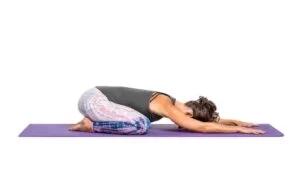
Child’s Pose
- Get to your hands and knees on the yoga mat.
- Spread your knees as wide as your mat, with the tops of your feet on the floor and the big toes touching.
- Rest your tummy between your thighs and place your forehead on the floor. Relax your shoulders, jawline, and eyes. If placing your forehead on the floor is too unpleasant, try resting it on a block or two stacked fists. There is an energy point in the center of the forehead between the brows that activates the vagus nerve and promotes a “rest and digest” state. Finding a comfortable position for your forehead is critical to obtaining this relaxing benefit.
- Stretch your arms in front of you, palms facing the floor, or bring them back alongside your thighs, palms facing up. For a shoulder release, stretch your arms forward with palms facing up, or bend your elbows so the palms contact and your thumbs rest at the back of the neck. In this posture, inch your elbows forward.
- Stay as long as you like, gradually reconnecting with the consistent inhales and exhales of your breath.
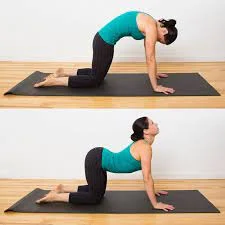
Cat-Cow Stretch
- Put your hands on the floor in front of you while kneeling.
- Keep your hands shoulder-width apart, and your knees exactly beneath your hips.
- Inhale deeply while arching your lower back and raising your head, tilting your pelvis upwards like a “cow.”
- Exhale deeply and pull your abdomen in, arching your spine and lowering your head and pelvis like a “cat.” Repeat many times.
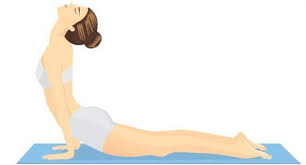
Prone Press-Up (Cobra Pose)
- Lie on your stomach, hands under your shoulders, as if you were ready to carry out a pushup.
- Slowly push your upper body up, maintaining your hips and lower back on the floor. Your arms should be straight, but your hips should remain down.
- Hold this position for a few seconds before slowly lowering yourself back down.
- Repeat this movement 8-10 times.
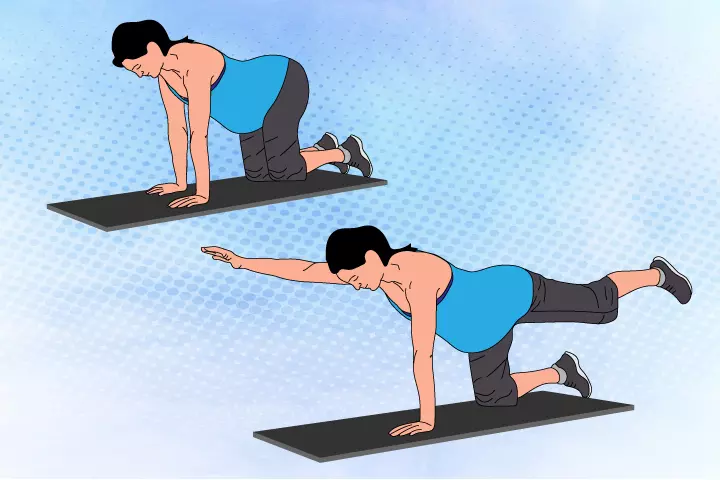
Bird Dog
- Begin on all fours in the tabletop posture.
- Put your knees under your hips and your hands beneath your shoulders.
- In order to keep your spine neutral, contract your abdominal muscles.
- Draw the shoulder blades together.
- Raise your right arm and left leg while keeping your shoulders and hips parallel to the ground.
- Tuck your chin into your chest and stretch the back of your neck so that you may glance down toward the floor.
- Hold this position for a few seconds before lowering back to the beginning position.
- Raise your left arm and right leg, then maintain this posture for a few seconds.
- Return to your starting position. This is one round.
- Perform 2-3 sets of 8-12 repetitions.
Dead Bug
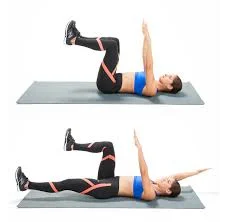
- Let your lower back and shoulders drop heavily to the ground.
- Remove your shoulders from your ears by drawing them down. Raise your hands till your elbows are above your shoulders and your fists are pointing inwards toward one another to begin.
- Raise your legs until your hips and knees are in line.
- Lower your left leg and right arm gradually until they are barely above the floor as you exhale.
- Return them to the beginning position as you inhale.
- On the other side, repeat.
- This is one repetition.
Bridge Pose
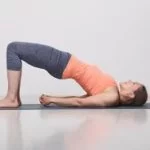
- Begin by resting on your back.
- Place your feet level on the floor, shoulder-width apart, with your knees bent.
- Place your hands at your sides, palms down on the floor.
- Inhale and raise your hips towards the ceiling. Keep your shoulders, head, and neck flat on the ground.
- There are several hand positions you may choose while holding the posture. You can maintain your palms flat against the ground. To increase the difficulty, interlace your fingers and push your hands on the floor to elevate your body slightly higher. Alternatively, you can place them on your back, fingers pointing toward your lower back and thumbs to the side.
- Breathe deeply and keep your position for a few moments. Then, return your arms to the floor, exhaling as you drop your hips down to the ground.
Clamshell Exercise
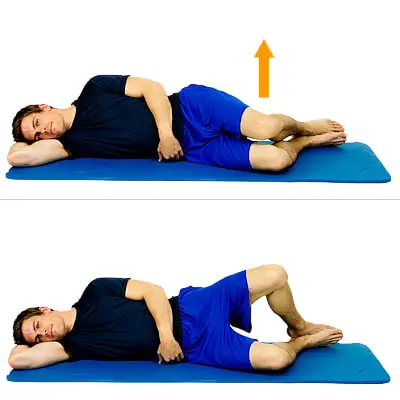
- Lie on your side, legs stacked, knees bent at a 45-degree angle.
- Rest your head on your lower arm and use your upper arm to support your body. Make sure your hipbones are stacked on top of each other, as the upper hip tends to rock backward.
- Pulling in your belly button will assist in stabilizing your spine and pelvis.
- Keep your feet together and elevate your upper knee as high as possible without changing your hips or pelvis. Do not lift your lower leg off the floor.
- Pause, then restore your higher leg to its original position on the ground. Perform 20 repetitions on each side.
Standing Hip Extension with Band
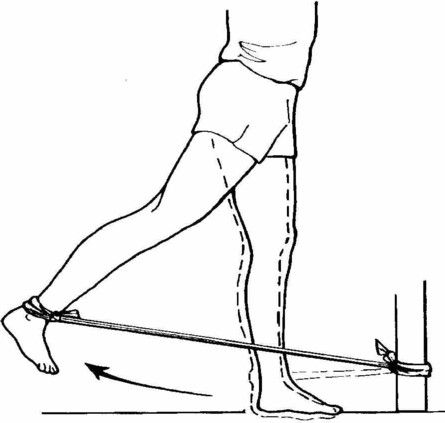
- Secure a resistance band around a low anchor point, such as a squat rack, door anchor, or table leg.
- Place the band on your ankle by stepping one foot inside the loop.
- To stretch the band while keeping your leg straight, kick your heel back until you are unable to pull your leg back upwards without bending your knee. Then, go back to the starting position.
- After completing the recommended number of repetitions, switch to the other leg.
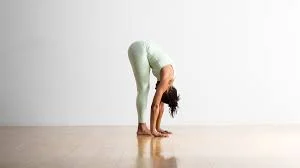
Standing Forward Bend Pose
- Stand tall, legs together. Inhale and lift your arms over your head, close to your ears. Exhale and bend forward from your hips, starting at your heart center. Create a straight line with your arms and upper body. Continue exhaling.
- Bend forward, then grip your ankles or calves.
- More sophisticated choices include placing your arms behind your knees and holding your elbows, or placing your palms up behind your feet. Hold this position for around a minute. Breathe gently and deeply. Then inhale and gently rise back up, leaving your arms and head hanging loose until you’re upright.
Conclusion
- Although flat back syndrome can cause stiffness, discomfort, and poor posture, it is possible to promote overall mobility and restore the spine’s natural curvature with the proper exercises.
- The Top 10 Exercises, which include posture-improving poses like Standing Forward Bend and Cobra, strengthening exercises like Bird Dog, Dead Bug, Bridge Pose, and Clamshells, as well as stretches like Child’s Pose and Cat-Cow, work together to correct muscle imbalances, relieve tension, and strengthen the spine.
- Regularly completing these exercises improves posture, balance, and movement efficiency while also relieving pain and tension. With time and commitment, these concentrated exercises can help restore proper spinal alignment and give long-term comfort.
FAQS
Is it possible to reverse flatback?
Anti-inflammatory drugs and physical therapy, with an emphasis on restoring posture and gait, are the first steps in treating flat back syndrome. However, you could have to have surgery depending on how severe the structural issues and related pain are.
Which muscles in a flat back are weak?
Additionally, you may have weakness in your leg and pelvic muscles, as well as tightness in your hamstrings and core (the muscles in the midsection of your body). A flat back posture when standing might put more pressure and stress on your lower back’s discs and joints.
How does one get a flat back?
Degenerative disc disease, lumbar post-laminectomy syndrome (flattening of the back after lumbar decompression surgery), osteoporosis, vertebral compression fractures, and ankylosing spondylitis (chronic inflammatory arthritis) are common causes of flatback syndrome.
How can I prevent a flat back?
One of the main types of bad posture that contributes to back pain is flat back posture.
How to avoid having a flat back
Do the breaststroke. In order to counteract the rounded posture, it expands the back.
To arch your back, try yoga positions like the Upward Dog, Cobra, or Superman.
Sit completely against the backrest and use back support equipment. If necessary, support your feet at a 90-degree angle using a footstool.
Can flatback syndrome be fixed with exercises?
Exercises for strengthening and stretching help lower the risk of developing a flat spine. Exercise is one of the greatest ways to correct the pattern of muscular imbalance that may have contributed to or maintained a flat spine. Stretches for the hamstrings and abdomen are usually beneficial.
What is the impact of a flat back on walking?
Due to their stooped posture and unbalanced weight across their legs and pelvis, many people with severe flatback deformities need assistance when walking, such as a walker or cane. There may be severe pain, impairment, and frustration associated with the illness.
References:
- Nalda, T. (2025, February 28). Flat back syndrome – what is it? how to treat it? Scoliosis Reduction Center®. https://www.scoliosisreductioncenter.com/blog/flat-back-syndrome
- Ryt, A. P. (2024b, July 7). How to Do Child’s Pose in Yoga. Verywell Fit. https://www.verywellfit.com/childs-pose-balasana-3567066
- Cat/cow pose. (n.d.). Mayo Clinic. https://www.mayoclinic.org/healthy-lifestyle/stress-management/multimedia/cat-cow-pose/vid-20453581
- Regenerative Spine and Joint Center. (2024, October 24). Why the Prone Press-Up Exercise is Helpful for Lumbar Disc Herniations. Regenerative Spine and Joint. https://regenerativespineandjoint.com/2024/10/24/why-the-prone-press-up-exercise-is-helpful-for-lumbar-disc-herniations/
- Cronkleton, E. (2023, October 27). How to perform the bird dog exercise and its core benefits. Healthline. https://www.healthline.com/health/bird-dog-exercise#how-to-do
- Taylor, M. (2024, December 12). How to do a bridge yoga pose. WebMD. https://www.webmd.com/fitness-exercise/how-to-bridge-yoga-pose
- Standing forward bend. (n.d.). Mayo Clinic. https://www.mayoclinic.org/healthy-lifestyle/stress-management/multimedia/standing-forward-bend/vid-20453583
- Cronkleton, E. (2024, January 25). How to do the Dead Bug exercise. Healthline. https://www.healthline.com/health/exercise-fitness/dead-bug-exercise#how-to-do-a-dead-bug
- Banded standing hip extension. (n.d.). Become Better Sport Performance and Personal Training. https://www.becomebettersppt.com/banded-standing-hip-extension-tutorial