
Clasp Hands Behind Back Stretch
Introduction
Clasp Hands Behind Back Stretch is a simple yet effective upper-body stretch that helps open the chest, improve posture, and relieve tightness in the shoulders and upper back. It’s especially beneficial for people who spend long hours sitting or working at a desk, as it promotes better alignment and increases shoulder mobility.
By encouraging shoulder retraction and thoracic expansion through the interlacing of fingers behind the back and the moderate extension of the arms, this stretch helps relieve tension in the upper body. Because it primarily targets the chest muscles and anterior deltoids, it is especially beneficial for those who have tightness from driving, desk work, or forward-leaning activity.
Regular practice of this stretch can help maintain functional mobility and reduce musculoskeletal strain by improving posture, increasing shoulder flexibility, and improving breathing capacity. Whether used as a warm-up, cool-down, or routine mobility exercise, the Clasp Hands Behind Back Stretch is a low-impact method to restore balance and openness to the upper body.
Clasp Hands Behind Back Stretch Video
Muscles involved
- The sternal fibers in the pectoralis major and minor are particularly resistant to shoulder extension.
- Deltoid anterior: lengthened as the arms move behind the torso.
- The subscapularis is stretched as a result of rotation and internal extension.
- The biceps Brachii (Long Head), particularly when the elbows are extended.
- The coracobrachialis is a deep shoulder flexor that is extension-resistant.
- While the lower scapulae retract and depress, the levator scapulae and upper trapezius relax.
- To sustain scapular retraction, the rhomboids and middle trapezius are used.
- Latissimus Dorsi: May be useful for pulling arms lower and inward. The triceps brachii are employed to maintain an extended elbow.
Benefits
- Increased Shoulder Flexibility and Mobility: The action allows your shoulders to move more freely, making daily tasks and sports easier.
- Opens the Chest: This stretch focuses on the pectoral muscles, which can become stiff from prolonged sitting or poor posture.
- Corrects Rounded Shoulders: Postural tendencies that cause rounded shoulders can be reversed by extending the chest and strengthening the muscles that support the shoulder blades.
- Reduces Upper Body Tension: It can help relieve upper body stiffness and tightness, particularly in persons who spend a lot of time sitting in front of a computer.
- Improves Posture: By strengthening and stretching your shoulder and back muscles, you may be able to stand taller and with better posture overall.
- Improves Breathing and Circulation: In addition to enhancing cardiovascular health by increasing blood flow to the shoulders and chest, an open posture can improve breathing efficiency and lung capacity.
- Improves Arm Extension: It allows you to extend your arm reach behind your back, which is beneficial for a range of jobs and for maintaining mobility.
How to perform Clasp Hands Behind Back Stretch?
- Position: standing or seated.
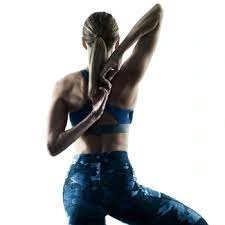
- Straighten your arms by interlacing your fingers behind your back and drawing your knuckles down to the floor. If clasping your hands is difficult or you can’t straighten your arms, set your hands hip-width apart on a strap or cloth.
- When you take your hands away from your buttocks, you should feel your shoulders stretching.
- The hold time is five to 10 seconds.
- Repeat 10-15 times each session.
Modifications for Increased Accessibility (Easier)
- If your hands cannot comfortably interlace, use a band or cloth to help you maintain good form. Standing tall, gripping a band behind the back with both hands, straightening the arms, and drawing the band away from the body for 15-30 seconds are all important movements.
Modifications for Increased Intensity (Harder)
- When clasping your hands, bring your palms together so that they make contact.
- To add a forward fold, extend your hands toward the ceiling (or overhead towards the floor if you have a deep forward fold).
- Include one more active shoulder engagement. As an alternative, pretend to draw your arms apart (while your hands remain clasped) to activate the outside of your shoulders. As you extend your arms away from your back, you may purposefully bring them closer together by activating the muscles between your shoulder blades.
Preventing shoulder pain and tightness
- Frequent stretching can help prevent shoulder pain in the first place. It’s also important to exercise often. Yoga may increase flexibility while decreasing tension and stress.
- When using a computer, place the screen at eye level using a stand. This reduces the risk of shoulder discomfort and the need to bend the neck and shoulders.
- Maintaining an appropriate posture is also important. If someone notices they are slouching, the shoulder roll exercise described above might help straighten their shoulders.
- Maintaining appropriate posture when standing and sitting can help to reduce long-term shoulder and neck discomfort, especially when working at a desk for lengthy periods of time. If stretching does not ease a persistent shoulder soreness, a massage may assist.
Indications
- Postural Correction: Ideal for correcting forward-leaning heads and rounded shoulders, which are commonly seen in drivers, students, and desk workers.
- Shoulder Mobility: Recommended for increasing shoulder flexibility and extension, especially in persons whose range is limited by age or inactivity. Opening the chest helps to increase thoracic expansion and stretch stiff pectoral muscles, both of which support better breathing mechanics.
- Desk Job Recovery: Reduces upper-body stress by counteracting the effects of prolonged sitting and slouching.
- Mobility Before and After Exercise: This method can be used to warm or cool the shoulder girdle, especially during pushing or overhead motions.
- Yoga and Rehabilitation: Commonly used in physiotherapy exercises and yoga postures to promote shoulder retraction and slight spinal extension.
Tips for Safety
- To alleviate shoulder pain, repeat these simple exercises three to six times each week. As your strength and flexibility improve, gradually increase the duration of your workout from a 10-minute start.
- When practicing these exercises, focus on releasing tension in your shoulders and other regions where you feel confined.
- On any given day, just stretch to the point where it feels comfortable. If you experience pain that is more than slight discomfort, stop exercising and do not push yourself beyond your limitations.
FAQs
What advantages can hand stretches provide?
Stretching aims to lengthen the muscles and tendons of the hands and wrists. Repetitive jobs such as typing, using gardening tools, or working on an assembly line can induce muscular shortening, pain, and stiffness.
Should you stretch your back daily?
Stretching every day helps to reduce back pain by increasing circulation and loosening tight muscles. Additionally, stretching improves muscular strength and agility. Having strong abdominal and back muscles will help to reduce discomfort and the chance of future injuries.
What six scapular motions are there?
The scapula is an essential bone for the proper functioning of the shoulder joint. It can move in six different directions, including protraction, retraction, elevation, depression, upward rotation, and downward rotation, allowing for complete functional mobility of the upper extremities.
What exactly is the scapular weakness?
Winging the Medial Scapula
The most common symptoms of a recurrent stretch injury are scapular winging and a gradual development of weakness. The risk of traction damage to the long thoracic nerve rises when the head is moved away during overhead arm training, repetitive throwing, or protracted shoulder abduction.
How is scapular muscle strength measured?
The examiner stands behind the patient and delivers pressures downward to the floor, while the hand-giving resistance is contoured over the arm immediately proximal to the elbow. The patient is instructed to abduct their arm at a 90° angle. Grade 5: Despite the highest amount of opposition, the patient can maintain the final test position.
References
- Cronkleton, E. (2025, February 28). Top 10 exercises to relieve shoulder pain and tightness. Healthline. https://www.healthline.com/health/shoulder-pain-exercises#neck-release
- Wadehra, S. (2019, January 22). What to know about front shoulder pain. https://www.medicalnewstoday.com/articles/324246#treatment
- Mark. (2025, August 14). Exercises to improve reaching your hand behind back. Posture Direct. https://www.posturedirect.com/hand-behind-back/