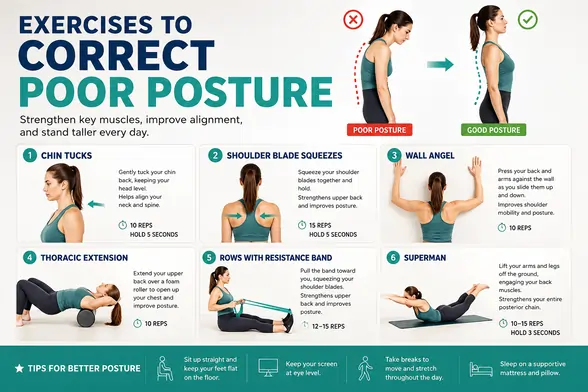
Exercises To Correct Poor Posture
Introduction
A person’s posture can affect their overall health and well-being. A person may establish a posture that lowers the risk of back pain and other issues with the use of exercises and other advice.
More than only self-confidence may be enhanced by proper posture. Additionally, it provides long-term health advantages like:
- decreased back pain
- reduced chance of harm
- increased circulation, digestion, breathing, and flexibility;
- less strain on the muscles and joints
People may become more conscious of their bodies when they begin to correct their posture. A person may become more aware of misalignments in different regions and start to notice when their muscles are stiff.
The body will eventually learn to spontaneously correct poor posture.
Why is it important to have proper posture?
Your body and spine experience the least amount of additional strain and tension from gravity when you are standing and sitting with good posture. Over time, back and neck pain may result from gravity’s constant tugging of us forward and downward.
Your neck and back experience an additional 10 pounds of strain for each inch that your head deviates from vertical. As the day goes on, this increased effort may result in joint pain and muscular fatigue.
What causes bad posture?
- Occupation: If slouching at your desk has become habitual, you’re not alone. Many people find it difficult to maintain appropriate posture during the day because of their sedentary jobs or excessive smartphone use.
- Muscle imbalances: When one part of the body is weak or tense, other muscle groups are forced to compensate. For example, if you have a weak core, your back muscles may have to work harder to maintain stability, resulting in bad posture.
- Excess weight: Carrying extra weight around the midline can force the pelvis forward, putting additional strain on the low back and leading to bad posture.
- Sleep habits: If you’ve ever woken up with a tingling sensation in your neck or unexpected back discomfort overnight, you’ve most certainly slept in an uncomfortable position, which can impair your posture throughout the day.
How posture affects your physical and mental health
Health risks of bad posture
- Back and neck aches: It’s no secret that slouching or hunching puts additional strain on the spine, resulting in back and neck pain.
- Headaches: Neck pain and strain can cause headaches, including persistent migraines.
- Poor posture can eventually lead to balance impairment, which may increase your risk of injury.
- Digestive issues: Bad posture can strain the abdomen, resulting in delayed digestion and discomfort.
Health benefits of good posture
- Reduces stress on joints, muscles, and ligaments: Good posture helps to avoid injury, pain, and discomfort.
- Enhanced circulation: Poor posture can compress key organs, making it difficult for blood to circulate. In contrast, good posture promotes circulation throughout the body.
- Better energy and mood: If you’ve ever felt more confident after standing up a bit straighter, the feeling isn’t all in your head: studies have shown that perfect posture may reduce fatigue and increase mood in depressed individuals.
- Better breathing: Having good posture enables you to breathe more deeply, which increases your intake of oxygen.
Proper posture guides
Standing
- Stand with your feet flat.
- Shoulder-width apart.
- Stand tall, as if a cord is pulling upward from your head, and relax your arms at your sides.
- Pull your belly button slightly towards your spine.
- Keep your chin parallel to the floor.
Sitting at a desk or table
- Sit with your back straight and your shoulders pulled back.
- Maintain a level footing on the floor. Avoid crossing your legs or ankles.
- Rest your forearms on the table, keeping your shoulders back.
- Your chin should be parallel to the ground, and your ears should be aligned with your collarbone.
Lying down
- People can maintain proper posture when lying on their back or side. Maintain proper spine alignment and prevent twisting at the waist. Placing a pillow beneath or between the legs can help with back pain.
People should avoid sleeping on their stomachs because it causes the neck to rotate, placing unnecessary strain on the neck, shoulders, and back.
How can you improve your posture?
- Maintain good posture throughout the day. When we are not paying attention, we tend to default to a forward posture since gravity’s influence is constant.
- Remind yourself throughout the day to elevate your chest bone (sternum), keep your stomach muscles in, and maintain a mild bend in your low back. If you sit a lot during the day, a little pillow behind your lower back might assist in keeping your spine in a more upright position.
- You may also undertake exercises to strengthen the muscles in your back that keep you upright, as well as gently stretch the muscles in your front that tighten due to forward posture.
- Core workouts improve the muscles in your belly, back, hips, and pelvis, improving your trunk’s balance and stability. This improves your ability to perform on the field or in daily tasks.
- The stronger your core, the less likely you are to strain your back or neck while doing activities that are vital to you.
Best Exercises to Improve Your Posture
Chin tuck
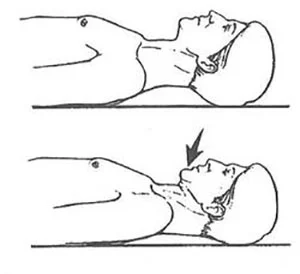
- Lie on your back on the mat, knees bent, feet on the mat.
- Feet should be hip-width apart.
- Let your arms rest at your sides
- Palms facing up.
- Gently tilt the chin toward the throat and keep it there.
- Hold this position and softly sink the back of your head farther into the mat. Hold lightly for three seconds, then repeat ten times.
Neck Stretch
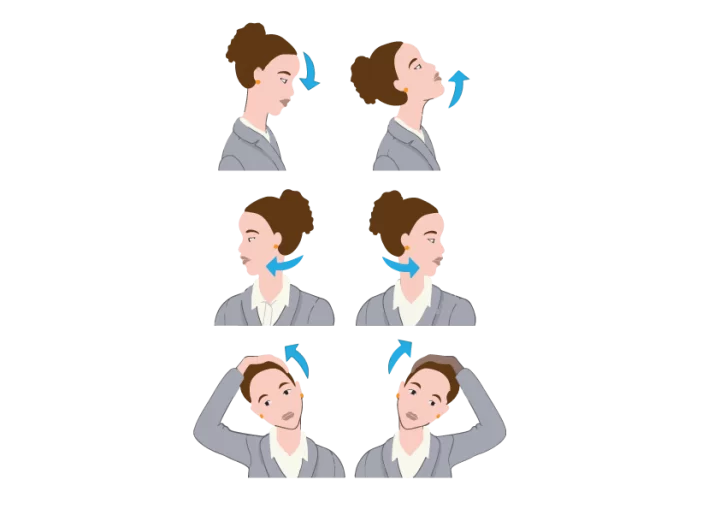
- Begin standing with your feet hip-width apart, core engaged, and shoulders pushed down and back.
- Slowly pull your right ear towards your right shoulder, pausing when you feel a stretch. Bring your right hand to the top of your head and softly press down with your fingertips to lengthen the stretch. Hold for 5–10 seconds. Repeat on the left side after slowly returning to the beginning position. Do two to four repetitions.
- Without bending your upper back, slowly bring your chin down to your chest. Hold for 15-30 seconds, then return to the beginning position. Then, slowly relax your head backward, bringing your chin up toward the ceiling. Keep your shoulders relaxed. Do two to four repetitions.
Wall Angels
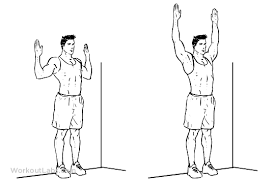
- Stand in a neutral stance against a wall, heels 3 to 4 inches away.
- Perform a chin tuck such that the top of your head and shoulders meet the wall while your chin remains horizontal.
- Tuck your pelvis in to press your back against the wall. Your lower back’s curvature should flatten somewhat.
- Slowly lift your arms over your head while keeping your elbows, wrists, and shoulders in consistent contact with the wall.
- Aim for 3 to 4 seconds of up and down the wall.
- Repeat 4 to 5 times while keeping contact with the wall.
Chest opener
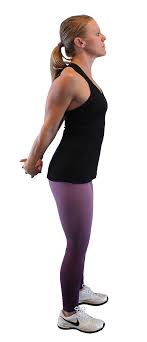
- Stand with your feet approximately hip-width apart.
- Bring your arms behind you and interlace your fingers, palms pushing together. If your hands are unable to touch, grasp a towel.
- Draw your shoulders back and down, keeping your head, neck, and spine in a neutral position. Look straight forward.
- As you raise your chest toward the ceiling and lower your hands toward the floor, take a breath.
- Take 5 deep breaths while holding this stance.
- Take a few deep breaths to relax.
- Repeat at least five times.
Bridges
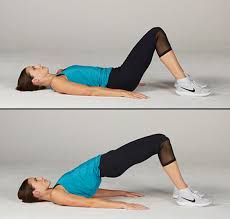
- Lie on your back, legs bent, feet flat on the floor.
- Use your buttocks and core muscles to raise your hips. The buttocks and lower back should be raised off the ground.
- Gently return to the starting position.
Plank
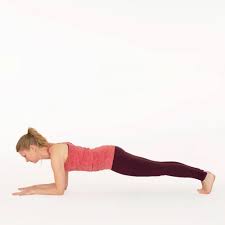
Plank Steps:
- Get down on your hands and knees. Ensure that your hands and knees are in alignment with your shoulders and hips, respectively.
- To land on the balls of your feet, raise your heels and straighten your legs. The body should be in a straight line.
- Keep your chest open and your shoulders back.
- Hold this posture for 30 to 60 seconds.
Pigeon Pose
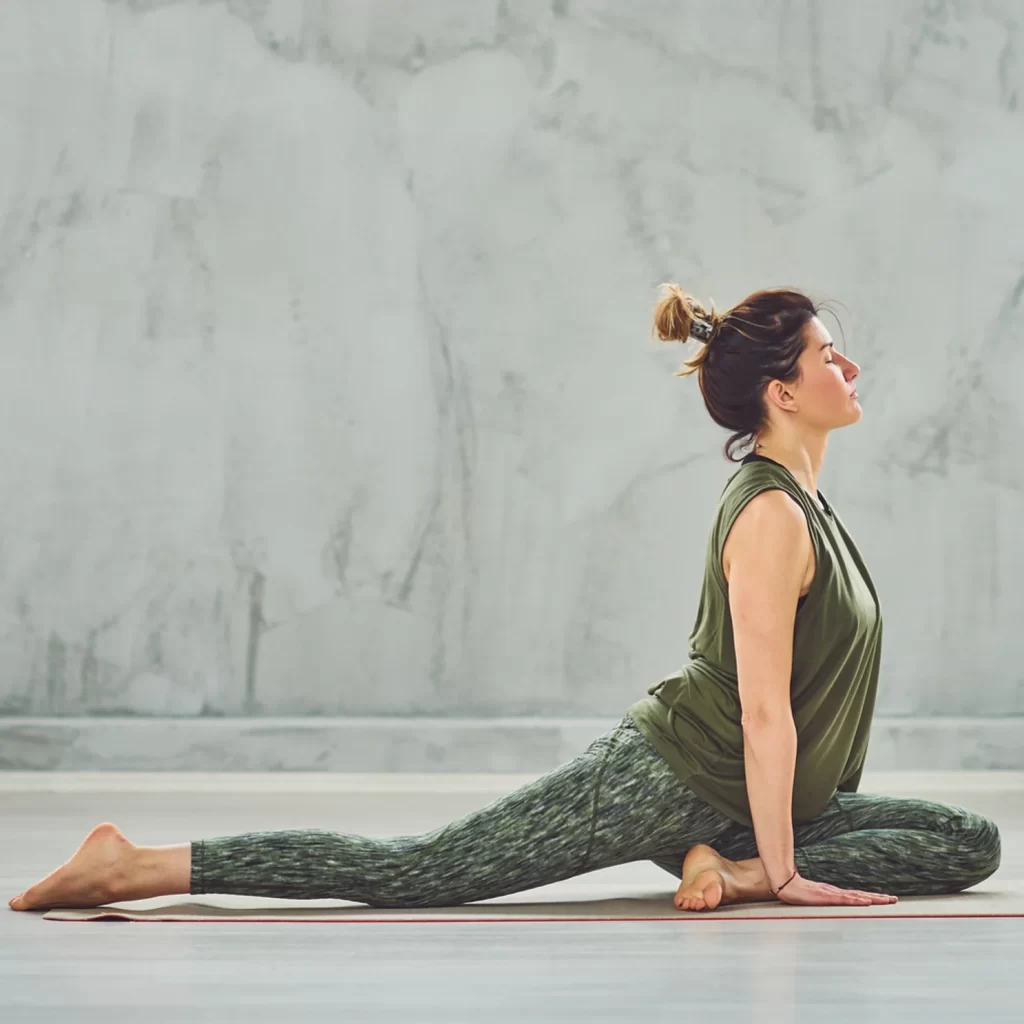
- Come down on all fours, knees below hips and hands slightly in front of shoulders.
- Bend your right knee and position it behind your right wrist, with your right foot pointed to the left.
- Rest the outside of your right shin on the ground.
- Slide your left leg back, straighten your knees, and place your thigh on the floor. Keep your hips square.
- Make sure your left leg is extended straight back (not to the side).
- Slowly lower your body to rest on your inner right thigh, arms outstretched in front of you.
- Hold this posture for up to one minute.
- Slowly release the position by walking your hands back toward your hips and lowering your torso.
- Repeat on the other side.
Thoracic spine rotation
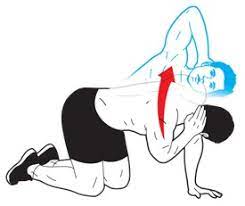
- Come to all fours, drop your hips back to your heels, and rest on your shins.
- Place your right hand behind your head with your elbow stretched to the side.
- Keep your left hand behind your shoulder, or raise it to the middle and rest on your forearm.
- Exhale while rotating your right elbow up to the sky and stretching the front of your torso.
- Take a deep inhale and exhale in this posture.
- Return to your previous position by releasing.
- Repeat this exercise 5 to 10 times, then switch sides.
Hip Flexor Stretch
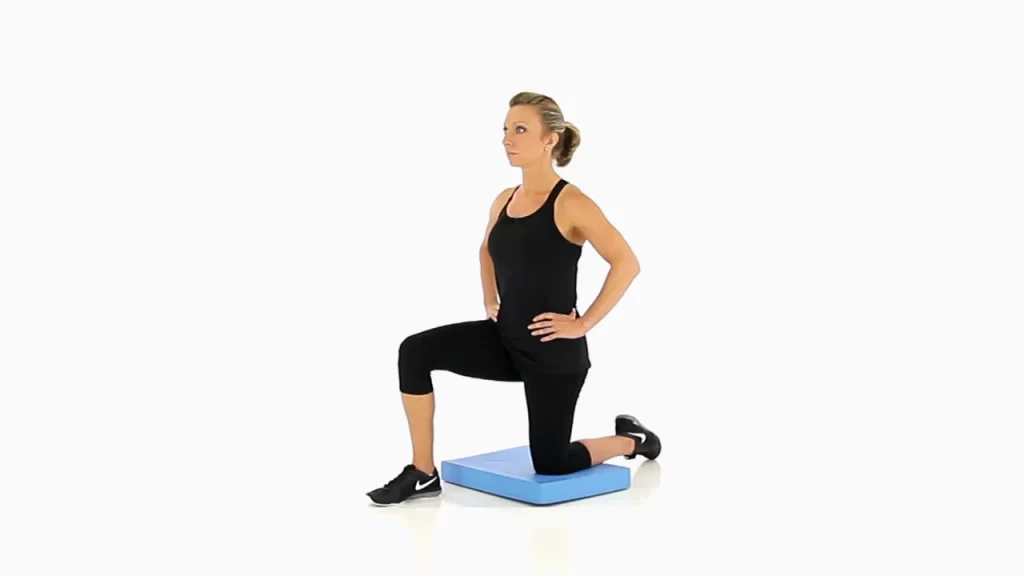
- Kneel with your right knee on the floor.
- Position your left foot in front and bend your knee at a 90-degree angle.
- Keep your back straight, chest forward, and head high.
- Put both hands on your left thigh.
- Gently thrust your hips forward and maintain this position for 20-30 seconds.
- Repeat the stretch on the right side.
Supine Hamstrings Stretch
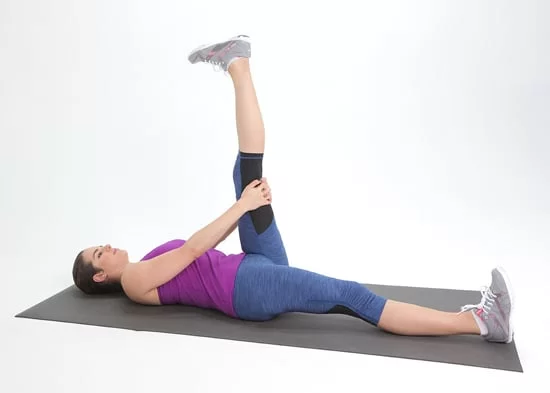
- Lie face up on the floor, knees bent and feet flat, arms spread out to the sides, palms facing upward.
- Extend the right leg to the ceiling. Contract your quadriceps (the muscles on the front of your leg) and bend your toes towards your body to feel a stretch in your hamstrings and calves.
- Hold this stance for 15-30 seconds and then relax. Perform two to four reps, then repeat on the opposite side.
Prone Press-Up
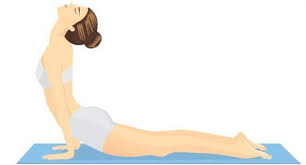
- Begin by lying on your stomach, hands at your shoulders, flat on the ground.
- Bend your back upward and place your hands on the ground.
- Perform two sets of ten repetitions
Superman
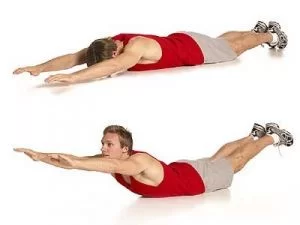
- Stretch both arms straight above while lying on your stomach on the mat. Your face should be toward the mat, and you can put a small towel roll under your forehead for comfort. Gently elevate your right arm and left leg one to two inches toward the ceiling while keeping them straight. Hold for three seconds, then repeat ten times. Next, do the same exercise with your right leg and left arm.
Bird-Dog
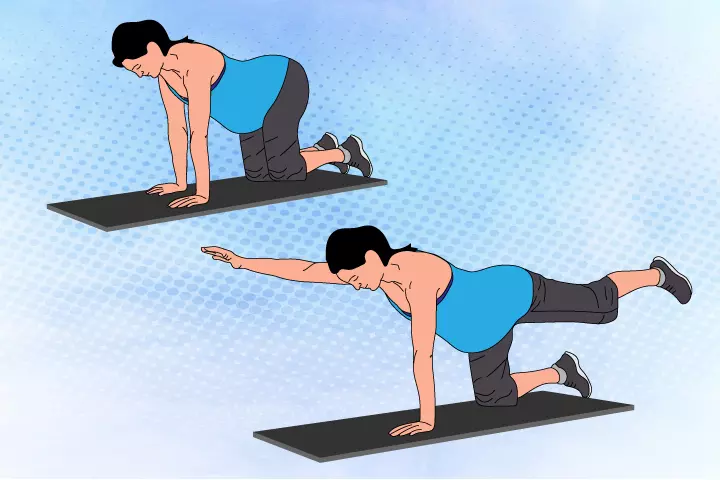
- Begin on your hands and knees, with your palms precisely beneath your shoulders and your knees beneath your hips.
- Engage your core to achieve a neutral spine. Maintaining this position, take your right hand off the floor and stretch your arm forward at shoulder height, bicep near to your ear. Simultaneously, bend your foot and point your knee toward the floor while extending your left leg behind you to hip height.
- After a moment of holding, put your foot and hand on the ground. Repeat on the other side. Do 8 repetitions.
Child’s Pose
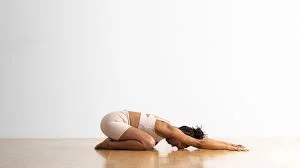
- Get down on your hands and knees.
- Gently lean backward while maintaining your hands in the same place.
- Lean back till your forehead is in contact with the ground.
- Your arms should form a straight line, with your buttocks resting on your heels.
- Keep your arms straight and your shoulders relaxed.
Cat-Cow
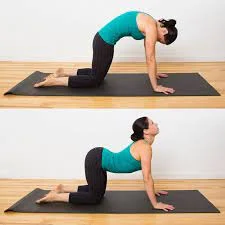
- Assume a hands-and-knees position, wrists under shoulders, knees under hips. Distribute your weight equally between your hands and knees.
- Inhale as you elevate your chest and tailbone, letting your abdomen descend to the floor as your spine arches. (Cow)
- Breathe out as you pull your chin to your chest and rotate your spine toward the ceiling. (Cat)
- Continue to alternate between Cat and Cow with your breath for at least 1 minute.
Tips
- Maintain good posture.
- Stay active by engaging in regular exercise that includes aerobic, strength training, or stretching.
- Maintain a healthy weight since excess weight weakens the abdominal muscles and puts stress on the joints and ligaments.
- Wear comfortable, low-heeled shoes with arch support. High-heeled shoes shift a person’s center of gravity, putting additional strain on the muscles and joints, particularly the knees.
- If you’re working or eating at a desk or table, make sure it’s at the appropriate height.
Conclusion
It takes a combination of muscular strength, joint mobility, and general balance to develop and maintain excellent posture. Wearing supportive shoes, maintaining an active lifestyle, and exercising body awareness may also be beneficial.
You could benefit from being more active by using a sit-stand desk or taking a stroll around the room at the top of the hour.
FAQs
Can long-term health problems result from bad posture?
Actually, bad posture can result in long-term health problems like persistent neck and back pain, reduced flexibility, compromised lung function, and a higher chance of spinal conditions.
Does exercising need good posture?
Of course, maintaining good posture throughout exercise is essential to avoiding injuries and getting the most out of your activity. When lifting weights, for example, you may protect your back by keeping your knees bent and using your leg muscles. Additionally, it keeps the spine neutral and prevents the back from rounding or overarching.
Is it common to experience soreness when doing these exercises for the first time?
When you first perform these exercises, you could feel a little uncomfortable or sore, particularly if you have bad posture or underlying musculoskeletal problems. It’s critical to pay attention to your body’s signals and to stop if you experience any severe or acute pain. It is possible to avoid pain by gradually increasing the workouts’ duration and intensity.
Can years of poor posture be corrected?
Improvements are possible, but it’s essential to control expectations. It will take time for change to occur.
Consult a healthcare provider if, after a few weeks of careful effort and regular stretching, you still don’t see improvements in your posture. To assess the alignment and form of your spine, they may suggest X-rays.
How long does it take for posture correction exercises to start showing results?
Depending on the person and how consistently they perform the exercises, it may take different amounts of time to notice effects from posture correction exercises. However, many people report better posture and less pain in a matter of weeks to months with consistent practice and appropriate technique.
References:
- Eske, J. (2023, February 13). Exercises and tips for better posture. https://www.medicalnewstoday.com/articles/325883#summary
- 6 exercises to help correct poor posture. (2019, September 19). The Ohio State University Wexner Medical Center. https://wexnermedical.osu.edu/our-stories/6-exercises-to-improve-posture
- Mazzo, L. (2025, January 30). How to improve your posture—and why it’s important for your workouts. https://www.onepeloton.com/blog/posture-exercises