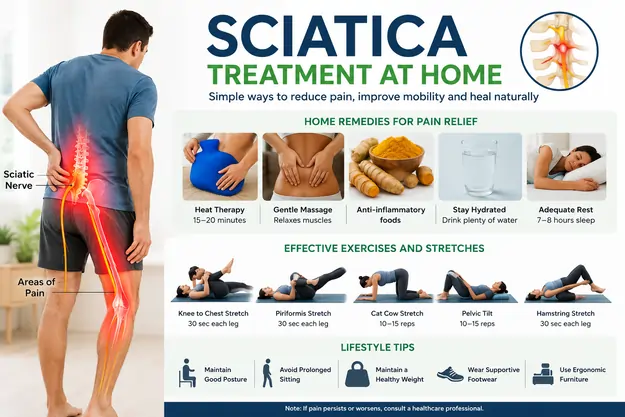
Sciatica Treatment At Home
Introduction
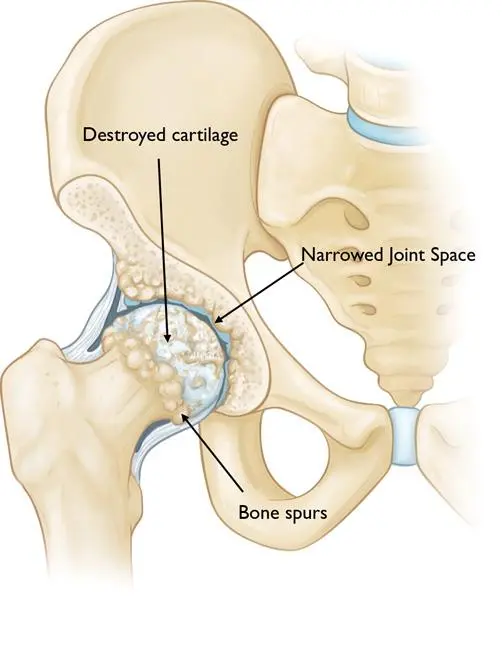
The sciatic nerve extends from your lower back to your feet. Sciatica occurs when a disc or bone spur compresses the sciatic nerve. This compression can lead to discomfort, irritation, and numbness. Sciatica pain may be scary when it interferes with your movement.
Corticosteroid medication, rehabilitation, and corrective surgery are all options for sciatica patients who have life-threatening pain. There are two types of surgical treatments for sciatica. There are two types of surgeries: discectomy and laminectomy.
However, when the pain is manageable, you can treat sciatica at home.
Symptoms
The following symptoms can be moderate to severe:
- Radiating Pain
- Numbness
- Feeling of tingling (pins & needles)
Serious symptoms to look out for include:
- Muscle weakness
- Loss of bladder control
- Loss of bowel control
Causes
- Cauda equina syndrome
- Degenerative disk disease
- Foraminal stenosis
- Herniated disks
- Osteoarthritis
- Pregnancy
- Spinal stenosis
- Spondylolisthesis
- Tumors, cysts, or other growths
Risk factors
- Previous or present injuries to your lower back or spine may increase your risk.
- Aging and spine tear: As you become older, your spinal discs and joints may wear down. This can result in pinched nerves and other spinal disorders. It very rarely occurs before the age of 20, unless it is due to an accident.
- Extra body weight: Carrying excess weight can put additional strain on your lower back and spine.
- Weak core muscles may provide less support for your spine.
- Your job or everyday activities: Heavy lifting, frequent bending, or prolonged sitting can all strain your lower back.
- Poor posture or lifting form: Using poor body mechanics while working or exercising may put you in danger.
- Diabetes: Type 2 diabetes can cause nerve damage.
- Low physical activity:
- Sitting too much
- Not moving enough.
- Tobacco use: Nicotine reduces blood flow and increases the likelihood of chronic pain.
How To Treat Sciatica At Home?
Ice Pack
Applying an ice pack to the back of the pelvis can help relieve sciatica pain. As a consequence, your back will feel numb instead of aching.
Heat Treatment
Warm baths, heat pads, and hot water bottles can assist with sciatica pain briefly. Heat improves the flow of oxygenated blood to the posterior pelvis, where the sciatic nerve’s root is located, resulting in pain relief. It is not advised to rely too much on this pain-relieving method, either, as using heat may cause fluid accumulation and increased inflammation.
Exercises For Effective Pain Relief
It may seem weird to exercise when in pain, but research suggests that resting in bed for an extended period of time might increase your back and leg pain. Lack of exercise and mobility can cause weakness and stiffness in the back muscles and spinal structures, and you may be unable to address back problems.
A regulated, progressive exercise program can help you treat, resolve, and avoid recurrence of the underlying causes of pain. The idea is to exercise gradually and keep it from becoming irritated or severe.
Pelvic Tilt
The pelvic tilt exercise strengthens the lower back muscles and improves pelvic alignment, reducing sciatic pain. This exercise stabilizes the spine and reduces the stress on the lower back, consequently relieving pressure on the sciatic nerve.
How to perform:
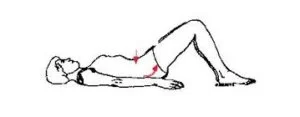
- Lie on your back with your feet flat on the ground and your knees bent.
- To flatten your lower back on the floor, tilt your pelvis slightly up.
- Hold this stance for a few seconds before relaxing.
- Repeat 10 to 15 times.
Frequent use of this exercise can lead to long-term sciatica therapy by stabilizing the lower back and improving posture. The pelvic tilt is especially useful since it strengthens the muscles that support the spine, perhaps preventing future episodes of sciatica.
Bird-Dog Exercise
How to perform:
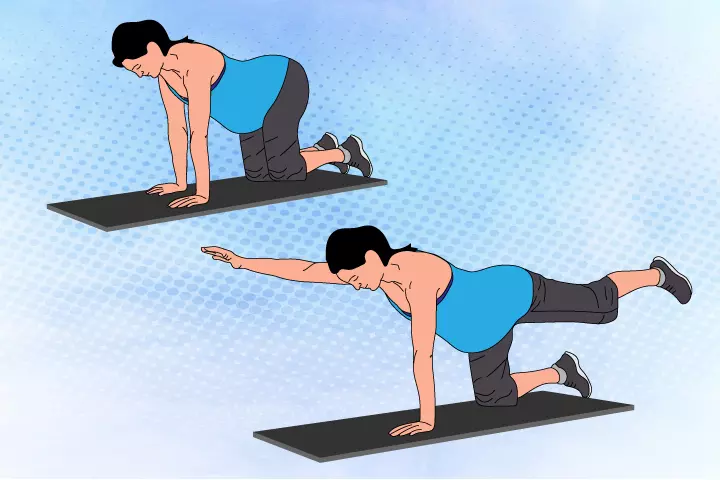
- Begin by going on all fours with a neutral spine.
- Inhale as you straighten and elevate an opposite arm and leg, with the left arm pointing ahead and the right foot pointing backward, or vice versa.
- Hold this pose for approximately five breaths.
- Return to neutral, then repeat with the opposite arm and leg.
- Repeat this stretch approximately three to five times.
Sciatic Nerve Glide Exercise
Exercises for nerve gliding promote relaxation and help the nerves move naturally.
How to perform:
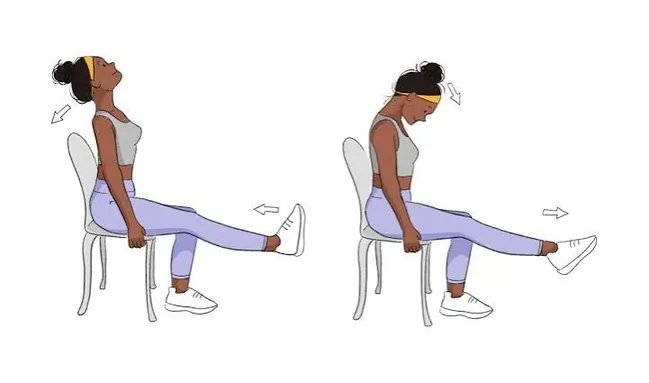
- The sciatic nerve glide exercise is performed while sitting erect in a chair.
- Put one foot flat on the floor while you’re seated. Next, straighten the opposite knee.
- Slowly bend your ankle while maintaining your toes pointing towards you.
- Then, carefully bend your ankle the other way while maintaining your toes pointing in the opposite direction. Bend your neck in the same direction as your ankle.
- Keep altering your ankle position at least 15 times.
- Repeat the exercise with the other leg. You may perform this workout twice every day.
Stretching It Out Helps
Including gentle stretching in your daily practice will help you in a number of ways. It is not only a wonderful approach to enhance spinal flexibility and range of motion, but it also helps to strengthen core and spinal strength, which will benefit you in the long run. The majority of stretches are simple enough to be done while watching television or listening to music.
Pigeon Pose
How to perform:

- Lie on your back, one foot flat on the floor, knee pointing up.
- Cross the opposite leg’s ankle over the knee.
- Reach forward, lifting your upper back off the floor if required, and grip your shin with both hands.
- Pull your legs to your chest.
- Hold this stance for at least five breaths, then release.
- Repeat this stretch approximately three to five times.
Supine Spinal Twist
How to perform:

- Place your legs as near to your chest as you can comfortably position yourself while lying on your back.
- Spread both arms.
- Lower both legs to one side and tilt your head the opposite way.
- Maintain this posture for at least five breaths.
- Return to the starting place and repeat on the other side.
- Repeat on both sides about three to five times.
Cat-Cow Stretches
How to perform:
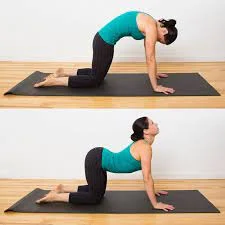
- Begin by going on all fours with your spine in neutral.
- Inhale, arch your back, and move your stomach to the floor.
- Exhale and return to neutral until your back is bent and your upper back reaches for the ceiling.
- Come back to the neutral position.
- Repeat this stretch at least 10-15 times.
Standing Hamstring Stretch
Your sciatic nerve may be significantly less stressed by stretching your hamstrings, which will ease your pain. Tight hamstrings can increase sciatic pain by causing strain in the lower back and pelvis, putting pressure on the sciatic nerve.
The standing hamstring stretch lengthens these muscles and relieves tension, providing improved nerve mobility and less pain.
How to perform:

- Stand with one foot on a slightly raised surface (like a step or a chair).
- Keep your leg straight and toes pointing up.
- Gently lean forward from your hips while maintaining your back straight, until you feel a stretch down the back of your leg.
- Hold for 30 seconds.
- Switch legs and repeat.
Piriformis stretch
How to perform:
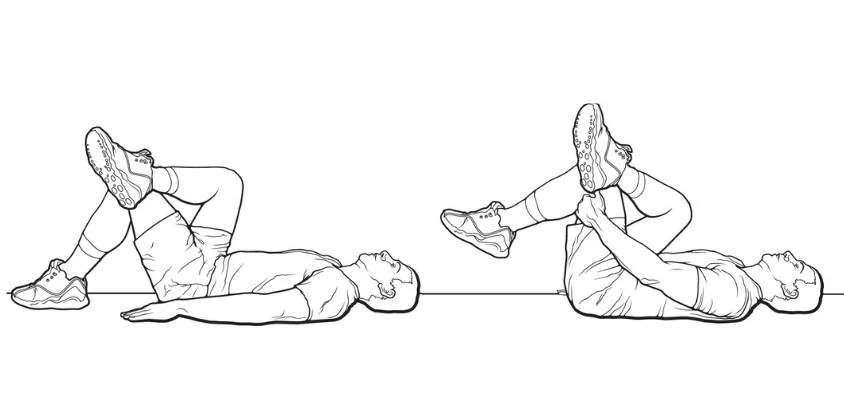
- Bend both knees while lying flat on your back.
- Cross your ankle over the knee on the other side.
- Reach behind your opposing knee and grab the back of your thigh.
- Pull your thigh gently in the direction of your chest.
- Hold for thirty seconds.
- Do this twice a day, three times on each side.
Knee-to-Chest Stretch
The knee-to-chest stretch is a simple but effective approach to stretching the lower back and glutes, relieving strain on the sciatic nerve.
How to perform:
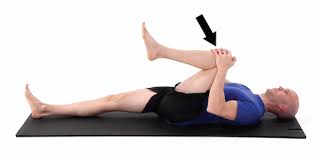
- Lie on your back, legs outstretched.
- One knee should be bent and dragged up to your chest.
- Gently bring the knee closer to your chest by placing your hands over it.
- Hold the position for 30 seconds.
- Repeat for the other leg.
Low-impact exercises
Water aerobics, stationary riding, and yoga can help to minimize the intensity of symptoms and avoid future back problems. Stronger back muscles also support the spine and relieve pressure on the spinal nerves, thereby reducing the frequency and severity of sciatica pain attacks. Exercise helps to keep your joints flexible while also strengthening your core, lower back, and abdominal muscles. These muscles protect the spine from damage and tension, which might cause extra pain.
Correct Your Posture
Sciatica pain can be managed or relieved by improving posture. Working at a desk or sitting in the same posture for an extended period of time might aggravate sciatica symptoms. The easiest approach to avoid this is to change your posture every 20 minutes and keep your head aligned with your hips.
It relieves pressure on the spine and lowers sciatica pain symptoms. Taking regular breaks from sitting might also help to ease back pain and improve your overall health.
Stop Painful Activities
Some motions may trigger sciatica-related pain. Squatting exercises, elevating both legs off the ground while lying down, bending forward with your legs straight, jumping, jogging, and twisting the torso are some examples.
Avoid motions that cause sciatica pain. If you know that a certain form of physical activity affects your sciatica, avoid doing it. Continuing to engage in physical activities that cause sciatica will most likely worsen the issue.
Avoid Sitting or Lying Down for Too Long
Try not to sit or lie on your sofa for more than 20 minutes. Sitting or lying down for too long might aggravate your sciatica pain. Instead, get up and move about every twenty minutes, no matter how painful it is.
When to See Your Doctor for Sciatica Pain?
With sciatica, each person may suffer various symptoms and levels of pain. The type and level of pain you experience, as well as the underlying reasons, vary from person to person. Some people see relief with self-care home remedies in a matter of days, while others require more time.
If your pain does not appear to be improving and self-care measures such as cold and heat, stretching, and over-the-counter drugs are not effective, contact your doctor. Redefine Healthcare’s pain control professionals identify the underlying reasons for your problems and provide the best solutions to help you feel better.
Some sciatica symptoms can develop into medical crises, and postponing treatment might result in lasting nerve damage. If you suffer any of the following symptoms, call your doctor as soon as possible.
- Severe lower back and leg pain that doesn’t go away with over-the-counter drugs
- Nerve-related symptoms, including tingling, numbness, weakness, or pain that feels like an electric shock
- The pain has not improved after 2 weeks
- Even when you use home remedies for self-care, the pain gets worse.
- Loss of bladder and bowel control
Do not ignore your low back and leg pain and delay seeing a doctor. Acute sciatica might progress to chronic sciatica if you do not seek fast and appropriate treatment. If you are not careful, continuous pain may drive you to give up your favorite hobbies and disturb your daily routine.
FAQs
What is the underlying cause of sciatica?
The primary cause of sciatica is compression or inflammation of the sciatic nerve or its spinal nerve roots. While a pinched nerve is the major cause, the underlying causes vary greatly.
What is the quickest approach to healing sciatica?
The fastest non-surgical strategy to recover from sciatica is to alternate 20 minutes of ice and heat (for the first 48 hours), take over-the-counter anti-inflammatories, and engage in guided mild exercise such as walking and sitting piriformis stretches. Avoid lengthy bed rest, since modest movement promotes recovery.
Should you avoid sitting with sciatica?
Yes, prolonged sitting is terrible for sciatica. It applies up to 40% greater pressure to your spinal discs than standing, which can strain bulging discs on the sciatic nerve. It also reduces blood flow and tightens your hip muscles, which worsens nerve irritation and leg pain.
References:
- Harvard Health. (2024, July 22). Sciatica home remedies and self-care. https://www.health.harvard.edu/pain/sciatica-home-remedies-and-self-care
- DeSantis, C., & DeSantis, C. (2024, June 20). Sciatica pain treatment: At-Home Exercises for Pain relief. Bradley D. Ahlgren, MD. https://www.ahlgrenspinemd.com/2021/06/25/sciatica-pain-treatment-at-home-exercises-for-pain-relief/
- Sciatica. (2026, June 9). Cleveland Clinic. https://my.clevelandclinic.org/health/diseases/12792-sciatica
- How to treat sciatica at home. (2023, May 2). Texas Neuro Spine. https://www.texasneurospine.com/blog/how-to-treat-sciatica-at-home/?bp=35466
- Redefine Healthcare. (2024, December 24). Sciatica Self-care: 5 At-home remedies for low back and leg pain. NJ’s Top Orthopedic Spine & Pain Management Center. https://redefinehealthcare.com/sciatica-self-care-5-at-home-remedies-for-low-back-and-leg-pain/