Morning Stretches For Back Pain Relief
Introduction
Millions of people worldwide suffer from chronic back pain, which makes normal morning activities difficult. Gentle stretching exercises have emerged as a powerful, natural method for managing chronic discomfort, even though many people turn to medication as their first line of defense.
According to research, doing purposeful morning exercises may significantly lessen stiffness, increase mobility, and provide a pleasant outlook for the day. Numerous people have successfully integrated an extensive pain management approach into their everyday lives after learning how and why these thoughtfully crafted stretches work.
Why Does Your Back Hurt in the Morning?
It’s annoying to start the day with a sore back. Instead of feeling rested, you feel sore, stiff, and older than you actually are. If this sounds familiar to you, you’re not alone. Even though morning back pain is quite frequent, you don’t have to accept it as a part of your daily routine. To obtain relief and begin your day feeling refreshed and mobile, you must first understand the underlying problems.
Frequently, the pain originates from the events of the previous day as well as hours of inactivity during the night. The quality of your mattress, the way you sleep, and even everyday routines like prolonged sitting can all have an impact. Imagine it as a perfect storm of little worries that build up as you sleep, leaving you to handle the fallout when your alarm goes off. Fortunately, you have the ability to alter this pattern. You may significantly improve your daily mood by making a few easy changes to your life, such as stretching gently in the morning.
What Causes Morning Back Pain?
There are several possible causes of back pain in the morning. It frequently has to do with where you sleep. Your spine may become inflamed and painful in the morning if you sleep in an uncomfortable posture or on an unsupportive mattress.
Your everyday behaviors also have a big impact. Some muscles may become weak and strained if you spend most of your day sitting at a desk or doing repetitive tasks. You may experience tightness from this imbalance, which is particularly noticeable after a prolonged period of inactivity. While an underlying medical condition may be the reason in certain situations, morning back pain is often a lifestyle problem that may be effectively treated.
Why You Feel Stiff When You Wake Up
It’s normal to feel stiff and confined when you first wake up. Your body remains still for hours at a time throughout the night, which can lead to the tightening of your muscles and connective tissues. Additionally, your muscles receive less circulation when you sleep, and the fluid that lubricates your joints may thicken. The morning stiffness that makes those first few steps so difficult is caused by this combo. It needs time to warm up before it can function properly, much like an automobile engine on a chilly day. The secret to releasing those tense muscles and preparing your body for the day is gentle exercise.
How Stretching Eases Lower Back Pain
One of the best methods to treat stiffness and morning back pain is to stretch. Stretching promotes blood flow to your muscles, which gives them the nutrition and oxygen they require to perform correctly.
This increases your flexibility and relieves the stress that accumulated over the night. By strengthening your back and the core muscles that support it, a regular stretching regimen helps prevent future discomfort in addition to offering short-term relief. Stretching is an effective method for preserving a healthy, flexible spine and easing the stiffness that causes morning pain, even while it isn’t a cure for all back problems.
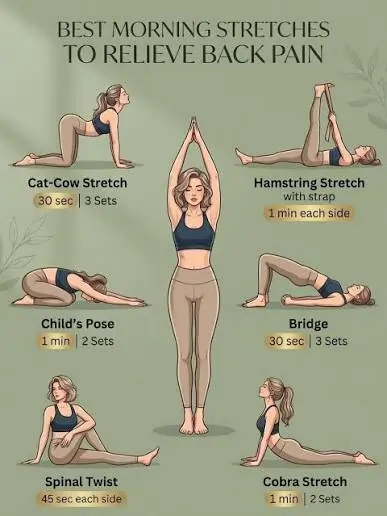
Best Morning Stretches For Back Pain Relief
This basic program includes moderate stretches that extend your spine, enhance blood flow to your back muscles, and improve your general mobility. You can perform the majority of them in bed.
The idea is to walk gently and mindfully, focusing on how your body feels. There is no need to push or force anything; the idea is to provide mild comfort rather than a hard exercise. By including these back-friendly exercises into your morning routine, you may begin the day with less pain and greater range of movement.
Cat-Cow Stretch
There is a reason why the Cat-Cow movement is considered a classic. It is a dynamic stretch that warms up the spine and increases flexibility by moving it through flexion and extension.
How To Perform It:
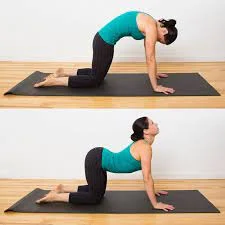
- Begin in a tabletop posture with your wrists immediately under your shoulders and your knees beneath your hips.
- As you inhale, lower your belly toward the bed, elevate your chest, and face ahead (Cow Pose).
- As you exhale, curve your spine up toward the sky and lower your chin into your chest (this is Cat Pose).
- Flow between these two movements for roughly a minute, allowing your breath to direct the movement.
Child’s Pose
Child’s Pose is a restorative stretch that feels fantastic on a stiff lower back. It gently stretches your entire back, hips, and shoulders.
How To Perform It:

- Keeping your big toes in contact, spread your knees apart.
- Sit your hips back on your heels and fold forward, placing your face on the bed or a pillow.
- Reach your arms out in front of you or rest them beside your body.
- Take long breaths into your back, feeling it expand with each inhalation.
- Hold this stance for 30 seconds to 1 minute, allowing your body to relax and release.
Knee-to-Chest Stretch
This is an excellent stretch to begin with since it is so mild on the lower back. It lengthens the spine and relieves stress that may have collected overnight.
How To Perform It:
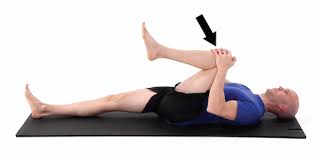
- Bend your knees and place your feet flat on the bed while lying on your back. Inhale a big breath.
- As you exhale, carefully draw one knee toward your chest and hold it with both hands. Keep your lower back lightly pushed against the mattress.
- Hold this position for around 20 to 30 seconds while breathing steadily.
- Release, then repeat with the opposite leg. Bring both knees to your chest at once for a deeper stretch.
Pelvic Tilt
This is a modest yet effective action for activating the core muscles that support your lower back. Maintaining the health of the spine requires a strong core.
How To Perform It:
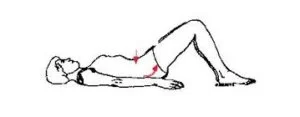
- Bend your knees, place your feet flat on the bed, and keep your arms at your sides while lying on your back.
- Take a slow inhale. As you exhale, use your abdominal muscles to gently press your lower back into the mattress while slightly tilting your pelvis forward.
- This is a tiny, controlled movement; you are not pushing your hips off the bed.
- Hold for a few seconds before releasing as you inhale.
- Repeat this 10-15 times.
Supine Spinal Twist
A mild twist improves spinal mobility and stretches the muscles on the sides of your back and hips.
How To Perform It:

- Lying on your back, bring your legs up to your chest.
- Extend your arms to the sides in a “T” form.
- As you exhale, carefully lower your legs to one side while maintaining your shoulders as near to the bed as possible.
- Turn your head to look in the opposite direction for a deeper stretch in your neck.
- Hold for 20 to 30 seconds, then utilize your core muscles to return your knees to the center and repeat on the opposite side.
Bhujangasana (Cobra Stretch)
The Bhujangasana (Cobra Stretch) is a gentle backbend that helps to correct the forward-flexed posture that many of us get from sitting or sleeping curled up. It promotes the natural curvature of your lower spine.
How To Perform It:

- Lie on your stomach and prop yourself up with your forearms, elbows exactly beneath your shoulders.
- Keep your palms flat against the bed. To elevate your head and chest, gently press down with your forearms and hands, resulting in a little back bend.
- Avoid straining your neck by keeping your hips pushed into the bed and looking straight ahead.
- Hold for approximately 30 seconds, breathing comfortably.
- This is one of the best morning stretches for back pain.
Hamstring Stretch
The hamstring stretch lengthens the muscles that go from the lower buttock to the back of the knee. Tight hamstrings can cause lower back stiffness and pain; therefore, stretching them on a regular basis is useful.
How To Perform It:

- Raise one leg off the mattress while grasping the back of your thigh with both hands. Maintain a small bend in your elevated leg and toes pointed towards the ceiling (to support your lower back).
- If you are just beginning, you may want to keep your other leg bent with your foot flat on the mattress at first.
- Repeat this stretch for each leg.
- Maintain hamstring stretches for 10-15 seconds.
Piriformis Stretch
This stretch targets the piriformis muscle, which is located deep in your buttocks. Stretching this muscle can help reduce pain and tightness in your buttocks and low back.
How To Perform It:

- Bend your legs and place your feet flat on the ground while lying on your back.
- Position your right ankle near the base of your left thigh.
- Then, put your hands behind your left thigh and pull them up toward your chest until you feel a stretch.
- For 30 to 60 seconds, maintain this position.
- Then do the opposite side.
How to Build Your Morning Stretch Routine
Start Your Routine Safely
Before starting any new fitness routine, it’s always a good idea to consult with your doctor, especially if you have a specific injury or severe chronic pain. A healthcare expert can assist you in understanding your body’s specific requirements and determine which motions are ideal for you. Your safety is the number one priority, and seeking experienced assistance assures you can begin your stretching Routine with confidence.
Focus on Proper Form and Breathing
When stretching, try for gradual, soft motions rather than sudden or jerky ones. The objective is to relax your muscles into the stretch rather than compel them. Pay close attention to your breath—it’s one of your most valuable tools. Inhale to prepare for a movement, then exhale to deepen the stretch. This helps to calm your neurological system, allowing your muscles to release more efficiently.
How Long Should You Hold Each Stretch?
To make the most of your morning routine, timing is essential. For most static stretches, attempt to hold the pose for 20-30 seconds. This allows your muscle fibers to relax and stretch, resulting in improved flexibility and relief from stiffness. Rushing through the hold will not provide the same benefits. Remember to breathe steadily throughout the entire period.
Make Stretching a Daily Habit
Consistency is essential for effectively managing lower back pain. Stretching for a few minutes in the morning can assist to maintain your muscles supple and your spine supported over time. To form a lasting habit, consider connecting your new routine to something you currently do every morning. It does not have to be a long exercise; even five minutes each day is preferable to a lengthier session once a week. Soon, it will seem like a normal and important part of your morning routine.
Common Mistakes To Avoid
- Not warming up
- Stretching is often thought of as a warm-up before physical activity, but you should warm up before stretching. A pre-stretching warm-up will raise your core temperature, making muscles more supple and increasing blood flow to the muscles and connective tissue.
- Your warm-up should include modest cardiovascular movement, such as jogging in place, jumping jacks, or a brisk stroll, to prepare your muscles for stretching and more strenuous exercise later. The purpose of your warm-up is to elevate your heart and breathing rates sufficiently to boost blood flow. This action will relax the muscles, maximizing the advantages of stretching and preventing harm from a cold stretch.
- Overstretching your muscles
- Stretching should not be uncomfortable. Applying too much energy or going too far into a stretch might lead to a torn muscle. Slowly begin your stretches. You may feel somewhat uncomfortable during a stretch, but it should not hurt. Do not force your body beyond its limits, and always keep within your normal range of motion. If you sense tightness in one muscle region, repeat the stretch several times without pressing too hard.
- Bouncy stretches
- Bouncing when stretching, if done too aggressively, might result in a strained muscle. This ballistic action may cause the muscle to tighten up to protect itself, undermining the aim of the stretch. Bouncing while stretching may potentially lead you to stretch too deeply.
- Instead of bouncing, slowly expand into the stretch. After ten to fifteen seconds of holding the stretch, let go and repeat.
- Holding your breath while stretching
- Believe it or not, intentional breathing improves the effectiveness of stretching. Many individuals unconsciously hold their breath during stretching, which causes muscles to tighten and resist. In contrast, breathing boosts blood flow and distributes oxygen to the muscles. While stretching, breathe deeply and gently through your nose to relax your muscles and make them more sensitive to the stretch.
Safety tips
Listen to Your Body
You are the absolute authority over your own body. Before beginning any new workout regimen, consult with your doctor, especially if you have a specific injury or are experiencing severe pain. Maintain soft, flowing movements as you go through each stretch. Avoid making quick or jerky movements, which can place excessive strain on your muscles and spine. The objective is to relax into the stretch rather than push it. Your body will tell you what it needs and what feels good; your responsibility is to pay close attention and respect those signals.
Know When to Stop Stretching
Understanding the difference between a successful stretch and a painful one is critical. A proper stretch should provide mild to moderate muscular tension—a gentle pull rather than a harsh or stabbing sensation. If you experience acute, shooting, or growing pain, cease stretching right away. Pushing your body into a painful position is ineffective and might result in harm.
When It’s Best to Skip Your Routine
Stretching will not always be the greatest option, and acknowledging that fact is a show of strength, not weakness. If your back discomfort is acute, greater than normal, or does not improve with modest movement, it’s time to rest. When your body is in pain, forcing it to stretch might be more harmful than beneficial.
Other Ways to Support Your Back
- Strengthening Exercises: Use core-strengthening workouts to help your lower back.
- Posture Awareness: Maintain appropriate posture, especially when sitting or standing for an extended period.
- Ergonomic Adjustments: To decrease lower back pain, ensure that your workstation promotes a healthy posture.
- Regular Physical Activity: Exercise regularly to improve general health and flexibility.
- Better Sleep Position: If you sleep on your back, consider placing a cushion between your knees to retain your lower spine’s natural bend. For side sleepers, putting a cushion between your knees can help keep your upper leg from dragging your spine out of position. Sleeping on your stomach can strain your neck and back, so try to avoid it as much as possible. These small modifications might help you wake up feeling less stiff and more at ease.
Conclusion
Individuals with chronic back pain might benefit greatly from adopting a consistent morning stretching regimen. When performed correctly and consistently, stretching exercises help to increase spinal mobility, reduce muscular tension, and improve everyday function.
Patients who follow correct safety standards and include these mild motions into their morning routine can see a gradual improvement in their back pain symptoms and general quality of life.
FAQs
How soon could I expect to get relief from my morning back pain?
You’ll most likely notice an instant change in stiffness following your first session. The initial sensation of loosening up is a terrific start. However, consistency is essential for a significant reduction in your everyday morning pain. Stick to the program for a few weeks, and you should notice a dramatic difference as your muscles get more flexible and your spine receives the regular support it requires.
Can I perform this stretching regimen at night rather than in the morning?
Absolutely. While this technique is meant to relieve morning stiffness, stretching before bedtime is also beneficial. It can help relieve stress built up over the day and may even improve your sleep quality. The most essential thing is to develop a regular habit, so select a time of day that you are most likely to stick to.
What are the top three causes of back pain?
Back pain is most typically caused by three types of injuries: muscle and ligament strains (from overexertion or improper lifting), disc troubles (such as bulges or herniations that push on nerves), and joint problems.
Why is my back aching every morning?
Lower back pain in the morning might be caused by a variety of health issues. It could be due to specific lifestyle behaviors, such as being overweight or living a sedentary lifestyle. Your lower back muscles may experience increased pressure and strain as well as frequent wear and tear as a result.
Which is better: stretching on the floor or your bed?
When you’re just getting started, performing these easy stretches in bed is absolutely OK. It’s a simple and comfortable approach to get started with the motions. As you grow more comfortable with the practice, you may discover that using a yoga mat on the floor gives a firmer, more solid surface, allowing you to retain better form and achieve a little deeper stretch.
References:
- Cook, B., & Cook, B. (2025, October 14). 7 morning stretches for lower back pain relief – STRETCHMED. STRETCHMED – 1-on-1 Assisted Stretch. https://stretchmedstudios.com/morning-stretches-for-lower-back-pain/
- Author: Michelle Kenway, Pelvic Floor Physiotherapist. (2022, January 5). Lower back stretches to ease morning back stiffness – pelvic exercises. Pelvic Exercises. https://www.pelvicexercises.com.au/lower-back-stretches/?srsltid=AfmBOopX_jSZn1kPkFVn_6VXE_Z1urGiHtXv1zOVeUIiasRbFlWnUjY4
- Tran, J. (2025, March 12). Gentle morning stretches to ease chronic back pain. Activ Therapy. https://activtherapy.com.au/blog/gentle-morning-stretches-to-ease-chronic-back-pain
- Sofia, C. (2025, March 8). 9 Best morning stretches for back pain relief and flexibility. Coach Sofia Fitness. https://www.coachsofiafitness.com/morning-back-stretches/
- Admin. (2020, October 22). 5 STRETCHES TO RELIEVE MORNING BACK PAIN. GetPT Blog. https://getpt.org/5-stretches-relieve-morning-back-pain/
- 5 morning stretches to relieve back pain | Nuffield Health. (n.d.). https://www.nuffieldhealth.com/article/5-essential-morning-stretches-to-relieve-back-pain