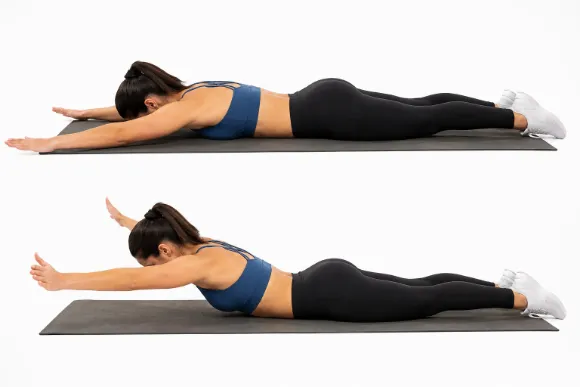
Prone Y Raise Exercise
Introduction
The Prone Y Raise is a simple yet highly effective exercise designed to strengthen the muscles that support your shoulders and upper back. By lifting your arms into a “Y” position while lying face down, you primarily target the lower trapezius, rear deltoids, and rotator cuff muscles, helping improve shoulder stability, posture, and overall upper-body function.
The Prone Y Raise can be a useful addition to any exercise or rehabilitation regimen, regardless of whether you’re an athlete, an office worker, or someone healing from a shoulder injury. It helps correct rounded shoulders caused by prolonged sitting, enhances scapular control, and reduces the risk of common shoulder problems. Because it requires minimal equipment, the exercise can be performed at home, in the gym, or as part of a physiotherapy program.
What Muscles Are Worked by Prone Y Raises?
Mobilizer Muscles
When performed correctly, prone Y raises work the upper and lower trapezius muscles, as well as the posterior deltoid head. Each of these muscle groups is important for mobility of the shoulder or shoulder blades; hence, they are the primary focus of the exercise.
Stabilizer Muscles
Along with the mobilizer muscles, there are the levator scapulae, serratus anterior, medial deltoid head, and several deep upper back and rotator cuff muscles. This includes the teres muscles, rhomboideus major, and supraspinatus.
How to do Prone Y Raises?
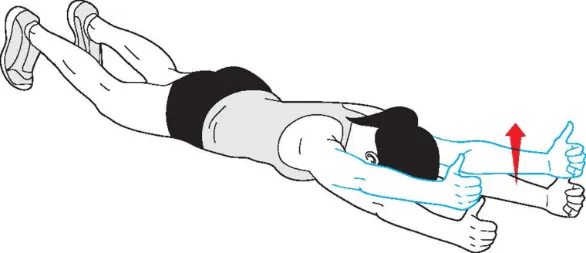
- To do the prone Y raise, the exerciser will lie flat on their stomach, legs straight and close together.
- The arms should be elevated parallel to the shoulders at a 45-degree angle, palms facing each other, producing a letter “Y” shape with the upper body.
- From this position, the exerciser pulls their scapulae together and squeezes their posterior deltoids, elevating their arms off the floor while maintaining the same “Y” shape until a full range of motion is achieved.
- Now, at the end of their range of motion, the exerciser progressively releases the tension in their scapulae and lowers their arms back to the floor, maintaining the same posture.
- At this moment, the repeat is believed to be complete.
Benefits of Doing Prone Y Raises
Strengthens, mobilizes,s and stabilizes the Upper Back Muscles
- Prone Y raises are utilized to strengthen, stretch, and increase the static capacity of the upper back muscles. These advantages are particularly noticeable in the lower trapezius and the posterior deltoid head, which can produce greater force, sustain isometric contraction for longer, and achieve a wider range of motion.
Excellent for Reinforcing Scapula and Shoulder Joint Movement
- Individuals looking to enhance the stability and force of shoulder and scapula motions can do so with prone Y raises, which do not increase the risk of injury or require any equipment.
Low Joint Impact, Accessible and Easy to Master
- For typically healthy people, the prone Y raise is extremely unlikely to cause injury and has the bonus of requiring no advanced workout knowledge or equipment. These features make the prone Y raise one of the most accessible actions for even the most inexperienced athletes, providing an entrance point into general training and a great tool for individuals looking to enhance their overall shoulder girdle structure.
Improves Posture of the Upper Back
- The scapula’s position, especially its degree of retraction, is an important aspect of upper body posture.
- Individuals with poor upper back posture frequently have internally rotated shoulders, a curved cervical spine, a forward extended neck, and, on rare occasions, a naturally lengthened or “winged” scapula.
- Apart from more severe cases or underlying medical disorders, one of the most effective strategies to fix postural abnormalities is to conduct low-impact resistance exercises, such as the prone Y raise.
Common Mistakes To Avoid
Insufficient Range of Motion
To ensure that the upper back is fully contracted, the exercise should be performed with as much range of motion as possible. This means that at the beginning of the exercise, the arms should be on the floor, and at the end, the shoulder blades should be firmly pressed together.
Insufficient range of motion might lead muscles to be targeted at a much lower intensity, resulting in poor overall results.
Excessively Rapid Tempo
Similar to an inadequate range of motion, practicing the prone Y raise too rapidly might reduce its effectiveness as an exercise. Try to finish each workout repeat in two to three seconds, extending out each half as you go.
Arching the Lower Back
To assist in separating the upper back and reduce unnecessary tension on the lower back, avoid arching as much as possible. Maintain a neutral curve in the lower back and pelvis while contracting the abdominals.
Failing to Retract Shoulder Blades
Exercisers who depend too much on their deltoids or even their abs may fail to appropriately use their shoulder blades, undermining the aim of the workout.
One useful hint is to imagine squeezing a little ball behind the back with the shoulder blades. This should appropriately retract them without the need for muscles other than those in the upper back.
Alternatives to the Y Raise
Dumbbell Face Pulls
Dumbbell face pulls are a superb upper-back strengthening exercise that builds on the advantages of prone Y raises.
How to do:
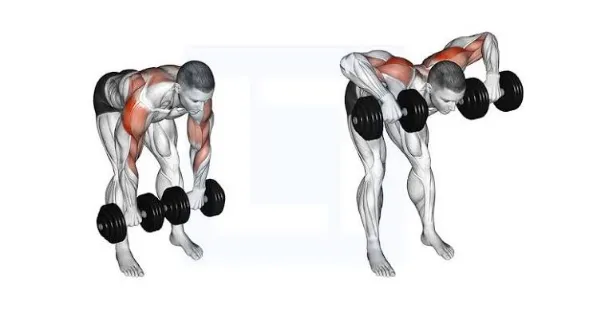
- Set an adjustable bench to a 30-45-degree slope and lie face down, chest against the pad, gripping a dumbbell in each hand.
- Pull the dumbbells up and out by bringing your elbows back and externally twisting your shoulders.
- At the top position, your upper arms should be nearly parallel to the floor, with your forearms pointing down.
- Squeeze your rear deltoids and upper back muscles while holding briefly at the peak.
- Lower the dumbbells back to their starting position with control, then repeat.
Weighted Incline Y Raises
Performing Y raises on an incline bench with a pair of dumbbells is one alternative for essentially the same activity but with a wider range of motion and more intensity.
Weighted incline Y raises are just a more severe version of the unweighted prone type, allowing more advanced exercisers to enhance their training without the limitations of the latter routine.
How to do:
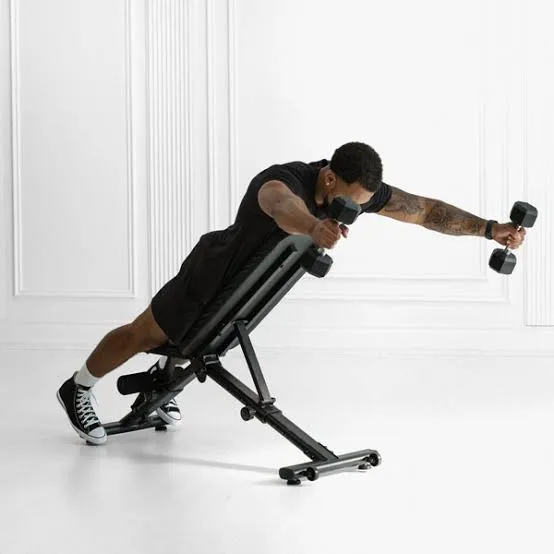
- Set a bench at a 30-45 degree slope and lie face down, chest supported against the pad, holding a light dumbbell in each hand.
- Let your arms dangle straight down, palms facing each other or thumbs pointing forwards.
- Raise both arms upward and outward at a 45-degree angle from your head, creating a Y shape.
- Lift your arms until they are parallel to or slightly higher than your chest, squeezing your lower traps and back delts.
- Hold the highest posture for 1-2 seconds while concentrating on the contraction in your upper back.
- Lower the dumbbells carefully back to their starting position and repeat.
Dumbbell High Elbow Rows
The dumbbell high elbow row is still considered a high-risk workout that demands some amount of training knowledge to do successfully.
If you have a history of shoulder, shoulder blade, or elbow issues, avoid practicing this exercise as an alternate to the prone Y raise.
How to do:
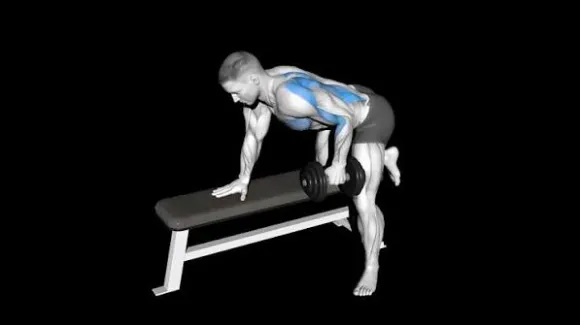
- Bend over or place your upper body on an inclined bench, face down.
- With your arms hanging straight down, grasp light dumbbells.
- Extend your elbows and raise them toward the sky.
- Squeeze your shoulder blades together as you pause at the top.
- Return to the beginning by gradually lowering the weight.
Tips
- Lift your arms and engage your shoulder blades.
- Keep your head level and prevent straining your neck.
Conclusion
The Prone Y Raise is an excellent exercise for improving shoulder stability, strengthening the upper back, and promoting better posture. When performed with proper form and controlled movements, it helps enhance scapular control, supports rotator cuff health, and reduces the risk of shoulder injuries. Include it regularly in your workout or rehabilitation routine to build stronger, healthier shoulders and improve overall upper-body function.
FAQS
Are Prone Lateral Raises Similar to Prone Y Raises?
No, prone lateral raises are largely a medial deltoid exercise in which the arms abduct when fully extended. Y raises use a more vertical arm posture and target the posterior deltoid head and upper back muscles instead.
What is a Standing Y Raise?
The standing Y raise is a variant on the Y raise in which the performer lifts their arms diagonally into the air.
The standing variant is typically performed with a pair of dumbbells, which allows for more focused development of the trapezius and deltoids.
What are prone Y raises useful for?
Prone Y raises are excellent exercises for strengthening the lower trapezius muscles, increasing shoulder stability, and correcting bad posture. They also assist in relieving neck stress and facilitate safe overhead lifting.
References:
- Dr. Lai, Tiffany et. al. (2021) “Prone Y-Raise” RehabHero Retrieved from: https://www.rehabhero.ca/exercise/prone-y-raise
- Kim, Eunkuk & Kim, Jinho & You, Jinyoung. (2020). Effects of Lower Trapezius Strengthening Exercise on Shoulder Pain, Function and Archery Performance in Elite Archers. The Korean Journal of Sports Medicine. 38. 171-181. 10.5763/kjsm.2020.38.3.171
- LoadMuscle. (n.d.). Lying Prone Y Raise: Exercise Guide | LoadMuscle. https://loadmuscle.com/exercises/lying-prone-y-raise
- Luna, D. (2023, November 3). Prone Y raises: benefits, muscles worked, and more. Inspire US. https://www.inspireusafoundation.org/prone-y-raises/



One Comment