Knee Swelling
Introduction
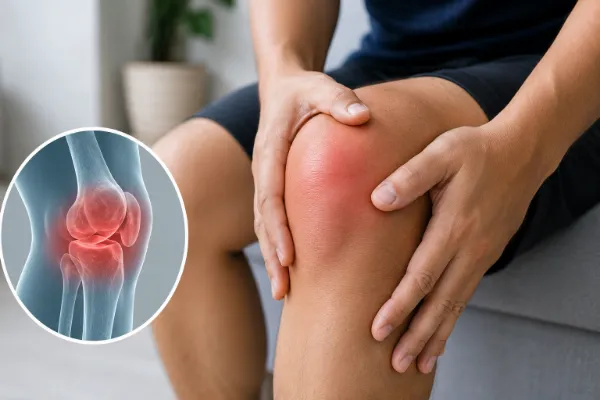
Knee swelling indicates a buildup of fluid in or around your knee joint.
The knee is the joint that joins your femur (thigh bone) to your tibia (shin bone) and kneecap (patella). It’s the largest joint in your body. Your knee includes cartilage, muscles, ligaments, and nerves. Anything that injures or irritates your knee might create edema. Your knee may enlarge if you have an injury or a medical condition that is causing tissue damage surrounding it.
You may begin treating most causes of knee swelling at home with rest and over-the-counter (OTC) medications. If you have suffered a trauma or sports injury, get medical attention. Consult a doctor if the swelling does not subside within a few days, if you are in significant pain, or if you are unable to move your knee.
Anatomy of the Knee Joint
The knee joint is a complicated and important part of the human musculoskeletal system, regulating mobility and weight-bearing activities. It is the body’s biggest joint and serves largely as a hinge joint.
Key components of the knee joint
Bones:
- Femur – The distal end generates two condyles that articulate with the tibia.
- Tibia – The proximal end creates a plateau that supports the femur
- Patella – It is a sesamoid bone that increases leverage for the quadriceps muscle.
Cartilage:
- Articular cartilage – It protects the surfaces of the femur, tibia, and patella, decreasing friction and stress.
- Menisci -Medial and lateral menisci are fibrocartilaginous structures that support the joint and distribute stress.
Ligaments:
- The anterior cruciate ligament (ACL) prevents anterior dislocation of the tibia.
- Posterior cruciate ligament (PCL) – Prevents posterior displacement of the tibia
- Medial collateral ligament (MCL) – Provides medial stability
- Lateral collateral ligament (LCL) – Provides lateral stability
Tendons:
- Quadriceps tendon – Connects the quadriceps muscle to the patella
- Patellar tendon – Extends from the patella to the tibia
Muscles:
- The quadriceps and hamstrings are the major muscles that regulate knee movement. The quadriceps extend the knee, while the hamstrings aid in flexion.
Synovial membrane and fluid:
- The synovial membrane creates synovial fluid, which lubricates the joint and reduces friction during movement.
Causes
Acute Injuries
One of the most frequent causes of knee swelling is sudden trauma.
- ACL injuries
- Meniscus tears
- ligament sprains
- fractures
Overuse and Repetitive Stress
Inflammation and pain of the knee can result from repeated strain.
- tendonitis
- bursitis
- overuse injuries
Arthritis
Persistent swelling can be a symptom of chronic illnesses including rheumatoid arthritis and osteoarthritis.
- cartilage degeneration
- joint inflammation
- chronic stiffness
Infection or Medical Condition
Rarely, systemic diseases or infections may be the cause of swelling.
- joint infection
- gout
- inflammatory disorders
Risk Factors for Knee Swelling
- Being overweight or obese – because your knees are weight-bearing, any additional weight puts greater strain on them, which can damage your knee joint over time; obesity also raises the chance of osteoarthritis, which is a major cause of swollen knees.
- Playing certain sports — Participating in activities that require pivoting, rotating, or twisting your knees increases your chance of knee injuries, which cause swelling.
- Your age—your risk grows as you become older.
Symptoms of Knee Swelling
- Swelling around or within the knee joint
- They don’t appear symmetrical when comparing one knee to the other.
- A feeling of heaviness or tightness
- Pain, especially when bearing weight
- Stiffness and difficulty bending or straightening the knee
- Limited range of motion
- Warmth or redness, which might be signs of an infection or inflammation
Diagnosis
A physical examination and symptom evaluation are the first steps in the diagnostic process.
- Evaluation of edema and fluid accumulation.
- Assessment of Joint Mobility
- Test for instability.
In rare circumstances, fluid from the knee may be collected for examination.
Imaging techniques such as X-rays or MRI scans can be used to detect structural damage.
Treatment for Knee Swelling
Immediate Home Treatment
- Rest
- Ice application
- Compression
- Elevation
Non-Surgical Treatments
- Physical therapy
- Anti-inflammatory medications
- Joint aspiration
Advanced Treatments
- Corticosteroid injections
- Viscosupplementation
- Regenerative therapies
Surgical Treatments
- Arthroscopy
- Repair of damaged structures
- Joint replacement
Best Physiotherapy Exercises for Knee Swelling
Heel Slides
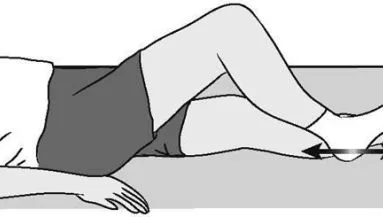
- With one leg straight, lie on your back on the floor or a sturdy bed.
- Bend your other leg while keeping your foot flat on the ground.
- As you slide your foot toward you on the floor, slowly bend your straight leg by lifting your knee.
- As much as you can, bend your knee.
- Then drop your leg back down while carefully sliding your foot away from you.
- Perform this exercise on one side eight to twelve times.
Quadriceps Sets
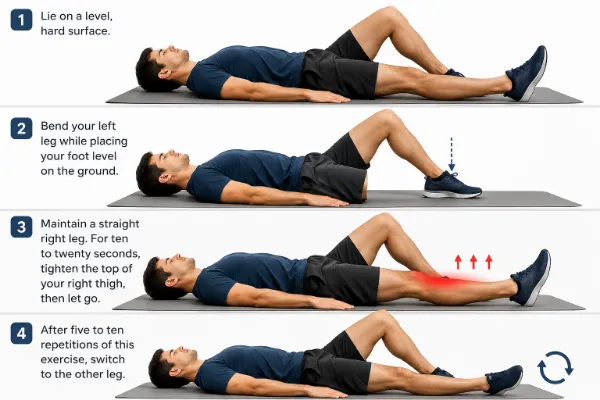
- Lie on a level, hard surface.
- Bend your left leg while placing your foot level on the ground.
- Maintain a straight right leg. For ten to twenty seconds, tighten the top of your right thigh, then let go.
- After five to ten repetitions of this exercise, switch to the other leg.
Straight Leg Raises
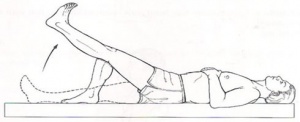
- Lie on a flat, firm surface.
- To place your foot flat on the ground, flex your left leg.
- For five to ten seconds, lift your right leg a few inches off the ground. Slowly lower your leg.
- Do this exercise five to ten times, then switch to the other leg.
Short Arc Quad Exercise
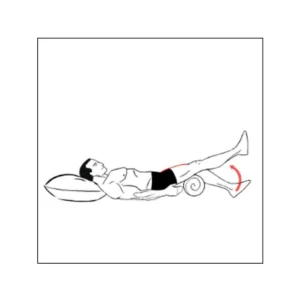
- Lie on your back, with your knees straight.
- Place a bolster beneath the knee of the region you want to strengthen. You may use a coffee can or a basketball as a bolster.
- Carefully extend your knees till your leg is totally straight. Maintain constant contact with the bolster throughout the workout.
- Tighten your quadriceps muscles as your knee straightens. You should strive to straighten your knee out completely.
- Maintain the straight knee position for three to five seconds before gradually returning to the starting position.
- The exercise should be repeated ten to twelve times.
Knee Extensions Prone
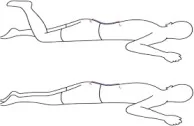
- Lying face down with your knee contracted, gently and gradually straighten your leg.
- Return to the starting position. Try not to jerk your leg and maintain the movement as smooth as possible.
Hamstring Stretch
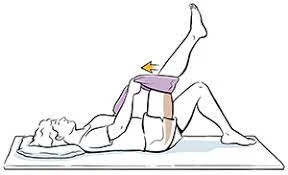
- Lie flat on the ground, bend your knees, and put your feet on the floor.
- Gently raise your right knee to your chest.
- As you extend your leg, keep your knee slightly bent. To deepen your stretch, use a yoga strap or rope, but do not tug too hard.
- After ten seconds of holding, work for thirty seconds.
- Repeat with the opposite leg.
Calf Stretch

- Wrap a towel around the ball of your foot while sitting with your legs straight.
- Keeping your knee straight, draw the towel’s ends toward you.
- Hold for 30 seconds. Repeat three times per side. Three times a day.
Mini Squats (Recovery Phase)
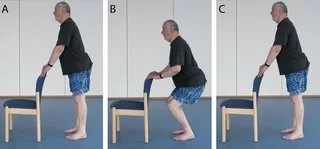
- Start by placing your feet comfortably apart.
- As if you were just getting into a chair, gently bend your knees and move your hips back.
- Squeeze your thigh muscles while holding this position.
- To return to standing, push through your feet.
- With each repetition, you could feel your hip, leg, and thigh muscles working.
Step-Ups (Advanced Recovery)
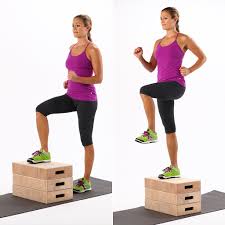
- This workout requires a 6-inch stool, step, or other platform.
- Put one foot on top of the platform. Raise your other foot off the floor and let it fall freely.
- Hold that posture for 3-5 seconds. Next, softly drop your foot to the floor.
- Drop your other foot to the ground from the platform’s surface.
- After five to ten repetitions of this exercise, switch to the other leg.
Exercises to Avoid When Your Knee Is Swollen
- Deep squats.
- Jumping and high-impact exercises.
- Running during acute swelling.
- Twisting or pivoting movements.
- Heavy weightlifting until swelling improves.
Prevention
During sports and other physical activities:
- Wear appropriate protective equipment.
- If your knee hurts during or after activity, don’t “play through the pain.”
- Allow your body to relax and heal after heavy activities.
- Before participating in sports or other physical activity, warm up and stretch.
- Cool down and stretch after intense activity.
Follow these general safety precautions to lessen the danger of injury:
- Keep your house and workstation clutter-free to avoid tripping yourself or others.
- Always use the appropriate tools or equipment at home to reach objects. Never stand on a chair, table, or countertop.
- Use a cane or walker if you have trouble walking or are at risk of falling.
Complications
- Muscle loss: Fluid in the knee can impair muscular function and cause thigh weakness.
- Fluid-filled sac (Baker cyst): A Baker cyst on the back of your knee can occur as fluid accumulates. A swelling Baker cyst might be unpleasant, but it normally resolves with ice and compression. If your edema is significant, you may need to have fluid extracted using a needle.
When to seek the Doctor
If you have been traumatized or injured, get medical attention. If non-traumatic swelling persists after a few days of at-home therapies, see a doctor.
If you have any of the following symptoms, go to the emergency department.
Severe pain.
You cannot move or utilize your knee.
A fall from a high place (such as a ladder) or a car crash are examples of major trauma.
Conclusion
Knee swelling can be caused by an underlying health condition, such as arthritis or an infection, or it can occur after an accident.
Several home care treatments might help decrease swelling, including taking NSAIDs and using an ice pack.
However, if a person feels that the swelling is caused by an underlying ailment, they should seek expert assistance. A doctor can use imaging to assess the damage and prescribe therapies such as antibiotics.
FAQs
How long does knee swelling last?
Mild swelling may diminish in a few days, but more severe cases may remain longer, depending on the reason.
Can knee swelling decrease on its own?
Yes, small incidents may resolve with rest, but persistent swelling requires evaluation.
Should I walk on a swollen knee?
It depends on the severity. If you are experiencing pain or instability, you should rest.
When should I visit a doctor about knee swelling?
Seek medical attention if the swelling is significant, persistent, or accompanied by pain, redness, or trouble moving the joint.
References:
- Professional, C. C. M. (2025c, December 23). Swollen knee. Cleveland Clinic. https://my.clevelandclinic.org/health/symptoms/17678-swollen-knee
- Calendine, C., MD. (2026, August 4). Knee swelling: 8 essential causes and when to worry. Cory Calendine, MD. https://corycalendinemd.com/blog/knee-swelling-causes/
- XPhysio. (2024, December 30). 9) Knee Swelling: A Physiotherapist Perspective – admin. www.xphysio.com.au. https://xphysio.com.au/9-knee-swelling-a-physiotherapist-perspective/
- Physio, S. (n.d.). 5 Best Exercises to Reduce Swelling in your Knee – Surrey Physio. Surrey Physio. https://www.surreyphysio.co.uk/top-5/5-best-exercises-to-reduce-swelling-in-your-knee/