Top 11 Exercises to Gain a Healthy Weight Quickly
Introduction
Gaining a healthy weight requires the right combination of strength training, proper nutrition, and adequate recovery. Unlike unhealthy weight gain, the goal is to build lean muscle mass and improve overall strength.
Exercises such as compound movements, resistance training, and progressive overload help stimulate muscle growth, enhance metabolism, and support long-term fitness.
Building muscular mass is the primary motivation for weight gain. You are underweight, and your current weight is unhealthy for your height, which is the second reason.
Exercise is the most natural way to develop muscle mass. However, just as it may help you lose weight, it can also make you gain weight if you don’t eat well and lead an unhealthy lifestyle. You may gain weight without going to the gym, but you can’t do it without exercising.
You should exercise, consume the proper number of calories, and perform weight-gain exercises in your spare time or at home. This will be sufficient for you to change your lifestyle and gain weight. We all believe it’s hard to lose weight, but it’s far harder to gain weight.
Benefits of Exercise for Weight Gain
- Enhanced Muscle Growth
- Weightlifting and resistance training are exercises that induce hypertrophy, which increases muscular mass. This muscle growth increases physical attractiveness and metabolic rate, which aids in long-term weight gain.
- Improved Metabolic Efficiency
- Regular strength training improves metabolic efficiency by raising the muscle-to-fat ratio. This enables the body to burn calories more efficiently, allowing for weight gain without collecting too much fat.
- Increased appetite
- High-intensity workouts increase hunger by raising the body’s energy demands. This natural increase in appetite promotes increased calorie intake, which is necessary for healthy weight growth.
- Better bone density
- Weight-bearing activities like squats and deadlifts build bones by activating bone-forming cells. This enhances bone density, lowering the risk of fractures and osteoporosis as body mass rises.
- Optimised hormone levels
- Exercise helps control hormones like testosterone and growth hormone, which are essential for muscle growth and weight gain. Balanced hormone levels promote protein synthesis and nutrient absorption, resulting in healthier weight gain.
- Improved Body Composition
- Targeted activities assist in redistributing body fat, which improves total body composition. This results in a more defined body as muscle mass grows and fat is used more effectively.
- Increased strength and endurance
- Progressive resistance training increases muscular strength and endurance. This promotes weight growth while improving general physical performance, making everyday tasks easier and more relaxing.
- Improved cardiovascular health
- Compound workouts promote cardiovascular health by boosting heart rate and circulation. This promotes general fitness while ensuring that weight increase does not impair cardiovascular function.
Top 11 Exercises to Gain a Healthy Weight
Squats
One strengthening exercise is the squat. You may increase the effectiveness of your workouts by gradually including several squat variants into your weight gain training regimen. In essence, squats require lowering the hips from a standing posture and then raising them back up.
Squats are great for the butt and thigh muscles, much like push-ups, which help add weight to the upper body. Because squats increase muscle mass, which is heavier than body fat, you may readily rely on them to help you gain weight. The ideal body form goes well with this.
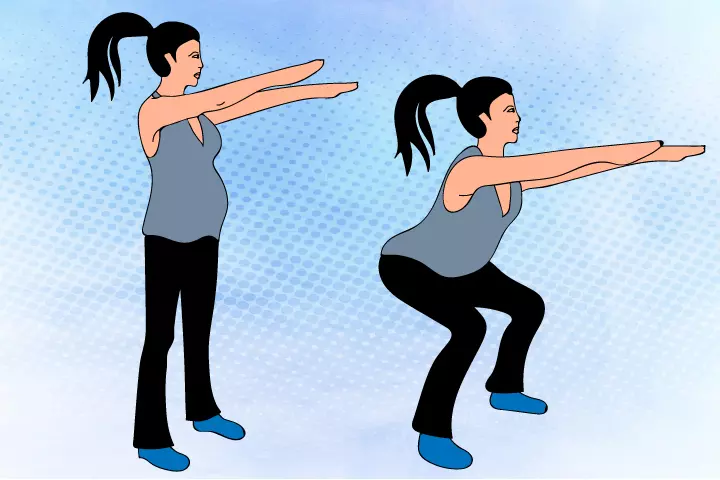
How to do it:
- Maintain a shoulder-width distance between your feet and bend your knees slightly. Make sure your head and neck are in a comfortable posture, and your shoulders are squarely over your hips.
- Throughout the exercise, the chin should be tucked in.
- To establish a secure stance, evenly distribute your body weight and use your feet to grab the floor.
- It is necessary to position the arms by the sides.
- Keep your pelvis tucked in and your ribs down.
Deadlift
The deadlift is perhaps the most taxing of all the complex movements that use several muscular groups. You and the barbell are competing against each other.
You must stop making excuses and include deadlifts in your regimen if you want to gain a lot of strength and muscle.
We have designed a deadlift routine that will strengthen your whole posterior chain, improve your grip, and grow your back.
How to do it:
- Place the barbell on the floor and place your toes slightly behind the bar while keeping your feet shoulder-width apart.
- Maintain a straight back while bending at the legs.
- Use a mixed grip (one hand over, one out) or an overhand grip (palms facing back towards your body) to hold the bar.
- As you push through your legs with your chest facing upward, maintain a straight back and an upright head.
- Pull the bar up while extending your legs fully. As you push your hips forward and straighten your legs, your foot should rise close to your shins and cross over your knees.
- Holding the barbell at waist height should result in you standing upright. Remember to maintain a straight back.
- Bend your legs and maintain a straight back while keeping your head up to put the bar back down.
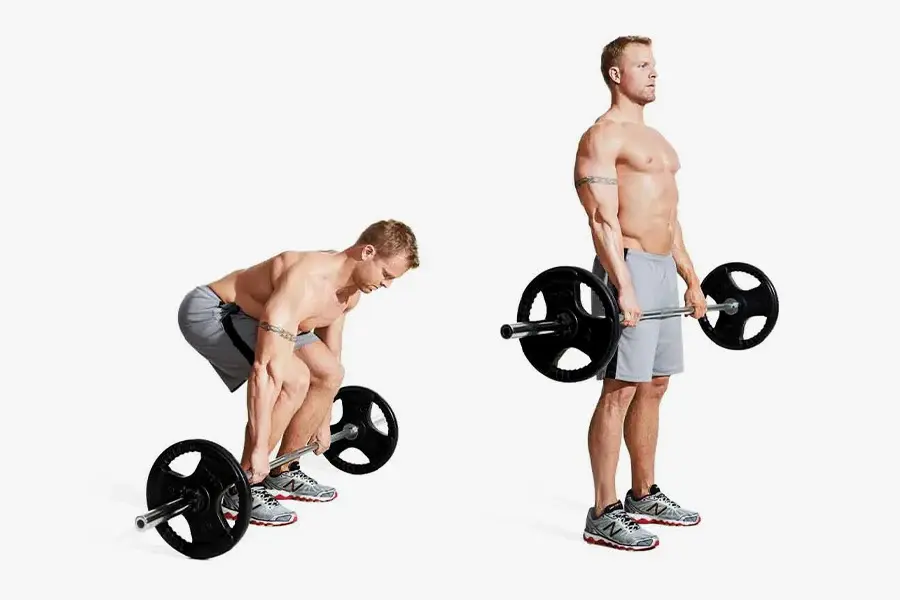
Deadlifting increases core stability and gripping strength, improves cardio (when done at a high intensity), and strengthens the following muscle groups:
- Back muscles include erectors and lats.
- Gluteus Maximus and glutes
- Legs – The majority of the deadlift is performed with your legs, which develops power in practically every muscle in your lower body.
- Arms – Deadlifting causes all of your arm muscles to contract. The tremendous grip you’ll develop is especially beneficial to your forearms.
- Shoulders: Use hard deadlifts to establish huge traps.
Bench Press
The bench press is a complex exercise that works the muscles in the upper body.
It involves reclining on a bench and pressing a weight upward with either a barbell or a pair of dumbbells. A bench press involves lowering the weight to chest level and then pressing upward while extending your arms. This movement is termed a single repetition, or rep.
Bench presses have various varieties, each of which works a different muscle group. These might include reclining flat, lying at an inclination or decline, or bringing your hands closer together on the barbell.
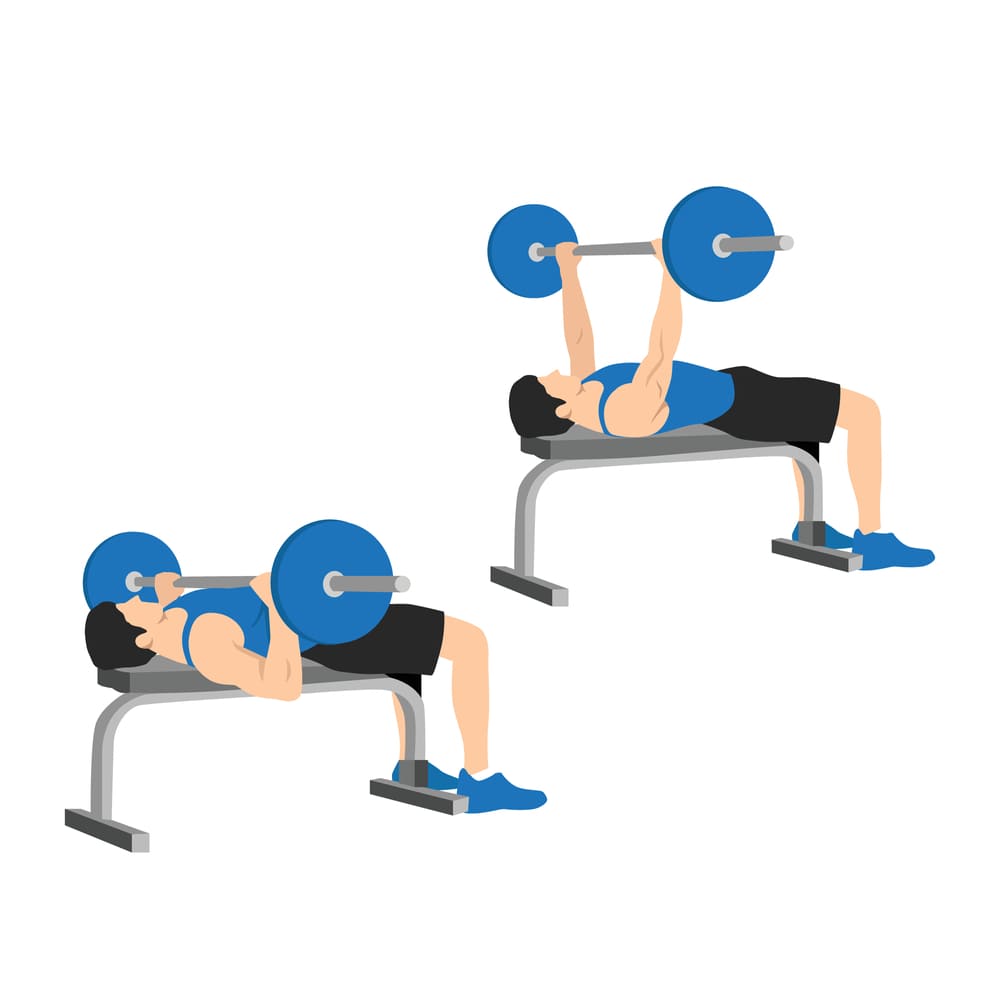
How to do it:
- Lie back on a flat bench. With hands a little wider than shoulder-width apart, hold a barbell. The bar should be precisely over the shoulders.
- Throughout the action, maintain your hips on the bench and your feet firmly planted on the ground.
- Keep your core engaged and your spine neutral throughout the action. Avoid arching your back.
- Slowly remove the bar or dumbbells from the rack, if applicable. Lower the bar to the chest, approximately nipple level, and allow the elbows to bend out to the side, about 45 degreesaway from the body.
- Stop lowering when your elbows are almost below the bench. To return to the beginning position, press your feet into the floor and push the bar back up.
- Perform 5 to 10 repetitions, depending on the weight utilized. Perform up to three sets.
Target Muscles: Traps, back muscles, anterior deltoid muscles, triceps.
Pull-Ups
Pull-ups are often connected with weight reduction, but they can also be an effective weight-gain exercise for people looking to gain weight. The key is to do them with appropriate form and a deliberate, controlled motion. Pull-ups primarily target the large back muscles and are an effective way to increase strength.
Furthermore, pull-ups help to improve grip strength and provide the flexibility of various hand positions. For best results, do three sets of eight to ten repetitions, using a weight load that you can safely handle. Pull-ups require a pull-up bar.
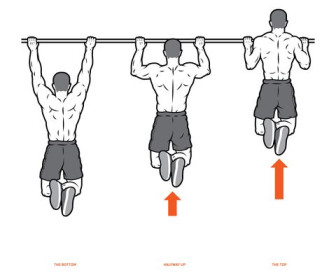
How to do it:
- Grab the pull-up bar with your hands facing the direction you desire.
- Lift your body up till your chin is barely above the bar.
- Lower yourself until your arms are fully stretched.
- Repeat the exercise.
Target Muscles: Lats (or flat muscles at the back), biceps, forearms, trapezius (or centre muscles at the upper back), and muscles at the lower back.
Overhead Press
An exercise called an overhead press involves pushing weights up above your head. This exercise may be done sitting or standing with a dumbbell or barbell. It’s a well-liked exercise since it builds muscular shoulders. Overhead presses come in two primary varieties: standing and seated. Unlike the sitting version, which focuses on your shoulders, the standing version works your entire body.
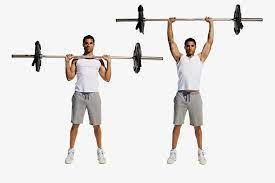
How to do it:
- Stand with your feet shoulder-width apart. If you’re sitting, pick a comfy bench or chair. Prepare your weights—either a barbell or a dumbbell.
- Hold the weights firmly. With a barbell, make sure your hands are a little wider than your shoulders. Place one dumbbell in each hand, palms up.
- Lift the weights to shoulder height. It’s like saying hello to your shoulders.
- If you are standing, straighten your back. Your back should be against the chair if you are seated. Proper posture is your hidden weapon.
- Push the weights directly overhead. Imagine you’re pushing the ceiling away. Utilize your shoulder strength here.
- Pause at the top for a moment. Feel the strength on your shoulders.
- Lower the weights to shoulder height. There’s no need to rush; it’s crucial to keep everything under control.
- Never forget to breathe! Exhale as you rise, and inhale as you drop. It keeps your body in sync. You should take a rest between sets. Repeat the spell for more shoulder power if you feel up to it.
Target Muscles: Upper back muscles, triceps, and deltoids.
Lunges
These are lower-body strength training exercises that help build muscle in the lower extremities. It involves bending forward or backward, lowering the hips until both knees are bent at about a 90-degree angle.
How to do it:
- Lunges require you to stand around three feet apart with your right foot forward and your left foot backward. Flex your knees to bring your body near the ground.
- Instead of lowering forward, descend straight down and avoid letting the front knee extend past the toes. Maintain a straight torso and contracted abdominal muscles as you push through the front heel and go back to the beginning position.
- Don’t lock your knees at the lunges. Perform 3 to 4 sets of 15 to 20 repetitions.
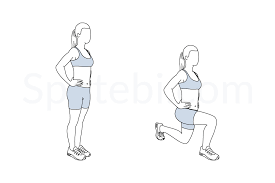
Target muscles: hamstrings, quadriceps, buttocks, glutes, and core.
Bent-Over Rows
Bent over row is a strength exercise that helps develop the muscles of the back. This exercise is useful for building strength and improving body posture.
How to do it:
- Stand straight with your feet about shoulder-width apart. Hold a barbell or a pair of dumbbells in your hands. Keep your knees slightly bent.
- Next, bend forward from your hips while keeping your back straight. Your upper body should lean forward, almost parallel to the floor. Do not round your shoulders.
- Now, pull the weight upward toward your lower chest or upper stomach. Keep your elbows close to your sides. Pause for amoment at the top and tighten your back muscles.
- Slowly lower the weight back to the starting position in a controlled way.
- Perform three sets of six to twelve repetitions.
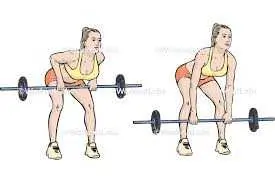
Target Muscles: Biceps brachii, shoulders, forearms, middle back muscles, and lats.
Push-Ups
Push-ups are an excellent workout for developing pectorals and strengthening the upper body. It is an excellent weight-gaining workout that may be performed without the need for any equipment.
How to do it:
- To begin, go on your hands and knees and place yourself in a high plank posture. Your legs should be straight, and your hands should be broader than your shoulders. You should have a neutral spine.
- Maintaining a straight line from head to heel, descend your chest toward the floor by flexing your elbows to a 40–50 degree angle while keeping your core muscles taut.
- Our goal is to descend as low as possible without compromising the alignment of your spine and pelvis or the stability of your core muscles.
- Extend your elbows by pressing your chest away from the floor.
- Perform ten to twenty repetitions. Perform one to three sets.
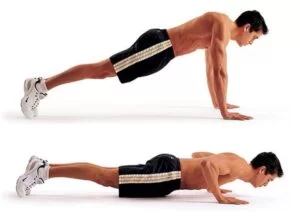
Target Muscles: chest muscles, deltoid (or shoulder muscles), core muscles, and triceps.
Bicep Curls
Bicep curl practice greatly improves arm stamina and can assist shape and toning your physique.
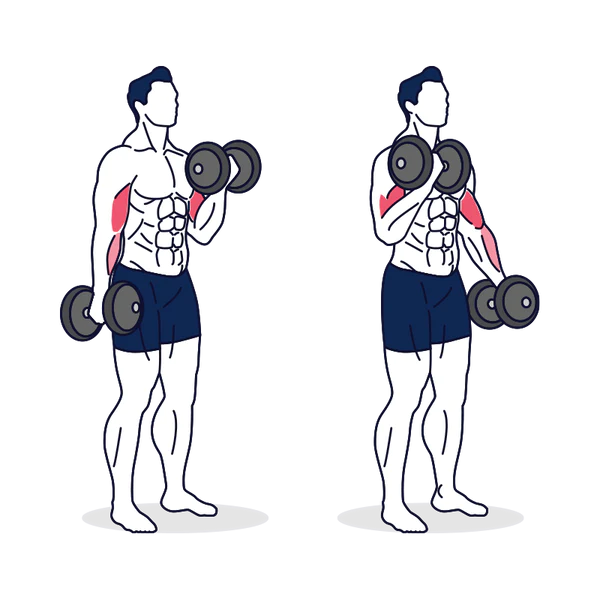
How to do it:
- Maintain an erect posture and place your feet shoulder-width apart. Bend your knees just slightly.
- Hold a dumbbell in each hand, palms facing inward (toward your body) and arms fully stretched down by your sides.
- During the workout, maintain your upper arms motionless and your elbows close to your sides.
- The dumbbell is gently curled towards your shoulder while maintaining a straight wrist and immobile elbow.
- After the exercise has reached its peak, you will pause and carefully return the dumbbell to its starting position.
- Curl the opposite arm in the same way that you curled the other.
- Switch arms for the required number of repetitions.
- Maintain a straight back and do not lift the weights above your head. Concentrate on the motion of the dumbbells with your biceps.
- Concentrate on your breathing; exhale as you lift the weight and inhale as you lower it.
Tricep Dips
Tricep dips are the best bodyweight exercise for developing arm and shoulder strength. This basic workout may be performed practically anywhere and has several variants to accommodate your fitness level. Use it as part of your upper-body strength routine.
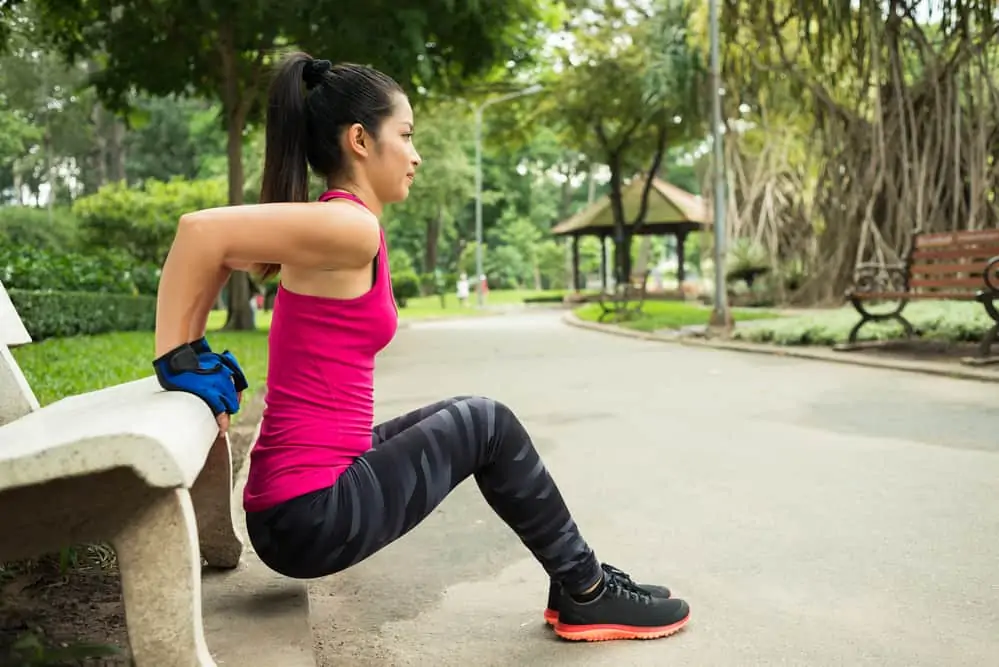
How to do it:
- Sit on the edge of a sturdy chair, weight bench, or step and grab the edge near your hips. Some pull-up bars are also suitable for tricep dips. Your fingers should be directed at your feet, your legs stretched, and your feet hip-width apart, with your heels on the ground. Look straight forward, chin up.
- Press your palms together to elevate your torso and move forward until your buttocks clear the edge of the chair.
- Lower yourself until your elbows are bent at 45 to 90 degrees. Control your movements across the range of action.
- Push yourself back up gently until your arms are nearly straight, then repeat.
Plank
In addition to preventing back issues, maintaining a strong core is crucial for enhancing stability, balance, athletic performance, and general function. Plank workouts are among the finest methods for strengthening your core. Since planks are less stressful on the spine and hip flexors than crunches or situps, several specialists now advise doing them instead.
Additionally, a plank may assist in strengthening your arms, shoulders, hamstrings, glutes, and back all at once. For only 30 to 60 seconds of your time, that’s a significant gain.
There are several plank variants to assist you in developing a strong core, regardless of your level of experience.
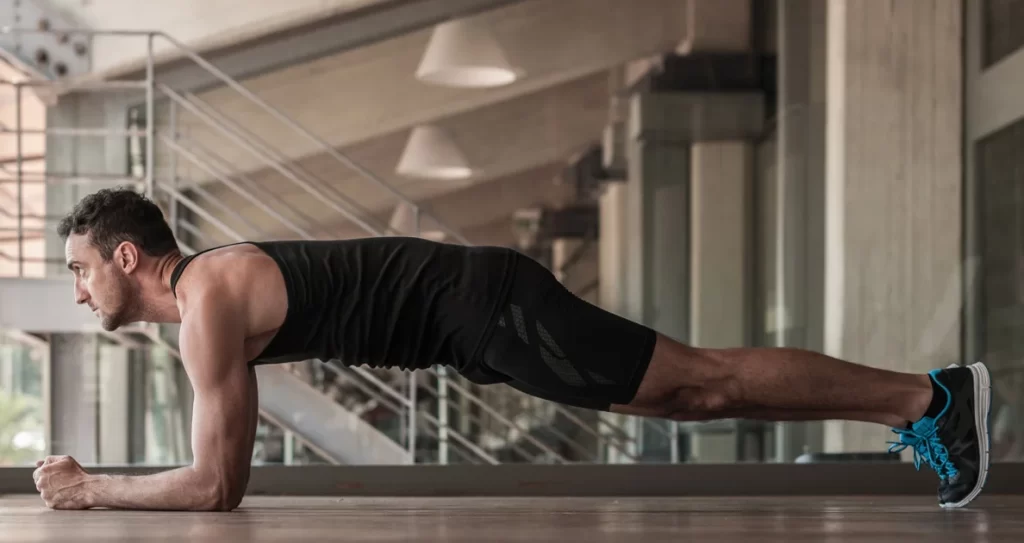
How to do it:
- Place your forearms directly behind your shoulders while lying on the floor.
- Press onto your knees and forearms to slowly raise your torso off the ground. As you rise, keep your neck and spine neutral and engage your core.
- To ensure that your body is in a straight line, tuck your toes under and raise your knees.
- Build up to one minute or more by holding this for 20 to 30 seconds. The longest forearm plank was maintained for more than 9.5 hours, according to Guinness World Records!
- Expert advice: Keep your neck in a neutral position by letting your eyes drop toward your mat, about a foot in front of you.
Exercises to Avoid
Gaining weight is often achieved by choosing the proper activities and adjusting your training regimen to your specific goals. You should concentrate on activities that increase muscular growth and strength. However, some activities may burn a considerable quantity of calories and, if overdone, may not fit with your weight gain goals.
To encourage weight gain, decrease the frequency and intensity of aerobic and cardiac workouts. These activities are mostly intended for fat loss and muscle toning rather than significant muscular growth. However, you do not have to fully eliminate them from your exercise program. Instead, you may do these workouts in moderation to improve muscle definition, allowing you to achieve the ideal shape and look.
Lifestyle changes
Gaining weight necessitates a comprehensive strategy that goes beyond exercise and a balanced diet. Here, we outline several considerations you should make:
- Food and Supplies
- Be realistic: Give your weight-gain training a reasonable objective.
- Sleep Quality: Make an effort to achieve six to seven hours of calm, restful sleep. Getting enough sleep boosts your mood and speeds up muscular repair.
- Reduce tension: The primary cause of your tension and depressed mood is cortisol. To relax your entire body, you can lower it with deep breathing exercises, meditation, or a deep tissue massage.
- Stay Away From Bad Habits: Avoid bad habits such as drinking and smoking.
FAQs
Is it possible to gain weight through exercise?
If it applies to you, avoid drinking right before or during meals. However, be sure to consume adequate amounts of liquids throughout the day. Work out. Gaining muscle mass via exercise, particularly strength training, can help you put on weight.
When is the greatest time to work out to gain weight?
Since GH secretion, which is also pulsatile, is at its peak at night and in the early hours of sleep, it is best to schedule the early hours of sleep to fall between 11 p.m. and 12 a.m. in order to maximize its benefits in encouraging the formation of muscle mass.
What impact does exercise have on weight gain?
Energy balance may be impacted by physical activity, which may have an impact on how body weight is regulated. Physical exercise seems to need to be moderate to vigorous in intensity in order to have a major impact on body weight, but there is some evidence that it can reduce weight gain.
What advantages can weight training offer?
Strength exercise can boost your metabolism to help you burn more calories and help you control or lose weight. Improve your standard of living. Your capacity to do daily tasks and your quality of life may both be improved by strength training. Additionally, strength exercise can help keep your joints safe from harm.
What should one not do when gaining weight?
Those who are attempting to put on weight should also pay attention to the kinds of food they are eating. Consuming sugar-rich meals, for instance, is a simple method of consuming more calories, but it also raises the risk of type 2 diabetes.
When you start exercising, what happens to your body?
Your body’s oxygen levels rise as a result of the increased blood flow. This reduces your chance of developing cardiac conditions, including heart attacks and coronary artery disease. Additionally, heart disease risk factors such as high blood pressure, cholesterol, and triglycerides can be reduced with regular exercise.
References
- MaxiNutrition. (2025b, July 20). The ultimate deadlift workout routine. MaxiNutrition. https://www.maxinutrition.com/blogs/training/the-ultimate-deadlift-workout-routine
- Chertoff, J. (2023b, May 24). What muscles do bench presses work? Healthline. https://www.healthline.com/health/exercise-fitness/bench-press-muscles-worked#variations
- Insurance, D. G. (n.d.-b). 10 best exercises to gain weight for men and women. Digit Insurance. https://www.godigit.com/wellbeing/weight-gain-exercise
- Ms, E. Q. (2024b, June 2). Triceps dips: proper form, variations, and common mistakes. Verywell Fit. https://www.verywellfit.com/the-chair-dip-triceps-exercise-3120734
- Cronenberg, C. (2025b, April 22). 15 plank variations you haven’t tried but need to ASAP. Healthline. https://www.healthline.com/health/14-plank-variations-your-core-will-thank-you-for-later#traditional-planks