8 Best Exercises for Back Stiffness
Introduction
Back stiffness is a condition that can occur in the morning after waking up or after extended periods of sitting or standing. In severe cases, it can cause pain, decreased range of motion, and difficulty with daily activities.
Back stiffness is characterized by a tight, rigid, or limited range of motion in the muscles and joints of the spine that causes discomfort when performing daily activities like bending, standing, or even walking.
Factors that can lead to back stiffness
Poor posture: Slouching or sitting hunched over a desk puts continuous strain on the muscles of the spine.
Extended periods of sitting or standing: Prolonged standing or sitting in one position can cause stiffness and decrease blood flow.
Muscle tension: Tight glutes, hip flexors, or hamstrings may indirectly put more strain on the lower back.
Lack of flexibility: Movement may be the restricted by the spine and restricted range of motion. Sports injuries, strained muscles, or accidents can cause stiffness while the body recovers.
Aging and degeneration: Stiffness is frequently the result of the natural deterioration of the joints and spinal discs (arthritis, spondylosis).
Tension and stress: Back and shoulder muscles can become tense due to emotional stress.
Sedentary lifestyle: The muscles supporting the spine deteriorate when one does not exercise.
Importance of exercise
For the following reasons, exercise is essential for both reducing current stiffness and avoiding recurrence:
Boost Flexibility: By lengthening tense muscles, stretching exercises relieve tension and allow the spine to move easily.
Strengthen Supporting Muscles: Stiffness can be caused by weak hip, core, and back muscles, which help to support the spine.
Enhance Blood Circulation: Exercise improves blood flow to the discs and spinal muscles, which reduces tightness and promotes healing.
Proper Posture: Consistent exercise teaches the body to keep its alignment, which lessens the needless strain on the spine.
Prevent Recurrence: By maintaining balance and mobility, repeating the same workouts helps to prevent stiffness from recurring.
Reduce Stress: Exercise causes endorphins to be released, which relaxes tense muscles brought on by stress.
Encourage Healthy Aging: Joint flexibility is maintained with mild mobility and strengthening workouts.
Exercises for Back Stiffness
Cat -Cow Stretch
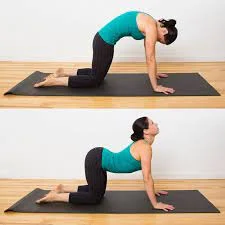
- Place your knees behind your hips and your wrists directly beneath your shoulders in a tabletop position. While looking at the floor, flatten the back and maintain a neutral neck position.
- Inhale into the cow pose. Take a breath, lower your belly to the floor, raise your chest and tailbone, and look up toward the ceiling just a little bit (without straining your neck).
- Pose of the Cat (Exhale) Draw your belly button in as though it were moving toward your spine, tuck your tailbone in, exhale, and round your spine toward the ceiling.
- For five to ten cycles, or roughly one to two minutes, flow via the cow (inhale) and cat (exhale).
Child’s Pose
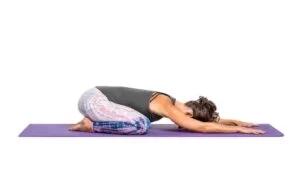
- Kneel on the floor and recline on your heels.
- Your knees should be slightly spread.
- Stretch your arms out in front of you while bending forward.
- Place your forehead on the floor.
- Breathe deeply and relax.
Knee to chest stretch
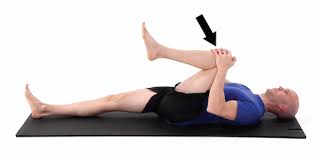
- Flatten yourself on your back.
- Bend one knee till it is at your chest.
- Hold your shin with both hands.
- On the ground, the opposite leg should stay straight.
- Change legs after 20 to 30 seconds of holding.
Seated Forward bend
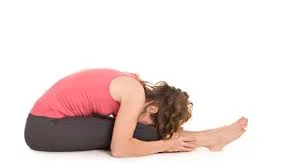
- Place your hands on the floor at your hips and sit on the floor with your legs straight in front of you.
- Take a deep breath and sit up straight. If your patellar tendons are tight, gently bend your knees.
- Lean forward slightly from the hips after exhaling.
- As you move your hands down your thighs, pause where it feels comfortable.
- Hold on and take a deep breath.
- Bring your hands closer to your ankles or shins if that feels comfortable. Let the head fall lightly and relax the shoulders.
- Don’t rush; hold for three to five breaths. Take a slow breath and rise again, one step at a time.
Bird Dog Exercise
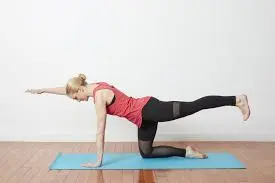
Bird-Dog Exercise steps:
- Lower yourself to your hands and knees. Put your knees beneath your hips and your hands beneath your shoulders.
- Observe the flooring. Have a flat back. Make your abdomen slightly tighter. Elevate your right arm. Lift the left leg back.
- Remain straight and level. For three to five seconds, hold.
- Reduce them gradually. Bring your left arm up now.
- Back up your right leg. For three to five seconds, hold. Reduce them gradually. Repeat 5 to 10 times.
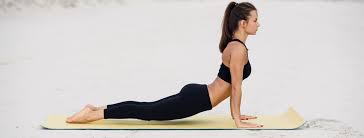
Cobra Stretch
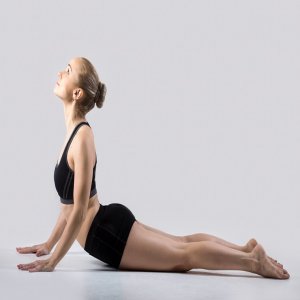
- Step 1: Begin by lying prone (on your stomach) on a floor or workout mat with your hands at your sides, facing forward and squarely beneath your shoulders. Plantar flex your ankles (toes pointing away from the torso) and extend your legs.
- Step 2: Upward Phase: Exhale gently, press your hips into the floor or mat, and lift your chest off the ground while maintaining a firm hip position.
- Maintain this posture for 15–30 seconds.
- Step 3: Downward Phase: Lower your upper body to rest on the mat or floor while gently relaxing.
- Step 4: Stop the workout right away and speak with your doctor if this movement causes any low back pain.
- People frequently raise their hips off the mat or floor when they completely stretch their arms because arm lengths vary. In this situation, keep your hips on the mat by limiting the extension of your arms.
Superman Pose
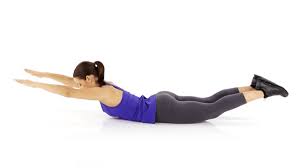
Superman Pose steps:
- Lie on your stomach with your forehead lightly resting on the floor, your arms extended on the floor, and your legs straight behind you.
- Take a slow breath, then as you release it, raise your right arm and left leg a little, hold it for two to three seconds, then lower it again, maintain the chest, arms, and legs off the ground (flying),
- Hold it for three to five seconds, breathe gently, and then slowly lower it back down, rest with your head to one side, and repeat five to eight times.
Bridging
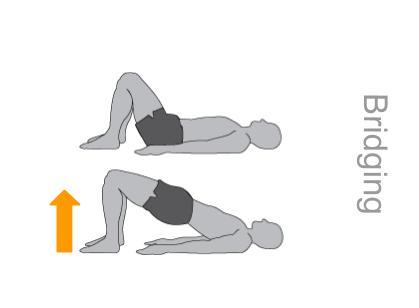
- To develop your core muscles, perform the bridge. Bend your knees and lie on your back. Tighten your stomach muscles.
- Lift your hips off the ground until your shoulders and knees are in alignment.
- Take three deep breaths and hold. Go back to where you were before and do it again.
FAQs
Does exercising really help with back stiffness?
Indeed, gentle stretching and strengthening activities improve the flexibility, blood flow, and mobility of the spine. They also reduce muscle tension and help prevent future stiffness if done regularly.
What are the best workouts for those with stiff backs?
Some effective exercises are as follows:
The cat-cow stretch increases the flexibility of the spine.
Child’s Pose helps ease tense back muscles.
The knee-to-chest stretch helps release stiffness in the lower back.
Pelvic tilts strengthen the core and support the spine.
When seated, a slight forward bend improves movement.
What is the recommended frequency of these exercises?
Stretching exercises can help with mild stiffness for five to ten minutes each day. If your profession requires you to sit for long periods of time, try stretching every two to three hours to avoid stiffness accumulation.
How long does it take to notice results?
Mild back stiffness usually disappears immediately after stretching. For long-term treatment and prevention, regular practice over a period of two to four weeks is usually necessary.
What mistakes should I avoid when doing back exercises?
Excessive stretching.
Holding your breath and not taking deep breaths.
Making jerking motions.
Lacking in warmed up.
Neglecting pain
When should I stop working out and consult a doctor?
Stop working out and consult a physician if you encounter:
Pain that is sharp or radiating, particularly in the legs.
Tingling or numbness.
Legs that are weak.
References
- Cluett, J., MD. (2025, June 9). What’s causing your stiff back and how can you relieve it? Verywell Health. https://www.verywellhealth.com/back-pain-symptoms-stiffness-2549270
- Ryt, A. P. (2024, June 2). How to do cat cow stretch in yoga. Verywell Fit. https://www.verywellfit.com/cat-cow-stretch-chakravakasana-3567178
- Ryt, A. P. (2021, May 24). How to do seated forward bend (Paschimottanasana) in yoga. Verywell Fit. https://www.verywellfit.com/seated-forward-bend-paschimottanasana-3567101
- Cpt, K. D. M. R. (2023b, April 12). Try the Superman Exercise to Stand Tall and Proud. Healthline. https://www.healthline.com/health/fitness/superman-exercise
- Taylor, M. (2024, December 12). How to do a bridge yoga pose. WebMD. https://www.webmd.com/fitness-exercise/how-to-bridge-yoga-pose
- Child’s pose. (n.d.). Mayo Clinic. https://www.mayoclinic.org/healthy-lifestyle/stress-management/multimedia/childs-pose/vid-20453580