7 Best Exercise For Slipped Disc (L4-L5,L5-S1)
Introduction
Best exercises for a slipped disc focus on reducing pain, improving flexibility, and strengthening the core and back muscles to support the spine. These exercises help relieve pressure on the affected disc and promote better posture for long-term recovery.
Most often occurring in the lower back (lumbar spine), a disc herniation occurs when disc material slips outside of the intervertebral disc region.
Disc herniation, which most commonly affects the lumbar spine in the lower back, is the displacement of disc material beyond the intervertebral disc space. An intervertebral disc sits between each vertebra, acting as a cushion to prevent the vertebrae from rubbing against one another.
Additionally, the nucleus pulposus, a gel-like substance, is found inside these discs (intervertebral discs) that sit between the vertebrae. A herniated disc occurs when the gel-like substance bursts through the disc’s outer covering and presses against the spinal cord or spinal nerves, causing symptoms including incapacitating back pain and other related issues that can make daily tasks challenging.
Herniated Lumbar Disc Symptoms
include: – Lower back pain, which is usually the initial sign
Leg pain that goes up and down
- A tingling or numbness
- Leg weakness
- Sitting causes more pain
- Limited trunk flexion
- Pain from sciatica (pinched nerve)
Exercise For Slipped Disc (L4-L5,L5-S1) Video
Exercises For Slipped Disc
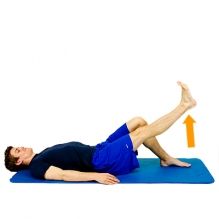
SLR ( Straight Leg Raise )
- Lie on your back.
- Bend one leg while keeping the other straight. Gradually move your single leg to a 45-degree angle while contracting your quadriceps muscles.
- Hold for 3-5 seconds, then lower.
- Repeat at least 10 times on both sides.
- This exercise strengthens the quadriceps and hip flexors. Also, maintain leg strength.
Knee to Chest Stretch
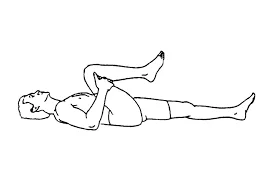
- On a yoga carpet or another comfortable surface, lie on your stomach with both hands on each side, your legs stretched out.
- Keeping the other leg straight and comfortable on the floor, bend one knee till it reaches your chest, then use both hands to gently draw it closer.
- After taking a deep breath and lowering your scapula, hold your position for 20 to 30 seconds before carefully lowering your foot.
Bridging
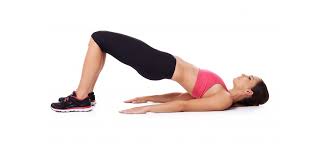
- Use a carpet and lie on your back if it’s easy for you. It is wider than your waist or floor level. Bend your knees and place your palms next to you.
- Hold at the top for 3–5 seconds (or longer if you are stronger), squeeze your glutes, engage your core (tuck your belly button toward your spine), keep your back neutral, and lift your hips off the ground.
- Then, lower slowly (bring your hips back down to the floor with control) and repeat (10–15 reps, for 2-3 sets).
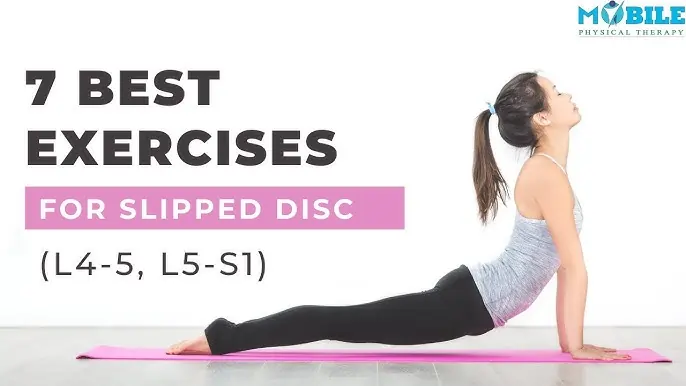
Cobra Pose
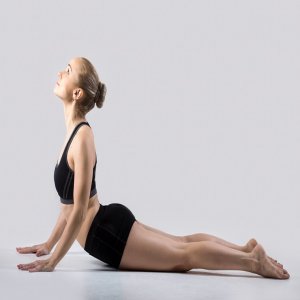
Cobra pose steps:
- Lie on your stomach with your hands beneath your shoulders. Stretch your big toes wide back and use all ten toenails to exert pressure to contract your quads.
- Turn the inside of your thighs towards the top to enlarge your back area. Raise your head and chest while rolling your shoulders back and down, applying light pressure with your hands.
- Instead of the chin, lift the sternum to keep the long-necked back. Place your right hand and press your ear.
- Make sure your elbows are folded slightly. To get out of the pose, leave your back and return to the carpet.
Hip Extension in Prone
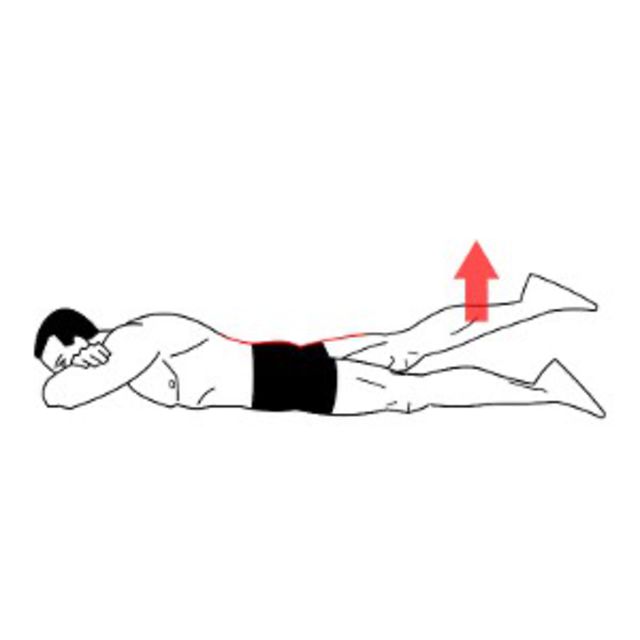
- Once you’re lying on your stomach, start by turning your legs straight. Closing your contract with the abdominal cavity will help stabilize your heart.
- Lift your feet: At the top of the exercise, lift your feet off the floor, keep the other leg on the right, and tighten your buttocks.
- Hold: Hold for a brief period of time. Slowly return your feet to the original position.
- Repeat: Perform ten repetitions on each leg in three sets, or as directed by a medical professional.
Superman Pose
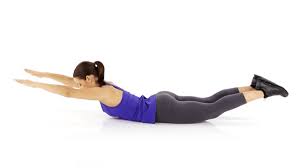
Superman pose steps:
- With the installation (facing down), lie on the ground, reach in front of you, and grab your straight leg.
- Support your head (do not lift) in a neutral position, slowly raise your hands about 6 inches (15 cm) off the ground, or lift your arms and legs until the lower back muscles begin to contract.
- At the same time, tighten the muscles that pass between the buttocks, the nape of the neck, and the shoulder blades. You want to lift your belly button off the ground and push your rep. Visualizing yourself like Superman floating in the sky is a good way to visualize this.
- Hold for two to three seconds. Make sure you’re breathing continuously. On the ground, turn your upper body, legs, and stomach upside down. This training is performed 2-3 times with 8-12 repetitions.
Bird Dog Exercise
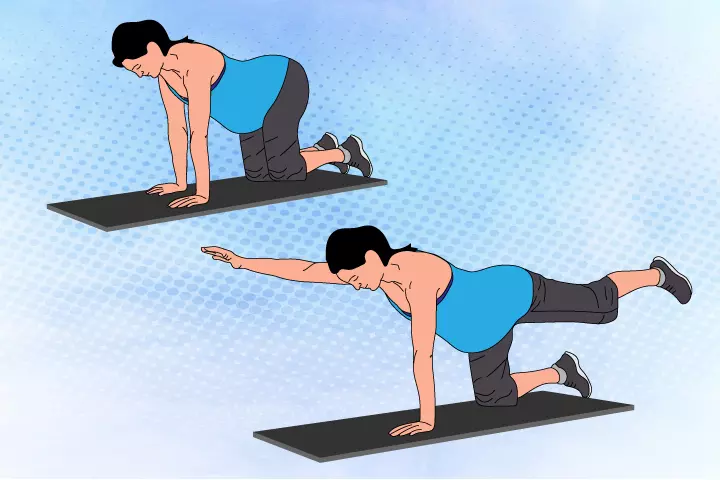
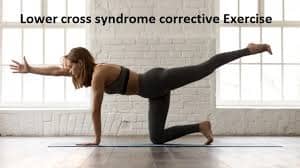
- Start in the tabletop posture on all fours.
- Place your arms below your shoulders and knees.
- To keep your spine neutral, contract your abdominal muscles.
- Your shoulder blades should be drawn together.
Lift your left leg and right hand by supporting your shoulders and hips parallel to the ground. - To look down at the floor, drop your chin toward your chest, and lengthen the back of your neck.
- Return to the beginning a few seconds after maintaining this position. Support this pose for a few seconds and lift your right leg and left hand.
- Go back to where you were before. There is only one round.
Perform 8–12 repetitions in two or three sets.
Avoid activities for Slipped Disc (L4-L5-L5-S1)
- Performing Heavy Lifting
- High-Efficiency Workouts
- Bending and twisting forward
- Extended Sitting
- Abrupt Jerky Motions
- Using a Soft Mattress to Sleep
FAQs
At L5-S1, what is a slipped disc?
When the soft cushioning (disc) intermediate the last lumbar vertebra (L5) and the first sacral vertebra (S1) is ruptured, it results in a slipped disc injury at L5-S1. This disc may herniate or bulge, placing pressure on nerves and causing leg, sciatica, or lower back pain.
Is it true that slipped disc exercises are beneficial?
Certain physiotherapy exercises can increase flexibility, strengthen supporting muscles, relieve disc pressure, and lessen nerve compression. Exercises must be performed correctly and under supervision, though.
How often should I perform these exercises?
One or two times a day, with 8–10 repetitions per exercise, is the usual frequency for performing these exercises.
Do I need to avoid doing any activities with my L4-L5-S1 slipped disc?
Yes, avoid:
Strong lifting and twisting movements.
High-impact exercises like jogging or leaping might cause acute pain.
Exercises that require deep forward bending or toe touching.
Can walking fix problems with the L5-S1 disc?
Indeed. Walking at a reasonable pace speeds up healing, improves blood flow, and lessens stiffness. Avoid long stretches in the beginning.
When should I stop exercising and see a doctor immediately?
If you have any of the following symptoms, stop and see a doctor:
Abrupt worsening of back or leg pain.
Numbness or weakness in the legs.
Incapacity to control bladder or bowel movements.
References
- Inverarity, L., DO. (2022, November 21). How to do a straight leg raise. Verywell Health. https://www.verywellhealth.com/how-to-the-straight-leg-raise-2696526
- Ezrin, S. (2021, July 21). The benefits of doing Cobra pose every day. Healthline. https://www.healthline.com/health/fitness/benefits-of-cobra-pose#how-to-do-it
- Cpt, K. D. M. R. (2023, April 12). Try the Superman Exercise to Stand Tall and Proud. Healthline. https://www.healthline.com/health/fitness/superman-exercise
- Cronkleton, E. (2023, October 27). How to perform the bird dog exercise and its core benefits. Healthline. https://www.healthline.com/health/bird-dog-exercise#how-to-do