How to Activate the Popliteus Muscle?
Introduction
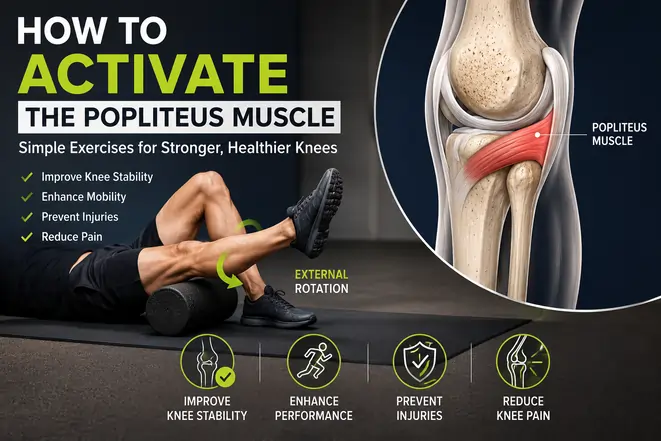
The popliteus is a small diagonal muscle found in the back of the knee. What is its main function? To “unlock” the knee from a fully straightened position, rotate the tibia (shin bone) relative to the femur (thigh bone). It basically helps to stabilize the knee, particularly during single-leg motions, descents, and rotation-heavy exercises.
It is not a large power producer; rather, it is an essential stabilizer. And, like many stabilizers, it can become irritated when performing more than its fair share.
The popliteus muscle is critical to the walking cycle because it begins the flexion of fully extended (“locked”) knees. Furthermore, the popliteus muscle serves as the principal stabilizer in the posterior knee region.
When the popliteus muscle is tight or strained, it can cause a number of knee problems. People typically complain about significant knee pain that extends to their hamstrings and calf muscles. Because the popliteus spans the top of the femoral artery, if it is overly tight, it can cause cramping or swelling in the calf.
What Is the Popliteus Muscle?
Anatomy and Location:
Origin:
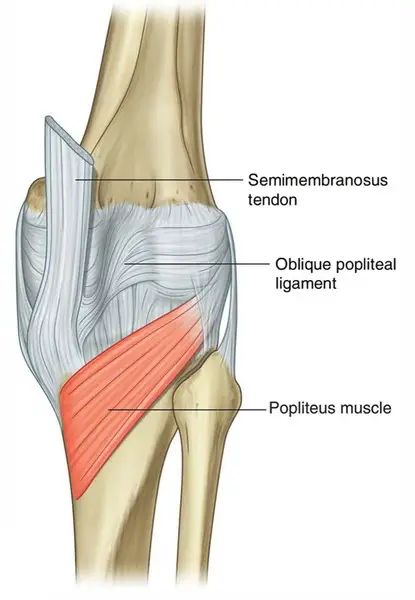
The popliteus muscle comes from the lateral condyle of the femur by a strong tendon known as the popliteus tendon. The popliteus tendon passes through the groove for the popliteus muscle on the lateral side of the lateral femoral condyle.
Tendinous fibers originate from the posterior horn of the lateral meniscus, connecting this tendon medially. The popliteofibular ligament also connects the popliteus tendon to the medial section of the head of the fibula.
Insertion:
The popliteus tendon then grows into a triangular muscle belly that runs inferomedially over the posterior joint capsule of the knee joint. The popliteus muscle inserts on the posterior side of the proximal tibia (medial two-thirds), just above the soleal line, which is also the origin of the soleus muscle.
Relations:
The popliteus muscle is placed deep within the popliteal fossa, where it forms the floor. The popliteus tendon originates within the capsule of the knee joint, making it intracapsular. The posterior end of the popliteus tendon is crossed by the arcuate popliteal ligament, the fibular collateral ligament, and the biceps femoris tendon.
The fleshy part of the popliteus muscle replaces the popliteus tendon as it travels beneath the arcuate ligament. The popliteus muscle is posteriorly covered by an investing fascia, which is supported by a thick aponeurotic expansion originating mostly from the semimembranosus muscle tendon. The gastrocnemius, plantaris, tibial nerve, and popliteal artery and vein are all situated posterior to the popliteus’ investing fascia.
Main Functions of the Popliteus
The popliteus muscle has a not-so-major role as a knee flexor. However, the popliteus muscle is needed for initial flexion of the fully extended (“locked”) knee. Thus, the popliteus is known as “the key to unlock the knee,” as it is essential for walking, standing, and sitting.
The popliteus muscle may perform two things: rotate the femur laterally or rotate the tibia medially. The gait cycle’s phase controls these actions:
During the closed chain phase of the gait cycle, the foot makes contact with the ground. Laterally rotating the tibia (approximately 5º) on the femur “locks” the knee joint. With the tibia fixed, the popliteus muscle contracts at its origin, forcing the femur to rotate laterally on the tibia. This action “unlocks” the knee, allowing flexion to be done.
During the open chain (swing) phase of the gait cycle, the foot is elevated, and the tibia may move freely. As a result, the popliteus muscle can use its insertion to medially rotate the tibia on the femur. This movement stabilizes the tibia during knee flexion.
The popliteus muscle is also the essential stabilizer of the posterior knee region due to its connections to the posterior joint capsule and popliteofibular ligament. Furthermore, the popliteus muscle pulls the lateral meniscus posteriorly during knee flexion and femoral lateral rotation, keeping it from being stuck.
Why Popliteus Muscle Activation Matters?
Knee Stability and Joint Support
The popliteus is the primary stabilizer for the posterior (rear) region of the knee. Its activation protects various internal structures.
Injury Prevention
Proper activation prevents the femur from tracking poorly over the tibia, reducing the risk of IT Band Syndrome and general patellofemoral pain. Stabilizing the posterior capsule, it prevents hyperextension injuries.
Better Athletic Performance
For athletes, the popliteus is a major player in deceleration and changing direction. When you run downhill or land from a jump, the popliteus helps control the rotation of the knee.
Improved Walking and Running Mechanics
If the popliteus is weak or dormant, the knee stays “stuck” in a locked or semi-locked position as you transition from the swing phase to the stance phase. Proper activation ensures the knee “unlocks” instantly upon heel strike. This allows for a smoother transition into mid-stance, preventing that “clunky” or jarring feeling in the joint.
Signs of Weak or Dysfunctional Popliteus Muscle
- Pain behind the knee
- Knee stiffness
- Difficulty bending the knee
- Instability during movement
- Pain while running downhill or descending stairs
Common Causes of Poor Popliteus Activation
Common biomechanical causes: Twisting or pivoting actions (such as shifting direction in sports). Downhill running or walking puts a lot of stress on the popliteus. Overuse due to repeated activities like cycling or long-distance jogging.
Age-related changes. Natural changes in strength, flexibility, and joint mechanics can all influence how forces are distributed throughout the knee as we get older. Staying active and strong can help build resilience.
Previous injuries. If you’ve had a previous knee injury, specific muscles may compensate by taking on additional strain during activities. This does not imply that you are frail, but it can affect how stress is transmitted throughout the joint.
Muscle imbalance. When neighboring muscles, such as the glutes (buttocks), quadriceps (front of thigh muscles), hamstrings (back of thigh muscles), or calves, do not efficiently share the strain, the popliteus may work harder during movement. Targeted strengthening can assist in restoring balance and improving knee mechanics.
How to Identify and Feel the Popliteus Muscle
The Popliteus muscle is located at the back of the knee and originates from the outside end of the femur, the bone in your thigh. It goes diagonally and connects to the upper portion of the tibia, generally known as the shin bone. This muscle serves to stabilize the knee joint during walking and standing.
To find the muscle, sit with your legs straight out and slightly bend your knee, placing your palm behind it. Move your foot inward and outward, and you will feel a muscle tense and release beneath your fingers; this is the Popliteus muscle.
Best Exercises to Activate the Popliteus Muscle
Seated Tibial Internal Rotation
- Sit on a chair or a stool.
- Put your hands between your legs, and you will maintain that spacing between your legs.
- Pop your heels just off the ground and rotate them out while rotating on the balls of your feet.
- Pulling the ground towards your buttocks.
- Hold for five seconds.
- Rotate your heels toward each other, bringing the ground towards you.
- Hold for five seconds.
- Do two sets of four to six repetitions.
Heel Dig Exercise
- Lie on your back and bend the knee of your sound leg at an angle as directed by the physician.
- Pull your toes towards you. Gently press your heel onto the floor.
- Do two sets of four to six repetitions.
Mini Knee Bends
- Stand with your hands lightly resting on a counter or chair in front of you, and your feet shoulder-width apart.
- Slowly bend your knees and bend down as if you were going to sit in a chair. Make sure your knees do not come in front of your toes.
- Lower yourself around 15 cm (6 in.). Your heels should stay on the floor.
- Rise carefully to a standing posture.
Single-Leg Balance Exercise
- Stand next to a chair, a wall, or in a doorway.
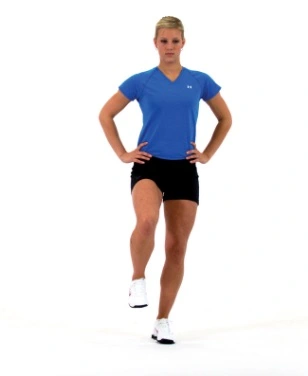
- Lift one leg from the floor and bend it behind you.
- If you have trouble keeping your balance, use one hand to cling to a chair, wall, or doorway.
- Keep the knee of your standing leg straight.
- Attempt to balance for up to 30 seconds.
- Rest for up to 10 seconds, if necessary.
- Repeat the exercise 6 to 8 times, then move to the other leg.
- When you can balance on one leg for 30 seconds with your eyes open, do it again with your eyes closed.
- If you can comfortably complete this exercise with your eyes closed for 30 seconds, you may push yourself further by performing it while standing on a pillow, if that feels secure.
Step-Down Exercise
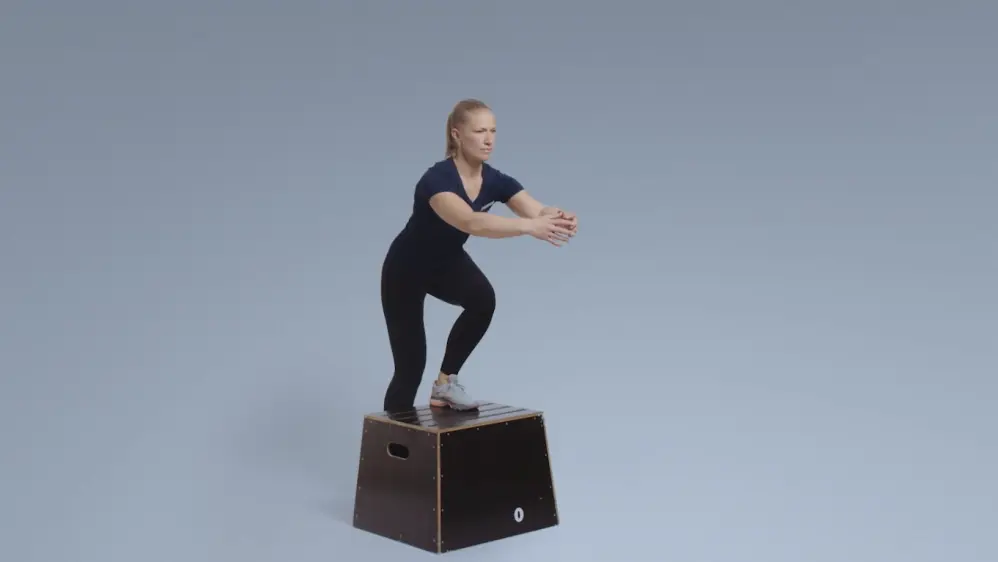
- Begin with both feet on the step.
- Then, take a gentle step down in front of the step with your left leg, letting your heel softly contact the ground.
- As you step down, attempt to keep your knee in the same straight line as your middle toe.
- Lift your left leg back to the starting position, keeping both feet on the step.
- Repeat this exercise 8 to 12 times, then move to your right leg.
- As you’re ready for a challenge, touch your heel to the floor in the same way, but as you pull your leg back up, softly tap it on the step.
Walking Lunges
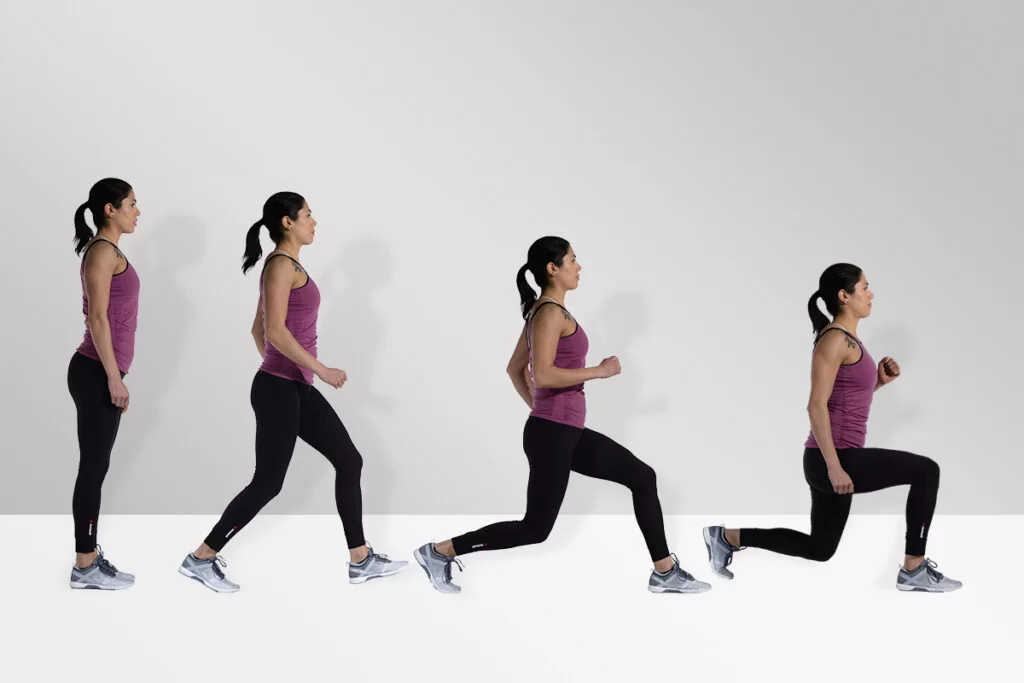
- Stand up straight, with your feet shoulder-width apart. You can keep your hands at your side or on your hips.
- Step forward with your right leg, weight on your heel.
- Bend the right knee and drop it until it is parallel to the floor in a lunge stance. Pause for a beat.
- Without moving your right leg, move your left foot forward, then repeat on the left leg. Pause with your left leg parallel to the floor in a lunge stance.
- Repeat this exercise, “walking” forward while you lunge with alternate legs.
- Perform 10-12 repetitions on each leg. Perform 2–3 sets.
- Variations to Try:
Mobility Exercises for the Popliteus Muscle
Hamstring Stretching
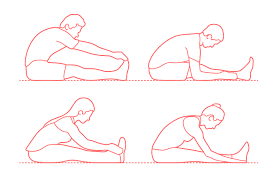
- Sit on the floor, with both legs straight.
- stretch your arms and stretch forward, bending your waist as far as possible but keeping your knees straight.
- Hold this posture for 15–30 seconds.
- Relax back into the beginning position.
- Repeat three times.
- Stretch until you feel a mild pull on the back of your thighs. If you experience severe pain, you should discontinue the workout.
Calf Mobility Drills
Wall Calf Stretch
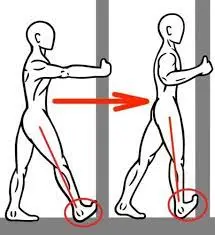
- Stand near a wall with one foot in front of the other and your front knee slightly bent.
- Keep your back knee straight, your heel on the ground, and lean toward the wall.
- Feel the stretch around the back leg’s calf.
- Hold the stretch for 20-30 seconds.
- Switch legs and alternate for three repetitions.
Dynamic Calf Raise
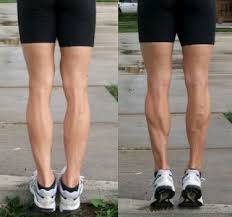
- Position the ball of your foot on the step’s edge. Your heel should be off the step.
- Slowly lower your heel while you bear weight through your leg. You may grasp onto anything, such as a railing or a wall, while you lower.
- Hold this posture for 20 to 30 seconds.
- Switch legs, then alternate for three repetitions.
Bent-Knee Soleus Stretch
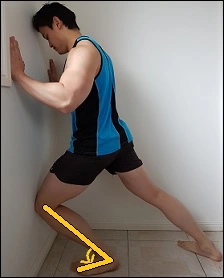
- Stand near a wall, one foot in front of the other, with the front knee slightly bent.
- Bend your back knee and maintain your heel on the ground as you lean toward the wall.
- Feel a stretch in the lower region of your calf muscle.
- Hold this stretch for 20 to 30 seconds.
- Switch legs, then alternate for three repetitions.
Foam Rolling Techniques
Quads
- Begin in a forearm plank posture, with the foam roller beneath your quads.
- Brace yourself with your upper body and core, then gently glide down the roller until it reaches just before your knees. Next, roll in the other direction until you reach your hip flexors.
- Repeat this for 30 seconds.
- When you reach a delicate region, stay there for a few breaths.
Calves
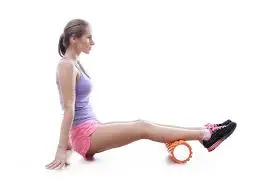
- Begin by sitting on the floor with your legs outstretched and the foam roller positioned beneath your calves.
- Lift your body up until your weight is resting on the foam roller. Cross your left leg over your right to provide pressure.
- Slowly roll your right calf back and forth on the foam roller, using your arms to guide your body forth and back.
- Complete in 30 seconds.
- Switch legs and concentrate on your left calf.
Hamstrings
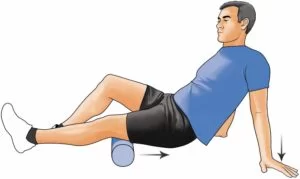
- Start by sitting on the floor with your legs extended. Place the foam roller below your hamstrings.
- Lift your body up until your weight is resting on the foam roller. Roll slowly up and down between the backs of your knees and glutes.
- Stay on tender places and roll for at least 30 seconds.
Ankle Mobility Exercises
Ankle circles
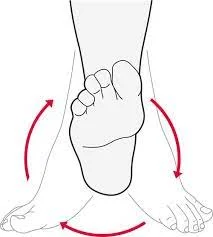
- Place a rolled towel or foam roller beneath your ankle.
- Slowly turn your ankle in circles, 10 times clockwise and 10 times counterclockwise.
- Only move your feet and ankles, not your legs.
- Vary the stretch by tracing the letters of the alphabet with your big toe.
Ankle flexion (plantar)
As you point your toes down toward your heel (plantar flexion), you will strengthen your ankle with a resistance band.
- Sit on the floor with one leg bent at the knee, heel on the floor, and the other leg comfortably on the floor.
- Wrap the band around the front of your foot and grip both ends in your palms.
- Slowly point your toes forward and back, releasing tension.
- Perform three sets of ten flexes on each foot three days a week.
Ankle flexion (dorsiflexion)
This exercise employs a stretch band to bend your ankle by bringing your toes toward you (dorsiflexion).
- Sit on the floor with your legs spread out in front of you.
- Wrap the band around a chair or table leg, then around one foot.
- Slowly raise your toes toward you, then return to the starting position.
- Perform three sets of ten flexes on each foot, three days a week.
Toe-heel walks
You may perform this workout with or without shoes on. It strengthens your ankles and feet.
- Walk around 30 feet while on your toes.
- Turn around and walk back in heels.
- Repeat 3-5 times.
Ankle jumps
- Stand up straight, hands on hips.
- Jump up straight, without bending your knees.
- Flex your ankles and lift your toes up when jumping (dorsiflexion).
- Just before you make contact with the floor, extend your ankles back.
- Push the balls of your feet into the floor explosively before jumping again. Try to keep your feet on the floor for as short a period as possible.
- Begin with a few repetitions in each set and go through two or three sets. Perform up to 25 repetitions in each set.
Common Mistakes to Avoid
- Using excessive resistance
- The popliteus isn’t designed to raise big loads. If you use a high resistance band or too much weight during rotation activities, bigger muscles, such as the hamstrings, will take control, leaving the popliteus unresponsive.
- Poor knee alignment
- During activation exercises, if your knee collapses inward or bends outward, your ligaments are put under undue strain. Always keep your kneecap tracked over your second toe.
- Moving too quickly
- This muscle performs best with calm, controlled motions. Rushing through repetitions uses momentum rather than muscle fiber, which weakens the goal of “unlocking” the joint.
- Ignoring pain signals
- Sharp or “pinching” pain in the back of the knee is a red flag. Pushing through this can cause tendinitis. If it hurts, limit the range of motion or tension right away.
- Skipping mobility work
- You can’t strengthen a muscle that’s “locked” or tight. If your calves or hamstrings are particularly tight, the popliteus muscle may be unable to move the joint through its complete rotational range.
Who Should Perform Popliteus Activation Exercises?
- Runners and Athletes
- Older Adults
- Individuals Recovering From Knee Injuries
- People With Knee Instability
Tips for Strengthening the Popliteus Safely
- Use Slow, Controlled Movements
- Strengthen Supporting Muscles
- Don’t Ignore Pain
- Prioritize Functional Movements
- Avoid Sudden Increases in Intensity
- Include Balance and Stability Training
Conclusion
Consider the popliteus as the “hidden key” that keeps your knees moving smoothly. While it is a small muscle, it plays a critical role in allowing you to appropriately bend your knee.
Without it, your movements would be rigid, difficult, and ultimately painful. By keeping this muscle engaged, you not only protect your joints but also make every stride more efficient. It functions as a clever stabilizer, cushioning the impact of the concrete and keeping your bones exactly straight whether you’re walking the dog or running a marathon.
FAQs
What are the signs of a weak popliteus?
Pain in the back and around the knee. Sharp discomfort with certain motions or a persistent dull aching. Mild swelling or bruises. Walking, descending stairs, and other weight-bearing activities cause pain.
How can you unlock the popliteus muscle in your knee?
In this position, the femur rotates medially on the tibia, allowing for complete extension without requiring muscular effort. To ‘unlock’ the knee, the popliteus muscle must contract, inducing flexion and lateral rotation of the femur on the tibia, giving the muscle the name ‘key’ to the locked knee.
How long does the popliteus take to heal?
Usually curable in 6 weeks if treated conservatively and resting the affected region, many instances improve in 10 – 14 days.
What causes tightness in the popliteus muscle?
Popliteus tendinopathy is frequently linked to overuse or biomechanical difficulties in the lower body. Common reasons include: Repetitive motion: Sports that involve frequent knee bending and extension, such as jogging, cycling, and skiing, can put strain on the popliteus tendon, producing wear and inflammation over time.
Can the popliteus induce knee locking?
Meniscal tears or other intra-articular injuries frequently result in acute locked knees. A popliteus tendon tear, a rare cause of acute locked knee, is sometimes neglected as a potential diagnosis.
Is the popliteus a deep muscle?
The popliteus muscle (PPM) is a tiny, triangular-shaped deep muscle located on the posteromedial side of the knee. It begins with a strong tendinous attachment from the lateral femoral condyle, at the origin of the fibular collateral ligament (FCL) and the posterolateral joint capsule.
References:
- Levarda, T. (2025, February 5). Popliteus muscle explained — Morningside Acupuncture NYC. Morningside Acupuncture NYC. https://www.morningsideacupuncturenyc.com/blog/popliteus-muscle-explained
- Murdoch, M. (2025, April 16). What is the popliteus muscle? — Sports Chiropractor Vernon BC. Sports Chiropractor Vernon BC. https://www.basecampclinic.com/blog/what-is-the-popliteus-muscle
- Sc, F. (2018, November 12). Popliteus- The tiny muscle of knee pain. Dynamic Chiropractic. https://dynamicchiro.com.au/2018/11/1865/
- Popliteus muscle. (2023, October 30). Kenhub. https://www.kenhub.com/en/library/anatomy/popliteus-muscle
- Evergreen. (2026, May 4). Popliteus strain. CARESPACE Health+Wellness. https://carespace.health/conditions/popliteus-strain/?utm_source
- Specialist, E. W. B.-. K. a. M. (2025, June 26). 4 Tibial rotation exercises to fix knee pain at home. Precision Movement. https://www.precisionmovement.coach/tibial-rotation-exercises/
- How to do the Single-Leg Balance Exercise | NYP. (n.d.). NewYork-Presbyterian. https://www.nyp.org/healthlibrary/multimedia/how-to-do-the-single-leg-balance-exercise
- How to do Step-Up and Step-Down Exercises | NYP. (n.d.). NewYork-Presbyterian. https://www.nyp.org/healthlibrary/multimedia/how-to-do-step-up-and-step-down-exercises
- Hecht, M. (2019, May 28). 12 Stretch and strength moves for ankle mobility. Healthline. https://www.healthline.com/health/ankle-mobility