
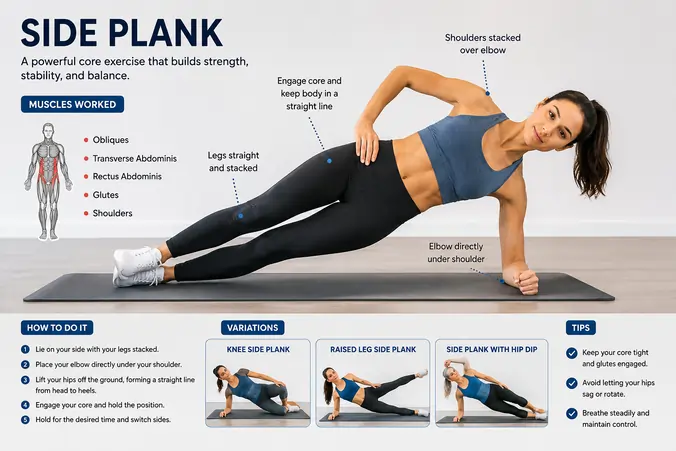
Side Plank Exercise
What is Side Plank Exercise?
The Side Plank Exercise is an excellent core-strengthening exercise that targets the oblique muscles, shoulders, hips, and lower back.
When it comes to core workouts, the focus is generally on the “six-pack” muscles in the front of your body (rectus abdominis), but this ignores the all-important obliques. These core muscles that run along your trunk on either side are responsible for much more than the infamous snatched waist. Obliques assist you in maintaining balance and stability while also allowing you to rotate, twist, and turn—all of which are vital in sports such as running, tennis, soccer, and everyday life.
The side plank is one of the most effective workouts for targeting your obliques. This anti-rotation, isometric workout asks you to stabilize while strengthening to avoid wobbling or falling over. And it’s much more than just a core workout. Similar to the regular plank, the side plank asks you to engage muscles from head to toe.
Muscles Worked By Side Planks
- Internal Obliques: The smaller, thinner muscles that sit beneath the external obliques and run down the sides of your belly. They assist in stabilizing the spine and pelvis, twisting and bending your body, and resisting rotation.
- External Obliques: The broader, flatter oblique muscles that run down the sides of your belly, above the internal obliques (closer to the surface). These muscles, like the internal obliques, aid in the stabilization of the spine and pelvis, as well as the ability to twist and bend your torso and resist rotation.
- Gluteus Medius: The gluteus medius muscle is positioned on the outside borders of your buttocks, beneath the much bigger gluteus maximus. It stabilizes the pelvis and aids in hip rotation, extension, and abduction.
- Shoulder: Because you must stabilize via the shoulder joint on the weight-bearing side, a side plank works multiple muscles in the shoulders, including the rotator cuff.
What are the benefits of a side plank?
The following are some of the primary advantages of including the side plank in your exercise routine:
- Strengthens three muscular groups simultaneously. To maintain stability in a side plank posture, the muscles in your shoulders, hips, and core sides must all activate and function together.
- Protects your spine. Side planks target the deep spinal stabilizing muscle, the quadratus lumborum. Keeping this muscle strong will help you avoid a back injury.
- Strengthens your core without straining your back. Unlike crunches and situps, side planks do not place strain on your lower back. However, this exercise does an outstanding job of increasing core strength.
- It improves your equilibrium. A side plank exercise can help enhance your sense of balance and coordination.
- Reduces the possibility of a back injury. Including planks and side planks in your workout routine may help lower your chance of a back injury.
How to do a Side Plank Video?
How to do a side plank?
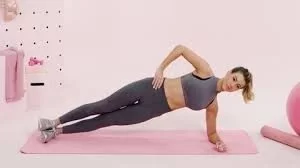
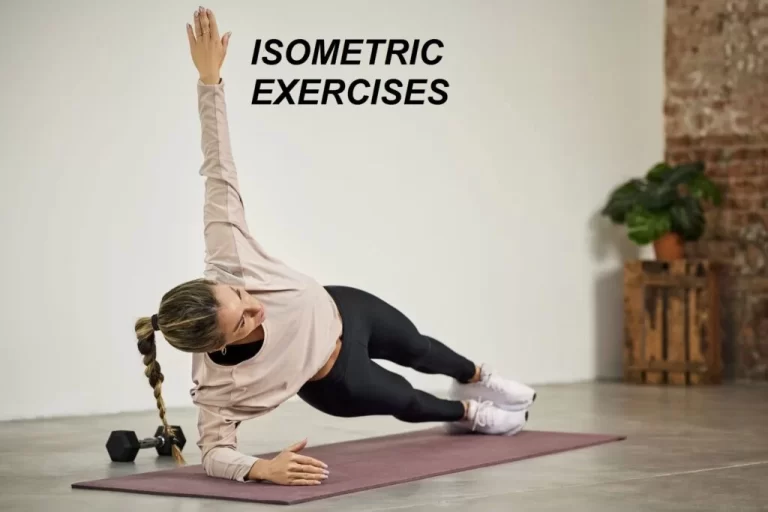
- Begin in a high plank position, shoulders stacked over wrists and legs stretched behind you, toes tucked. Engage your core and move your belly button closer to your spine; imagine tightening the muscles on each side of your abdomen inward (don’t suck in). Lightly tighten your glutes and keep your head in a neutral position; look slightly forward to produce a straight line from your crown to your heels.
- Roll to the outside edge of your right foot, then stack your left foot on top of it. Turn your hips and shoulders to the side, positioning your left hip and shoulder precisely over your right hip and shoulder.
- Firmly press down with your right hand, avoiding sinking into your shoulder. Keep your hips elevated and stacked, with your pelvis pointed forward rather than up or down.
- Extend your left arm to the ceiling. Hold this posture for 10 to 60 seconds.
- Pivot back through the middle, returning to the high plank posture before repeating on the other side. (If necessary, lower your hips to the floor for a little break before continuing on to the opposite side.)
Some points to keep in mind during the exercise:
- If you find it difficult to hold a side plank, that’s OK. While working on your strength, consider carrying out the exercise from your knees rather than your feet.
- Keep your hips stacked and pointing front. Try not to rotate your body.
- Avoid allowing your hips to fall throughout the activity. If you are unable to maintain the posture, consider shortening the time of the side plank. It’s preferable to execute 20 seconds with proper form than 50 seconds with poor form.
- Try to maintain your face and bottom hand calm throughout the workout.
Side plank variations
Side Twist
Ease into your side plank gradually before completely loading it with your body weight to avoid joint and/or muscle strain. This is accomplished through warmups and adjustments.
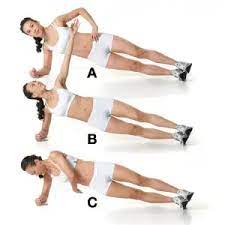
Warm up your obliques with short curl-ups on the side.
- Begin by lying on the floor, knees bent and feet flat. Start with a few straight-on curl-ups.
- When you’re ready, execute the curls to one side, going gently up and down to maximize the strength gains.
- Do at least five per side.
Side Plank From Knees
Now, sit on one hip with your legs curled behind you to make the warm-up a little more challenging.

- Support your body weight by extending the arm on the same side as the hip you’re sitting on and placing the hand on the floor.
- Keep your hips on the floor and lean toward your hand. This will give your obliques some isometric training.
- Stay there for about 20 to 30 seconds, then repeat on the opposite side.
Single-Knee Side Plank
If you can’t maintain the side plank posture, the corrective side plank is an excellent way to improve your oblique strength.
- Lower down from a sitting posture such that your weight is supported by your hip and the side of your leg closest to the floor. This leg should be slightly bent to ensure safe and proper alignment. Your weight should also be supported by the forearm on the same side.
- Maintain proper form and alignment by keeping your upper hip and shoulder exactly above the lower. Use your abs. Your upper arm might rest at your side, or you can place your hand on your hip.
- Spend up to one minute in this posture, then switch sides. Maintain proper form while in the posture, and attempt to add 1-2 seconds each time you practice.
Stability Ball Side Plank
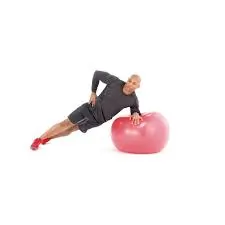
If you stay correct, you may improve muscular balance and engage the muscles in your ribcage by placing a fit ball or BOSU ball under your flank.
The ball will test your alignment and overall balance. You must keep your upper hip and shoulder precisely over the bottom. If you have trouble accomplishing this, expand your base of support by placing the top foot in front of the other on the floor.
Side plank dips
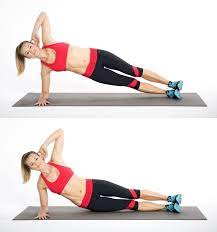
- Begin in a typical side plank position.
- Raise your top arm straight above you or place your top hand on your top hip.
- Drop your hips until they are in touch with the ground, then return to the starting position.
- Repeat 10 to 15 times and then swap sides.
- If you’re a beginner, start with one set per side and gradually increase to three sets per side as the exercise becomes simpler to perform.
Elevated side plank
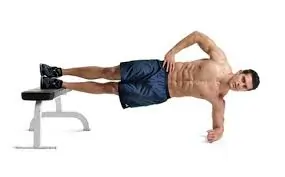
- Begin in the same posture you would for a standard side plank.
- Keep your neck neutral and your core supported.
- Lift your hips off the mat, placing the palm of your supporting hand precisely beneath your lower shoulder, fingers pointing away from you.
- Extend your top arm toward the ceiling.
- Hold this posture for 15–60 seconds.
- Repeat on the opposite side.
Common Mistakes to Avoid
Hips Sagging
If you haven’t developed enough strength, your hips will droop, and you will be unable to keep a straight line. When this happens, your core is no longer keeping you in place, and you are not benefiting from the workout. You may also put excessive strain on your hips and back.
Rolling forward
Without adequate strength and balance, you may be unable to hold the posture, resulting in rolling forward and being unable to stack your hips and legs. If this occurs, attempt to straighten it; if this is too tough, drop your bottom knee and maintain a straight line.
Holding Too Long
Initially, you might only be able to hold the side plank for a few seconds. When you begin drooping or rolling forward or backward, it is essential to stop the plank before you sustain a strain injury. Monitor your form and stop as soon as you feel fatigued.
Lift your upper leg as well, for the ultimate challenge. You may execute this from either the forearm or straight arm support positions. Raising the upper leg will engage your inner thigh muscles, but it is unnecessary to elevate it higher than parallel to the ground. Another option is to lift the lower leg off the floor while merely contacting the upper leg’s foot with your elbow or hand.
How to include side planks in your workout routine?
Side planks are a terrific warm-up exercise. Try this: Hold a modified side plank for 30-60 seconds on each side, then switch to a progressive variant, such as side plank hip dips for 30-60 seconds on each side. He claims that warming up your core, obliques, and glutes before the major part of your exercise can help you perform better in activities like split squats, lunges, staggered-stance Romanian deadlifts, single-leg squats, sprinting, and leaping.
Side planks can also be included in the primary block of work in your daily workout routines. To maximize the advantages of strength and endurance, perform three to five sets.
If you’ve been doing side planks for a while and are confident with your form, you may increase the reps, sets, or duration. You may also test your talents with side plank variants or combine numerous exercise variations to create a comprehensive lateral core workout.
Safety and Precautions
If you have a shoulder, arm, elbow, or ankle injury, avoid doing the side plank. If you have any other injuries or conditions, consult with your doctor or physical therapist to figure out whether it is appropriate. Stop if you have pain at any point.
Conclusion
While crunches and traditional planks target the muscles in the front of your core, a side plank targets the obliques, which run down the side of your core.
Keeping your obliques strong might help you rotate and bend your trunk. Strong obliques can also help protect your spine, improve your posture, and lower your chance of back pain.
If you’re new to working out, have an injury, or don’t know how to execute a side plank correctly, consult with a certified personal trainer to get started. As with any workout, if you experience pain while attempting a side plank, stop immediately.
FAQs
Can I do side planks every day?
Side planks can also be included in the primary block of work in your daily workout routines. To maximize the advantages of strength and endurance, perform three to five sets.
Can planking improve scoliosis?
No exercise entirely “fixes” scoliosis, although side planks can strengthen the core and improve stability, potentially reducing curve severity or symptoms.
How long should I hold the side plank?
Hold a side plank for 30-60 seconds per side to improve core strength and stability. Beginners should start with 15-30 seconds, while expert practitioners can hold for 90-120 seconds. Quality is more important than time; keep hips high and lifted.
Is the side plank better than the standard plank?
While the plank engages the same muscles that cause our slouch, the side plank pushes us to utilize our strength to target essential and helpful muscles such as the TVA, QL (both vital lumbar spine supports), and glutei medii (major pelvic stabilizers).
Do side planks assist in building core strength?
The side plank tests your stability and strengthens your core by engaging the muscles on the side of your body. Lie on your left side and raise yourself onto your left forearm (top illustration). Position your left shoulder precisely over your left elbow, keeping your shoulders, hips, and knees in a straight line.
What kind of workout is a side plank?
A side plank is a static strength exercise that involves supporting your body weight with one arm and the side of one foot (or knee for beginners). When executed correctly, your body creates a straight line from head to feet, resulting in an isometric contraction that increases strength and stability.
References:
- The benefits of a side plank and how to do it safely. (2020, November 10). Healthline. https://www.healthline.com/health/side-plank
- Sparacino, A. (1970, January 1). Why side planks deserve more of your attention—and 8 spicy variations to try. https://www.onepeloton.com/blog/side-planks

One Comment