How To Loosen Tight Lower Back Muscles
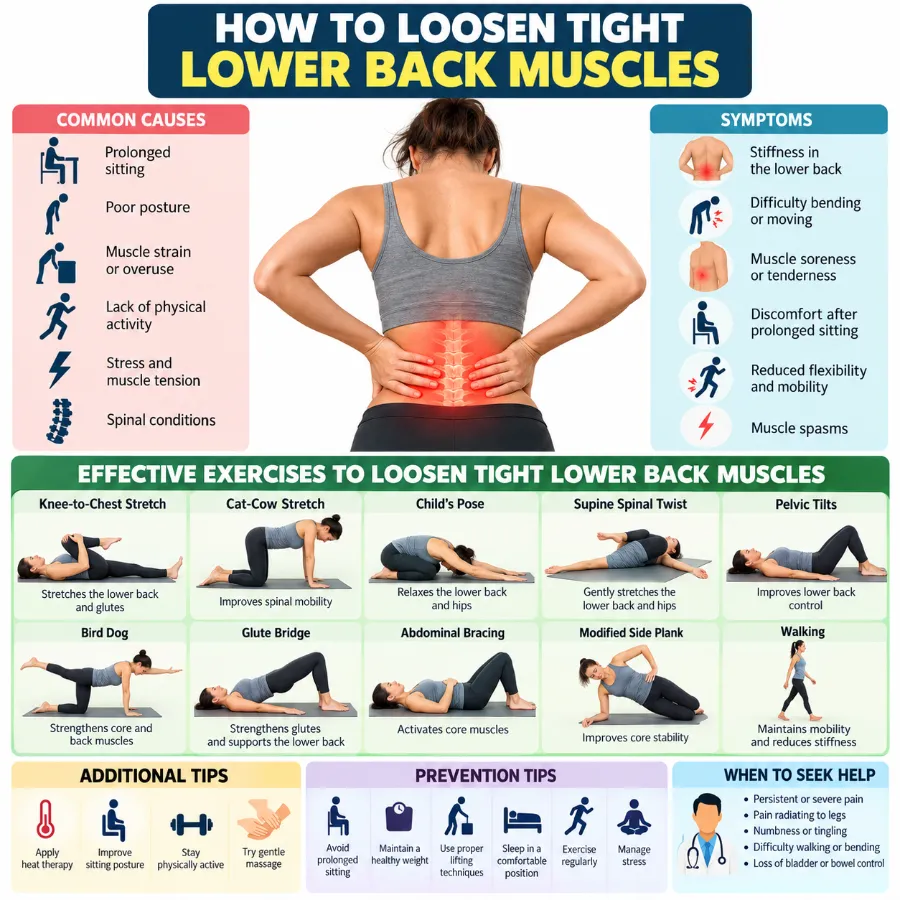
Tight lower back muscles can cause a variety of symptoms, including discomfort, stiffness, limited movement, and difficulty carrying out everyday tasks. Common causes of tight lower back muscles include sitting for long periods of time, poor posture, overuse of muscles, incorrect lifting techniques, and lack of physical activity. Tight muscles can also occur if you have suffered an injury or there is an issue with the spine itself.
A variety of treatments, including gentle stretching, mobility exercises, strengthening exercises, heat treatment, and making changes to your lifestyle, can help loosen your tight lower back muscles.
In this article, we will look at how to loosen tight lower back muscles, including common causes, symptoms, effective exercises, and treatment options.
Why Do Lower Back Muscles Become Tight?
There are many reasons why lower back muscles can become tight. Common reasons include:
- Sitting For Long Periods
Sitting for long periods of time can put strain on your lower back. If you sit for long periods of time without good back support, this can cause tightness and discomfort.
- Poor Posture
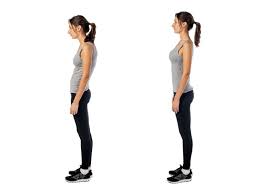
Poor posture whilst sitting, standing or walking can cause increased strain to your lower back. Over time, this can cause some muscles to become overworked.
- Muscular Strain
Lifting heavy objects, twisting suddenly, incorrect bending or doing something physical which you are not used to can cause strain to the lower back muscles. This can cause tightness, muscle spasms and discomfort.
- Lack Of Physical Activity
Not being physically active can cause muscles to become less strong, flexible, and mobile. If your muscles are not strong, they may struggle to support the normal movement of your spine.
- Overuse Of Back Muscles
Doing lots of bending, lifting, twisting, or physically demanding tasks can cause the lower back muscles to become overworked. This can cause tightness and fatigue.
- Stress
Having high levels of stress can cause muscles to become tight, including lower back muscles. This can cause your tightness to become more noticeable.
- Spinal Issues
Issues with the spine, including disc herniation, degenerative disc disease, spinal stenosis, and joint issues, can cause lower back discomfort and muscle tightness.
In these instances, tight muscles can be a secondary issue caused by irritation or limited movement.
Symptoms
The symptoms you experience will depend on the cause of your tight muscles.
Common symptoms include:
- Stiffness in the lower back area.
- Difficulty bending forwards/backwards.
- Sore muscles in the lower back area.
- Discomfort when sitting/standing for long periods of time.
- Limited mobility and flexibility.
- Muscle spasms.
- Difficulties with changing positions.
- Discomfort when walking, lifting, or twisting.
- Some people may also experience tightness in the hip and gluteal area.
How To Loosen Tight Lower Back Muscles
There are a variety of ways to loosen tight lower back muscles.
- Heat
Using heat can be a simple way to help reduce muscular stiffness.
- Place a warm heat pad or hot water bottle onto the lower back area. This can help to increase blood flow to the area and relax tight muscles.
- Apply a heat pad/hot water bottle over the lower back area.
- Place a towel between the heat and skin.
- Leave on for 15-20 minutes.
- Take off and let skin return to normal temperature.
- Don’t overheat and don’t sleep with a heat pad on.
- Gentle Stretching
- Gentle stretching can help to increase flexibility.
- Stretch gently and avoid bouncing.
- Physical Activity
- Avoid complete rest if you have simple lower back pain. Gentle physical activity such as walking can help keep you mobile.
- Start with short walks and build up.
- Good Posture When Sitting
Try to sit in a comfortable position to help reduce strain on your lower back.
- Ensure your feet are supported.
- Sit upright in a comfortable position.
- Use good lumbar support if needed.
- Avoid sitting for long periods.
- Change positions regularly.
- Gentle Massaging
- Gentle massaging of lower back muscles can help to reduce tightness.
- Massaging should be gentle, as you don’t want to cause any pain. If you’re experiencing pain or have recently suffered an injury, avoid deep pressure.
- Avoid putting pressure directly onto your spine. Stop if symptoms get worse.
Best Exercises To Loosen Tight Lower Back Muscles
Below are some exercises which can help to increase flexibility in your lower back, mobility in your spine and improve muscle function. Do these slowly and within your comfortable range of movement.
Stretching Exercises
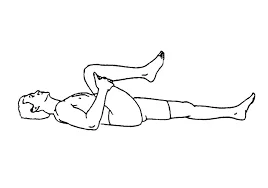
- Single Knee to Chest
This gentle stretch helps to stretch the lower back and gluteal muscles. It can help reduce stiffness.
Steps:
- Lie on your back with both legs straight.
- Gently flex your right knee and draw your leg upward toward your chest.
- Grab your knee/thigh with both hands.
- Gently bring your knee closer to your chest.
- Keep the other leg relaxed.
- Hold for 15-30 seconds.
- Slowly return to the start position and repeat on the other side.
- Repeat 2-3 times on each side.
- Double Knee to Chest
This stretch can help to stretch the lower back and gluteal muscles. It can help increase flexibility in the lower back.
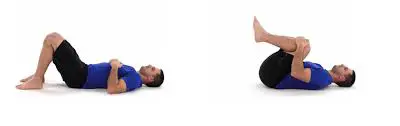
- Position yourself lying face-up, with both knees flexed and your feet supported on the floor.
- Slowly bring both knees towards your chest.
- Grasp your knees/thighs.
- Gently bring your knees closer until you feel a comfortable stretch.
- Hold for 15-30 seconds.
- Slowly return your feet to the start position.
- Repeat 2-3 times.
This gentle mobility exercise can help to increase mobility in your spine. It can help reduce stiffness in the lower back.
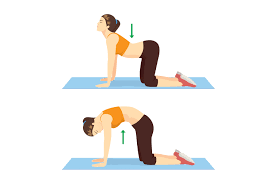
Steps:
- Get into a hands-and-knees position with your wrists under your shoulders and knees under your hips.
- Inhale and gently arch your back. Tuck your chin and tailbone.
- Exhale and gently round your spine towards the ceiling.
- Let your head gently lower.
- Repeat, ensuring you keep a good breathing pattern.
- Repeat 10-15 times.
This gentle stretch will help to lengthen muscles around your lower back and hips. It can help you to relax.
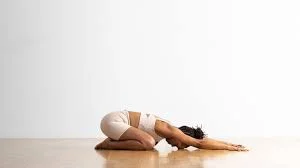
Steps:
- Kneel on the floor.
- Gently tuck your hips towards your heels.
- Stretch arms forwards.
- Lower your chest down towards your thighs as far as is comfortable.
- Relax your shoulders and take a steady breath.
- Hold for 20-30 seconds.
- Repeat 2-3 times.
This gentle exercise can help to mobilise the lower back and thoracic area. It can help to stretch muscles around the hips and lower back.
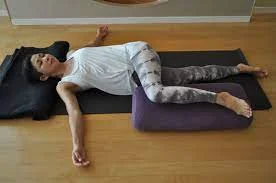
Steps:
- Lie on your back.
- Keep knees bent while feet on the floor.
- Stretch arms out to the side with your arms at shoulder height.
- Gently bring both knees to the right.
- Ensure your shoulders are comfortably on the floor.
- Hold for 15-30 seconds.
- Return knees to centre and repeat on the other side.
- Repeat 2-3 times on each side.
- Do not overextend and only move within your comfortable range.
- Pelvic Tilt
This gentle exercise can help to activate your abdominal muscles. It can help you to become more aware of your pelvic and lower back movement.
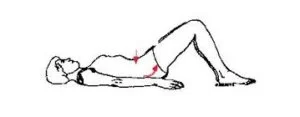
Steps:
- Lie on your back.
- Keep knees bent while feet on the floor.
- Keep arms relaxed by your side.
- Gently engage your abdominal muscles.
- Tuck your pelvis underneath you to bring your lower back closer to the floor.
- Hold for 3-5 seconds.
- Gently release and return to the start position.
- Repeat 10-15 times.
- Forward Bend
This gentle stretch can help to stretch the muscles along your back, including your hamstrings and lower back.
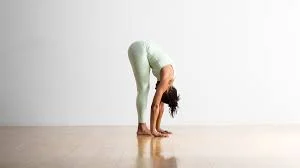
Steps:
- Stand up tall with feet around hip-width apart.
- Knees slightly bent.
- Bend forwards from your hips.
- Let your arms hang comfortably.
- Stop when you feel a gentle stretch.
- Hold for 15-20 seconds.
- Gently return to standing.
- Repeat 2-3 times.
Strengthening/Mobility Exercises
Strengthening your abdominal, gluteal and spinal muscles can help to improve stability.
- Bird Dog
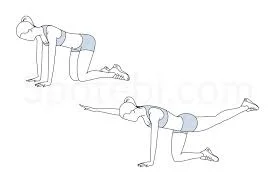
This exercise can help strengthen your core, gluteal and spinal muscles. It can help improve coordination of your trunk when moving opposite limbs.
Steps:
- Get into a hands-and-knees position.
- Keep your spine neutral and gently engage your abdominal muscles.
- Extend your right arm forward and left leg backwards.
- Ensure your hips are level and your trunk is not twisting.
- Hold for 3-5 seconds.
- Gently return to the start position.
- Repeat on the other side.
- Repeat 10 times on each side.
- Glute Bridge
This exercise can help strengthen your gluteal muscles. It can help improve hip extension and control of your pelvis. Having stronger gluteal muscles can help you to move efficiently during everyday activities.
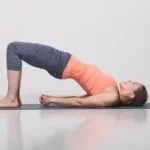
Steps:
- Lie on your back.
- Keep knees bent while feet on the floor.
- Keep arms relaxed by your side.
- Engage your abdominal and gluteal muscles gently.
- Raise your hips up so that your shoulders, hips, and knees are in a comfortable diagonal line.
- Avoid over-arching your lower back.
- Hold for 3-5 seconds.
- Gently return to the start position.
- Repeat 10-15 times.
- Abdominal Bracing
This exercise can help engage your deep abdominal muscles. It can help improve the stability of your trunk. It is a good exercise to start with to help improve control.
Steps:
- Lie on your back.
- Keep your knees bent
- Keep your feet on the floor.
- Relax your shoulders and take steady breaths.
- Engage your abdominal muscles as if bracing for a light push to your stomach.
- Ensure your pelvis and lower back are in a comfortable neutral position.
- Keep breathing.
- Hold for 5-10 seconds.
- Release and repeat.
- Repeat 10 times.
- Modified Side Plank
This exercise can help strengthen your abdominal muscles. It can help improve core endurance and control of your pelvis. It specifically targets the lateral stability muscles.
Steps:
- Lie on your side with knees bent.
- Ensure your elbow is directly under your shoulder.
- Place your top hand on your hip.
- Engage your abdominal muscles.
- Raise your hips off the floor. Ensure your knees are touching the ground.
- Ensure you are in a straight line from your shoulders to your knees.
- Hold for 10-20 seconds.
- Gently lower your hips.
- Repeat 2-3 times on each side.
- Walking
Low-impact activity can help to keep your spine moving as it should. Regular walking can help reduce stiffness caused by sitting for long periods.
Steps:
- Stand up tall with relaxed shoulders.
- Start walking at a comfortable pace.
- Walk naturally without overstriding.
- Keep breathing comfortably.
- Start with 5-10 mins and build up.
- 10-30 mins depending on how much you can tolerate.
Daily Routine
A simple routine can help improve movement in your lower back. Include stretching, mobility, and strengthening exercises.
Exercise
Time
- Cat Cow
- 10 Repetitions
- Single Knee to Chest
- 20 Seconds Each Side
- Child’s Pose
- 20-30 Seconds
- Pelvic Tilt
- 10-15 Repetitions
- Bird Dog
- 10 Repetitions Each Side
- Glute Bridge
- 10-15 Repetitions
- Walking
- 10-20 Mins
You don’t need to complete all of these exercises. Start with a few comfortable exercises and build up as your mobility improves.
Tips To Reduce Tight Lower Back Muscles
Alongside completing exercises, you can also make changes to your lifestyle to help reduce the chances of your lower back muscles becoming tight.
Avoid sitting for long periods of time. Take short breaks to stand up and walk around. Move your hips and back gently every 30-60 minutes.
Maintain a healthy weight. Extra weight can cause increased strain on your lower back. Regular physical activity and eating a balanced diet can help to keep your spine healthy.
- Lift correctly. When lifting:
- Stand close to the object.
- Bend at the hips and knees.
- Keep the object close to your body.
- Avoid twisting your back.
- Use your legs to help lift.
- Sleep in a comfortable position. This can help keep your spine comfortable.
- Back sleeping: Slide a pillow beneath your knees to provide additional support and maintain a comfortable spinal position.
- Side sleeping: Keep a pillow between your knees to help align your hips and reduce strain on your lower back.
Be physically active. Regular physical activity can help keep your muscles strong and flexible and keep your spine moving. Include walking, strengthening, and gentle stretching.
Reduce stress. Using relaxation techniques, deep breathing, enough sleep, and physical activity can help reduce muscle tightness caused by stress.
When To See A Physiotherapist/Doctor
Most simple cases of tight lower back muscles can be improved with correct movement and treatment. However, if you are experiencing ongoing, severe symptoms, you should seek advice from a Physiotherapist/Doctor.
See a Physiotherapist/Doctor if:
- Your lower back muscles are still tight after a few days of self-care.
- You are suffering with regular tightness.
- Pain travelling into your buttock/legs.
- Having trouble walking, bending or doing everyday tasks.
- Ongoing muscle spasms.
- Numbness/Tingling in your legs.
- Pain affecting your sleep/activity.
Seek urgent medical attention if you are experiencing new bladder/bowel control issues, numbness in your groin/saddle area, or worsening weakness in your legs. This can indicate serious nerve compression, including cauda equina.
If you are experiencing lower back symptoms following a major accident/injury, or alongside fever/weight loss, you should seek prompt medical attention.
Physiotherapy Treatment
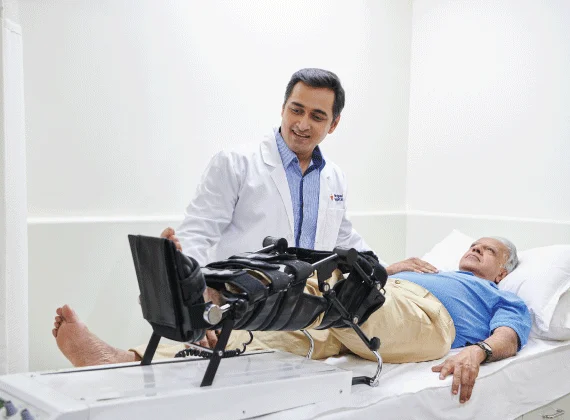
Physiotherapy can help identify the cause of your tight lower back muscles and create a suitable treatment plan.
Depending on your assessment, you may receive:
A Physiotherapist may use the correct manual techniques to help improve any movement issues. This can provide short-term relief.
Therapy Exercises
Personalised stretches, strengthening and mobility exercises can help to increase flexibility, control and improve function.
Core Strengthening
Exercises targeting your abdominal, back and pelvic stability muscles can help improve control and endurance.
Postural Advice
A Physiotherapist can assess your posture when sitting, standing and moving. They can advise on what changes you can make to reduce unnecessary strain.
Education
Learning how to lift correctly, modify your activity, progress your exercises and self-manage can help to prevent any further episodes.
Your treatment will depend on your symptoms, physical assessment, limitations and underlying issue.
FAQs
How can I quickly loosen my tight lower back muscles?
Gentle stretching, short walks, moving within your comfortable range and applying heat for 15-20 mins can help reduce lower back stiffness. Don’t overstretch.
What is the best stretch for tight lower back muscles?
The Cat Cow, Single Knee to Chest, Child’s Pose and gentle Supine Spinal Twist are commonly used to improve spinal mobility and reduce muscle tightness. The best exercise will depend on the cause of your tightness.
Why are my lower back muscles tight when I wake up?
Morning stiffness can occur due to not being as active during sleep, poor sleeping position, muscle fatigue, or spinal/joint issues. If you are experiencing ongoing or severe morning stiffness, you should seek advice from a healthcare professional.
Will walking help me loosen my tight lower back muscles?
Yes! Gentle walking can help keep your spine moving, improve circulation, and reduce stiffness. Start with a comfortable amount of time and build up.
Should I use heat or ice on my tight lower back muscles?
Heat can be helpful for reducing muscle tightness. Ice can be helpful for providing short-term pain relief following an acute injury. Choose whichever is most comfortable for you. Don’t apply directly onto your skin.
How long will it take to loosen my tight lower back muscles?
If you have mild muscle tightness, this may improve within a few days with correct movement. If you have ongoing symptoms, this may take a few weeks of rehab.
Should I stretch my tight lower back muscles?
Gentle stretching can help improve flexibility. Avoid overstretching, especially if it is causing sharp pain, referred pain, numbness, or tingling.
Can weak core muscles cause my lower back muscles to be tight?
Having weak/core muscles with poor endurance can cause poor control of your trunk. This can cause increased demand on other muscles. Strengthening your core can help improve support in your spine.
References
- NHS – Back Pain
https://www.nhs.uk/conditions/back-pain/
Covers common causes of back pain, heat therapy, staying active, exercises, and when to seek medical advice. - MedlinePlus – Taking Care of Your Back at Home
https://www.medlineplus.gov/ency/article/002119.htm
Information about back care, posture, physical activity, stretching, strengthening, and prevention. - World Health Organization (WHO) – Low Back Pain
https://www.who.int/news-room/fact-sheets/detail/low-back-pain
Covers symptoms, risk factors, treatment, physical activity, and rehabilitation. - NICE – Low Back Pain and Sciatica: Recommendations
https://www.nice.org.uk/guidance/ng59/chapter/Recommendations
Clinical recommendations for exercise programmes, manual therapy, and self-management. - MedlinePlus – Acute Low Back Pain
https://medlineplus.gov/ency/article/007425.htm
Explains acute lower back pain, home treatment, activity modification, and physiotherapy. - MedlinePlus – Chronic Low Back Pain
https://www.medlineplus.gov/ency/article/007422.htm
Covers long-term lower back pain management, physical therapy, stretching, and strengthening exercises. - NHS – Back Pain Exercises and Stretches
https://www.nhs.uk/conditions/back-pain/
Provides practical guidance about exercises and stretches for people experiencing back pain.