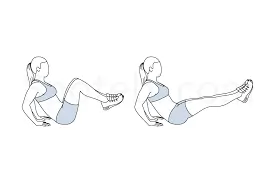
Seated Knee Tucks Exercise
Introduction
Seated Knee Tucks is a simple yet effective core-strengthening exercise that targets the abdominal muscles, especially the lower abs. It is commonly performed while sitting on the floor or a bench, making it suitable for beginners as well as advanced fitness enthusiasts. This exercise involves drawing your knees toward your chest while maintaining balance, which helps engage the core and improve stability.
One of the key benefits of Seated Knee Tucks is that it enhances core strength without putting excessive strain on the lower back, making it a safe option for many individuals. It also helps improve coordination, balance, and overall body control. Additionally, this exercise can be easily modified to increase or decrease intensity based on fitness levels.
Incorporating Seated Knee Tucks into your routine can support better posture, improve athletic performance, and contribute to a stronger, more stable core, which is essential for everyday movements and injury prevention.
Muscles Worked In Seated Knee Tucks
- Rectus Abdominis – Main muscle responsible for core flexion (“six-pack” muscle)
- Lower Abdominals – Heavily engaged when pulling knees toward the chest
- Obliques (Internal & External) – Help stabilize and balance the trunk
- Hip Flexors (Iliopsoas) – Assist in lifting and drawing the knees inward
- Transverse Abdominis – Deep core muscle that supports stability and control
- Quadriceps – Help in controlling leg movement
- Erector Spinae (Lower Back Muscles) – Maintain posture and spinal stability
Seated Knee Tucks Exercise Video
How To Do Seated Knee Tucks
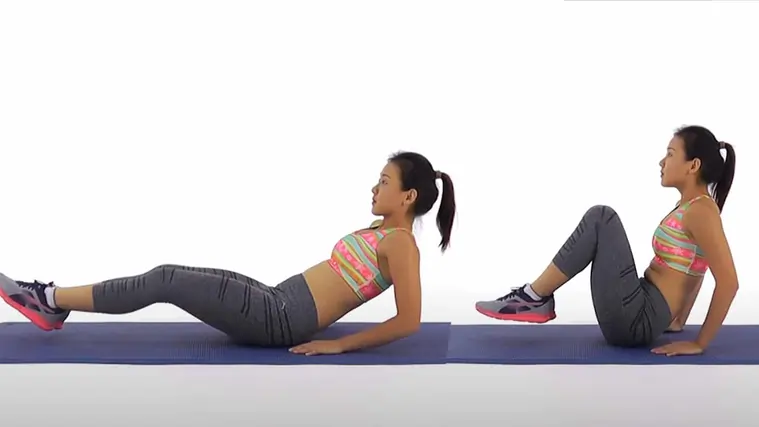
- With your feet flat on the floor and your knees flexed, assume a sitting position. For support, keep your back straight and position your hands slightly behind you.
- Maintain a straight back and raise your feet off the ground while you slightly lean back.
- Stretch your legs outside to return to the starting position without letting them touch the ground.
- Keep your core active and under control while you perform the exercise as many times as you desire.
Variation of Seated Knee Tuck
- Weighted Seated Knee Tucks: Consider adding additional weight if you believe you have mastered the standard seated knee tuck. Using the same method as the body weight variation, perform the seated knee tucks while balancing a medicine ball—or any other weight—over your ankles.
- Seated Knee Tucks to Leg Crunches: You may also combine knee tucks with other workouts. In one example, you may switch between leg crunches and knee tucks. After doing a seated knee tuck, keep your legs straight and tense your core to bring your thighs to your chest. After that, go back to knee tucks and keep switching.
- Seated Knee Tucks on an Incline Bench: The sitting knee tuck on an inclined bench is an exercise that targets the lower abdominals, hip flexors, and stabilizers. When performed on an incline bench, they become more challenging due to the added resistance provided by gravity.
- Seated Knee Tucks with Resistance Bands: The Seated Knee Tuck with Resistance Bands is a great variation of the traditional knee tuck that continuously stresses the core, hip flexors, and stabilizers.
Benefits
Improved Core Strength:
- Knee tucks when seated immediately target your abdominal muscles. Thus, regular exercise will help you develop a stronger core.
- Almost all of the workouts require a strong core. The first step to becoming better at complex exercises is strengthening your core.
- Whether you want to gain those six-pack abs, toss a ball, or lift weights and large objects, seated knee tucks can help you reach your objectives.
Improved Posture:
- Many people are surprised to learn that slouched shoulders, an anterior pelvic tilt, and other postural issues are often caused by a weak core.
- Your abdominal muscles support your spine and keep your body in alignment.
- If you experience lower back pain or stiffness, seated knee tucks can help you immediately improve your posture and strengthen your core.
Improved Aesthetics:
- Almost everyone wishes they had more gorgeous abs, let’s be honest. Seated knee tucks can help build stronger, more defined abdominal muscles.
- You can instantly improve the appearance of your core with this simple exercise.
Common Mistakes While Performing Seated Knee Tucks
Completing Partial Reps:
- The most common mistake made when doing seated knee tucks is half-repetitions. Most individuals raise their knees to their chest, keep them bent, and then return them halfway to the starting position.
- To maximize each rep, you must always extend your legs completely. By doing this, you may ensure that your abs are properly strained during the exercise motion.
Rounding Your Back:
- Seated knee tucks must be stable. Rounding one’s back raises the risk of back conditions and places excessive strain on the spine.
- Focus on maintaining a straight back and stabilizing your upper body to correct this error. Your back will be protected, and your core will be strengthened.
Rushing The Motion:
- Another common mistake is performing the seated knee tuck too quickly. All too frequently, people quickly move their upper body back and forth to move their legs toward and away from them.
- While it will definitely increase your heart rate, rushing through the exercise strains your arms and back more than your abs. The goal is to do seated knee tucks carefully.
- To fix this mistake, focus on fully contracting your core muscles while gently moving your legs back and forth.
Prevention
- Before doing seated knee tucks, make sure you’re thoroughly warmed up.
- Maintain proper form throughout the whole workout to prevent injury.
- Stop working out and speak with a trainer if you experience any pain or discomfort.
Conclusion
- The sitting knee tuck, often called a reverse crunch, is a popular exercise for strengthening the core. They primarily target the abdominals with secondary activation of the lower back, hip flexors, and obliques. You must lift your legs toward your chest while sitting on the floor using your core, then extend them back out without touching the ground.
- Among the benefits are better posture, more defined abs, and stronger core muscles. Common errors include hunching the back, hurrying the exercise, and doing insufficient repetitions. Some variants include leg crunches, incline benches, weights, and resistance bands.
- Maintain proper form at all times, warm up before beginning any task, and stop if something aches.
FAQs
What are the benefits of doing sitting knee tucks?
Seated knee tucks increase hip flexor flexibility, strengthen the core, and increase general core endurance. They are an excellent supplement to any training regimen since they are adaptable exercises that can be done anywhere.
What is the recommended number of seated knee tucks?
Proceed from 10 to 16 repetitions at first. You may enhance the difficulty of your core exercises by including v-sits and v-ups after you’re comfortable performing sitting knee tucks.
Is it possible to reduce abdominal fat with Seated Knee Tucks?
They tone and strengthen the core, but diet, exercise, and general calorie control are all necessary for fat reduction.
How effective are knee tucks while seated?
Your abdominal muscles are specifically targeted by knee tucks while seated. Consequently, regular exercise will strengthen your core. Almost all exercises require a strong core. Building a strong core is the first step towards improving your performance in compound lifts.
What do you call a knee tuck when seated?
The sitting knee tuck, sometimes referred to as the reverse crunch, is a crucial component of any core exercise program. Seated knee tucks are ideal if you want to strengthen your core or develop six-pack abs.
Are knee tucks while seated beneficial?
You may activate both your hip flexors and your core muscles by adding knee tucks to your workout. It’s a dynamic exercise that increases your general coordination in addition to your strength.
References:
- Aliens, A. (2020b, November 25). Seated Knee Tucks: A complete guide | How to build core strength! Anabolic Aliens. https://anabolicaliens.com/blogs/the-signal/seated-knee-tucks?srsltid=AfmBOopLT2tpP2YgtvtUxaSG73b-zIvSrfL888-SBxIGkMT0GfLeJF2E
- Seated knee tucks – Grinder gym. (n.d.-b). https://grindergym.com/seated-knee-tucks/