Pursed-Lip Breathing Exercise
Introduction
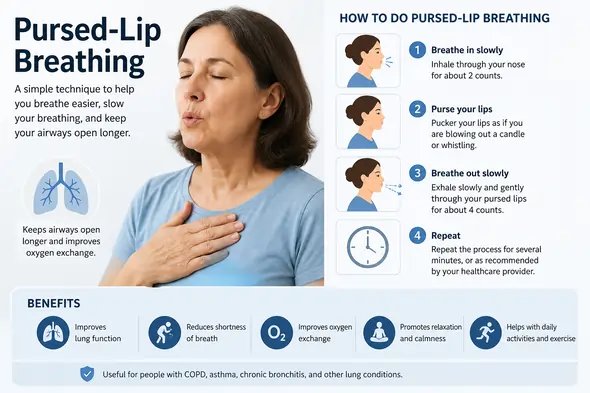
Pursed-lip breathing exercise is a simple yet efficient breathing method that improves breathing efficiency and control.
Following a slow inhale through your nose, you gradually exhale through pursed lips. Pursed-lip breathing relieves tension and promotes physical activity. For pursed-lip breathing (PLB) to be effective, the practitioner must be skilled in the technique. The method requires excellent coordination to sustain extended exhalation.
The therapeutic benefits are temporary. The method is restricted to three to five breaths since prolonging it results in respiratory muscle fatigue and much lower-than-normal carbon dioxide levels in a healthy individual, which may cause syncope and a decrease in brain perfusion pressure. If purse-lip breathing is not done correctly, it could worsen carbon dioxide retention and air trapping.
What kinds of breathing are there?
- Eupnea refers to normal breathing. It is effortless and comes naturally.
- Hyperpnea is a term used to describe deep, vigorous breathing. When your body does not receive enough oxygen, you may have hyperpneic breathing before, during, or after physical exertion. Hyperpneic breathing occurs when you take a deep breath at a greater altitude with thinner air or before lifting a heavy object.
- Diaphragmatic breathing refers to Using your diaphragm to assist you in taking deep breaths is known as diaphragmatic breathing.
- Costal breathing is a type of shallow breathing that involves the intercostal muscles. Intercostal muscles surround and fill the area between your ribs.
Purpose of pursed-lip breathing
- Promotes ventilation.
- Releases air that has become trapped in your lungs.
- Keeps your airways open for longer while requiring less effort to breathe.
- Slows your breathing rate by increasing exhalations.
- Improves breathing patterns by enabling new air into your lungs while eliminating old air.
- Reduces shortness of breath.
- Promotes general relaxation.
How to Perform Pursed Lip Breathing
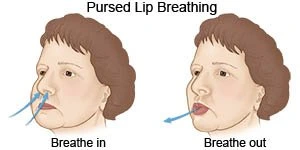
- Position: sitting.
- Take a comfortable seat, keeping your back straight and your face, neck, and shoulders relaxed.
- Keep a small-diameter straw on hand if you have one.
- Place the straw in your mouth, take a big inhale through your nose, and then exhale slowly and completely through the straw. Make sure to release your breath totally and softly; do not force it out.
- If you don’t have a straw, you can simulate the shape of your lips by placing an invisible straw in your mouth. Inhale deeply and slowly, then gently exhale through the imaginary straw in your mouth.
- After inhaling again via your nose, exhale through the real or imagined straw in your mouth.
- Inhale deeply into your abdomen. Feel your abdomen lift as you inhale and descend as you exhale.
- You can then provide a few counts. Inhale for four counts and then exhale for six or eight. Repeat this exercise for about five minutes.
At first, pursed-lip breathing may seem awkward or unsettling. However, constant practice will make the skill easier. The following advice can make it easier for you to breathe with pursed lips:
Avoid releasing air from your lungs.
Always exhale longer than you inhale.
Breathe in and out gently and smoothly until you have complete control over your breathing.
Benefits of pursed lip breathing
- Improved Oxygen Exchange: Increases the efficiency of oxygen and carbon dioxide exchange in the lungs.
- Shortness of breath – Breathlessness: Helps alleviate dyspnea produced by intense physical activity or respiratory problems.
- Relaxation: Promotes peaceful breathing patterns, which reduce anxiety and tension.
- Strengthens Respiratory Muscles: Engages and tones the muscles involved in breathing, improving lung function.
- Maintains positive airway pressure, which prevents airway collapse during exhalation.
- Improves Exercise Tolerance: Increases stamina and endurance in those with lung problems.
- Improves Controlled Breathing: Encourages a purposeful breathing rhythm, resulting in better overall respiratory control.
- Reduces Respiratory Rate: Slows down the breathing rate, allowing for more efficient and deeper breaths.
- Supports Lung Rehabilitation: Promotes healing and improved lung function following respiratory diseases or procedures.
- Promotes better posture: Pursed lip breathing enables people to have a more upright posture, which promotes proper lung expansion. Proper posture relieves strain on the diaphragm and chest, allowing for deeper and more efficient breathing.
- Supports mental clarity and focus: The regulated nature of pursed-lip breathing enhances mental clarity and attention by improving oxygen flow to the brain. Focus, memory, and decision-making are all enhanced by increased oxygenation.
Indications
Learning to manage one’s breathing may benefit anyone. However, if you have a pulmonary (lung) condition that impairs your capacity to breathe, pursed lip breathing can be quite beneficial. Among the conditions are:
- asthma
- COPD stands for chronic obstructive pulmonary disease.
- pulmonary fibrosis
Contraindications
Acute illness: People who are critically ill or medically fragile may not benefit from pursed-lip breathing.
Dizziness: If you suffer lightheadedness or dizziness while practicing pursed-lip breathing, stop.
Mechanism of action
Pursed-lip breathing increases the positive pressure created by the lungs’ conducting branches. Individuals with high lung compliance, such as those with emphysema, may have bronchioles that remain open.
Pursed-lip breathing also activates the parasympathetic nervous system, which reduces tension during dyspnea episodes.
Role of pursed lip breathing in various conditions:
Pursed lip breathing in COPD patients:
People with COPD-impaired airways may benefit from the little pressure that pursed lips apply to the airway, preventing it from collapsing during exhalation.
Benefits:
- Reduces breathing rate,
- Enhances oxygen saturation,
- Removes airborne particles from the lungs and reduces the sense of being out of breath.
Pursed lip breathing in emphysema patients:
When you purse your lips, resistance is generated during exhalation, allowing for a more controlled release of air and preventing the airways from constricting prematurely.
Benefits:
- Reduces difficulty breathing
- Improves oxygen saturation
- Decreases fatigue
- Promotes relaxation.
Pursed lip breathing in congestive heart failure patients:
- Reduces shortness of breath: Patients with heart failure may find that pursed lip breathing reduces the sensation of shortness of breath by slowing the breathing rate and allowing for a more complete exhalation.
- Pursed lip breathing can help to ensure that the body gets adequate oxygen by stimulating better air exchange in the lungs.
- Lowers respiratory effort: By preserving airway pressure during exhalation, the method minimizes the amount of work required to breathe, which is beneficial for patients with poor heart function.
- Promotes relaxation: The controlled breathing pattern associated with pursed lip breathing can be soothing and aid in the treatment of anxiety that may accompany heart failure symptoms.
Pursed lip breathing in anxiety patients:
- Pursed lip breathing reduces anxiety symptoms by slowing breathing and boosting the parasympathetic nervous system, which is in charge of the rest-and-digest response.
- Improved breathing control: This strategy provides patients with more control over their breathing, which is critical for addressing anxiety-related respiratory problems, including shortness of breath or fast breathing.
- Increased oxygen intake: Pursed lip breathing allows for a more complete exhale, which can help to optimize oxygen intake and boost sensations of calm.
- Easy to use: Because it is simple to learn and can be used anywhere, this strategy is a handy tool for managing anxiety throughout the day.
Pursed lip breathing in post-recovery patients:
- Pursed lip breathing helps to keep airways open for longer periods of time by lengthening the exhalation phase, lowering the effort required to breathe, and reducing dyspnea.
- Increased oxygen saturation: Pursed lip breathing can help enhance blood oxygen levels by promoting better gas exchange.
- Pain management: Breathing slowly and carefully through pursed lips can be relaxing and diminish the sensation of pain.
- Pursed lip breathing increases effective breathing, allowing patients to move and resume routine activities sooner following surgery.
- Effects on the mind: Pursed lip breathing’s capacity to generate calm and reduce anxiety can be especially effective during the healing phase after surgery.
Conclusion
Incorporating pursed lip breathing into your daily routine is a simple yet effective way to improve respiratory function and overall health. This approach promotes regulated exhalation, which minimizes shortness of breath, enhances oxygen exchange, and supports lung health, especially in people with chronic respiratory problems.
Beyond its physiological benefits, pursed-lip breathing promotes relaxation and stress reduction, which contribute to improved mental health. Its accessibility and ease of use make it a useful tool for symptom management and enhancing quality of life in the absence of specialist equipment. Embracing this breathing practice allows people to take an active role in their respiratory care, demonstrating how conscious breathing can be a foundation for long-term health and vitality.
FAQs
Pursed lip breathing exercises: what are they?
Breathing through pursed lips. Unlike a regular inspiration, this breathing style extends the expiratory phase by inhaling purposefully via the nose and exhaling slowly, regulated by puckered or pursed lips.-to-expiration
How long should you do pursed-lip breathing?
It may take some time to feel normal breathing with pursed lips. It is recommended to practice four or five times a day for at least five to 10 minutes each. You may only employ pursed-lip breathing when absolutely necessary, once the breathing pattern has become second nature.
What is the pursed lip’s main function?
In addition to helping you manage dyspnea, pursed lip breathing is a simple and quick way to reduce your breathing rate and increase the efficacy of each breath. Pursed lip breathing improves breath control by relaxing you and boosting the quantity of oxygen that enters your lungs while you’re out of breath.
What does it look like to breathe with pursed lips?
Pursed your lips as if you were about to blast a hot beverage or whistle. Exhale slowly and softly via pursed lips for a minimum of four seconds. Counting yourself might help.
What happens when you do pursed-lip breathing?
After practicing pursed-lip breathing, you will get greater control over your breathing, be able to relax more readily, and experience less shortness of breath.
Is it easy to learn to breathe using pursed lips?
Pursed-lip breathing is an effective method for making room in your lungs for new, fresh air to enter. When you have trouble cleaning your lungs, this approach works nicely. Furthermore, it is effective if you have dyspnea. Learning to breathe with your pursed lips is simple.
References:
- Professional, C. C. M. (2025b, June 30). Pursed-lip breathing. Cleveland Clinic. https://my.clevelandclinic.org/health/treatments/9443-pursed-lip-breathing
- Wikipedia contributors. (2025a, May 25). Pursed-lip breathing. Wikipedia. https://en.wikipedia.org/wiki/Pursed-lip_breathing
- The Art of Living. (2025, May 28). Straw Breathing: anxiety solutions Anyone Can practice. Art Of Living (United States). https://www.artofliving.org/us-en/breathwork/breathing-exercises-101/straw-breathing-anxiety
- Gordon, S. (2025, December 8). The benefits of breathing exercises, plus 6 types to try. Health. https://www.health.com/breathing-exercises-8646630
- Health benefits of pursed lip breathing: Top 10 reasons to try it. (n.d.). https://www.manipalcigna.com/health-benefits/health-benefits-of-pursed-lip-breathing