Cervical Kyphosis
What is Cervical Kyphosis?
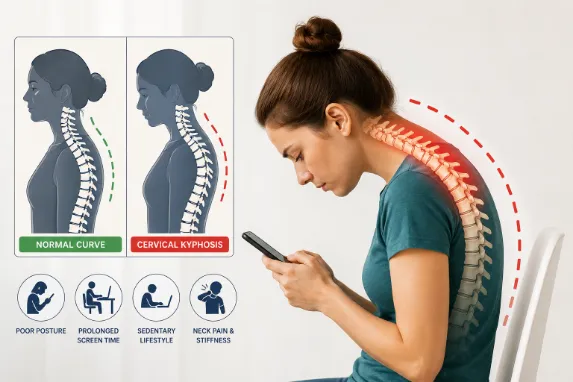
When viewed in profile, your neck has a natural C-shaped curvature. The aperture of the C is facing your back. This form of curvature is known as lordosis. In cervical kyphosis, the curvature straightens or even reverses, with the C opening toward the front of the body. The curvature of your neck influences the height of your natural gaze.
Cervical kyphosis is also known as military neck because it results in a straight-necked posture akin to that of a soldier. In more extreme situations, the curvature of the neck leads a person’s natural sight to go downward.
Anatomy
The first seven vertebrae contribute to the cervical spine. It begins beneath the head and terminates just above the thoracic spine. Both the lumbar and cervical spines exhibit a rearward C-shaped lordotic curvature. Compared to the other parts of the spine, the cervical spine is much more mobile; you can turn your neck in a variety of ways.
In contrast to the rest of the spine, the cervical spine includes separate openings for the spinal canal, which carries the spinal cord, and the arteries, which are blood vessels that carry blood away from the heart. The arteries that pass through these holes provide blood to the brain.
Because they are made especially for rotation, the atlas and axis vertebrae of the cervical spine are different from the other vertebrae. Your neck may move in a variety of ways, including sideways, thanks to these two vertebrae.
The first cervical vertebra, the atlas, is located between the head and the balance of the spine. The atlas has two noticeable lateral masses and a broad forward (anterior) and narrow back (posterior) arch, but it lacks a vertebral body.
The axis, the second cervical vertebra, supports the atlas. The odontoid process, a bony knob that extends through the atlas opening, is carried by the axis. The head may rotate as much as possible from side to side thanks to its special design. These two vertebrae are joined by unique ligaments that permit a great deal of rotation between them.
Though the cervical spine is extremely flexible, it is also highly sensitive to damage from forceful, rapid motions, such as whiplash. This elevated risk of damage is caused by the cervical spine’s minimal muscular support and the fact that it must sustain the weight of the head. For a tiny, thin group of bones and soft tissues to support, this is a significant amount of weight. As a result, rapid, violent head movements might cause injury.
Different Forms of Kyphosis
- Postural Kyphosis: It is the leading cause of kyphosis, which is also linked to slouching. It can be fixed by addressing the imbalance in the back’s muscles and ligaments with braces or by conducting regular workouts.
- Juvenile Kyphosis: It is a more stiff and severe kind of malformation that causes significant cosmetic damage. It can run in families, implying a genetic cause. It typically appears in young adolescent guys. It can be repaired surgically or with braces.
- Congenital Kyphosis: It develops at birth. It occurs when the child’s spinal column does not grow properly in the mother’s uterus. It is usually treated with surgery.
Causes
- Degenerative disc disease
- Trauma or injury of the spine
- Spine tumors
- Congenital spinal abnormalities
- Ankylosing spondylitis
- A laminectomy surgical procedure
Risk Factors
- Age: Older persons are more vulnerable owing to degenerative changes in the spine.
- Gender: Women are at a greater risk, especially after menopause.
- Geographic Location: Certain areas may have a greater frequency of spinal abnormalities owing to hereditary or environmental reasons.
- Individuals with osteoporosis, scoliosis, or a history of spinal trauma are at a higher risk.
Symptoms
- Decreased range of motion of your head and neck
- Permanent downward gaze (more serious cases)
- Headache
- Instability while walking
- Difficulty swallowing (dysphagia)
- Reduced or absent hand fine motor function
- Muscle weakness in your shoulders, arms, or hands
- Poor urinary or fecal control
- Numbness or tingling in your shoulders, arms, or hands
- Pain in your neck, back, shoulders, or arms
- A rounded or hunched back
- Tight hamstring muscles
- Difficulties with limb mobility
Diagnosis and Tests
Complete History
A “complete history” often consists of two parts. The first portion is a written form that you fill out while waiting to see the doctor. While filling out the questionnaire, write down all you can remember regarding your neck ache. The more you tell your doctor, the faster he or she can determine the problem and treat your pain. The second portion of your history will involve answering questions. Your doctor will ask you to detail when your neck ache started and what sort of pain you’re experiencing.
Examples of questions that may be asked include:
- When did the pain first begin?
- Do you have weakness in your arms or legs?
- Have you had an injury or surgery to your neck at any time?
- Does the pain go down into your arms or legs?
- Have you had problems walking?
- Problems with your bowels or bladder
Physical Examination
The exam will include assessments of your:
- Balance.
- Movement.
- Posture.
- Reflexes.
- Strength.
X-rays
X-rays reveal the bones of the cervical spine. The majority of the spine’s soft tissue features, such as nerves, disks, and muscles, are not visible on an X-ray. X-rays can reveal bone-related issues such as infections, fractures, and malignancies. X-rays may also indicate how much degeneration has occurred in the spine. The X-rays will indicate how much degeneration and arthritis are damaging the neck and will help your doctor determine if cervical spinal stenosis occurs.
Magnetic Resonance Imaging (MRI)
The MRI is the most often utilized test to check the spine because it may reveal abnormalities in the soft tissues around the spine. The MRI is superior to the X-ray because it may show images of the nerves and disks as well as the bones. An MRI is used to detect malignancies, herniated disks, and other soft-tissue problems.
The MRI is painless and lasts around 90 minutes. During the MRI, extremely detailed computer pictures of spinal regions are obtained. Unlike most other examinations, which employ X-rays, the MRI uses magnetic fields and radio waves to examine the neck’s structures. Cross-sectional photography is also possible.
The MRI allows the doctor to visualize the nerves and disks without needing any special dyes or needles. In many circumstances, an MRI scan is the only particular test required to determine what is causing your neck pain.
Treatment
- Medications: Nonsteroidal anti-inflammatory medicines (NSAIDs) can aid with pain and inflammation. In rare circumstances, corticosteroids may be administered to treat severe inflammation.
- Surgical Options: In situations of severe curvature or neurological problems, surgical intervention may be required. Spinal fusion and corrective surgery to straighten the spine are two possible procedures.
- Physical Therapy: A personalized physical therapy program can help you gain strength, flexibility, and posture.
- Chiropractic adjustments can help relieve pain and improve spinal alignment.
- Lifestyle Changes: Making ergonomic improvements at work, getting regular exercise, and keeping a healthy weight can all assist with symptom management.
Exercises for Cervical Kyphosis
Postural Correction Exercises:
Shoulder blade squeezes
Shoulder blade squeezes target the mid-back muscles, which are commonly weak in persons with cervical kyphosis. Strengthening these muscles helps to maintain normal posture by keeping the shoulders from curving forward and relieving neck pain.
How to Do It:
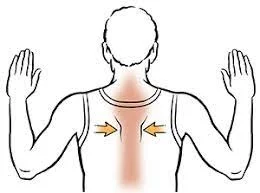
- Sit or stand tall, with your shoulders relaxed.
- Squeeze your shoulder blades together, as if compressing a little ball.
- Hold for 5–10 seconds.
- Repeat 10 to 15 times.
Tips: Avoid shrugging your shoulders toward your ears. To increase muscular activation, use slow, controlled motions.
Chin tucks
Chin tucks target the deep neck flexor muscles, which are commonly weak in persons with cervical kyphosis. Strengthening these muscles helps to bring the head back into appropriate alignment, which reduces forward head posture. Regular practice can also help to ease neck stiffness and avoid pain caused by slouching or excessive screen time.
How To Do It:
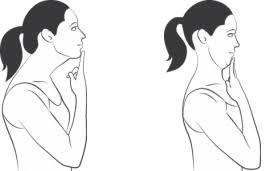
- Sit or stand erect, shoulders relaxed.
- Gently drag your chin backward to form a “double chin” without bending your neck forward.
- Hold for 5–10 seconds.
- Relax and repeat 10–15 times.
- Use a mirror to ensure perfect form.
Tips: Keep your gaze forward and avoid tilting your head up and down. Instead of focusing on speed, think about steady, controlled movements.
Wall Angels
Wall angels are great for enhancing thoracic spine mobility and extending chest muscles that become stiff due to bad posture. They strengthen the upper back muscles, which assist in bringing the shoulders down and back, correcting the rounded shoulder posture that is frequent in cervical kyphosis.
How to Do It:
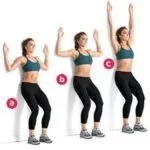
- Place your feet slightly apart and stand with your back flat against a wall.
- Gently press your lower back, shoulders, and head on the wall.
- Place your arms in a “goalpost” form at 90 degrees.
- Slowly lift your arms over your head before lowering them back.
- Repeat 10 to 12 times, moving gently.
Tips: Move gently and concentrate on feeling the muscles in your upper back activate. Avoid arching your lower back; instead, push it softly against the wall.
Strengthening Exercises
Neck Retractions
Neck retractions aid by strengthening deep neck flexors and promoting appropriate cervical alignment. This lowers forward head position and relieves stress, which contributes to cervical kyphosis.
How To Do It:
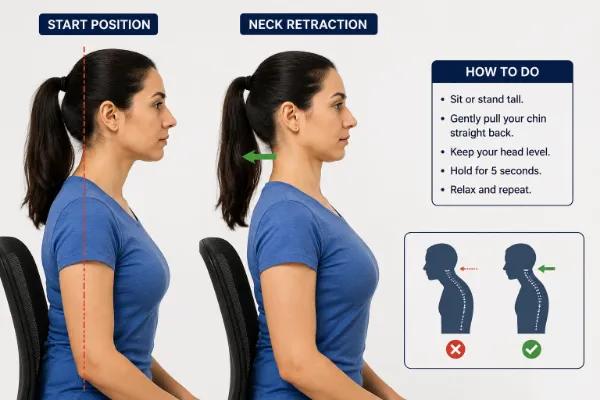
- Sit erect, shoulders relaxed.
- Gently lift your head straight back while maintaining your gaze forward.
- Hold for five seconds.
- Relax and repeat ten times.
- Keep motions modest and controlled; avoid tilting the head up or down.
Tips: Keep your motions modest and controlled. Avoid tilting your head upward or downward. Performing this exercise in front of a mirror might help you achieve perfect alignment.
Supermans/arch hold
Supermans/arch hold helps increase spinal support through endurance exercise and also improves postural control in patients with kyphosis.
How to Do It:
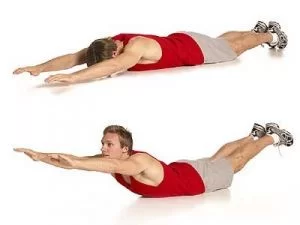
- Lie down on a mat or soft surface.
- Set the spine in a neutral position.
- Gently brace the core without flattening the back.
- Inhale to prepare.
- On exhale, elevate arms and legs slightly off the floor.
- Hold temporarily (Superman hold) for 2-3 seconds.
- Lower gently and with care.
Tips: The Superman hold exercise should feel controlled and not strained. Breathing control is key.
Resistance Band Rows
Resistance band rows help the upper back muscles, namely the rhomboids, trapezius, and posterior deltoids. Strengthening these muscles helps to prevent forward shoulder posture by stabilizing the cervical spine and lowering tension.
How To Do It:
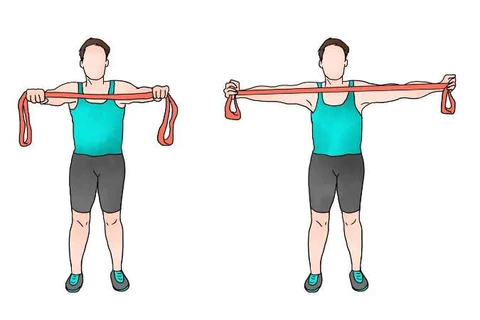
- Anchor a resistance band at chest level.
- Hold the band with both hands, palms facing inwards.
- Pull the band toward your torso while tightening your shoulder blades.
- Slowly release and return to the beginning position.
- Repeat 12 to 15 times.
- Avoid shrugging your shoulders and keep your spine neutral.
Tips: Keep your spine neutral during the exercise. Avoid shrugging your shoulders upward; instead, concentrate on the back muscles performing the effort. Begin with a mild resistance band, then increase tension as your strength increases.
Prone Y-T-W Lifts
These lifts work the upper back and shoulder stabilizers, including the rhomboids and trapezius muscles. Strengthening these postural muscles promotes appropriate cervical and thoracic spine alignment, reduces kyphotic curvature, and improves shoulder mobility.
How To Do It:
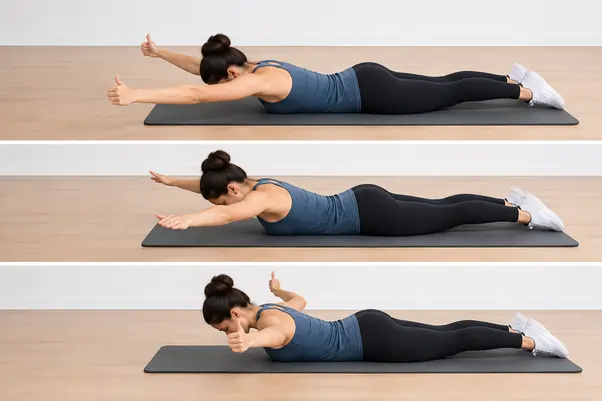
- Lie facedown on a mat or stability ball.
- Lift the arms into a Y posture (straight over the head at a 45-degree angle).
- Lift your arms into a T posture (arms out to the sides, shoulder level).
- Lift your arms into the W position (arms bent at 90 degrees, elbows at sides).
- Hold each posture for 2-3 seconds, then relax.
- Repeat 8-10 times in each position.
Tips: Squeeze your shoulder blades together. Keep your neck neutral and avoid craning upward. This exercise is mild but effective if done consistently.
Flexibility Exercises
Doorway Chest Stretch
Tight chest muscles pull the shoulders forward, increasing cervical kyphosis. This stretch expands the chest, enabling the shoulders and upper back to spontaneously realign, which improves posture and relieves tension.
How To Do It:
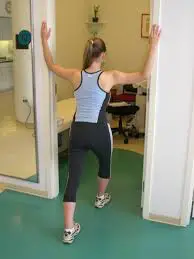
- Stand in a doorway, hands on the frame, shoulder height.
- Take one step forward and bend lightly into the doorway.
- Hold for 20 to 30 seconds.
- Repeat 2–3 times.
- Maintain a relaxed shoulder posture and avoid arching the lower back.
Tips: Relax your shoulders and prevent arching your lower back. Slow, deep breathing will help you stretch more effectively.
Neck Side Bends
Side bends stretch the lateral neck muscles, which include the scalenes and upper trapezius. Forward head position frequently causes these muscles to tighten, resulting in stiffness and pain. Improving lateral flexibility aids in the restoration of balance and relieves stress on the cervical vertebrae.
How To Do It:
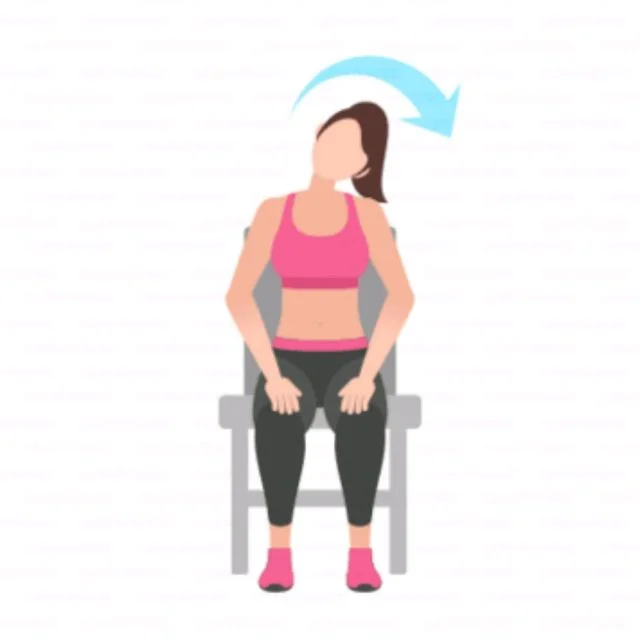
- Sit erect, shoulders relaxed.
- Tilt your head toward your shoulder (keeping the other shoulder down).
- Hold for 15–20 seconds.
- Repeat on the opposite side.
- Perform 3-5 reps per side.
Tips: Move carefully and don’t force the stretch. You can use your hand to gradually deepen the stretch, but never pull too hard.
Upper Trapezius Stretch
The upper trapezius stretch targets the tight neck and shoulder muscles that pull the head forward. Stretching regularly helps to release stress, increase neck mobility, and promote posture.
How To Do It:
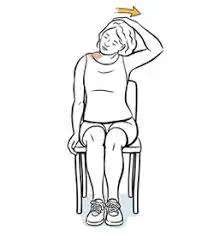
- Sit or stand tall.
- Tilt your head to one side and bring your ear near your shoulder.
- Use your hand to gradually deepen the stretch.
- Hold for 15-20 seconds per side.
- Repeat 2–3 times.
- Keep your shoulders relaxed and breathe deeply.
Tip: Keep your shoulders relaxed and avoid elevating the opposite shoulder. To get the most out of your performance, breathe deeply and gently.
Cat-Cow Stretch
The cat-cow stretch increases spinal flexibility, especially in the cervical and thoracic areas. It relieves stress, improves circulation, and promotes normal spinal curvature, making it useful for kyphosis prevention treatment.
How To Do It:
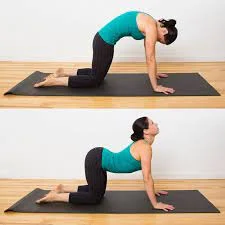
- Begin with hands and knees, wrists under shoulders, knees under hips.
- Inhale: arch back, elevating the head and tailbone (Cow).
- Exhale: circle the back and tuck the chin and pelvis (Cat).
- Repeat 10-12 times in a moderate and controlled way.
Tips: Match your movement to your breath. Maintain a comfortable range of motion for your neck rather than driving it into excessive positions.
Benefits of Cervical Kyphosis Exercises
Improves posture and alignment
Regular exercise strengthens postural muscles and retrains the neck and upper back to keep their natural bend. This lowers the forward head position that is commonly linked with cervical kyphosis.
Reduces pain and stiffness
Stretching tight chest and neck muscles, along with strengthening activities, relieves stress and pain. Over time, this can significantly increase mobility and comfort.
Strengthens the neck and upper back muscles
Chin tucks, wall angels, and scapular movements work the deep neck flexors, rhomboids, and trapezius muscles. Stronger muscles offer more support to the cervical spine, avoiding additional curvature changes.
Improves spinal flexibility and range of motion
Mobility exercises such as cat-cow stretches and thoracic spine mobilizations serve to release tight joints and improve mobility across the neck and upper back.
Promotes long-term spinal health
Consistent practice, along with correct ergonomics, prevents cervical kyphosis from increasing and lowers the chance of developing chronic problems. It also improves posture, balance, and confidence throughout regular tasks.
Complications
Short-term complications
- Increased pain: Chronic neck pain might develop, limiting everyday activities.
- Muscle Strain: Overcompensation by the surrounding muscles can cause strain and pain.
Long-term Complications
- Neurological Issues: Severe curvature can compress spinal nerves, causing numbness, paralysis, or loss of function in the arms and legs.
- Decreased Quality of Life: Chronic pain and mobility limitations can have a substantial influence on a person’s quality of life, leading to despair and social isolation.
Prevention
- Posture Awareness: Maintaining proper posture, whether sitting, standing, or using electronic gadgets, might help avoid spinal abnormalities.
- Regular Exercise: Strengthening the neck and back muscles might help to stabilize the spine.
- Bone health can be enhanced by a balanced diet high in calcium and vitamin D.
- Ergonomic Adjustments: Making sure that workstations are ergonomically constructed might help to decrease neck pain.
Conclusion
The prognosis for people with cervical kyphosis varies depending on several factors, including the severity of the curvature, the existence of symptoms, and the timing of therapy. Early diagnosis and management can lead to improved outcomes, with many people reporting considerable improvements in their symptoms and quality of life. Chronic management may be required for some people, especially older individuals or those with underlying diseases.
FAQs
How painful is cervical kyphosis?
Cervical kyphosis pain can range from minor muscular aches to severe, persistent agony. Pain levels are determined by how much the neck’s natural curvature has reversed, if disks are under abnormal pressure, and whether nerves get pinched. Some people have just slight stiffness, while others suffer from chronic, crippling pain.
How long does it take to correct cervical kyphosis?
Correcting cervical kyphosis (a reverse neck curvature) might take anywhere from 6 weeks to more than a year. Symptom reduction often occurs in two weeks, but mild postural instances require three to six months of treatment. Severe or fixed structural malformations may require extensive surgery and a one-year rehabilitation.
How severe is cervical kyphosis?
Cervical kyphosis can range from minor to severe. It happens when the neck’s normal inward curvature is reversed, forcing the spine to bend backward. Mild instances result in modest stiffness or weariness, but severe cases can compress the spinal cord, causing nerve damage, persistent pain, or difficulties walking.
Is kyphosis permanent?
The underlying cause and kind of kyphosis determine whether it is permanent or temporary. Mild postural kyphosis induced by slouching is completely reversible; however, structural types such as Scheuermann’s disease or congenital kyphosis result in persistent bone shape alterations unless addressed.
References:
- Cervical spine anatomy. (n.d.). University of Maryland Medical Center. https://www.umms.org/ummc/health-services/orthopedics/services/spine/patient-guides/cervical-spine-anatomy
- Cervical Kyphosis. (2025, December 4). Cleveland Clinic. https://my.clevelandclinic.org/health/diseases/22868-cervical-kyphosis
- Cervical Kyphosis. (n.d.). University of Maryland Medical Center. https://www.umms.org/ummc/health-services/orthopedics/services/spine/patient-guides/cervical-kyphosis
- Cervical kyphosis – Causes, symptoms, diagnosis, and treatment. (n.d.). Apollo Hospitals. https://www.apollohospitals.com/diseases-and-conditions/cervical-kyphosis
- Backrack, S., Manita, M., & Backrack, S. (2023, April 14). Cervical kyphosis – Causes, symptoms and treatment. Spinal Backrack. https://www.spinalbackrack.com/cervical-kyphosis-causes-symptoms-and-treatment/
- Physio, B. (2024, February 27). Kyphosis: A Physiotherapist’s Guide to Symptoms, Exercises, and Treatment – Benchmark Physio. Benchmark Physio. https://benchmarkphysio.com.au/kyphosis-symptoms-exercises-treatment/
- Hero, B., USA. (2025, October 5). Top 10 cervical kyphosis exercises to reduce pain. Back Hero USA. https://backherousa.com/blogs/news/cervical-kyphosis-exercises?srsltid=AfmBOoqE8Xnnysd7zFRp0wxzX77QoauGbTiiDT_Pt-S0fPmYpLC6UrKg