How to Relieve Herniated Disc Pain in Lower Back at Home?
Introduction
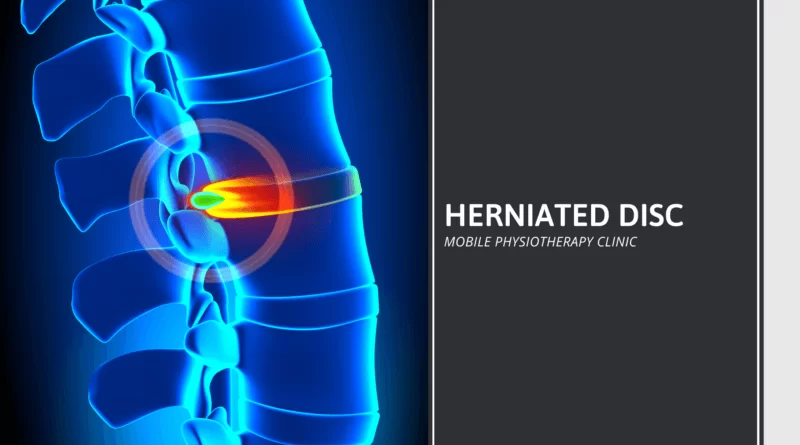
A herniated disk occurs when one of the disks in your spine (backbone) bursts or leaks due to common wear and tear or trauma. Your spinal nerves are irritated, and your spinal cord is compressed, resulting in pain, numbness, and weakness.
From the base of your head to your tailbone, your spine is made up of a number of bones called vertebrae. Between your vertebrae are circular cushions called disks. The disks act as cushions between your bones, allowing you to bend and move freely. Over time, the disks can shift and lose their functionality. This condition is known as a herniated disk.
Other names for a herniated disk include:
- Bulging disk.
- Slipped disk.
- Ruptured disk.
- Protruding disk.
Although they can arise anywhere on your spine, they most frequently do so in your neck (cervical spine) or lower back (lumbar spine). Rarely can a herniated disk occur in the thoracic spine, which is the upper to mid back.
If you have ever had a slipped disk, you are aware of how painful it can be. The good news is that surgery is rarely required because most cases resolve on their own. Consult a healthcare professional if your symptoms have persisted for longer than a few weeks. They can help you understand your alternatives for treatment and resume your favorite hobbies.
Anatomy
Intervertebral discs: These discs serve as a link between two adjacent vertebral bodies. They form the “functional unit of Junghans” along with the matching facet joints. The disc is composed of an annulus fibrosus, a nucleus pulposus, and two cartilaginous endplates. Only in youth is it possible to differentiate between annulus and nucleus because, as people age, the disc’s uniformity gets more consistent.
Therefore, after the age of 70, nuclear disc protrusions are rare. The disc must be viewed as a single, cohesive unit from a therapeutic perspective, as each component’s integrity is essential to its proper functioning. This implies that if one component is damaged, the others will react negatively.
The disc carries an Endplate, Annulus fibrosus, and Nucleus pulposus
Stages of disc herniation
Stage 1: Disc Degeneration (Initial Changes)
Disc Dehydration: Dehydration results from the intervertebral discs’ diminished capacity to hold water in the early stages of DDD. This results in a decrease in disc height and possibly in the spacing between adjacent vertebrae.
- Minor Tears and Cracks: The disc’s outer layer, the annulus fibrosus, is prone to small tears and cracks. These could make future injuries and disc instability more likely.
- Mild discomfort and Discomfort: At this point, people may feel mild to moderate back discomfort, particularly after engaging in physical activity or sitting for extended periods of time. Conservative therapy can be used to manage the discomfort, which is frequently episodic.
Stage 2: Prolapse (Bulging Disc)
- Disc Bulging: As the disease worsens, the disc may protrude outward as the nucleus pulposus, the inner core of the disc, presses against the weakening annulus fibrosus. Neural and spinal cord structures may be compressed as a result.
- Enhanced discomfort and Discomfort: People may feel more intense and persistent discomfort, which frequently travels to their arms or legs. This results from the bulging disc compressing the spinal cord or nerves.
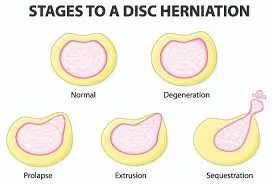
Stage 3: Herniation (Ruptured Disc)
- The disc’s outer covering may tear or rupture during a disc herniation, allowing the inner nucleus pulposus to protrude through the annulus fibrosus. This medical condition is sometimes referred to as a slipped disk or herniated disc.
- Severe Pain and Symptoms: In addition to numbness, tingling, and muscle weakness in the regions provided by the injured nerves, herniated discs can produce excruciating and frequently continuous agony. The amount and location of the herniation can affect how severe these symptoms are.
Stage 4: Severe Degeneration (Advanced Changes)
- Disc Height Loss: The damaged discs may experience a considerable reduction in height in the advanced stage of DDD, which reduces the distance between the vertebrae.
- Bone Spurs: The body may develop bony growths called bone spurs along the margins of the vertebrae to make up for the instability and loss of disc height. These may further affect spinal structures and nerves.
- Chronic and Debilitating Pain: People may have limits in their everyday activities, decreased mobility, and chronic and debilitating pain at this point. For stability and pain control, surgery may be considered.
Cause
Several factors can cause a disk rupture. Herniated disk causes include:
- Aging.
- Traumatic injuries, like falls.
- Performing repetitive bending or twisting motions.
- Improper lifting of heavy objects.
Risk Factors
Our risk of developing a herniated disk may be elevated by specific variables. These consist of:
- Gender. The majority of men who suffer from a herniated disk are between the ages of 20 and 50.
- Improper lifting. A herniated disk might result from lifting heavy objects with your back muscles rather than your legs. Additionally, twisting when lifting can put your back at risk. Your spine may be protected if you lift with your legs rather than your back.
- Weight. The disks in your lower back are subjected to additional strain when you are overweight.
- Repetitive tasks that put stress on your spine. A lot of jobs require a lot of physical labor. Some need to be lifted, pulled, bent, or twisted continuously. Your back can be protected by using safe lifting and movement techniques.
- Frequent driving. Long periods of sitting still, combined with the vibration from the car’s engine, might strain your disks and spine.
- Lifestyle that is sedentary lifestyle (not active). A herniated disk is one of the many illnesses that can be avoided with regular exercise.
- smoking. Smoking is thought to accelerate disk deterioration by reducing the oxygen flow to the disk.
Symptoms
The initial sign of a herniated disk is typically low back pain. After a few days, the soreness can subside. Other signs and symptoms could be:
- Sciatica. This pain travels from the buttocks down the back of one leg and is severe and frequently shooting. Pressure on the spinal nerve is the cause.
- Leg and/or foot numbness or a tingling feeling
- Weakness in the foot or leg
- loss of control over one’s bowels or bladder. This is quite uncommon and could be a sign of cauda equina syndrome, a more dangerous condition. Compression of the spinal nerve roots is the etiology of this disorder.
How to relieve herniated disc pain in the lower back at home
A combination of rest, physical therapy, lifestyle modifications, and occasionally medicinal therapies is used to manage a slipped disc. The main objectives are to lessen discomfort, increase the range of motion, and stop further injuries.
Taking Sufficient Rest
- In the early stages of a slipped disc, rest is important. Avoid back-stressing activities such as prolonged sitting and heavy lifting. Instead, focus on short rest periods alternated with gentle movements to keep your spine flexible.
- You can either lie on your back with a pillow under your knees or on your side with a pillow between your knees to prevent the tension on your spine. However, avoid prolonged bed rest since this may worsen your illness and result in stiff muscles. Maintaining balance is important. Take pauses when needed, but keep moving lightly to promote healing.
Nutrition-Rich Dietary Management
- Recovering from a slipped disc requires eating a balanced diet. Nutrient-dense foods can help lower inflammation and improve overall health. Consume a diet high in fruits, vegetables, lean meats, and entire grains.
- Foods high in omega-3 fatty acids, such as salmon, flaxseeds, and walnuts, can help reduce inflammation. Because calcium and vitamin D are essential for strong bones, make sure you’re consuming dairy products, leafy greens, and fortified foods. Drinking lots of water is also necessary to maintain spinal health.
Cold and Heat Therapy
- By alternating between cold and heat therapy, slipped disc pain can be reduced. While cold therapy helps reduce inflammation and dull extreme pain, heat therapy improves blood flow and relaxes stiff muscles.
- Apply a cold pack or an ice bag wrapped in a towel to the affected area many times a day for 15 to 20 minutes in the early stages of the injury. After a few days, apply heat therapy with a warm towel or heating pad. Apply heat for 15 to 20 minutes to promote healing and lessen stiffness. For at-home treatment of slipped discs, this method is effective.
Low Impact & Gentle Exercises for Slipped Disc
Yoga, swimming, and walking are all great examples of gentle exercises.
Rest on the Belly
How to do it:
- Lay on your stomach with your head cocked to the side and your arms by your sides.
- Try to relax and disable your lower back muscles.
- Hold this position for two minutes at a time.
Prone Press-Up
How to do it:
- ou should lie on your stomach with your palms on the floor just outside your chest.
- Keep your lower back and buttock muscles calm as you lift your upper body off the ground.
- For five seconds, maintain this position while performing ten press-ups.
Backward Bend
The backward bend exercise is a simple modification that can aid in your recovery from a low back herniation if you have trouble getting on the floor.
How to do it:
- Stand with your feet shoulder-width apart and place your hands on your waist.
- Slowly bend backward as far as it feels comfortable without locking your knees.
- After a few seconds of holding this posture, straighten up once more. Aim for two to four repetitions.
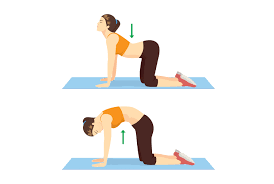
Cat-Cow
The intervertebral disc space is opened by the cat-cow stretch, which may lessen the strain on the ruptured disc. It also improves spine mobility, which could speed up recovery and reduce disc herniation pain.
Cat-Cow Steps:
- Before beginning this stretch, go on your hands and knees. As you look up at the ceiling, take a breath and let your stomach drop towards the floor.
- Exhale, then bend your neck just enough to view your feet, press your hands into the floor, and slowly twist your spine.
- Do two to three sets of this stretch, aiming for eight to ten repetitions.
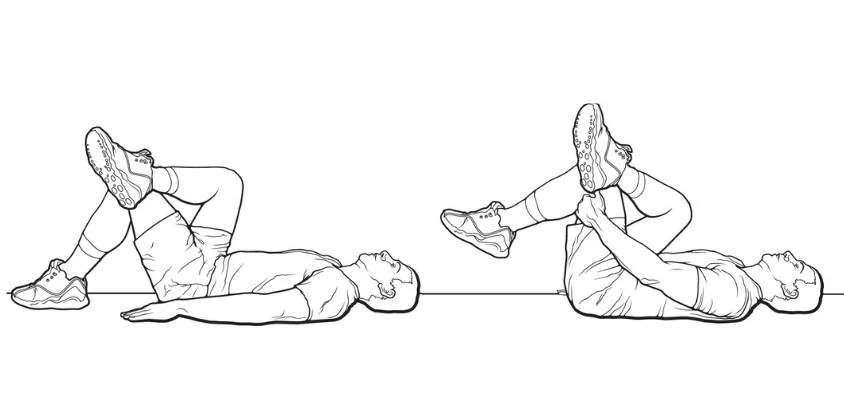
Piriformis Stretch
How to do it:
- Lay on your back with your knees bent and your feet planted firmly on the floor.
- Place the affected leg’s ankle on the unaffected leg’s knee.
- Pull the unaffected thigh in the direction of your stomach until the affected buttock begins to gently stretch.
- Do three stretches while holding this posture for 15 to 30 seconds.
Bird Dog
This is a great exercise to build core strength and lumbar back muscles.
How to do it:
- Place your hands under your shoulders and your knees under your hips to begin on your hands and knees.
- Brace (contract) your core as tightly as you can before beginning any movement.
- While bracing your core, raise your left arm and extend it forward until it aligns with your chest. Similarly, kick your right leg backwards until it aligns with your body.
- It’s important to avoid arching your lower back when doing this.
- Hold this position for two to three seconds, then slowly return to the beginning position.
- Repeat with your right arm and left leg.
- Do ten reps on each side.
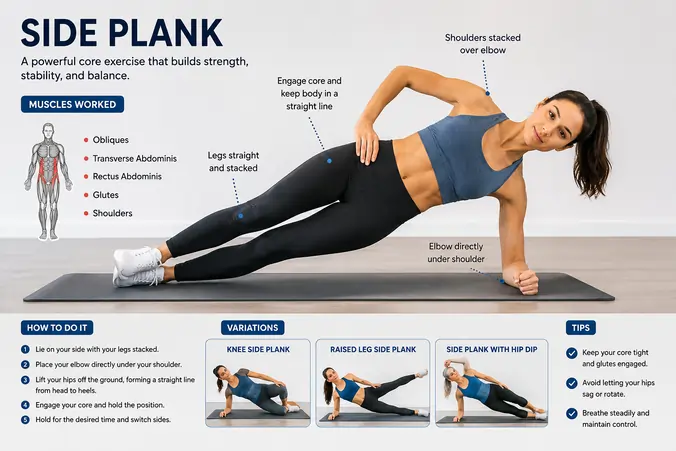
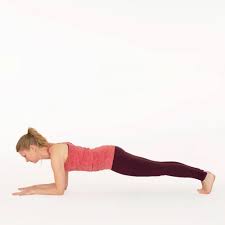
Plank
This exercise is excellent for strengthening your deep core and gluteal muscles.
How to do it:
- Start lying on your stomach with your forearms pressed against the mat.
- To rest on your forearms and toes, raise your body using your core.
- Make sure your spine is in a neutral position, meaning it shouldn’t be sagging in the lower back or raising its butt in the air.
- Lower it to the floor after maintaining the plank position for 20 to 30 seconds.
- Make an effort to complete this exercise two to five times.
- ** Throughout the entire workout, make sure your back remains straight.
Dead Bug
How to do it:
- Lay on your back with your knees bent and your feet placed firmly on the floor.
- To flatten your lower back onto the floor, contract your abdominal muscles.
- Raise both arms toward the ceiling.
- Gradually raise one foot a few inches off the ground. As you do this, raise the arm a few inches above your head on the same side.
- Lower your foot and arm back to their initial positions, then repeat the movement on the other side.
- Continue to move softly back and forth until you have completed 15 repetitions for each leg and arm.
Bridge
How to do it:
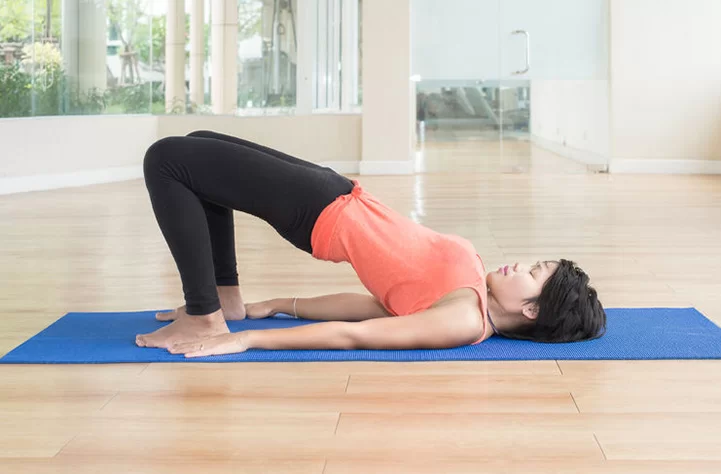
- Lay on your back with your knees bent and your feet placed firmly on the floor.
- Contract your abdominal muscles to raise your buttocks as high off the ground as you can without feeling any pain.
- Hold this position for 10 seconds before lowering yourself to the floor.
- Aim for one or two sets of ten reps.
Exercises for Herniated Disc Weight Loss
Walking
- Walking is an inexpensive, simple cardio workout that might help you shed extra pounds. To begin, walk for as long as you can without exacerbating your symptoms at a moderate speed.
- Although it is advised to walk for roughly 250 minutes per week in order to reduce weight, any action is preferable to inactivity. Attempt to gradually increase the amount of time you spend exercising each week, or divide your daily walking into several shorter periods.
Swimming
- Swimming is another great way to lose weight after a disc herniation, regardless of the stroke you choose. Because it has less of an effect on the spine than other types of exercise, this type of aerobic exercise is very beneficial.
- On most days of the week, swimming for 30 minutes is advised for those trying to lose weight.
Movements and Exercises to Avoid
- When raising or bending to the ground, round your spine.
- Lifting heavy objects or holding objects far away from your body
- Wearing high-heeled shoes
- Prolonged standing or sitting
- Any other activities that cause your pain to increase
Reduced Stress Levels
- Stress might make a slipped disc’s symptoms worse. Using stress-reduction strategies can help you feel better overall and have less discomfort.
- Consider techniques like deep breathing, meditation, and awareness. Using these methods on a regular basis will help you relax your muscles and quiet your thoughts, which will help you recover more quickly and experience less discomfort. Make sure you get enough sleep, as it’s essential for recovery.
Workspace & Home Improvements
- You can considerably lessen the strain on your back by making improvements to your home and work surroundings. Make sure the design of your workstation is ergonomic. Your computer screen should be at eye level to avoid hunching, and your chair should support your lower back.
- Think about how your furniture arrangement at home impacts your posture. Stay away from soft, low chairs that make you sink and put strain on your back. Purchase a supportive mattress to lessen pressure spots and maintain the alignment of your spine. By encouraging a healthier spine and easing discomfort, these modifications can be essential components of at-home disc problem treatment.
Conclusion
A combination of rest, healthy eating, cold and heat therapy, mild exercise, stress management, and ergonomic modifications is necessary for at-home management of a slipped disc. Even though these suggestions can lessen symptoms and encourage recovery, it’s crucial to speak with a healthcare provider for tailored guidance and care.
You may effectively address slipped disc issues and enhance your quality of life by being proactive and following a thorough approach. You may successfully treat slipped discs by implementing these methods into your everyday routine, which will enhance your spine’s health and lessen your suffering.
FAQs
Which is better for a herniated disc: rest or exercise?
Because excessive bed rest can induce disc degeneration, it is preferable to exercise a herniated disc. To relieve low back discomfort following a disc herniation, you might need to take a few days off.
Regarding a slipped disc, what are the dos and don’ts?
Maintaining an active lifestyle and continuing to engage in regular activities is crucial. But it’s essential to stop doing anything that makes your symptoms worse, like bending over, carrying heavy objects, and doing sudden twisting or jerking movements.
Is skipping good for slipped discs?
Skipping rope: Due to the possible strain it puts on the spine, skipping rope should be strictly avoided by anyone with a herniated disc. Changes in activity are required to speed up recuperation and stop more injuries.
What is the impact of weight on a herniated disc?
Excess weight can put additional strain on spinal discs, causing them to bulge or rupture and leak the inside gel material. We call this a herniated disc. When the outer disc layer tears and the soft inner gel seeps out, the result is a herniated disc.
References
- Herniated disk (Slipped or bulging disk). (2025b, September 4). Cleveland Clinic. https://my.clevelandclinic.org/health/diseases/12768-herniated-disk
- Disc herniatin, physio pedia ,https://www.physio-pedia.com/Disc_Herniation
- Herniated disk in the lower back – OrthoInfo – AAOS. (n.d.). https://orthoinfo.aaos.org/en/diseases–conditions/herniated-disk-in-the-lower-back/
- What are the 4 stages of degenerative disc disease? – Spine surgery. (2024, April 2). Spine Surgery. https://www.spine.md/insights/stages-of-degenerative-disc-disease
- slip-disc-treatment-at-home, kauveryhospitalsbangalore https://www.kauveryhospitalsbangalore.com/blog/slip-disc-treatment-at-home
- Ocs, T. P. D. (2025b, September 7). 16 Exercises for herniated disc (Back or neck) pain. Verywell Health. https://www.verywellhealth.com/exercises-for-herniated-disc-7642792
- McQuilkie, S., DC. (2023, July 3). 7 Herniated disc exercises for lower back (Lumbar area). PostureFlow (Formerly Back Intelligence). https://backintelligence.com/herniated-disc-exercises/