Flutter Kicks Exercise
What Are Flutter Kicks Exercise?
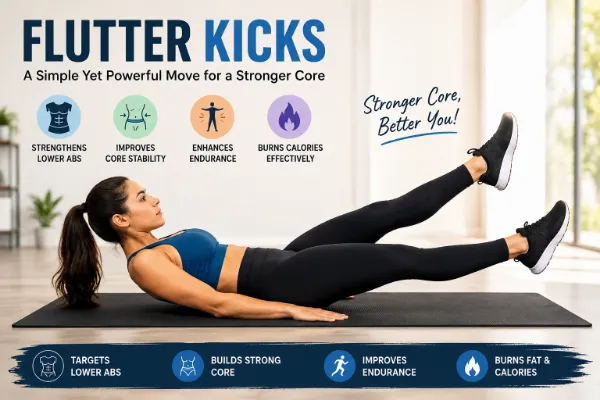
Flutter kicks are a rhythmic leg-lifting exercise that involves raising and lowering your legs while keeping your core engaged. This technique, which is often performed lying on your back, stimulates the lower abdominal muscles, hip flexors, quadriceps, and glutes, making it an excellent choice for increasing lower-body strength and endurance.
Unlike crunches or leg lifts, flutter kicks provide dynamic tension, which keeps your core active and increases muscular endurance and posture.
What muscles do flutter kicks work?
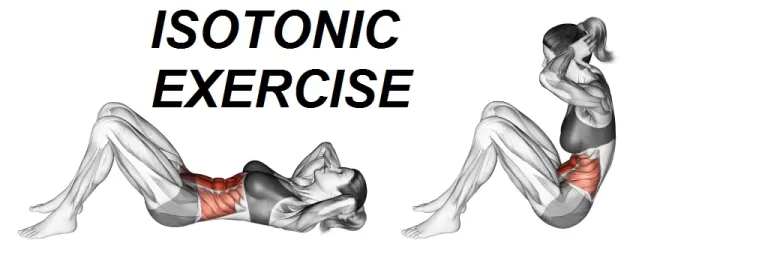
- The rectus abdominis is the major muscle that contracts throughout the workout. The rectus abdominis muscle covers the stomach and reduces the space between the ribs and pelvis. Aside from that, the muscle group contracts to hold our legs in the air and flexes isometrically to support the torso.
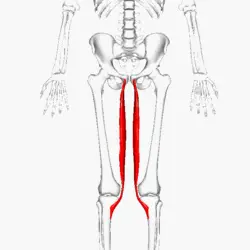
- Kicks also activate the five hip flexors. The group of muscles helps the abs keep our legs in the air and move up and down.
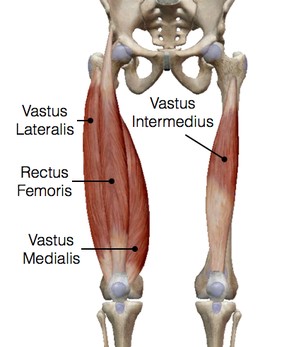
- The glutes, hamstrings, and quadriceps all contribute in some way. These muscles play an important part in many leg actions and contribute during exercise, but their involvement is restricted.
Benefits of Flutter Kicks
- Strengthening Your Core
- Flutter kicks engage several muscle groups in your core. This exercise strengthens your upper abs and flexors, as well as your lower abs, which are one of the most difficult regions to target. A stronger core makes other workouts simpler and helps you lift more weight.
- Tones the hips, thighs, and glutes
- Regular flutter kicks shape your hips, quadriceps, and buttocks, giving your lower body a toned, athletic appearance.
- Improving muscle balance and stability
- This workout strengthens your muscles and helps you achieve overall balance and stability. Flutter kicks improve your daily functionality, allowing you to do things more effortlessly.
- Enhancing Muscular Endurance
- Flutter kicks, in addition to increasing strength, also promote agility and endurance in your body. Muscular endurance allows you to enhance both your stamina and general flexibility. You may also train your body to handle challenging physical activity associated with sports or daily life.
- Supporting the Lower Back
- This exercise works your hip flexors and lower back, which improves your lower body muscles. This allows you to engage in regular activities like walking, running, and even standing without generating additional effort. This exercise not only improves your posture but also helps to avoid future health issues like sciatica and pain in the lower back.
- Increased Calorie Burning
- Flutter kicks require a lot of muscular activity, making them not just a bodyweight ab workout but also a form of aerobic training. This means you’re not only shaping your abs, but also burning calories, which results in fat and weight reduction.
Flutter Kicks Exercise Video
How To Do Flutter Kicks?
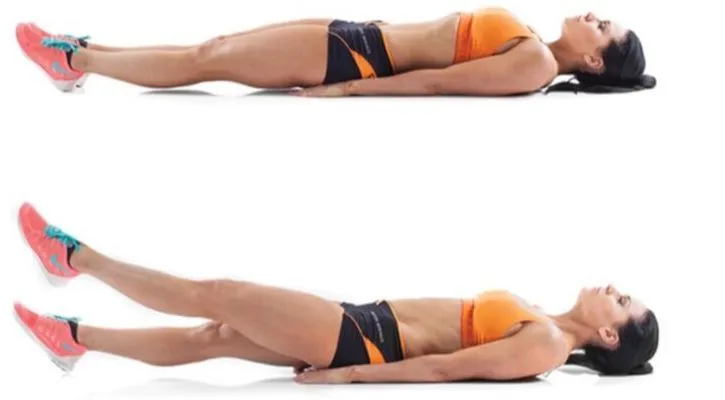
- Lie Down with Your Back Flat: Make sure you’re comfortable on a yoga mat or a soft surface.
- Support Your Spine: Place your palms flat under your glutes or hips; this posture will stabilize your pelvis and assist you in elevating your body, especially if you are a beginner.
- Engage your core. Tuck your upper abs inward and suck your belly button into your spine; this will stimulate your core and ensure you feel movement in your abs.
- Elevate your legs. Raise your legs upward, keeping your core tucked and braced and your lower back flat on the ground. Aim for a working angle of 30° to 45° from the ground.
- Begin Fluttering Your Kicks: In slow and controlled motions, keeping your legs straight, flutter your legs as if you were swimming in the air. You don’t need to move your legs too far upwards as long as you keep a steady motion.
- Control Your Breathing: With each flutter, inhale and exhale to ensure that your breathing rhythm is stable and controllable.
- Counting Reps: Do not underestimate this workout. Either try for as many flutter kicks as possible in 40 seconds, or count to 30 flutters on each leg.
Perfecting The Form
- Maintain Neck Neutral: Make sure your neck and spine are aligned and straight.
- Hand Position: Place your palms flat against the ground and beneath your glutes. This position will relieve lower back pain and allow you to push through your maneuver.
- Keep your core active: Keep your core engaged by bracing and tucking it in. You can also reduce the tension on your lower back while keeping your workout effective.
- Control your movements: Control your upward and downward movements to generate and maintain tension in your core muscles.
- Use a yoga mat: To avoid pain, be sure you lie on a yoga mat.
Variations and Modifications of Flutter Kicks
Prone Flutter Kick
Prone flutter kicks are a variant performed while lying on your stomach. Facing down during the exercise helps to emphasize your posterior muscles, which include the glutes, hamstrings, and lower back.
Criss-Cross Flutter Kick
Criss-cross flutter kicks are virtually identical to regular kicks, with one difference. Keep your legs straight but move them in and out, placing one foot over the other alternately. This is excellent for changing things up and possibly incorporating your oblique muscles more.
Vertical Flutter Kicks
Perform kicks on a vertical plane with legs pointed upward, focusing on the upper abs more.
Weighted Flutter Kicks
Hold a small dumbbell between your feet or use ankle weights for extra resistance.
Flutter Kicks using Resistance Bands
Wrap a band around your ankles to increase the strain on your hip flexors and thighs.
Wide-Leg Flutter Kicks
Increase the space between your legs to get a wider range of motion.
Common Mistakes To Avoid
- Lower back arching: Keep your back pushed on the mat at all times.
- Using momentum: Execute controlled, purposeful kicks.
- Holding your breath: Breathe steadily to minimize weariness and strain.
- Bending the knees: To maintain maximal tension, keep your legs as straight as possible.
- Raising the legs too high: To stimulate the lower core, remain low.
- Keeping Tension in Your Neck: Maintain a “neutral spine” when performing flutter kicks. This means your neck should not be arched. Make sure you’re not craning your neck up.
- Not Engaging Your Abs: Use your abs during flutter kicks to maximize benefits and minimize injury risk. If your abdominals aren’t engaged, your back is stressed.
When to Avoid Flutter Kicks
Consult a physiotherapist or fitness instructor before doing flutter kicks if you have:
- Lower back pain or injury
- Hip flexor strain
- Diastasis recti, in particular
Tips for Best Results
- Warm up your body before starting the workout.
- Include flutter kicks, planks, leg lifts, scissor kicks, and Russian twists in your core workout.
- Be consistent—do the activity three to four times each week.
- Prioritize form over speed to prevent injury and activate the core.
Flutter Kicks Workout Plan By Fitness Level
Beginner
- Reps: 10–15 per leg
- Time: 20–30 seconds
- Sets: 2–3 sets
- Rest: 30–60 seconds between sets
Intermediate
- Reps: 20–30 per leg
- Time: 30–45 seconds
- Sets: 3–4 sets
- Rest: 30 seconds between sets
Advanced
- Reps: 40–50+ per leg or until fatigue
- Time: 60+ seconds
- Sets: 4–5 sets
- Rest: Minimal rest (15–30 seconds)
Conclusion
Flutter kicks may appear simple, but they provide significant strength, sculpting, and aerobic benefits, particularly for the lower abdomen and legs. So, whether you’re a workout rookie or a seasoned veteran, this strong motion belongs in your regimen.
What is the best part? You can perform it anywhere, with no equipment or excuses. So sit down on that mat, engage your core, and flutter your way to a stronger, more defined lower half.
FAQs
What are flutter kicks useful for?
Flutter kicks are an excellent bodyweight exercise that targets the lower abdominal muscles, hip flexors, and core stability. When performed properly—keeping the lower back flat against the floor—they increase middle-back muscle endurance and enhance overall pelvic stability.
Do flutter kicks reduce abdominal fat?
Flutter kicks do not help to decrease belly fat in certain areas. It is not possible to lose fat in only one specific location by training those muscles.
How long should I practice flutter kicks?
Flutter kicks should be done for 20 to 60 seconds every set, to complete three sets. Stop immediately if your lower back arches or you lose proper form.
What happens if you practice flutter kicks every day?
Incorporating flutter kicks into your workout will help you strengthen your core and increase hip flexibility while maintaining good spinal alignment. By concentrating on technique and safety, you could maximize the advantages while lowering your chance of harm.
Leg lifts vs flutter kicks: which is better?
Flutter kicks and leg lifts are popular core workouts that work the lower abs and hip flexors. Flutter kicks utilize quick, tiny alternating motions for endurance, whereas leg lifts use a big, controlled vertical range of motion to build strength.
Can I practice flutter kicks in bed?
Yes, you can practice flutter kicks on your bed, and the soft, uneven surface requires your core muscles to work harder to maintain stability. However, a soft mattress might make it more difficult to protect your lower back.
References:
- How to do Flutter Kicks | Step-by-Step | The Gym Group (n.d.). https://www.thegymgroup.com/exercises/abs-and-core-exercises/how-to-do-flutter-kicks/
- How to do flutter kicks: form, muscles worked & techniques. (n.d.-b). SQUATWOLF. https://squatwolf.com/blogs/fitness/how-to-do-flutter-kicks-correctly
- Flutter kicks: What are they and what muscles do they use? (n.d.-d). Nike.com. https://www.nike.com/sg/a/what-are-flutter-kicks
- Stefanov, P. (2025a, May 29). Flutter Kicks: how-to, tips, variations, mistakes & more. Hevy – #1 Workout Tracker & Planner Gym Log App. https://www.hevyapp.com/exercises/flutter-kicks/