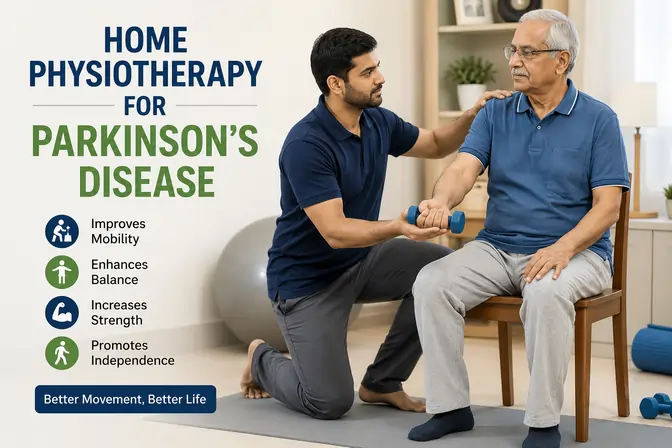
Home Physiotherapy For Parkinson’s Disease
Introduction
For many individuals with Parkinson’s disease, preserving their independence is of utmost importance. Beyond just improving overall health, exercise offers a ray of hope on this road. Participating in particular fitness regimens can result in improvements in:
- Gait
- Balance
- Tremors
- Motor coordination
For senior citizens who want to maintain their quality of life, all of these are essential. (Just folks, to take older people out)
A key element of therapy is exercise, which opens the door to a healthier, more mobile future. Patients can reap significant advantages from strengthening, stretching, and mobility exercises. The study emphasizes the importance of exercise by showing that it can slow the disease’s course and cause beneficial changes in the brain.
Within six months, people who exercise for at least 2.5 hours a week can start to see a noticeable improvement in their symptoms. (I don’t think the six months should be included because that will depend on how the illness develops.)
Benefits of Exercise for People With Parkinson’s Disease
Parkinson’s disease patients benefit greatly from exercise because of two major neurological changes:
- The release of dopamine has a beneficial impact on mood, pain perception, and movement.
- Modifications to the cortical striatum: This part of the brain regulates voluntary movements.
These changes can lead to benefits such as:
- Developing and preserving muscular endurance and strength
- Enhancing gait abnormalities and coordination can help lower the chance of falling or the fear of falling.
- Increasing range of motion and flexibility
- enhancing cardiovascular health, particularly lung and heart health
- Increasing the efficacy of levodopa, the most often prescribed drug for Parkinson’s illness
- Enhancing mental performance
- Keeping a healthy weight
- Enhancing the quality of sleep
Types of Home exercises for Parkinson’s disease
Parkinson’s disease. The following should be part of your routine:
- Aerobic exercises
- Resistance or strength training
- Exercises for balance, agility, and multitasking
- Stretching
Aim for two to three sessions of different forms of exercise per week in addition to at least three aerobic sessions.
Aerobic exercises for Parkinson’s disease
Exercises that include continuous, rhythmic motions that raise your heart rate over time are included in aerobic exercise, which many people simply refer to as “cardio.”
Aerobic exercise helps enhance fitness as a whole and can improve numerous elements of motor function. In fact, evidence reveals moderate and high intensity aerobic exercise is particularly advantageous for patients with Parkinson’s disease.
Types of aerobic exercises include:
- Walking, jogging, or running (based on your level of mobility)
- Swimming or water aerobics
- Cycling or stationary biking
- Dancing
- Jumping rope
Examples:
Brisk Walking or Jogging
- Start running or walking at a pace that makes your heart rate rise, but you can still talk.
- As you go, swing your arms and focus on taking longer steps.
- Rest when you’re tired. At least three times a week, try to gradually extend your running or walking workouts to 30 minutes.
Jogging in Place
- Start jogging in place at a difficult but moderate speed while facing a solid surface.
- Step or jog to the rhythm of music. Stop and relax when you’re exhausted.
- Complete three workouts per week of up to 30 minutes of jogging.
Dancing
- Play your preferred kind of music in an unobstructed space with surfaces to grasp (if necessary).
- Start performing a simple three- to four-step dancing routine in a steady yet controlled manner. To assist in strengthening your vocal system at the same time, try singing or counting aloud to the beat.
- As you dance for up to 30 minutes at a time, keep changing the step patterns and the song’s tempo. At least three times a week, do this.
Strength training exercises for Parkinson’s disease
Maintaining strong muscles makes daily tasks simpler, and strength training exercises aid in the development of muscular mass.
Strength training routines that target one muscle group at a time and switch up the emphasis regions every day are usually recommended by fitness professionals. This lowers the chance of damage by giving your exercised muscles time to rest, heal, and get stronger.
For each muscle group, perform 10–15 reps in 1-3 sets. Additionally, you should train each muscle part two to three times a week. You avoid working on the same muscle group more than once; just be sure you alternate your days.
Strength training exercises for different muscle groups include, for instance:
Bicep curls
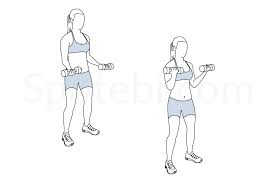
- Start with your feet hip-width apart and a lofty stance. Continue to contract your abdominal muscles.
- Each hand should hold one dumbbell. With your palms facing front, let your arms drop to the sides of your body.
- Bend at the elbow and raise the weights until the dumbbells are close to your shoulders while maintaining a steady upper arm and relaxed shoulders. For a complete range of motion, you may even raise the dumbbells to your forehead or eyes. At all times, keep your elbows near your body.
- Breathe out as you raise.
- Return the weights to their initial position.
Tricep dips
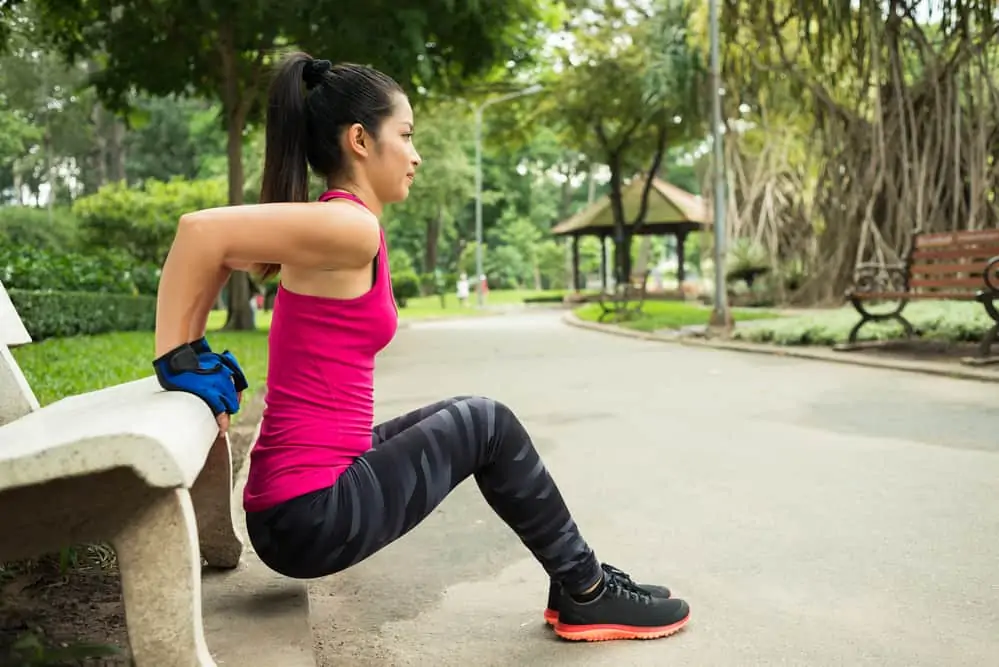
- Press into your palms to raise your body, then advance just far enough so that your buttocks cross the edge of the chair.
- Bend your elbows between 45 and 90 degrees by lowering yourself. Keep control of the movement throughout the range of motion.
- Repeat, carefully pushing yourself back up until your arms are nearly straight.
Stand-ups from a seated position on a chair
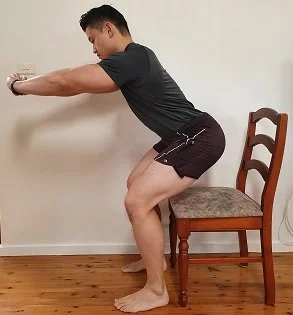
- Stand with your arms out in front of you and a chair behind you.
- You may tap the chair by shifting your buttocks.
- Stand back up again and perform three sets of 8 to 12 repetitions.
Push-Up

- Position your hands and toes on the floor, right outside of your shoulders.
- Lower your chest to the floor gradually while bending your elbows.
- When you’re almost in contact with the ground, push back up to your starting posture. Complete three sets of 8–12 pushups.
Heel Lifts
- Stand with your feet shoulder-width apart and grab a counter or a walker.
- Without bending forward, raise both heels off the ground and roll up to your first and second toes.
- Once you’ve achieved your highest position, return your heels to the ground.
- Do 8 to 12 heel lifts at a time and finish two to three sets.
Clamsells
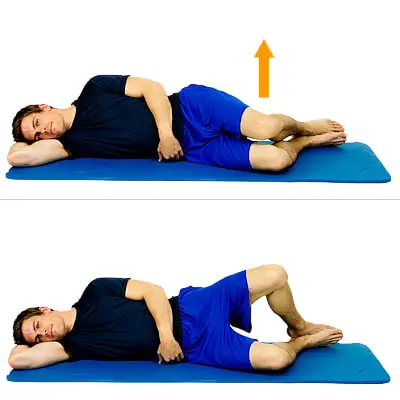
- In bed, lie on your side with your legs stacked on top of one another and your knees bent.
- Without moving your body backward, raise your upper knee while maintaining your feet in touch.
- Once you’ve raised your knee as far as you can, drop it back to the opposite leg. Try two or three sets of 12 repetitions.
Balance exercises for Parkinson’s disease
Maintaining balance is particularly important for preventing or mitigating the danger of falling. So, in addition to strengthening muscles via strength training, balance and mobility activities are essential for increasing stability.
Fall prevention is one of the primary objectives of balancing exercises.
Examples of community programs that also address balance:
Tandem Stance
- To ensure your safety, stand near a wall or counter.
- Heel to toe.
- Hold for 20-30 seconds.
- Switch feet and repeat.
Step and Reach
- Stand tall with your feet shoulder-width apart.
- Step forward with your right leg, then extend your left arm forward.
- Return to the middle and repeat on the opposing side.
- Continue alternating for ten to twelve reps.
Side Steps

- Stand with your knees bent slightly.
- Take a right-foot step to the right.
- Bring your left foot to face it.
- Then go to the left and repeat.
- Continue for one or two minutes.
Heel Raises
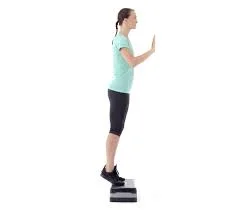
- Stand tall behind a chair.
- Rise slowly on your toes, elevating your heels off the ground.
- Hold for two seconds, then gently descend.
- Repeat 12-15 times.
Coordination exercises for Parkinson’s disease
When you have Parkinson’s disease, your muscular movements slow and shrink with time. This can make it harder to coordinate more complicated movements.
Working on tasks that test the agility, size, and speed of your muscle movements will help you enhance and maintain your motor abilities.
Coordination exercises and activities that challenge muscle groups in your lower body include:
Hand-To-Knee Alteration
- Raise your right hand and touch your left knee.
- Return to the start.
- Raise your left hand and touch your right knee.
- Repeat gently, increasing the pace as you feel comfortable.
Throw-And-Catch With A Partner Or Wall
- Toss the ball softly towards a partner or against a wall.
- Grab it with both hands.
- Repeat at various speeds and distances.
Heel-to-Toe Walking
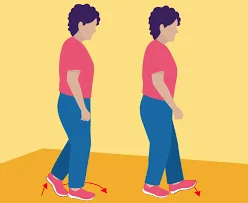
- Stand tall, arms relaxed at your sides or held out for balance.
- Place your front foot heel precisely in front of your back foot toes.
- Shift weight forward slowly and evenly.
- Take another step forward, bringing your heel precisely in front of your toes.
- Maintain proper posture and orientation by looking ahead, not down.
- Repeat for 10-20 steps or as many as you feel comfortable with.
Cycling
Cycling is another low-impact alternative worth considering, especially if you want to move quickly. Cycling can enhance coordination for Parkinson’s sufferers by:
- Strengthening the legs and back muscles, which are frequently underworked in people with mobility limitations.
- requiring greater concentration on your quadriceps and core, which helps your overall sense of balance.
- Strengthening the soft tissues and joints in your lower body will help you avoid stiffness and tight muscles.
- Requires in-sync arm and leg motions and continuous balance.
When it comes to training your upper body and fine motor abilities, some useful hand exercises for Parkinson’s may include:
- Pickups: Select a little object like a toothbrush, pencil, or penny. Place it on a table in front of you and practice taking it up, clutching it, and putting it down with both hands.
- Fingertip touches: Hold your arms up in a comfortable stance, elbows bent and palms facing out. Slowly bend your index downward until it touches your thumb, then reopen your hand. Repeat with your middle, ring, and pinky fingers.
Some hobbies and activities can also help improve coordination, including:
- Painting or drawing
- Writing a letter
- Gardening and planting
- Sewing, knitting, or cross-stitching
- Playing an instrument like the piano or guitar
Exercises to improve cognition challenges with Parkinson’s disease
Parkinson’s disease is both a movement problem and a degenerative neurological disorder. Individuals’ mobility and cognition might vary as the condition advances.
Brain-boosting workouts can assist enhance memory and cognition by including:
- Meditation
- Music therapy
- Doing math in your head
- Playing puzzles, board games, and word games
- Reading aloud
Tips and Considerations
- Arrange the room: Remove any potential tripping hazards, guarantee appropriate lighting, and have something firm to hold in case you lose your footing.
- Plan an exercise schedule: Try to work out at the same time every day to establish a consistent regimen. Post your schedule somewhere visible to increase responsibility.
- Find a family member or friend to work out with: A workout companion can help you stay accountable and prevent you from skipping your regular routine.
- Consult a physical or occupational therapist: Physical and occupational therapists can achieve advanced specialization in Parkinson’s disease treatment, which includes programs that train people on specific home exercise programs tailored to their level of functioning, PD symptoms, and safety concerns.
How to get started with an exercise plan?
- Meet with a physical therapist – A physical therapist can assist you in developing a personalized fitness regimen.
- Start small and be consistent – Whether you select short morning walks around the neighborhood or coordination exercises every other day, just begin moving and do it on a regular basis. Then begin to incorporate more pleasurable – and safe – exercises and activities to boost your activity level.
- Take advantage of Parkinson’s fitness classes – you’ll not only receive the activity you need, but you’ll also meet other individuals who have the condition.
- Consult your neurologist or movement expert for ideas on how to keep active based on your symptoms, illness progression, and personal preferences. They can also coordinate treatment with other professionals, such as a physical therapist, to develop a personalized rehabilitation and exercise program for you.
Conclusion
Home-based physical therapy is an effective and patient-centered strategy for controlling Parkinson’s disease. This type of treatment assists patients in maintaining independence and improving their quality of life by emphasizing mobility, balance, strength, and everyday functional movement.
When paired with medical therapy, caregiver support, and regular exercise, home-based rehabilitation has the potential to help people with Parkinson’s disease live more actively and confidently in their homes.
FAQs
Which Parkinson’s workouts enhance balance?
Exercises that target the legs and torso can assist improve your balance. If you’re concerned about the danger of falling, consult a physical therapist.
How often should you exercise if you have Parkinson’s?
At least 30 minutes of moderate to strenuous aerobic activity three times each week. They also recommend doing strength, stretching, and balancing exercises twice to three times each week.
What exercises should you avoid if you have Parkinson’s?
People with Parkinson’s disease are not prohibited from performing certain exercises, but they should avoid activities that enhance their risk of falling. Safety is the most important issue to consider while choosing workouts.
How does physiotherapy improve Parkinson’s disease?
Physiotherapy can assist in managing Parkinson’s disease by reducing motor symptoms, improving mobility, and increasing overall independence. It emphasizes balance, strength, and flexibility with personalized exercises, perhaps delaying illness development and increasing quality of life.
How do you self-care for Parkinson’s disease?
Aside from medication, there are several strategies for persons living with Parkinson’s disease to improve their health and well-being, maintain physical function, lessen symptoms, and improve their quality of life. The most important of them are regular exercise, a balanced diet, staying hydrated, and getting enough sleep.
What worsens Parkinson’s disease?
Parkinson’s disease is a gradual disorder, but physical stresses such as infections (particularly UTIs), persistent stress, dehydration, and poor sleep can exacerbate symptoms quickly. Certain medicines, such as antipsychotics and several anti-nausea treatments, can interact with dopamine and substantially worsen motor symptoms.
Can exercising slow down Parkinson’s disease?
Yes, regular exercise can reduce the course of Parkinson’s disease symptoms and is usually regarded as an effective disease-modifying treatment.
References:
- HealthPartners. (2025, July 21). The best exercises for Parkinson’s disease (and why physical activity is important). HealthPartners Blog. https://www.healthpartners.com/blog/the-best-exercises-for-parkinsons-disease-and-why-physical-activity-is-important/
- Home-based exercise for Parkinson’s disease. (n.d.). APA. https://australian.physio/inmotion/home-based-exercise-parkinsons-disease
- Miranda. (2024, June 24). 10 Best Exercises For Parkinson’s Disease. Miranda’s Physio Steps. https://mirandasphysiosteps.com/physical-therapy-exercises-for-parkinsons/
- Center for Movement Challenges – In-Person & Online Movement Exercises for Parkinson’s. (n.d.). https://www.centerformovementchallenges.org/resources/leg-exercises-for-parkinsons-disease-you-can-do-at-home
- Gallezone. (2026, May 9). Home-based physical therapy for patients with Parkinson’s disease. Sukumvit Physiotherapy & Rehabilitation Center | Muscat, Oman. https://sukumvitphysiomuscat.com/home-based-physical-therapy-for-patients-with-parkinsons-disease/