Physiotherapy After Total Hip Replacement Surgery
Introduction
A total hip joint replacement is a surgical operation that involves replacing a diseased or broken hip joint with a prosthesis, or artificial joint. During the surgery, damaged hip joint components are removed and replaced with ceramic, plastic, or metal elements.
For people with significant hip discomfort and restricted mobility from illnesses including osteoarthritis, rheumatoid arthritis, avascular necrosis, or a hip fracture, total hip joint replacement is usually advised. Additionally, it can be carried out in situations of developing hip dysplasia or congenital hip abnormalities.
Your complete recovery following a total hip replacement depends on regular exercise to regain hip strength and mobility, as well as a gradual return to daily activities. During the early stages of your recuperation, your orthopaedic surgeon and physical therapist might advise you to work out for 20 to 30 minutes a day, or perhaps two or three times a day. Some of the workouts listed below could be recommended by them.
Under the supervision of your orthopedic surgeon and physical therapist, this guide can help you better understand your exercise and activity regimen. Before doing any of these exercises, make sure to see your therapist or surgeon to ensure a safe recovery.
Why is Physiotherapy Important After Hip Surgery?
- Restoration of movement and function.
- Physiotherapy is essential for restoring mobility to your hip joint. It seeks to enhance flexibility and range of motion by providing workouts targeted to your specific condition.
- Prevention of Complications
- Post-surgical physiotherapy helps to avoid problems, including blood clots, joint stiffness, and infections. Regular exercise under supervision improves blood flow, promotes healing, and lowers the risk of serious issues.
- Pain Management
- Physiotherapy can be a useful way to manage post-surgical pain. Appropriate exercises performed by a professional physiotherapist can help decrease pain and speed up healing.
- Improving Quality of Life.
- Finally, physiotherapy after hip replacement aims to improve your quality of life. It helps you rebuild strength and movement, allowing you to resume your everyday activities with less pain and with confidence.
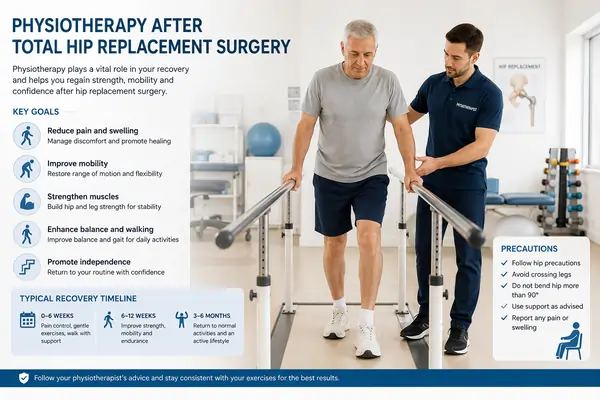
Timeline of Physiotherapy After Hip Replacement
Immediate Post-Operative Phase (First Few Days)
The immediate post-operative phase is critical to the patient’s recovery. During this time, the goals are to manage pain, avoid problems, and start moving.
Activities often include:
- Gentle leg exercises to improve blood circulation.
- Breathing exercises to avoid respiratory issues.
- Walking with assistance from a ward boy/girl and the use of aids such as crutches or walkers.
Early Rehabilitation Phase (First 2-4 Weeks)
As your condition improves, we start the early rehabilitation phase. The aims are to increase mobility, develop muscles, and improve balance.
Activities in this period often include:
- Gradual increase in walking distance with assistance
- Simple muscular building activities, such as leg lifts and kicks.
- Balance exercises can help avoid falls.
- Stretching techniques to improve hip muscle flexibility.
As you develop strength, the next phase awaits you, presenting new difficulties and potential for growth.
Intermediate Rehabilitation Phase (4-12 Weeks)
This is a vital time during which the emphasis changes to recovering independence and functioning ability. Goals include increased mobility, greater strength, and reintroduction into regular activities.
Typically, activities include:
- Walking without help.
- Advanced Strengthening Exercises
- Practicing stair climbing
- Beginning to do everyday duties
With constant work, you will be prepared for the advanced rehabilitation phase.
Advanced Rehabilitation Phase (3-6 Months)
In this phase, the goal is to get back to pre-surgery exercise levels and increase general fitness.
We aim for:
- Further enhancements to walking and mobility
- Introduction of more rigorous strength and balance workouts
- Gradual return to relaxation or work.
Your journey does not end here; long-term recovery continues beyond this period.
Long-Term Rehabilitation (6 Months and Beyond)
The final phase of rehabilitation focuses on maintaining fitness levels, preventing future hip-related disorders, and providing a decent quality of life.
With regular:
- Exercise to maintain strength and mobility.
- Annual check-ups with your physician
With patience, effort, and the appropriate direction, you will not only heal but also reclaim the freedom to live your life to the utmost.
Types of Physiotherapy Exercises After Hip Replacement
Hip replacement surgery may be a life-changing event. The good news is that with the correct physiotherapy exercises, you can restore your mobility and resume a regular, active lifestyle sooner. Your doctor or physiotherapist may prescribe the following specialist exercises:
Breathing exercises
These will help you recover from the anesthetic and become more awake. If you have a chest condition like asthma or bronchitis, it is even more crucial that you undertake these exercises to lower your chance of a chest infection.
- Relax your shoulders and upper chest.
- Take a big breath in through the nose.
- Hold your breath for four to five seconds, then exhale through your mouth.
- After the fourth breath, cough deeply from the abdomen (rather than merely clearing your throat).
- Try to do this every hour while you’re in the hospital.
Range of Motion Exercises
The initial round of exercises following a hip replacement surgery focuses on increasing the range of motion. These exercises are designed to progressively strengthen the flexibility and mobility of your hip joint.
Ankle Pumps
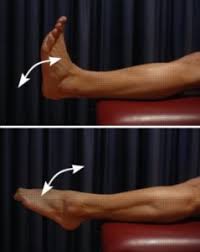
- This exercise may be done while lying down or sitting.
- Slowly press your foot up and down, bending at the ankle.
- Repeat this exercise multiple times, up to every 5 or 10 minutes.
- When you’re watching TV, pump your feet every time an ad comes on.
Begin this activity soon after surgery and continue until you are completely healed.
Ankle Rotations
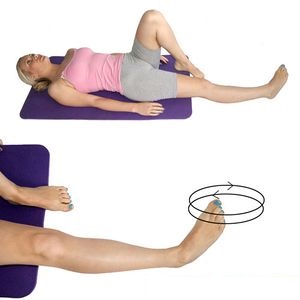
- This exercise may be done while lying down or sitting.
- Move your ankle inward toward your other foot
- Then outward away from your other foot.
- Repeat 5 times in each direction.
- This exercise should take 3 minutes.
- Do 3 to 4 sessions a day.
Abduction Exercise
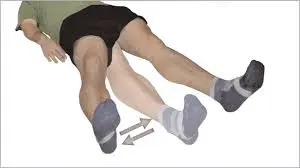
- Slide your leg out to the side as far as possible and then back.
- Repeat ten times.
- This workout should last 90 seconds.
- Do three to four sessions every day.
Bed-Supported Knee Bends
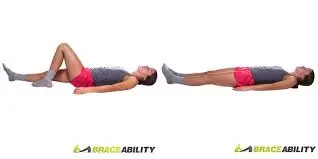
- This exercise is done while lying down.
- Slide your foot toward your buttocks, bending your knees while maintaining your heel on the bed. Do not let your knees slide inward.
- Hold your knee.
- Straighten your leg.
- Repeat ten times.
- This workout should last 3 minutes.
- Do 3-4 workouts every day.
Straight Leg Raises
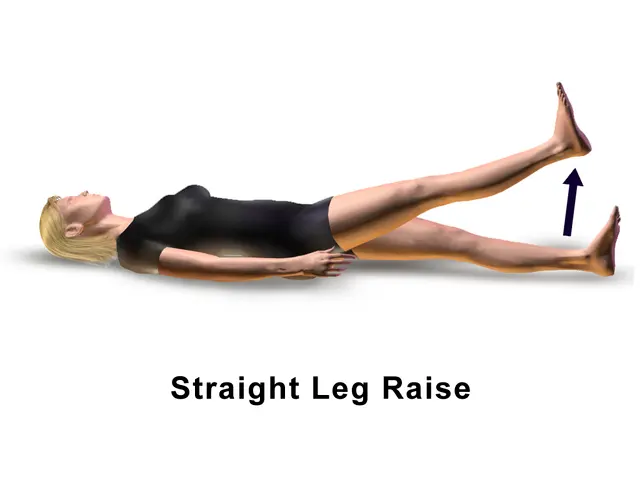
- Tighten your thigh muscle when your knee is totally straight on the bed.
- Lift your leg a few inches. Hold for 5-10 seconds.
- Gradually lower your leg.
- Repeat until your thigh is exhausted.
- This workout should last 2 minutes.
Strengthening exercises
The second stage of your recuperation is strengthening workouts. These workouts work the muscles surrounding your new hip joint, including your quadriceps, hamstrings, and glutes. Strengthening these muscles helps to support your new joint and increases your ability to do daily tasks such as walking and climbing stairs.
Buttock Contractions
- Tighten your buttock muscles while lying down and hold for 5 counts.
- Repeat 10 times.
- This workout should only take 90 seconds.
- Do 3 to 4 workouts every day.
Quadriceps Set
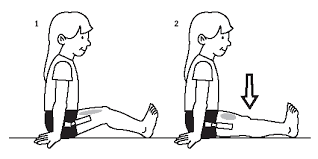
- Tighten your thigh muscles. Try straightening your knee. Hold for 5-10 seconds.
- This exercise should be repeated ten times, followed by a one-minute break.
- Continue until your thigh is weary.
- This workout should last 2 minutes.
Standing Knee Raises
- Lift your operated leg to your chest. Do not elevate your knee over your waist. Hold for 2-3 counts.
- Put your leg down.
- Repeat ten times.
- This workout should last 3 minutes.
- Do 3-4 workouts every day.
Standing Hip Abduction
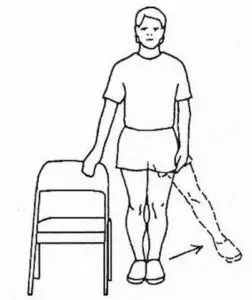
- Make sure your hips, knees, and feet are all facing straight ahead. Maintain your body straight. Maintaining a straight knee, raise your leg to the side.
- Slowly lower your leg until your foot is back on the floor.
- Repeat ten times.
- This workout should last 2 minutes.
- Do 3-4 workouts every day.
Standing Hip Extensions
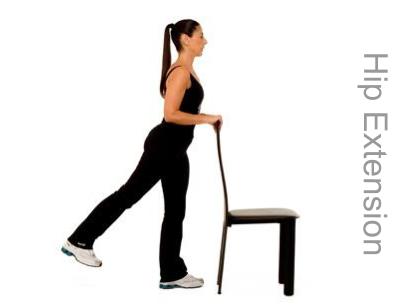
- Slowly lift your operated leg backward. Try to maintain your back straight. Hold for 2-3 counts.
- Return your foot to the ground.
- Repeat ten times.
- This workout should last 2 minutes.
- Do 3-4 workouts every day.
Balance and Proprioception Exercises
These workouts frequently use equipment such as balancing boards or stability balls. You’ll learn to regulate and synchronize your body motions, which is essential for avoiding falls and injuries while going about your regular activities.
Tandem Walking
- If necessary, lightly rest your hand against a supporting surface.
- Take 5–10 tiny moves ahead.
- The heel of the front foot should meet the toe of the back foot.
Single-leg stand
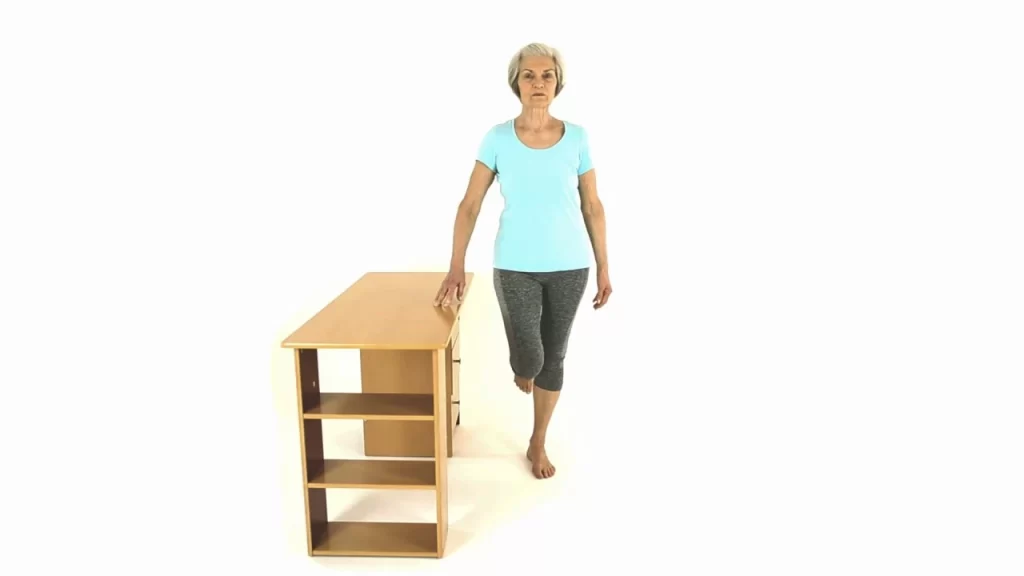
- Use a solid surface if necessary.
- Begin by standing.
- Transfer weight to one leg and elevate the other off the floor.
- Hold for 5-10 seconds, if possible.
- Switch legs. Repeat 5 to 10 times.
Aerobic Conditioning
When your doctor gives you the green light, aerobic training becomes an important aspect of your rehabilitation plan. The intensity of these workouts will progressively rise as your endurance develops.
Walking
Walk with a cane until you restore your equilibrium. If you are concerned about walking on uneven ground outside, a treadmill is also a safe alternative.
- Begin with walking for 5 to 10 minutes, three to four times a day.
- As your strength and endurance increase, you can walk for 20 to 30 minutes, twice or three times each day.
- Once you have completely recovered, regular walks of 20 to 30 minutes, 3 to 4 times a week, can help maintain your strength.
Riding an Exercise Bike
- Adjust the seat height.
- Pedal backwards at first.
- Ride forward only after a comfortable cycling motion is possible backwards.
- Gradually increase the tension on the cycle as you gain strength (about 4 to 6 weeks). Cycle for 10 to 15 minutes 2 times a day at first, gradually building up to 20 to 30 minutes, 3 to 4 times a week.
Functional Training
Finally, functional training is intended to prepare you for everyday tasks such as standing from a seated position, walking up stairs, or bending to pick up an object. These exercises will help you acquire confidence in your talents and reinforce good movement patterns.
Stair Climbing and Descending
- At first, you’ll need a railing for assistance and can only take one step at a time. Always ascend the stairs with your healthy leg and descend with your operated limb.
- You may wish to have someone assist you with stairs until you have regained the majority of your strength and mobility.
- Never attempt to climb stairs higher than the typical height (7 inches), and always utilize a railing for balance.
- As your strength and mobility improve, you will be able to ascend stairs step by step.
Sit to stand
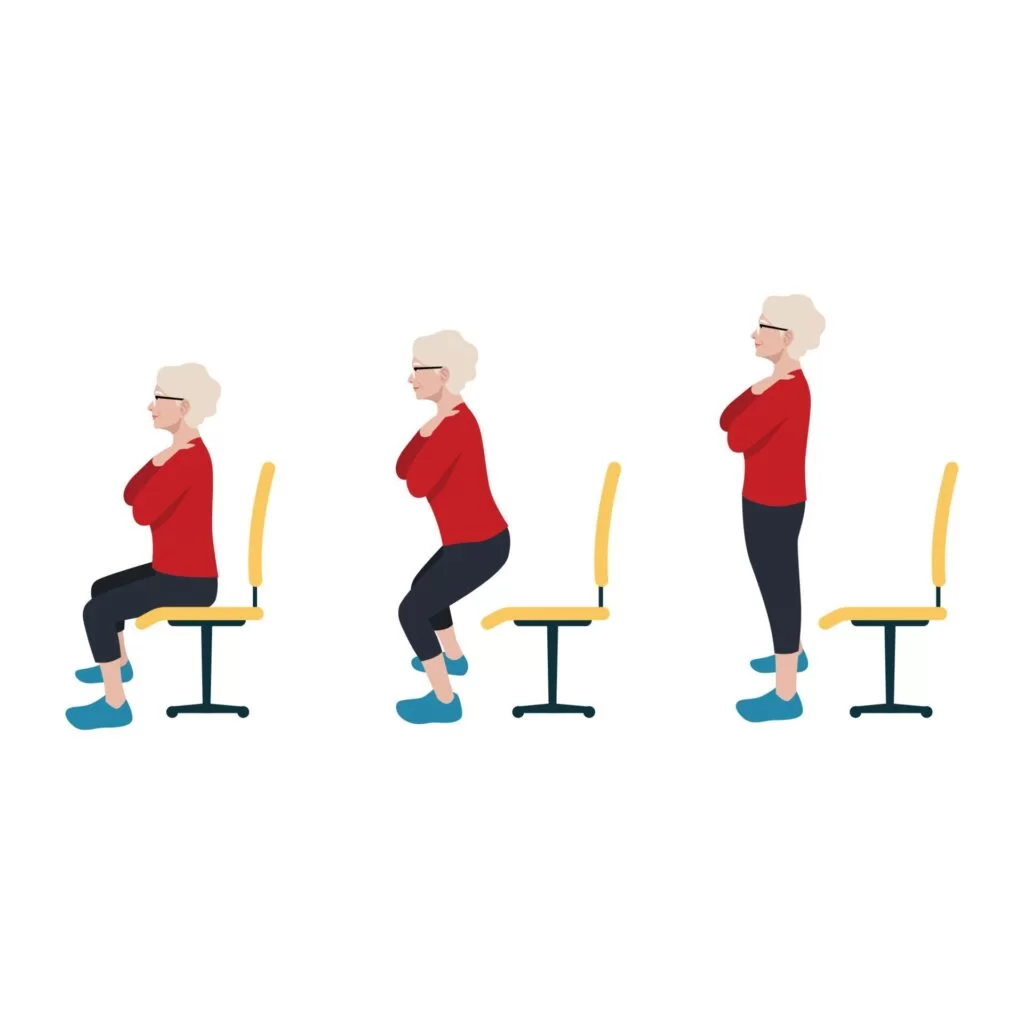
- Stand tall, with your feet about hip width apart and your weight equally spread over both feet.
- Ensure that the chair behind you is near you.
- Squat down into the chair, bending your knees and hips.
- Repeat 5 to 10 times.
Common Mistakes to Avoid During Hip Surgery Physiotherapy
- Exercising without first warming up might result in injury or unnecessary effort.
- Excessive exertion may lead to edema, increased pain, or even damage to the surgical site.
- Incorrect movements put strain on other regions of the body and impair the exercise’s effectiveness.
- Do not ignore sharp or persistent pain during activity.
- Muscle weakness or stiffness might result from skipping exercises or not adhering to the recommended program.
- You will be deficient in the proper nutrients if you don’t consume a healthy diet, which will prolong your recovery.
- Not following up with your doctor may prolong your recovery or lead to issues later on.
Tips for Successful Physiotherapy After Hip Replacement
- Follow Your Physiotherapist’s Advice: Your physiotherapist is an expert in the area and may provide recommendations customized to your unique requirements. It is critical that you carefully follow their advice and instructions.
- Gradually increase your activity level. Begin with mild motions and progressively raise your exercise level as your strength increases and your pain reduces. Remember that consistency is crucial.
- Stay Hydrated and Eat a Balanced Diet: Proper nutrition promotes speedier recovery, so make sure you’re drinking enough water and eating a balanced diet.
- Don’t Forget About Rest: In addition to exercise, getting enough rest is essential. It gives your body time to recover and recharge.
- Maintain a Positive Attitude: Having a positive attitude will help you heal faster. It’s natural to have ups and downs on this road, but it’s critical to stay positive and motivated.
Conclusion
Hip replacement surgery recovery is a long process that varies between whole and partial replacements and is influenced by pre-surgical activity levels, diet, and overall health. Rest is vital in the days following surgery, but increasing your usual activity regimen will aid your recovery.
Your physiotherapist will advise you on when it is okay to remove your walking assistance. Within six weeks, the majority of patients are free of all support. When your physiotherapist believes you’re ready, you should begin taking brief walks combined with hip replacement recovery exercises.
FAQs
How many days of physiotherapy are required after hip replacement?
It will probably take several months to heal following a hip replacement. You will require physical treatment for several months. It might take six to twelve weeks before you can use your hip without limits. During that period, you should undertake exercises to strengthen and stretch the muscles surrounding the hip joint.
Is physical rehabilitation essential following total hip replacement surgery?
Most people who have had hip replacements do not require rigorous physical therapy. Walking is the greatest exercise after surgery, so start with short, frequent walks. On the day after surgery, the physical therapist will help you get out of bed for the first time.
How far should I walk ten days after hip replacement?
Yes, it is possible to walk excessively following a hip replacement. It can take up to 12 months to fully recover, and while it is essential to walk consistently during this period, you should gradually increase your walking distance. Walking for 20 to 30 minutes at a time is ideal during the first few days of rehabilitation.
What happens if you don’t have physiotherapy after a hip replacement?
Exercising after hip replacement surgery is critical. Without it, the muscles around the hip joint will never recover their full power and flexibility, and the replacement joint is likely to fail, resulting in major consequences.
How many times per day should you exercise following a hip replacement?
You will be supported out of bed, encouraged to walk using walking aids, and guided to sit in a chair by your bed. Exercises should be practiced at least five times each day.
Is excessive walking dangerous for hip replacement?
One week following hip replacement surgery, each step you take brings you closer to regaining your power and freedom. However, it is critical to walk the appropriate distance at this stage. Walking too little may delay the healing process, while walking too much can cause pain or edema.
References:
- Antunes, M. (2025, August 28). Hip replacement recovery: total hip replacement exercises. The Horder Centre. https://hordercentre.co.uk/news/total-hip-replacement-exercises/
- Total Hip Replacement Exercise Guide – OrthoInfo – AAOS. (n.d.). https://orthoinfo.aaos.org/en/recovery/total-hip-replacement-exercise-guide/
- Apollo Spectra Hospitals. (n.d.). Hip Replacement Recovery & Physiotherapy Exercises | Apollo Spectra. https://www.apollospectra.com/blog/general-health/physiotherapy-after-hip-surgery
- Bilal, M. (2025, June 13). Physiotherapy after hip surgery – Pristyn Care. Pristyn Care. https://www.pristyncare.com/blog/physiotherapy-after-hip-surgery/
- Hip replacement, total: advice and exercises following. (n.d.). Cambridge University Hospitals. https://www.cuh.nhs.uk/patient-information/hip-replacement-total-advice-and-exercises-following/