Physiotherapy After Total Knee Replacement
Introduction
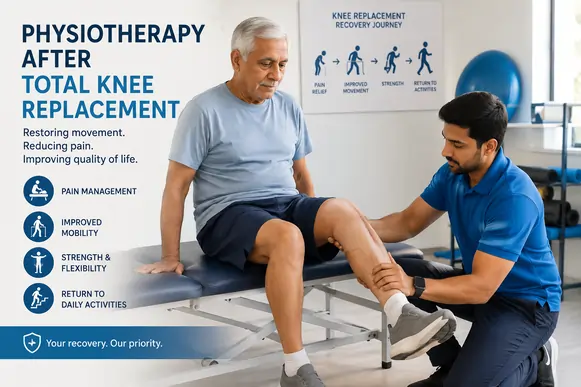
Total knee replacement provides patients with a new joint, but physical therapy is required to make that joint function properly. Many patients and their families are concerned about the duration and pain of therapy. The fact is that PT is a slow, controlled procedure that often takes many months.
What does Physiotherapy involve?
Knee replacement physiotherapy instructs and educates patients on how to do everyday tasks. It also includes joint and muscle exercises to help the replacement knee heal more quickly. Physiotherapists always design workout programs based on the needs and expectations of each patient.
For example, assume an athlete needs knee muscular strength in order to resume sporting activities. In that situation, a physiotherapist creates a particular series of workouts to help him compete.
What are some Physiotherapy exercises?
Physical rehabilitation following knee replacement involves a variety of activities, each with a unique purpose and approach. At first, mild exercises are utilized in sessions, which progressively develop to place more strain on the knee joint. Exercises vary in each phase of rehabilitation. Physical therapy after knee replacement surgery consists of the following:
0-2 Weeks After Surgery
Goals:
- Manage pain and edema.
- Begin a limited range of motion exercise.
- Begin walking with a walker or crutches.
Exercises:
Ankle pumps to promote circulation
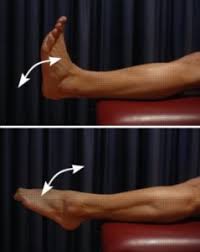
- You may practice this workout while sitting or lying down.
- Contract your calf and shin muscles to move your foot up and down in a rhythmical motion near the ankle.
- In the recovery phase, repeat this exercise for 2 to 3 minutes twice or three times every hour.
- If you’re watching television, do this workout throughout each commercial break.
- Continue doing this exercise until you are completely healed and all ankle and lower-leg edema has subsided.
Quadriceps sets (tightening the thigh muscles)
- You may practice this workout while sitting or lying down.
- Tighten your thigh muscles.
- Try straightening your knee. Hold for 5-10 seconds.
- Repeat this exercise around ten times in two minutes, then rest for one minute before repeating.
- Continue until your thigh is exhausted.
Straight leg raises
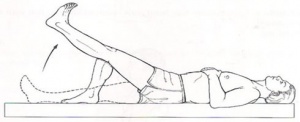
- Tighten your thigh muscle as your knee is totally straight on the bed, as with the quadriceps set above.
- Lift your leg a few inches. Hold for 5-10 seconds.
- Slowly lower.
- Repeat until your thigh is weary.
- This workout should last 3 minutes.
- You may also perform leg lifts while seated.
- Tighten your thigh muscle and keep your knee completely straight with your leg unsupported.
- Repeat the steps above.
- Continue these workouts on a regular basis until your thigh regains its full power.
Gentle knee bends (heel slides)
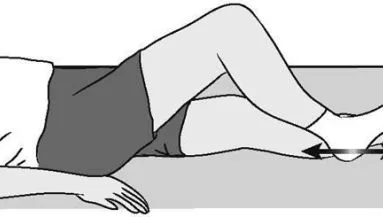
- Begin with both legs flat on the bed. Keeping your heel on the bed, bend the foot of your operated knee as you slide it toward your buttocks. Hold your knee in a maximally bent posture for 5-10 seconds.
- Straighten your leg.
- Do this repeatedly until you can fully bend your knee or your leg becomes fatigued.
- This workout should last 2 minutes.
2-6 Weeks After Surgery
Goals:
- Increase the range of motion.
- Begin weight bearing as tolerated.
- Strengthen the muscles surrounding your knee.
Exercises:
Stationary cycling (low resistance)
- First, adjust the seat height such that the bottom of your foot only touches the pedal and your knee is virtually straight.
- Peddle backwards at first.
- Only ride forward if you can cycle comfortably backwards.
- As you gain strength (after about 4 to 6 weeks), gradually increase the tension on the exercycle. Exercycle for 10 to 15 minutes, twice a day, progressively increasing to 20 to 30 minutes, three to four times each week.
- The seat may be lowered somewhat to allow you to bend your knees more while performing slow rotations.
Seated knee extensions
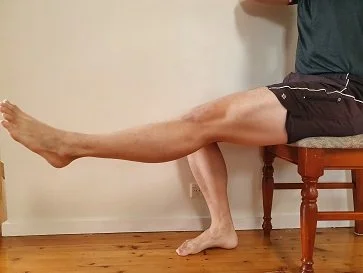
- Sit next to your bed or on a chair, with your thigh supported.
- Bend your knee as much as you can till your foot touches the floor.
- To enhance your knee bend, move your upper body forward in the chair while your foot is softly resting on the floor. Hold for 5-10 seconds.
- Straighten your knee completely.
- Repeat several rounds until your leg fatigues or you can fully bend your knee.
- This workout should last 3 minutes.
Step-ups on a low step
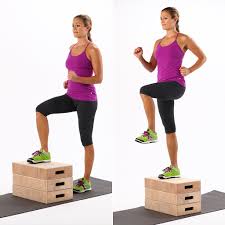
- Place a low stepper in front of you.
- To straighten your right leg, take a step up with your right foot and push into the heel.
- On the step, bring your left foot up to your right.
- Step back down with your left foot after bending your right knee.
- Lower your right foot till it touches the ground with your left foot.
Hamstring curls
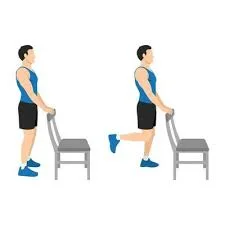
- Stand behind a chair or near a countertop. Keep your feet hip- or shoulder-width apart.
- Then attempt to bend your knees and kick yourself in the buttocks.
- Keep your thighs parallel to one another.
- Hold this for 3 to 5 seconds.
- Perform two sets of ten repetitions, one or two times each day.
Balance exercises
Single-leg balance: For strengthening the leg following a knee replacement, the single-leg balance exercise is perfect. Begin by standing with your hands on your hips, balancing on one leg, and raising your other foot off the ground. Move gently back and forth, attempting not to let either foot touch the ground. The workout strengthens both legs and improves your balance. Hold for 30 seconds before switching legs.
Parallel Stance: In a parallel stance, your feet are shoulder-width apart, with your knees and hips bent at 90 degrees. Push up onto your toes as if you were about to jump. Hold for 10 seconds, then gently return to the starting position. Perform three sets of eight repetitions every day. During the first week, do them twice a day; during the second week, do them three times a day. A parallel stance is important because it simulates standing on one leg, which is required after knee replacement surgery.
Arm Raises: While seated, extend your arms straight out in front of you, parallel to each other. Raise and lower your arms for five repetitions. Repeat. The exercise strengthens your chest muscles, which might help you stay balanced on your feet. It’s also excellent as part of a regimen to develop your abdominal, lower back, and hip muscles, all of which are necessary for maintaining your balance. Again, begin with five repetitions in each set. Over time, increase the number of repetitions per set to 10-15.
6-12 Weeks After Surgery
Goals:
- Achieve a complete range of motion (0-120 degrees is a frequent objective).
- Increase strength and endurance.
- Improve independence in daily tasks.
Exercises:
Leg presses (low resistance)
- Lie face up on a mat. Raise your feet off the mat. Bend your knees to form a 90-degree angle. Point your toes toward the ceiling while flexing your feet.
- Hold the ends of the band while wrapping it around your feet. Keep your feet near one another.
- To straighten your legs, push your feet on the straps.
- Bend your knees back to a 90-degree angle.
Standing hip abduction
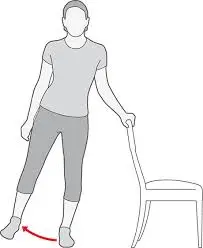
- Stand tall alongside a strong chair, one hand resting gently on the backrest for support.
- Keep your feet hip-width apart and maintain an upright posture.
- Slowly raise one leg out to the side, toes pointing front.
- Lift only as far as you are comfortable. Avoid tilting your body to the opposing side.
- Lower the leg back down with control.
- Repeat the appropriate number of times, then swap sides.
Mini squats
- Begin by standing with your feet comfortably spaced apart.
- As if you were just getting into a chair, slowly bend your knees and move your hips back.
- Hold this stance and squeeze your thigh muscles.
- To return to standing, push through your feet.
- You may feel your thigh, leg, and hip muscles working with each rep.
Walking longer distances
Advanced balance and proprioception exercises
Static Balance Exercises
- Standing on one leg while clinging to a support for stability is known as the single-leg stance.
- Tandem Stance: Keeping your balance while putting one foot squarely in front of the other.
Dynamic Balance Exercises
- Heel-to-Toe Walk: The heel-to-toe walk entails stepping in a straight line with one foot’s heel directly in front of the other’s toes.
- Step-Ups: alternating legs while stepping up and down a low platform.
3-6 Months After Surgery
Goals:
- Return to usual activities.
- Improve your cardiovascular fitness.
- Improve muscular strength and joint stability.
Exercises:
Treadmill walking or jogging
Lateral step exercises
- Stand sideways next to a step, with the foot closest to it on top and the knee bent. Your other foot should be on the ground, your knees somewhat straight. Hinge at the hips and tilt your body slightly forward. Next, put your hands in front of you and bend your elbows. (This helps with equilibrium.)
- Now, push the foot on the step, straightening your knee and raising your other foot off the ground.
- As you concentrate on balancing on your standing foot, keep your other foot floating in the air.
- To get back to where you started, lower your foot to the floor.
- Repeat, then perform the exercise on the opposing side.
Resistance band exercises for hip and knee muscles
Seated Knee Extensions with Band:
- Wrap a resistance band around your ankle after tying it to a table leg.
- While sitting, stretch your leg against the band’s resistance.
- Slowly return to the beginning.
- Do 10 to 12 repetitions.
Standing Hip Abduction:
- Attach the band to a low attachment point.
- Loop the opposite end around your ankle.
- Stand sideways to the anchor, lifting your leg outward.
- Hold, then gently return.
Low-impact aerobics (e.g., swimming, cycling)
Aquatic workouts are an excellent technique to increase strength and muscular mass while minimizing joint stress. It enables you to perform functional actions like lunging and squatting with ease. When you work out in water, the water supports your body weight, so there is less strain on your knees. Water sports can also help you become more coordinated and balanced.
Sports-specific training, if applicable (e.g., golf, tennis)
6+ Months After Surgery
Goals:
- Maintain knee functionality and general fitness.
- Prevent future injuries.
Exercises:
Regular walking, swimming, or cycling
Strength training exercises focusing on the lower body
Wall squats
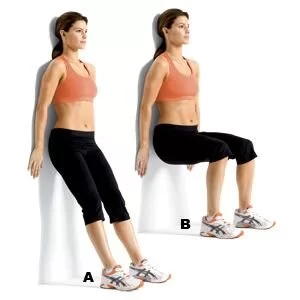
Take a standing stance with your back against the wall. Bend your knees as if you were going to sit on a chair, and hold this posture for at least 15 seconds. Repeat numerous times until you sense muscular tiredness. Hold the stance for extended periods of time as your strength increases.
Bridges:
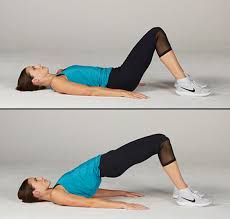
Begin by lying on your back, knees bent. Keep your feet level on the floor and hip-width apart. Contract your buttocks and raise your hips off the floor toward the ceiling, taking care not to arch your lower back. Return to your starting position. Repeat at least 20 times until fatigued. As this becomes easier, try holding a weight on your abdomen for an added challenge.
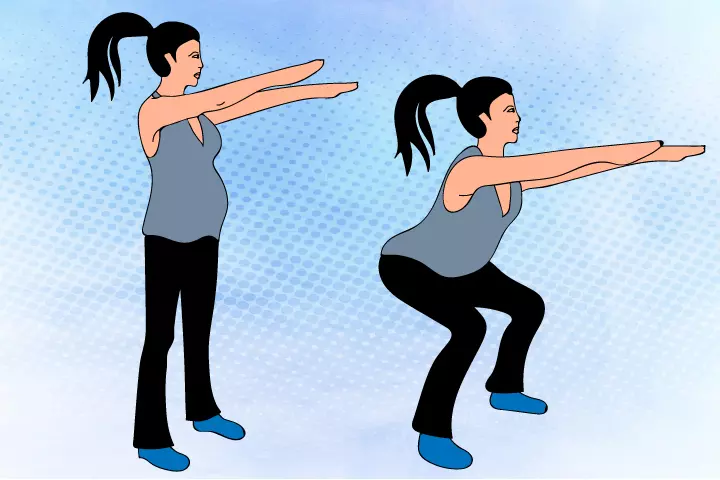
Place your feet hip-width apart to begin. While keeping your back straight and your shoulder slightly in front of your hip, squat down and bend your knees as much as you can comfortably. Make sure to move your weight from your toes to your heels. Put yourself back in an upright position. Increase the intensity of your workout by adding weights or kettlebells as your strength and confidence grow!
Flexibility exercises for the knee and surrounding muscles
Seated Hamstring Stretch
This stretch works best when sitting on the edge of a chair. Bend your other leg and set it on the chair after placing one foot on the ground. To straighten your spine, put your hands on the chair’s back and lean forward from your hips. Hold for 30 seconds each time you perform this exercise, at least three times each day.
Standing quadriceps stretch
Place your feet shoulder-width apart and stand up to perform this stretch. Keeping the opposite leg straight, place one foot close to your buttocks. Reach down and grab your toes with both hands. Bend your knee and slowly pull your ankle toward you until you feel a tiny stretch in your quadriceps. Hold for 30 seconds each time you perform this exercise, at least three times each day.
What Are the Benefits of Physical Therapy?
- Helps ease pain.
- Increases the range of motion.
- Increases joint flexibility.
- Strengthens the muscles around the joint.
- Reduces the need for pain medications.
- Manages swelling.
- Promotes blood circulation.
- Improves stability and prevents falls.
- Facilitates the restoration to a regular, independent life.
Rehabilitation Starts Immediately After Surgery
Rehabilitation begins on the same day as knee replacement surgery, which may seem unusual to you. On the day of surgery, the physiotherapist instructs the patient to stand up with support and take a few steps. The hospital personnel will assist with daily duties such as using the restroom or changing clothing. The physical therapist also shows the patient how to get in and out of bed and do other everyday tasks with less stress and frustration.
Strength training is part of the physical therapy after total knee replacement, and the physiotherapist gradually increases the load on the knee joint where the procedure was performed. As the patient’s condition improves, the physical therapist works on flexibility, balance, and walking exercises. Rehabilitation also includes a home training program, in which physiotherapists educate patients on how to move around their homes.
Challenges During Therapy
Physical treatment isn’t always simple. Pain, edema, and exhaustion are frequent in the first several weeks. Some patients become disheartened when their improvement is slower than expected. Others may struggle to find the desire to exercise every day at home. Patience, effort, and the support of therapists and family members are essential for overcoming these obstacles. Celebrating tiny successes along the road, such as bending the knee a few degrees or walking a little further, keeps motivation strong.
Tips for Success in Physical Therapy
- Take pain medication as directed before therapy sessions to make exercises easier.
- To reduce edema, use ice and elevate after each workout.
- Do home exercises every day, not just during treatment appointments.
- Maintain a positive mindset and realize that growth occurs gradually.
- Inform your therapist of any concerns or issues.
After a knee replacement, how many days of physical therapy are necessary?
Every patient’s condition at the time of surgery is unique, and each patient may take a varied amount of time to properly recover following knee replacement surgery. Due to the severity of their condition, some patients require more physiotherapy sessions than others.
Initially, you should attend physiotherapy sessions every day for two to three weeks. It is the most important stage of healing, and maximal recovery may be achieved within this time period. After 4-5 weeks, you should go to the physiotherapy clinic 2-3 times a week. And, after 8-9 weeks, 1-2 days a week works well. However, some individuals can recover quickly and do not require proper follow-ups, but only when necessary.
Conclusion
Physiotherapy following knee replacement surgery accelerates healing and is now an essential component of the process. Orthopedic surgeons and physiotherapists collaborate to create individualized treatment plans for each patient based on their condition.
Physiotherapy after knee replacement enhances the new knee joint’s integrity while also strengthening the muscles around the knee joint.
FAQs
How soon after surgery can I resume exercising?
The timing is determined by the type of surgery and your doctor’s recommendations. For many orthopaedic surgeries, extremely modest motions such as ankle pumps or breathing exercises can begin within hours or days of surgery. More advanced strengthening and mobility activities are normally started once your doctor determines that the wound is healing adequately.
What happens if I neglect the post-surgery exercises?
Missing exercise might hinder your rehabilitation and raise the risk of blood clots, stiffness, and weakness. Regular activity, no matter how mild or basic, helps to restore circulation, flexibility, and strength over time.
Are the post-surgery workouts painful?
While doing these exercises, you could feel some stretching or soreness, but the pain shouldn’t be severe or unbearable. If the discomfort gets severe, you should stop and notify your orthopaedic doctor or physical therapist, since it might indicate that you are pushing too hard.
How often should I perform post-surgical exercises?
Most post-surgery exercises should be done many times each day in short sessions. Consistency is more important than undertaking long or intensive workouts. Your orthopedic expert or physiotherapist will often create a customized regimen for you.
Which workouts can help you strengthen your muscles following surgery?
Straight leg lifts, heel slides, wall squats, and low resistance training are popular exercises for strengthening muscles after rehabilitation. The specific set of exercises will vary depending on whether you have knee, hip, spine, or other orthopaedic surgery.
How long does it take to fully recover from post-surgical exercises?
Full healing differs from person to person. Minor operations can take a few weeks to complete, while major surgeries like hip replacements might take months. Following your fitness plan on a regular basis and under supervision will help you get benefits faster and in the long run.
References:
- Total Knee Replacement Exercise Guide – OrthoInfo – AAOS. (n.d.). https://orthoinfo.aaos.org/en/recovery/total-knee-replacement-exercise-guide/
- How long is physical therapy after TKR? timelines, milestones, and what patients do. (2026, February 13). Gleneagles Hospitals. https://www.gleneagleshospitals.co.in/blogs/orthopaedics-joint-replacement/how-long-is-physical-therapy-after-tkr-timelines-milestones-and-what-patients-do
- Rehab, R. P. &., & Rehab, R. P. &. (2025, September 15). Knee Replacement Surgery care & Rehab: Post TKR Physiotherapy- RELIVA. ReLiva Physiotherapy & Rehab | The Physiotherapy Specialist. https://reliva.in/knee-replacement-surgery-tkr/
- Physiotherapy after knee replacement | Key to faster recovery. (n.d.). https://ortil.com/blog/importance-of-physiotherapy-after-knee-replacement-surgery
- 5 great balance exercises to do after knee replacement – Guidance & Wellness. (n.d.). https://guidancephysicaltherapy.com/5-great-balance-exercises-to-do-after-knee-replacement/