
Neck Pain Due to Bad Posture
Introduction
Research shows that the typical adult spends over seven hours daily in front of screens, with a significant amount of that time spent in poor posture. Neck discomfort can vary from mild to severe, potentially disrupting daily routines.
In today’s digital era, neck pain caused by poor posture, commonly known as “tech neck” or “text neck,” is becoming more prevalent. The muscles in the neck and upper back are consistently under strain, whether from hunching over in a chair, looking down at a mobile device, or spending extended periods at a computer without proper ergonomic support.
Disregarding neck discomfort can eventually lead to long-term pain, nerve irritation, and possibly structural alterations in your spine, even if it appears to be a slight irritation at first. Besides affecting your neck, poor posture can also negatively impact your mood and productivity, disrupt your sleep, trigger headaches, and restrict your mobility.
By making some mindful adjustments to your daily routine, work environment, and habits, most neck pain associated with posture can be prevented and even reversed.
Anatomy Of the Neck
Your neck does more than merely support your head. The cervical vertebral column is located in the back of your neck and is made up of seven little vertebra placed on above each other. The following vertebrae:
- Support your head’s weight, which is five to six kilograms.
- Protect your spinal cord.
- Assist you in turning and angling your head in various directions.
In order to help absorb shock during movement, intervertebral discs serve as tiny buffers between the vertebrae. Furthermore, the neck’s muscles, tendons, and nerves allow for movement and the transmission of impulses from your brain to different parts of your body.
Good Posture and Bad Posture
When you sit, stand, or lie down, your body is in a proper position.”Correct” posture makes movement easier and lowers the chance of strain and injury.
‘Back straight, shoulders back, and belly in’ is another way to define ‘good’ posture. This posture is excellent in many ways, but proper posture is more than just sitting or standing upright.
Your body typically assumes a variety of postures to perform various jobs, so switching up your daily stance helps you stay flexible.
It is desirable to regard good posture as a stance in which you:
- feel safe and well-balanced
- are able to do everyday tasks easily
- are causing the least harm to your body
Bad Posture: An improperly oriented spine can lead to pain, discomfort, and other health problems. This is known as poor posture. Bad habits, extended periods of inactivity, or underlying medical issues can all contribute to poor posture.
How your posture impacts your neck
When you sit or stand with incorrect posture, like slouching or leaning your head forward, it puts extra strain on your neck muscles and spine. Over time, this can:
- Cause your muscles to become sore and tense.
- Put extra strain on your discs, increasing the likelihood that they could slip or bulge.
- Lead to tingling or pain in your arms or shoulders if your nerves are compressed or irritated.
- Ultimately, discomfort arises because your neck is forced to work harder than it should.
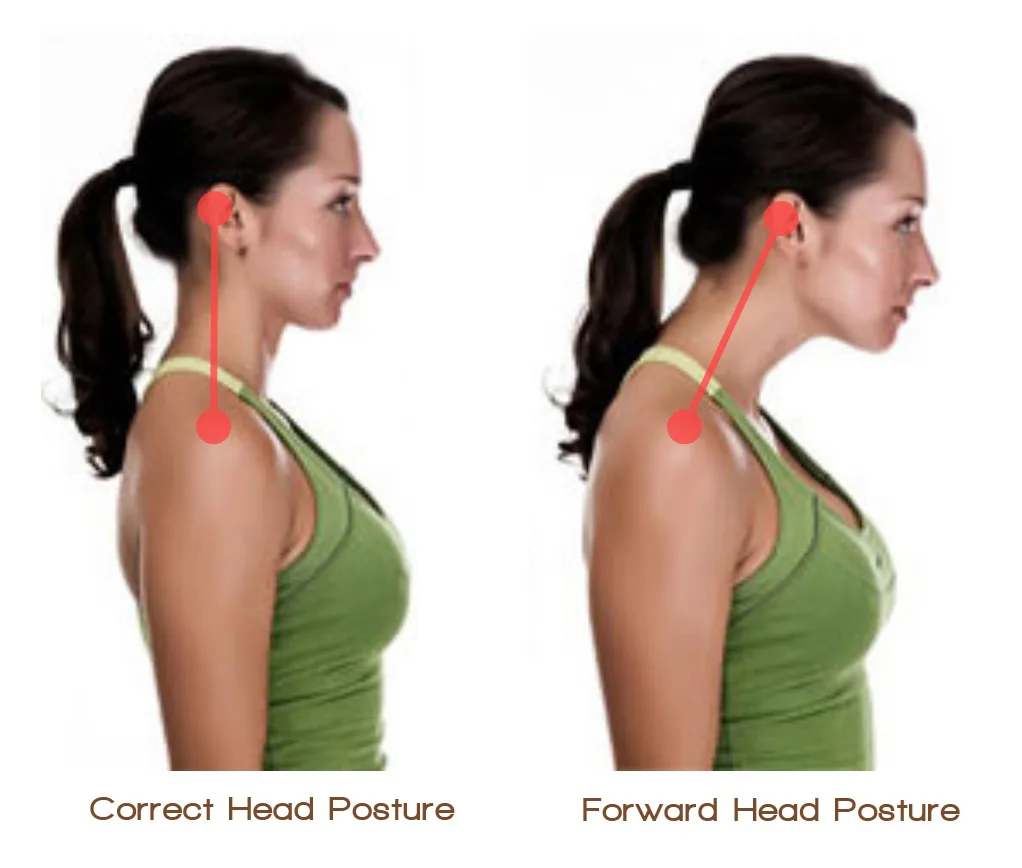
“Forward Head Posture”: What is it?
When your head is positioned in front of your shoulders rather than directly aligned with them, this condition is known as forward head posture.
Consider the following:
- Check your phone.
- Lean toward your laptop’s display.
- Sit with a hunched posture.
Over time, this posture can:
- Leads to discomfort in the shoulders and neck.
- Produce poor balance
- Make your back muscles tight and weak.
- Also affects your breathing.
How Neck Pain Is Caused by Poor Posture
Although it might not seem like much, poor posture can eventually lead to severe pain in your upper back, shoulders, and neck. Let’s examine how it occurs and some typical errors people make.
Typical Postural Mistakes
Forward Head Position
In this position, your head is pushed forward instead of being held upright over your shoulders. This commonly happens when we lean toward books or screens. Consequently, your neck muscles become tight and painful as they must exert more effort.
Rounded Shoulders
Your shoulders rolling forward leads to strain on your neck and upper back muscles, causing them to become misaligned.
Reclining in chairs
It’s quite common to catch yourself slouching or to recline deeply in your seat. This leads to an increase in the forward tilt of your neck and a weakening of your back and core muscles.
Looking Down at Mobile Phones (Tech Neck)
Most individuals bend forward to look at their phones for long stretches of time.
Over time, muscle strain and imbalance can develop. Poor posture leads to ongoing issues rather than just a single instance of pain.
Certain muscles, like those in your shoulders and the back of your neck, become excessively tight.
This imbalance makes it increasingly challenging for your body to maintain proper sitting or standing posture, which intensifies the discomfort.
This can also lead to:
- Headache
- Nerve compression
- Ongoing pain and stiffness
Common Symptoms of Neck Pain Linked to Posture
Discomfort or rigidity in the shoulders or neck: You might feel tightness, discomfort, or struggle to move your neck and shoulders.
Tension headaches: Typically triggered by tight neck muscles, this pain starts at the back of your head and moves forward.
Limited neck movement: You may find it challenging or painful to rotate your head fully to the left, right, up, or down.
Tingling or numbness in the arms or fingers: Poor posture can compress nerves, leading to a pins-and-needles feeling.
Shoulder pain or upper back ache: Slouching can make the shoulder blades feel tense and uncomfortable.
Strategies to Improve Your Posture
While poor posture habits are common, there’s good news: small changes can lead to significant improvements. Here are some suggestions for enhancing your posture in everyday situations:
a. Desk Ergonomics (For Work or Study)
Pay attention to height and distance: Position your screen at eye level and about an arm’s length away to prevent leaning forward or looking down.
Select the appropriate chair level and back support: Go for a chair that lets your feet lay comfortably on the ground. and supports your lower back.
In order to prevent straining or reaching, keep the keyboard and mouse near your body and at elbow height.
b. Using Devices and Phones
Position your devices at eye height.
To cut down on typing and excessive screen time, make use of voice-to-text capabilities
Keep your screen time in check and give your eyes, neck, and shoulders regular pauses to reset and relax.
c. Recommendations for Sitting Posture
Avoid putting your feet dangling or cross-legged by keeping them flat on the ground.
Make sure your knees are flexed at a 90-degree angle, aligned with or slightly beneath your hips.
Avoid crossing your legs as this might cause your spine to become misaligned and distorted.
Treatment
Pharmaceutical solutions for neck discomfort
Medicated solutions for neck discomfort can often be the best option, particularly when neck pain first occurs or if it significantly affects your daily life and happiness.
Non-prescription pain relievers
Non-prescription pain relievers, like paracetamol, can assist in alleviating neck discomfort.
Diclofenac, a strong anti-inflammatory NSAID found in anti-inflammatory gels like Iodex UltraGel+, reduces inflammation, eases pain, and speeds up the body’s natural healing process.
Muscle relaxants may be prescribed by your doctor for a short duration to assist in easing your neck pain.
In some cases, your physician might opt to administer corticosteroid injections close to the nerve root in your cervical spine or directly into the neck muscles to alleviate intense neck discomfort.
Surgery is seldom required for neck discomfort. However, on occasion, it can assist in alleviating compression of the nerve roots or spinal cord.
Home Treatments for Neck Pain
Neck pain can often be managed at home, with many cases resolving quickly thanks to these remedies.
Consider these home treatments for neck discomfort:
Cold or heat
To minimize inflammation, apply an ice pack wrapped in a light cloth for no more than 20 minutes each day. Switching between cold packs and warm compresses can help ease tension and loosen up tight neck muscles. Take a warm shower or apply hot pack
You can reduce discomfort and avoid muscle stiffness by gently stretching your neck. Carefully tilt, bend, and rotate your neck to relax the muscles and maintain flexibility.
Consider adding neck-strengthening exercises to your routine if you want to experience long-term relief from neck pain. This can help prevent future issues.
Make sure your shoulders are in the right alignment and sit comfortably. Interlace your fingers behind your head. Return your head to your hands and give them a gentle squeeze. Maintain this position for 30 seconds before releasing. Repeat several times to enhance strength.
Maintain proper posture
Slouching and having rounded shoulders indicate inadequate posture. We’ve all done it, whether it’s leaning over your phone or slumping on the couch. This is especially true for those who spend long hours sitting at a computer, where poor posture can become a detrimental routine.
Physiotherapy Treatment
Physiotherapy is one of the most common methods to treat chronic neck pain. Generally, physical therapy plans for neck pain include techniques aimed at alleviating pain and/or stiffness sufficiently to start a regimen of neck strengthening and stretching exercises. The particular techniques and exercises utilized in physical therapy, along with the length of the treatment plan, can differ from individual to individual.
Objectives of Physical Therapy for Neck Discomfort
Physical therapy aimed at alleviating neck pain generally encompasses these objectives:
- Alleviate discomfort and stiffness.
- Improve the flexibility of the head and neck.
- Establish methods to prevent future pain episodes.
- Even if complete pain relief is not achievable, physical therapy can significantly contribute to enhancing neck posture and functionality in everyday activities.
Exercises to Treat Neck Pain
When providing physiotherapy, we aimed at alleviating neck discomfort, we frequently recommend exercises to our patients to aid in reducing their pain, fortifying their injured muscles and surrounding tissues, and helping to prevent future injuries.
Here are five exercises we might suggest to our patients to assist in managing their neck pain:
Foam Roller ‘T’ and ‘Y’ Exercises
One exercise intended to enhance posture and strengthen the muscles around the upper back and neck involves lying lengthwise on a 36″ (3′) foam roller, spanning from tailbone to head, with support.
Start by extending your arms fully upward, then lower them to your sides so that they form a “T” shape. Controllably returning to where you started, and do it again 10 times. Maintain a wide chest and loose shoulders that are away from your ears.
This can also be repeated, leading with your thumbs to form a ‘Y’ shape (positioning them at a 45-degree angle between the ‘T’ position and directly overhead).
Using the foam roller provides an additional stability challenge while facilitating an effective stretch for the chest and supporting spinal stability.
Neck and Shoulder Rolls
These movements can serve as a preliminary warm-up for additional exercises.
While doing shoulder rolls, keep your arms and shoulders relaxed and “roll” them at least 10 times to aid in loosening your muscles. For head rolls, bring your chin to your chest and begin rotating your head in broad circles, ensuring that no pain occurs during the process.
Seated Neck Stretch
This stretch is performed while seated, as the name implies. With one arm extended downwards, maintain proper posture and gently use your other arm to guide your head towards the side of the extended arm. This stretch can also be modified by: A) nodding your chin both before and during the stretch; B) adding a tiny forward tilt to the chin nod (to stretch the muscles at the back of the neck); or C) executing a chin nod combined with a slight backward head tilt to target the front and side neck muscles. To find out which version is best for you, speak with your physiotherapist!
Prone Rows or Band Doorknob Rows
This exercise focuses on strengthening the muscles surrounding your neck and spine to provide better support. Lie face down on a bench. With your elbows bent, lift upwards and tighten your shoulder blades together, raising your fists as though you are rowing.
As an alternative, you can securely fasten a resistance band to the doorknob of a closed door if you have one. Keep your shoulders back, your belly engaged, and your chin slightly tucked into your throat as you stand away from the anchor. With your hands at your sides or in your lower belly, begin by extending your arms straight forward toward the door.
Aquatic Exercises
This broad category of exercises utilizes the buoyancy of water to gently and safely activate injured muscles, aiding in their strengthening. This approach helps relieve pressure from your neck and spine and can be especially beneficial when neck pain is associated with shoulder or back discomfort.
When Should I Skip Physiotherapy for Neck Pain?
Although physical therapy often aids in recovery from neck discomfort, there are specific situations in which it should be avoided. This is especially true if you are dealing with a serious medical condition, such as a fractured spine or a tumor in the neck area. Physiotherapy may worsen the issue in these situations in addition to being unsuccessful.
Additionally, some individuals may not be physically prepared for the rigors of physiotherapy until their acute inflammation and pain have subsided and their bodies are primed for progressive treatment.
In these instances, consult your doctor about alternative methods for relieving your neck pain or addressing its underlying cause.
Lifestyle changes for maintaining posture
Be Mindful of Your Posture:
- Make an active effort to observe and adjust your posture throughout the day, whether you’re sitting, standing, or walking.
Stand Upright
- Maintain your shoulders in a retracted position, engage your core, and balance your weight evenly on both feet.
Sit Correctly:
- Maintain an upright position, ensuring your back is supported by the chair, your feet are flat on the ground, and your ears are in line with your shoulders.
Avoid Forward Head Position:
- Be mindful of “text neck” and change your line of sight instead of tilting your head when viewing screens.
Exercise and Activity
- Strengthen Your Core Muscles:
- Include exercises such as planks, bridges, and abdominal crunches to enhance core strength, which supports your spine.
Stretch Frequently:
- Stretching can help you keep your muscles flexible and release tension, especially in your shoulders and neck.
Remain Active:
- Participate in regular physical activities like yoga, tai chi, walking, swimming, or cycling to enhance your overall fitness.
Take Breaks:
- Every thirty minutes or so, get up and move about to relieve tense muscles and improve your posture.
Healthy Lifestyle Practices
- Keep a Healthy Weight: Carrying extra weight can strain your abdominal muscles, increasing stress on your joints and ligaments.
- Consume a Balanced Diet: Prioritize a nutritious diet to enhance overall health and strengthen bone density, which benefits your spine.
- Stay Hydrated: Ensuring adequate water intake is essential for overall health and well-being.
FAQs
How can I treat posture-related neck pain?
Improve ergonomics by rearranging your workspace, adopting excellent posture, and engaging in regular stretching and strengthening activities to alleviate neck pain caused by poor posture.
How long does poor posture cause neck pain?
In most cases, neck pain brought on by typical problems like stress and strains goes away in a week or two.
Is it possible to correct poor neck posture?
You may quickly get better posture and treat your pain. You may relax those muscles and enhance your posture by stretching and paying attention to your posture.
Is physical treatment for the neck safe?
When compared to seeing a non-surgical or surgical physician, physical therapy can be a more affordable and safer option for addressing back and neck pain.
What is the most beneficial exercise for neck pain?
For neck pain, range-of-motion exercises and mild stretches are usually the most effective.
References
- UCHealth. (2023, June 23). Pain in the neck? How to fix your posture. UCHealth Today. https://www.uchealth.org/today/pain-in-the-neck-how-to-fix-posture/
- Neck and shoulder pain management. (2024, July 17). WebMD. https://www.webmd.com/pain-management/neck-shoulder
- Healthdirect Australia. (n.d.-b). Neck pain. Treatments, Causes and Related Symptoms | Healthdirect. https://www.healthdirect.gov.au/neck-pain
- Trust. (2015, September 22). Good and bad posture. MS Trust. https://mstrust.org.uk/a-z/understanding-and-improving-your-posture/good-and-bad-posture