Swimmer’s Shoulder
What is a Swimmer’s Shoulder?
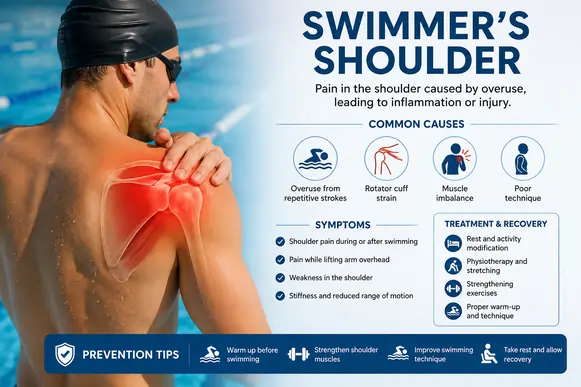
Swimmer’s shoulder is sometimes called shoulder impingement, subacromial impingement, or painful arc syndrome. Swimmers frequently aggravate their shoulders by rubbing and pinching shoulder structures against one another during swimming due to the continual joint movement.
One of the most complicated joints in the human body is the shoulder. It is designed to provide a very broad range of motion in the body. Swimming is unusual in that it requires repetitive use of the shoulders. The shoulder pushes the body’s weight against the resistance of water, allowing it to move further. For the most efficient swimming, you must have a wide range of motion in your shoulders and be flexible. This can sometimes lead to shoulder instability or greater laxity.
Swimmers are at a significant risk of shoulder injuries due to the particular nature of the many strokes used in swimming, as well as the huge quantity of repetitions necessary during training. Swimmer’s shoulder refers to a number of different shoulder diseases. Impingement syndrome, rotator cuff tendinitis, labral injuries, instability caused by ligamentous laxity or muscle imbalance/dysfunction, neuropathy due to nerve entrapment, and anatomic abnormalities are all possible pathologies. In order for the athlete to return to the sport at the proper moment, the doctor must be able to tell the difference between these various etiologies.
Swimmer’s shoulder is caused by repeated use of the joint, resulting in irritation, inflammation, rips, and scarring. Symptoms may include shoulder pain, edema, and stiffness (restricted range of motion). Swimmer’s shoulder affects the tendons, which link muscles to bones. The tendons in the shoulder become inflamed and swollen, putting strain on adjacent bones, muscles, or tendons.
Inflammation often affects the rotator cuff tendon (a collection of tendons and muscles around the shoulder joint). These tendons may put pressure on the scapula’s acromion process, which is located at the top of the shoulder blade bone. Friction on the shoulder blade can cause bone spurs (extra bony growths) to form. Swimmer’s shoulder is a specific kind of shoulder tendonitis.
It is important to remember, however, that swimmer’s shoulder is not limited to swimmers. It is a prevalent condition among athletes who do repeated shoulder motions, such as volleyball, baseball, and softball players. Any athlete who utilizes their shoulder muscles in repetitive overhead motions may develop swimmer’s shoulder.
Causes of Swimmer’s Shoulder:
The tendon and muscle tissue of the shoulder joint get irritated by repeated strain or movement. There are tiny tears in the joint that result in scar tissue and inflammation. The joint cannot move smoothly due to tiny tears in the tissue. Swimmer’s shoulder can cause a labral or rotator cuff injury if left untreated.
Swimming is a unique exercise since it relies predominantly on the upper body for propulsive force, with the torque generated from the shoulder accounting for 90% of the driving force. Each swimmer must complete between 60,000 and 80,000 meters each week, or 30,000 strokes per arm, in order to reach a specific level. Fundamentally, the swim stroke needs the shoulder to move to range-of-motion extremes while immense muscular effort is applied on it.
Swimmer’s shoulder can have a variety of causes, such as:
- Overuse of the shoulder joint
- Excessive training
- Not getting enough rest between training sessions
- Shoulder fatigue
- Improper swimming technique
- Weakness of the shoulder’s tendons, ligaments, and muscles
- Imbalanced development of the shoulder’s tendons, ligaments, and muscles
- A previous shoulder injury
- An underlying cause
Risk factors:
Playing sports that require fast or overhead motion is the most prevalent cause of shoulder impingement. Common activities that can cause swimmer’s shoulder include:
- Swimming
- Tennis
- Baseball
Occupations may also increase risk. These include:
- Construction work
- Moving Heavy Boxes
- Painting
Age and prior shoulder injuries, such as a dislocation, are additional risk factors for shoulder impingement.
Signs and Symptoms of Swimmer’s Shoulder:
- Muscle weakness or fatigue.
- Reduced range of motion.
- Shoulder instability.
- Shoulder Pain
- Difficulty reaching behind the back
- Pain in the shoulder when the arm is extended overhead
- Localized pain and inflammation in the shoulder
- Pain that is aggravated when resting/lying on the shoulder
- Tenderness in the shoulder
- Reduced muscular function, joint control, or range of motion (ROM)
- Change in stroke pattern in swimming and/or “lazy elbow”
- Pain and inflammation in the shoulder.
- Pain that radiates into the neck.
- Pain that is aggravated by weight on the affected shoulder.
- A decrease in muscular function, joint movement, or control
Diagnosis:
A doctor will assess the patient’s symptoms and do a physical examination. The doctor may examine the shoulder for symptoms by pressing on multiple points to detect pain, swelling, or soreness.
Imaging tests for seeing injuries:
X-rays are used to diagnose fractured or dislocated bones, as well as to see the shoulder bones.
An MRI or CT scan may evaluate soft tissue structures like tendons and ligaments and identify tendon damage.
The doctor may investigate any changes in training or activities that might have resulted in shoulder impingement.
The components of this examination may include:
- Palpation of the arm
- Measures of muscular strength
- Shoulder special tests
- Health Conditions
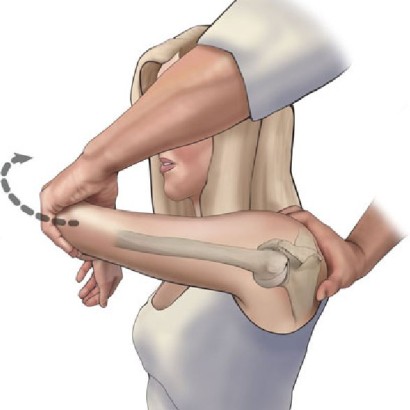
Neer’s test is a common diagnostic examination for shoulder problems.
Neer’s test: During this exam, the physician raises the arm overhead to its fullest extent. If this causes pain, the rotator cuff tendons may be squeezed, and the test is considered positive. Swimmer’s shoulder might then be suspected.
Treatments for swimmer’s shoulder
Conservating Treatment
- Rest – Avoid swimming and other activities that may aggravate your shoulder pain. Resting can minimize inflammation and give your shoulder time to recover.
- Ice – Place an ice pack on your shoulder. Ice helps decrease swelling and numb pain, allowing you to feel more comfortable.
- Pain killers–over–the–counter pain medicines such as ibuprofen or acetaminophen can help reduce pain and swelling. These drugs can offer short-term relief and make it easier to move your shoulder.
- Adjust your technique – Make sure you’re swimming correctly. A coach or physical therapist can assist you with this. Using good technique will help lessen tension on your shoulder and avoid future soreness.
- Shoulder brace – A shoulder brace can help restrict range of motion and shield your shoulder from additional tension and discomfort while it heals.
Surgical Treatment:
Most people with swimmer’s shoulders do not require surgery. However, surgery may be a possibility if shoulder pain or symptoms continue and do not respond to conservative therapies. A surgeon can conduct a treatment called subacromial decompression, which removes inflammatory tissue and bone spurs in the shoulder.
In some circumstances, surgeons can perform a minimally invasive technique during therapy with an arthroscope. During arthroscopic shoulder decompression, the surgeon makes many tiny incisions (cuts) around the shoulder. The surgeon examines the shoulder joint using a small, lighted tube known as an arthroscope. This approach allows the surgeon to do an operation without making a huge incision.
During this surgery, inflammatory tissue and bone spurs are removed from the bottom of the shoulder blade’s acromion process, freeing more room for the shoulder joint. After surgery, you can gradually resume swimming (and all other activities) in around eight weeks.
Physical therapy
A physical therapy program is typically an effective and required treatment for swimmer’s shoulder. A physical therapist (PT) provides physical therapy treatments. Your PT can examine your condition using a physical examination, special testing, and imaging. Physiotherapy experts may suggest treatments and exercises to increase shoulder mobility and strength without the use of medication.
In addition, the doctor may utilize modalities to reduce pain and enhance circulation to your shoulder muscles in order to speed up the healing process.
Physical therapy treatments for swimmer’s shoulder may incorporate:
- Modalities
- Exercise
- Joint mobilizations
Exercises for Swimmer’s Shoulder:
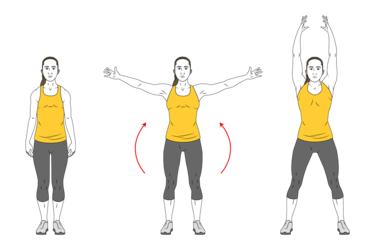
Swimmer’s shoulder exercises can assist in improving arm mobility and strengthening the rotator cuff muscles. This can help protect a person’s shoulder from pinching when swimming or reaching higher. Exercises include:
Range of motion exercises
Active and active assisted exercise of the shoulder joint.
- Shoulder flexion
- Shoulder Extension
- Shoulder abduction-adduction
- Shoulder internal-external rotation
Pendulum swings
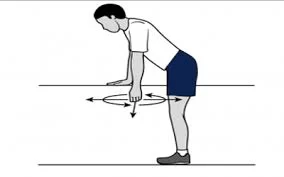
- Begin by standing tall, your feet shoulder-width apart.
- Lean slightly forward and let your affected arm hang freely.
- Gently swing your arm in a circular manner, gradually increasing the size of the circles.
- You may also swing your arm forward and backward, as well as side to side.
Stretching Exercises
Stretching is helpful in practice for a workout and is crucial when it comes to preventing injury. Stretches help to warm up the muscles and prepare the body for movement before getting in the water:
Internal Rotation Towel Stretch
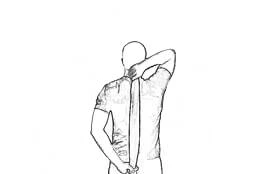
- Hold a towel over your shoulder.
- Grab the towel from behind your back with your other arm.
- With your hand behind your back, carefully draw the towel up until you feel a mild stretch in your shoulder.
- Hold the stretch for 15-20 seconds before progressively releasing.
- Repeat 5–10 times.
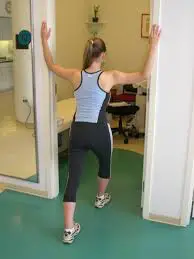
- Stand in a doorway, one arm stretched to the side at shoulder height and palm facing the wall. Step forward with the opposing foot, stretching your chest and shoulders.
- Hold this stretch for a few minutes before returning to the beginning position.
Chest stretch
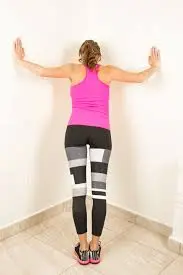
- Stand facing a wall, your feet shoulder-width apart.
- Place your palms flat against the wall, at shoulder height.
- Lean forward into the wall while keeping your feet in place. You should experience a slight stretch in your chest and shoulders.
- Hold this stretch for a few moments before slowly pushing back up to your starting position.
Prone Scapula Squeeze
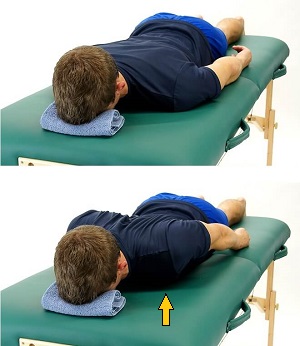
- Lie on your stomach on a bed, with the painful arm dangling to the floor.
- Slowly elevate the arm to the side, maintaining the elbow straight and not bending.
- Hold the straight arm parallel to the floor for 3-5 seconds before slowly lowering it down.
- Repeat the exercise 10–15 times.
Cross-Body Shoulder Stretch

- Bring one arm over your chest, then gradually draw the opposing hand closer.
- Hold for 20-30 seconds on each side.
Strengthening Exercises
External Rotation with Resistance Band
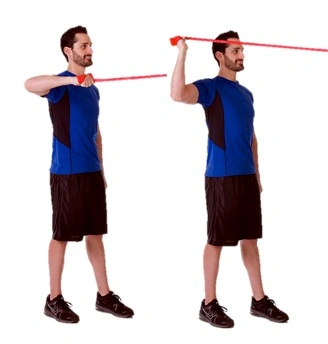
- Attach a resistance band at elbow height.
- Hold the band with your elbow bent 90 degrees and tucked into your side.
- Slowly rotate your arm outward and then back to the beginning position.
- Perform three sets of 12-15 repetitions per side.
Rows

- Place your feet shoulder-width apart and bend your hips slightly. With your palms toward your thighs, grasp a little weight in each hand. Push your shoulder blades together as you row the weights back and toward your chest. Maintain an active core and a straight back. Return the weights to their initial position gradually.
Prone Y-T-Ws
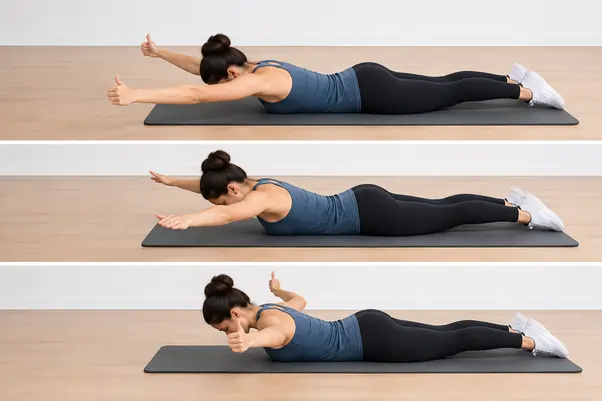
- On the ground or a seat, lie face down.
- Raise your arms to form a Y, then a T, and finally a W, briefly maintaining each position.
- Perform three sets of ten repetitions per letter.
Wall Angels
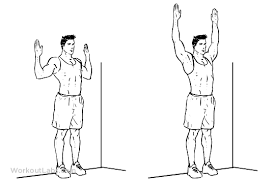
- Stand with your back against a wall and arms bent at 90 degrees.
- Slowly lift and drop your arms, keeping them in touch with the wall.
- To enhance mobility, perform three sets of ten repetitions.
Serratus Wall Slides
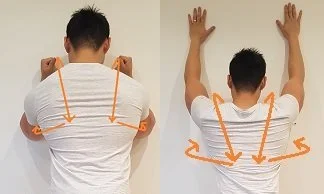
- Stand facing a wall, forearms against it.
- Slide your arms up, keeping the shoulder blades locked.
- To strengthen shoulder mechanics, perform three sets of twelve repetitions.
Preventing Swimmer’s Shoulder
Focus on proper stroke mechanics.
Poor form causes extra tension on the shoulder. Improving stroke technique with a coach or physical therapist can reduce joint stress.
Strengthen the rotator cuff and scapular muscles
Regular strengthening exercises increase shoulder stability and lower the incidence of overuse problems. Consistency is essential for maintaining muscular balance and endurance.
Prioritize shoulder mobility and flexibility.
Tight muscles can alter how people move and increase shoulder strain. Including mobility drills and stretching in your training regimen encourages a wide range of motion.
Allow for appropriate rest and recovery.
Overtraining without proper recovery can cause inflammation and tissue damage. Swimmers should listen to their bodies and take rest days when necessary.
Warm up and cool down properly.
An active warm-up before swimming, followed by a cool-down program, helps to prepare the muscles for exercise and reduces post-workout stiffness.
How Long Swimmers shoulder take to get better?
Most swimmers’ shoulder bouts last between eight and ten weeks. Some severe instances might persist as long as three months. Rest and mild stretching usually help relieve the pain gradually.
As your symptoms subside, you can gradually resume normal activities and swimming, but a few shoulder exercises two to three times per week may be required to keep your shoulder strong and flexible. This may assist to avoid future instances of impingement from swimmer’s shoulder.
FAQs
Do swimmers’ shoulders go away?
Yes, swimmer’s shoulder—a combination of rotator cuff tendonitis and shoulder impingement—usually resolves with proper therapy and rest. Mild instances can recover in 2 to 4 weeks; however, moderate to severe cases often take 3 to 6 months to fully heal. Complete healing necessitates rest, physical treatment, and modification of stroke mechanics to prevent re-injury.
How long does it take for a swimmer’s shoulder to heal?
Swimmer’s shoulder recovery time is 2 weeks for mild tiredness or tendinitis, whereas significant injuries require 6 to 12 weeks of physical treatment. Severe injuries or rips might take up to 6 months. Full recovery necessitates temporary rest, anti-inflammatory medications, and focused rotator cuff strengthening.
How frequent is swimmer’s shoulder?
You don’t have to be an excellent swimmer to suffer from swimmer’s shoulder; up to 50-70 percent of seasonal swimmers are affected. It’s a wide range that varies according to age, level of competition, swim technique, and training volume.
What’s another term for swimmer’s shoulder?
Impingement syndrome, commonly known as swimmer’s shoulder and subacromial impingement, is a frequent medical condition. It happens when the muscles and tendons that raise the arm become damaged or strained.
What not to do with a swimmer’s shoulder?
If you have swimmer’s shoulder, avoid repeating overhead motions, heavy lifting over shoulder height, sleeping on the affected side, and pushing through acute pain. Continued aggravating activities can worsen inflammation and raise the chance of rotator cuff injury.
How do you sleep with a swimmer’s shoulder?
You should sleep on your back if you have rotator cuff pain. Use a cushion or blanket to keep your arm from slipping down. This helps you prevent straining your shoulder. Keep your arm in line with your body
References:
- Kat. (2026, January 28). Physio Management of Swimmer’s Shoulder. Total Body Physio. https://totalbodyphysio.com.au/blog/swimmers-shoulder/
- Orthopedic Associates & Orthopedic Associates Team. (2019, February 19). What is swimmers shoulder and how is it treated? – Orthopedic Associates. Orthopedic Associates | Orthopedic and Sports Medicine Specialists. https://www.orthopedicassociates.org/this-is-an-explanation-of-swimmers-shoulder-including-the-causes-symptoms-and-treatments-for-this-condition/
- Swimmer’s shoulder Symptoms & Treatment | Aurora Health Care. (n.d.). https://www.aurorahealthcare.org/services/orthopedics/conditions/impingement-syndrome
- Team, K. R. (2024, October 24). 12 exercises that may improve swimmer’s shoulder. KC Rehab. https://www.kcrehabpt.com/post/12-exercises-that-may-improve-symptoms-of-swimmer-s-shoulder