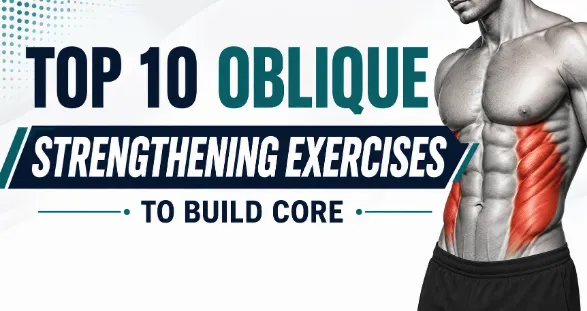
Top 10 Oblique Strengthening Exercises To Build Core
Introduction
Oblique workouts strengthen the muscles on the sides of your torso that allow you to rotate, resist rotation, and remain stable when life throws you off balance. Consider twisting to get a bag from the backseat, carrying groceries with one hand, or rotating during a sport. Your obliques are at the center of all the activity.
The external obliques are closer to the surface, whereas the internal obliques are located below them. Together with the rectus abdominis (the “six-pack” muscle) and deeper stabilizers, they contribute to a strong core that supports posture, balance, and lower-back control.
Understanding the Role of Obliques
The oblique muscles are essential for lateral flexion (bending sideways), spinal flexion (sitting up), and torso rotation. However, they also help the transverse abdominis pull in your abdomen by pushing the belly button closer to the spine and providing definition. They also serve to tuck the ribs down and in during a powerful exhale, as well as to support the abdominal organs.
What are Obliques?
The oblique muscles run diagonally along the sides of your body, connecting the lower ribs and pelvis. There are two types of oblique muscles: internal and external, which act together yet play unique roles.
Internal obliques
The internal obliques are located beneath the external obliques on both sides of the body. When activated, they assist in bending your torso sideways or rotating it toward the same side. For example, bending or leaning to the right will activate your right internal obliques.
External Obliques
The external obliques are the most prominent on the outside of your torso, above the internal obliques. When engaged, they help in bending to the same side (right externals aid in right-side bending) and rotating your torso to the opposite side; when you twist to the left, your right external obliques are activated.
Benefits of Oblique Strengthening Exercises
- Creates a stronger, more stable core
- Your obliques combine with the deep transverse abdominis to create a natural internal belt around your spine. Strengthening them results in actual stability, not simply surface-level tightness.
- Improves posture and spine alignment
- Weak obliques can contribute to excessive arching or rounding of the lower back.
- Regular exercise improves your alignment when sitting, standing, and moving, which is crucial if you spend a lot of time at a desk.
- Reduces lower back pain
- During everyday motions, the obliques support your lumbar spine. When they’re stronger, your lower back doesn’t have to overcompensate—many women find that continuous core training progressively relieves chronic back tightness with regular practice.
- Improves Functional Strength
- Bending, twisting, carrying—nearly every movement needs your oblique muscles. Training them immediately leads to easier, more skilled movement in everyday life.
- Enhances athletic performance
- Rotational core power is essential for every sport, including running, swimming, cycling, and yoga. Stronger obliques can help you move more effectively in any sport or physical activity.
- Increases Metabolism Through Muscle Development
- Obliques, like other muscular tissue, help to increase the resting metabolic rate. More lean muscle implies that your body burns energy even when it’s not moving.
- Enhances breathing and trunk control
- Your obliques help with forceful exhalation and trunk compression. This makes them applicable not just to fitness, but also to respiratory efficiency during exercise and recovery.
- Prevents injury during rotation
- Uncontrolled twisting, whether during exercise or a simple reach, is a typical cause of muscular tension. Trained obliques can absorb and regulate rotational forces far more safely.
- Improves confidence via functional fitness
- Core strength gains are tangible. Women who frequently train their obliques typically report feeling more capable, grounded, and physically confident in their daily lives.
- Complements other strength exercises
- A solid, trained core is beneficial for all major lifts, including squats, lunges, and upper body presses. When your obliques contribute to full-body strength exercises, it becomes significantly more effective.
10 Oblique Strengthening Exercises To Build Core
Russian Twists
Russian twists are a popular calisthenics ab workout, and with good reason. They stabilize your body and activate your lower abs, so the obliques must put in most of the work.
How to do:
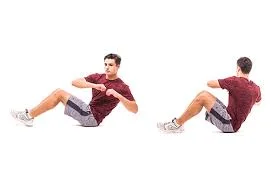
- Sit on the ground, cross your ankles, and drop your upper body to approximately 45 degrees.
- If you are only utilizing your bodyweight, stretch your arms in front, nearly parallel to your thighs. Alternatively, grip a dumbbell, medicine ball, or weight plate.
- Exhale while you rotate your torso to the right as far as you can, keeping your arms straight (bodyweight) or gripping a weight.
- Hold briefly.
- Then return.
- Repeat on the opposite side.
- Try three or four sets of 12 to 18 repetitions.
Bicycle Crunch
The bicycle crunch is one of the great home exercises for strengthening your core. The secret to a great crunch is to activate the abs with attention and control rather than speed.
How to do:
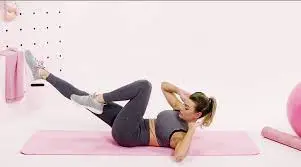
- Lie face up on a floor mat with your hands behind your head to provide mild support.
- Bring your knees to your chest and elevate your shoulder blades off the ground. Don’t tug on your neck.
- Rotate your body to the left, bringing the right elbow nearer (but not touching) the left knee while straightening the opposite leg.
- Pause before swapping sides, rotating your body to the right and bringing your left elbow to your right knee while straightening your left leg.
- Try three or four sets of ten to twelve repetitions.
Standing Side Crunch
Another great at-home or on-the-go exercise that doesn’t involve any equipment or lying down on the floor is the standing side crunch.
How to do:
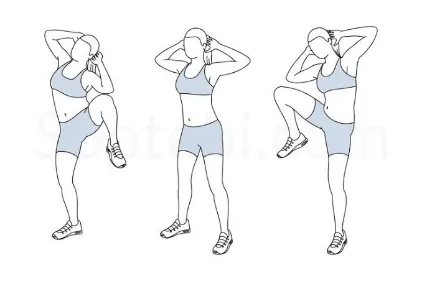
- With both hands behind your head and your elbows pointing to the side, maintain a straight posture.
- Move your weight to your left foot.
- Bring your right knee up and out while bending your body to the right and squeezing your right elbow into your right knee.
- To return to the starting position, lower your right foot and straighten your body.
- Perform 10–16 repetitions before switching sides.
Side Planks
Although the obliques are the primary focus of side planks, the shoulders, glutes, and abdominal muscles are all necessary to help keep the body steady. Because they don’t require a cable machine, pull-up bar, or any other equipment, they’re an excellent workout for developing oblique strength at home.
How to do:
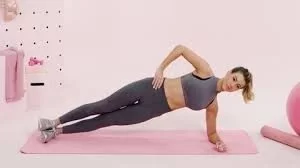
- Lie on your right side, legs outstretched, feet placed on top of each other.
- Prop yourself up on your right forearm, elbow squarely beneath your shoulder.
- Lift your hips off the floor, forming a straight line from your feet to your head, without bending at the hips or letting your shoulders drift forward.
- Maintain your neck length and look forward.
- Hold for 10-60 seconds, breathing continuously.
- Lower to the ground and repeat 2-3 times before changing sides.
Cable Woodchop
The cable woodchop is an amazing approach to work your obliques while using readily adjustable resistance training, allowing you to step up your routine and push beyond plateaus you may have hit with crunches alone.
How to do:
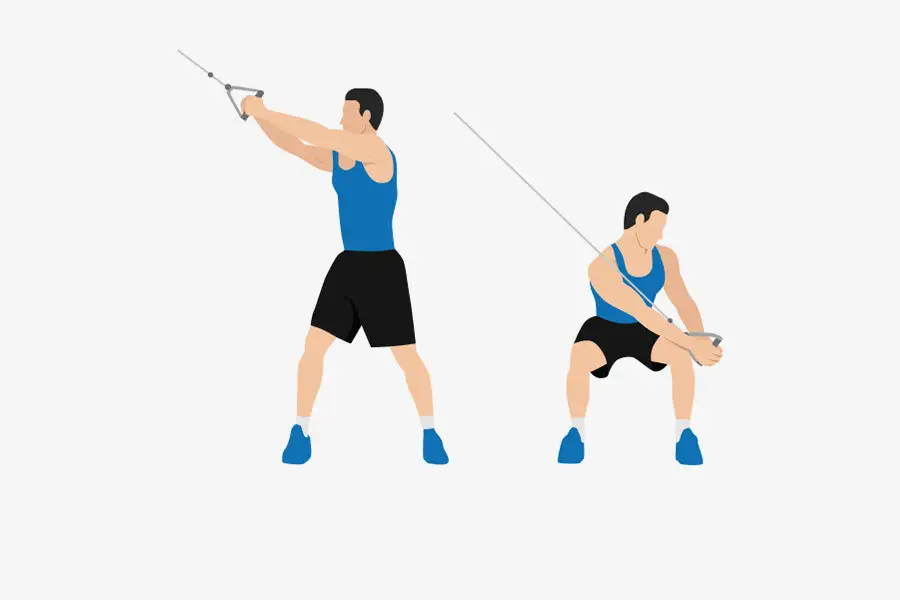
- Attach a rope to your cable machine at the highest pulley position.
- Grab both rope handles and kneel on one knee, shoulders perpendicular to the machine.
- Extend your arms diagonally across your body to the opposite shoulder of the knee you’re on, face straight ahead, and engage your core and abdominal muscles.
- Pull the rope across your body to complete the exercise, keeping your hands at waist level on the other side.
- Slowly return the weight in a smooth movement.
- Perform 8-10 repetitions before switching sides.
Sit-Up Twists
Sit-up twists combine basic sit-ups with rotation. This makes them more oblique-focused than regular sit-ups, which primarily stress forward bending of the abdominal muscles.
How to do:
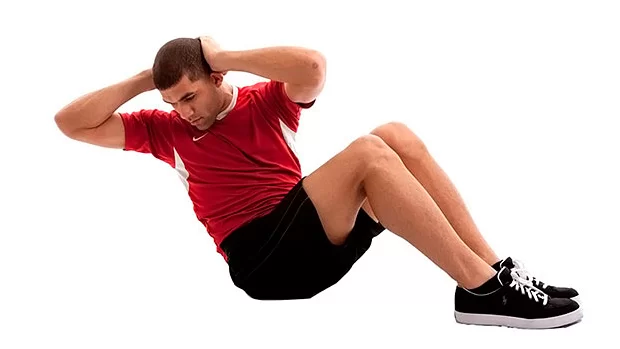
- Lie down on your back, like you would for a sit-up.
- Keep your feet flat and your knees bent.
- Now put your hands behind your head.
- Next, perform a sit-up.
- Just as you are ready to come up completely, rotate your core.
- Now, touch your right elbow to your left knee.
- Lower to resting posture.
- Repeat the sit-up to twist with the alternating elbow.
Trunk Rotations
Trunk rotations teach your body to turn through the torso while maintaining spinal stability. They are helpful since sports, chores, and daily life never follow completely straight lines.
How to do:
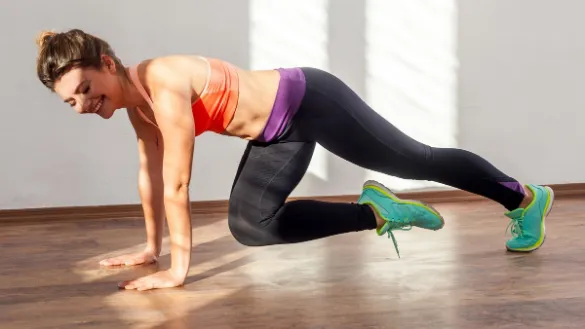
- Start with a high plank stance.
- Now twist your torso.
- Bring your left knee beneath your body, towards your right elbow.
- Return to the resting posture and continue with alternate knees.
Heel Taps
Heel taps are easy to learn, need no equipment, and are effective for developing core control.
How to do:
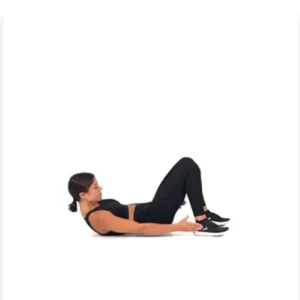
- Lie down on your back, knees bent.
- Keep your arms flat by your sides, palms facing down.
- Use your core to lift your head and shoulders off the ground.
- Now, bend your side and tap your heel with your left hand.
- Continue the action by using alternate hands on each foot.
Farmer’s Carry
A farmer’s carry not only trains your core, but also your lower body. You may even stand on tiptoes and work on your calves at the same time.
How to do:
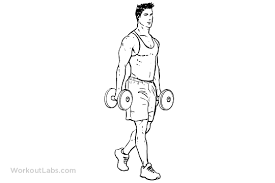
- Hold a dumbbell, kettlebell, or heavy bag in each hand, then stand tall and walk with your ribs packed over your hips. Do not let your torso sway. Your core must stabilize your body with each step.
Hanging Oblique Raise
The hanging oblique raise is a difficult workout that yields outstanding results. By putting your pelvis closer to your ribs, you can better target the lower section of your abs, and the minor twist also works your obliques well.
How to do:
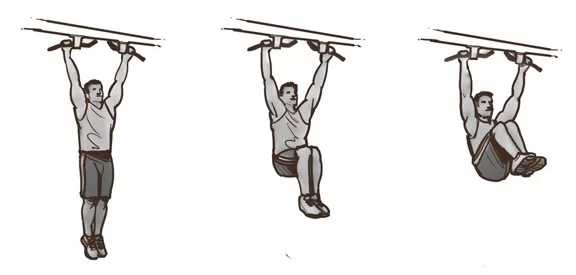
- Grab the pull-up bar and hang with your arms straight.
- Use your latissimus dorsi to elevate your knees.
- Bring your legs up towards your right ribcage while maintaining the tension.
- Slowly return to the starting position while retaining control throughout the range of motion.
- Repeat, bringing the legs up to your left ribs.
- Continue alternating sides for 3-4 sets of 10–12 repetitions.
How to Maintain Core Engagement While Performing Oblique Exercises?
- Imagine someone is going to hit you in the stomach, and tense your muscles as if you were bracing for contact. This is how to brace your core.
- Controlling your breathing is also necessary. Do not hold your breath. Concentrate on calm, steady, controlled breathing.
- Tuck your pelvis, keeping your tummy tucked into your spine to prevent your ribs from flaring out.
- When completing oblique workouts, maintain a small chin tuck and stretch the back of your neck.
- Maintain control throughout the range of motion. If you find yourself shaking so much that you lose form, limit your range of motion until your muscles strengthen and can manage it better.
Common Mistakes to Avoid
- Poor form
- The most prevalent mistake in oblique training is depending on momentum instead of muscle control. Bicycle crunches performed at full speed with minimal rotation, or Russian twists swung lazily from side to side, completely miss the goal. Slow down your movements and feel the lateral contraction with each repetition.
- Skipping the Warm-up
- Cold muscles and connective tissue are far more sensitive to stresses, especially in the torso during rotation. Before starting oblique work, practice at least five minutes of mild aerobic and trunk mobility exercises such as cat-cow, torso rotations, and hip circles. Understanding the principles of strength training and conditioning demonstrates why this stage is never optional.
- Overtraining the core
- Your obliques, like any other muscle, require recovery time. Training them every day without respite will cause tiredness and declining rewards. Most women benefit from two to three focused sessions each week, with appropriate rest time.
- Inconsistency
- Inconsistent training generates Poor outcomes. People who come up consistently week after week exhibit the most noticeable improvements in core strength and posture, as opposed to those who push hard for two weeks and then stop. Building a sustainable habit is more important than any single session.
Who Should Try Oblique Workouts?
Beginners
Oblique training is one of the most beginner-friendly types of strength training. You might begin with simple bodyweight motions on a mat, gradually increasing the intensity as you gain control. When motions are executed slowly, there is no equipment barrier and little likelihood of technique failure.
Women
A prevalent fear is that core training may result in a bulky or too muscular appearance. In practice, oblique training for women promotes functional strength and muscle tone over mass. Women have lower testosterone levels than men; thus, bodyweight and modest resistance exercise cannot cause this type of hypertrophy. You’ll often notice more definition, better posture, and increased strength. Strength training for women tackles these challenges directly and completely.
Older Adults
Oblique strength is fundamentally linked to balance, fall prevention, and spinal stability, all of which grow more important with age. Gentler versions, such as standing side crunches and modified side planks, are suitable beginning points. If you have any pre-existing medical issues, always check with your doctor before starting a new workout routine.
Working Professionals
Postural abnormalities caused by extended sitting are especially common among desk workers, who have a weak core and tight hip flexors. A 15-20 minute oblique-focused workout a few times per week can make a noticeable impact in how your back feels at the end of the day.
How to Structure Your Oblique Training?
Consistency is essential for optimizing outcomes in oblique training. Doing 2-3 ab workouts each week is a decent start, but if you’re really committed, 4 ab days are great. Choose 3-5 exercises that are appropriate for you and your equipment, and perform them on each of your ab days.
The number of reps and sets may vary depending on the workout and your physical condition and strength. On ab training day, you should aim for 3-4 sets of 10-16 repetitions for each exercise.
Furthermore, keep in mind that ab training is more than just exercises and reps. Remember to engage your core and concentrate on appropriate technique rather than the amount of weight you lift. In addition, eating good protein-rich foods (whether animal or plant-based) and staying hydrated throughout your workout are vital.
Conclusion
Building a stronger core goes beyond traditional crunches, and focusing on your oblique muscles is essential for improving stability, balance, posture, and athletic performance. These top 10 oblique strengthening exercises help target the side muscles of your abdomen while also engaging the deeper core for better functional strength.
Perform these exercises consistently with proper form, gradually increase the intensity, and pair them with a balanced fitness routine for the best results. Whether your goal is to enhance sports performance, reduce the risk of back pain, or achieve a stronger, more defined midsection, strengthening your obliques is a valuable step toward a healthier body.
FAQs
Is an oblique workout appropriate for beginners?
Yes. Many oblique workouts don’t require any equipment and may be done at low intensity. Side planks, standing side crunches, and dead bugs are great places to start when it comes to core training.
How often should I perform oblique exercises?
Most people can benefit from two to three sessions each week. This provides a significant training stimulus while providing your muscles enough time to rest and adapt between sessions.
Do I need any equipment for oblique exercises?
No. The bulk of the most effective oblique exercises—side planks, bicycle crunches, dead bugs, standing crunches, and mountain climbers—only require your body weight. When you’re ready to move on, a resistance band or a single light dumbbell can provide variation. You may find additional possibilities in our guide to the best home strength workouts.
How can you strengthen your oblique core?
The finest oblique workouts are the Russian twist, side plank, side plank rotation, bicycle crunch, cable woodchopper, and standing dumbbell side bend. They train all three duties that the obliques perform: rotating your torso, bending it to the side, and preventing rotation to support the spine.
Are obliques the same as ab?
No, abs and obliques are not synonymous, despite the fact that obliques are a subset of the abdominal muscle group. “Abs” typically refers to the rectus abdominis in the front, whereas “obliques” are the muscles on the sides.
References:
- Stable oblique twist. (n.d.). [Video]. Hingehealth. https://www.hingehealth.com/resources/articles/obliques-exercises/
- 10 best oblique exercises for a killer AB workout. (n.d.). SQUATWOLF. https://squatwolf.com/blogs/fitness/10-oblique-exercises-for-toned-abs
- Zehra, S. (2026, July 24). Oblique Workout for Women: 10 best exercises. Habuild Blogs. https://habuild.in/habitology/strength-and-fitness/oblique-workout-for-women/
- Chen, Y. (2025, August 14). 10 best oblique workouts for core strength & Definition. Speediance. https://www.speediance.com/blogs/fitness/best-oblique-workouts?