
Top 7 Home Exercises For Knee Pain
Home exercises for knee pain focus on gentle strengthening and stretching to ease discomfort, improve joint support, and restore mobility. Simple movements like quadriceps activation, hamstring stretches, and controlled range-of-motion exercises help reduce stiffness and promote better knee stability, making daily activities easier and more comfortable.
Introduction
- Knee pain is a very frequent problem that affects people of all ages. Your body weight is supported by the knee, a powerful yet complex joint that enables you to sit, run, walk, and climb stairs. Because the knee joint is utilized so frequently, it is more prone to strain or injury. Knee joint weakness, stiffness, or soreness can make daily tasks more difficult and lower one’s quality of life in general.
- After an accident, pain in the knee may develop gradually over time or suddenly. It might show up as stiffness, sudden pain, or dull aching. There may also be swelling, decreased mobility, or an unsteady sensation.
Causes of Knee Pain
- One of the main reasons for knee pain, particularly in older persons, is arthritis.
- Injury: The muscles or ligaments around the knee may be harmed by a sports injury, fall, or accident.
- Muscle Weakness: Weak leg and thigh muscles (quadriceps) can cause stress and instability in the knee joint.
- Age: As we become older, our joints’ natural strength and flexibility decrease, leading to stiffness and pain.
- Poor posture or overuse: Over time, repeated motions like squatting or jogging, as well as improper leg alignment, can also result in pain.
Significance of Exercise in Treating Knee Pain
- Knee pain may be prevented and reduced in large part via exercise. Although it might seem unnatural, appropriately rotating the knee joints will aid in their recovery. This is how exercise functions:
- Strengthens Muscles: Exercise strengthens the calves, hamstrings, and quadriceps, which support the knee joint without putting undue strain on it.
- Increases Mobility: Mild stretching keeps the knee flexible and elastic, which eventually improves mobility.
- Enhances Blood Flow: Regular exercise helps injured tissue repair more quickly by bringing more oxygen and nutrients to the knee joint with each movement.
- Maintains Healthy Weight: Being active helps maintain a healthy weight and reduces pain since excess body weight puts stress on the knees.
Precautions Before Doing Exercises
- To preserve your joints and achieve the greatest results, make sure to take some measures before beginning any knee pain exercises. Being well-prepared ensures that the exercises are successful and helps avoid injuries.
Importance of Warming Up
- To warm up the muscles around your knee, be sure to do a little warm-up before beginning any knee exercises. Your muscles get more flexible, your joints become warmer, and your blood flow to your muscles is improved as you warm up. Simple exercises like marching in place, light leg swings, or riding a stationary bike at a moderate speed for a few minutes are beneficial. An effective warm-up will lessen stiffness and the risk of injury or strain.
Avoid exercising when in pain.
- Ideally, exercise should lessen pain rather than increase it. It’s common to have slight muscular strain or stretching feelings. When you experience painful sensations like a sharp ache, swelling, or a catching sensation in your knee, it’s time to stop.
- Avoid pushing through uncomfortable sensations, as this might worsen the pain. Only move within a comfortable range of motion and at a reasonable pace.
When to Quit Working Out and Get Physiotherapy
- Stop exercising if you have worsening pain, swelling, or trouble walking or bending your knee. These are seen by an expert and may indicate inflammation or damage. A physiotherapist would be consulted if:
- You are recovering from surgery or an injury, and you have been performing exercises at home to relieve your severe or ongoing knee pain, but the pain only becomes worse after a few days.
- A physiotherapist can guide you through customized exercises and make sure your movements are both safe and appropriate for your circumstances.
7 Knee Pain Exercises You Can Do at Home
- These are the top seven home exercises for knee pain that can help you become more flexible, strengthen your legs, and lessen knee pain. The exercises are simple, efficient, and don’t need any specialised equipment.
Quadriceps Setting (Quad Strengthening)
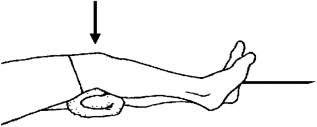
The goal is to develop the front thigh muscles, or quadriceps, in order to support and stabilize the knee joint.
- Steps: Keep your legs straight.
- Gently push the rear of your knee towards the floor to tighten the muscles in the front of your thigh.
- Hold for five to ten seconds, then let go.
- For each leg, repeat ten to fifteen times.
Straight Leg Raise
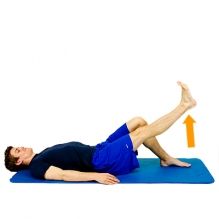
The goal of this exercise is to strengthen the hip flexor and quadriceps without bending the knee.
- Steps: With one leg bent and the other straight, lie on your back.
- Tighten the thigh muscles of the straight leg
- Raise the leg 12 to 18 inches off the ground slowly.
- After five seconds of holding, carefully lower the leg.
- Repeat ten to fifteen times for each leg.
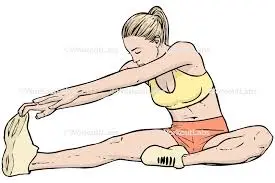
The goal is to reduce knee stiffness and increase back leg flexibility.
- Steps: The first step is to sit on the floor with one leg bent and the other straight.
- Lean your hips gently in the direction of your straight leg.
- Hold for 15 to 30 seconds while maintaining a straight back.
- Repeat two to three times on each leg while relaxing.
Wall Sit (Static Squat)
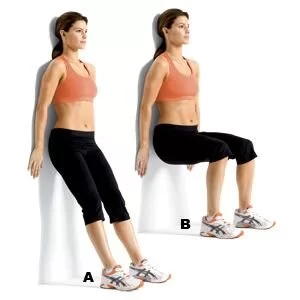
Strengthening the quadriceps, hamstrings, and gluteal muscles is the goal.
- Steps: Place your feet approximately two feet from a wall and stand with your back against it.
- As if you were sitting in an imaginary chair, slowly slide down the wall until your knees are bent to a 90° angle.
- Maintain the posture for ten to twenty seconds.
- Make a careful return to the starting position.
- Do this five to ten times.
Clamshell Exercise
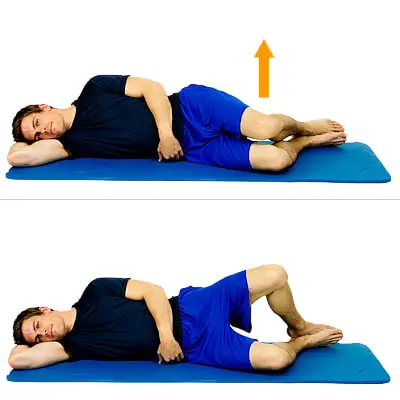
The goal is to assist knee alignment by strengthening the hip and glute muscles.
- Steps: With your feet together and your knees bent, lie on your side.
- Raise your upper knee as high as it feels comfortable while keeping your feet touching.
- After three to five seconds of holding, lower yourself back down.
- On each side, perform 10–15 repetitions.
Calf Raises
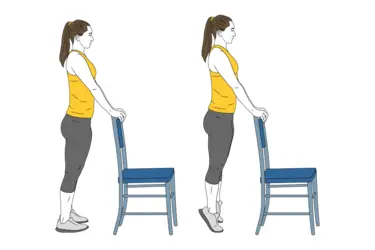
This exercise aims to build stronger calf muscles, which support the ankle and knee.
- Steps: Hold a chair or wall for balance and place your feet shoulder-width apart.
- Raise yourself as high as you can on your toes slowly.
- After three to five seconds of holding this position, completely lower yourself back down.
- Do the calf lifts ten to fifteen times.
Common Mistakes to Avoid
Overexertion
- If you exercise too much too soon, you face the danger of damaging rather than improving your knees. Swelling, stiffness, or damage are likely to occur if you push yourself beyond your comfort zone or overwork a particular muscle group.
Doing Exercise on Hard Surfaces
- Exercises for the knees that are performed on a hard floor or uneven surface place additional strain on the joints and may result in pain or bruises.
Ignoring posture or alignment
- Incorrect alignment or bad posture can reduce the effectiveness of exercises and put more pressure on your lower back, hips, or knees.
Benefits of Regular Knee Exercises
Pain Reduction
By strengthening the muscles surrounding the joint, knee exercises help to relieve a significant amount of strain on the knee. This reduces pain, inflammation, and tension. Frequent movement also improves blood flow, which brings nutrients and oxygen to the region to aid in healing. Over time, you might have reduced stiffness and pain when doing daily tasks.
Increased Mobility and Flexibility
The muscles and ligaments around the knee remain flexible with mild stretching and strengthening activities. Your range of motion is improved, which facilitates bending, walking, and climbing stairs. Increased flexibility makes it possible for the knee joint to move more naturally and fluidly while also reducing stiffness.
Better Support for the Knee Muscles
Strong muscles act as the knee joint’s natural support. Exercises that strengthen the quadriceps, hamstrings, and hip muscles that support the knee include clamshells, wall sits, and straight leg lifts. The knee can handle daily tasks more skillfully and will be less prone to strain or damage with improved muscular support.
When to Avoid These Exercises
Although knee exercises are generally safe and helpful, there may be instances in which you should avoid performing them in order to prevent an injury or other problem. Active exercise is crucial, but so is listening to your body to know when to take a break.
In the case of acute injury or swelling
- Exercise should be avoided until the inflammation goes down if your knee is red, swollen, or very painful after an accident. Exercise under these circumstances might worsen tissue injury and prolong the healing process.
In Situations of Severe Pain or After Surgery Without Advice
- Avoid doing any exercises by yourself if you are recovering from knee surgery or if you are feeling intense or sudden pain when moving. Improper movement technique might prevent your healing process or lead to recovery issues.
FAQs
Can I perform knee exercises daily?
Yes, you may perform mild strengthening and stretching activities every day as long as they don’t cause pain. Give your knees a day off to relax, though, if they are fatigued or hurting. Pay attention to your body at all times.
Can knee pain be reduced by walking?
It is true that walking slowly to moderately helps increase blood circulation and maintain knee joint flexibility. If you experience joint pain, stay away from hard surfaces and steep slopes.
Should I apply ice or heat after knee exercises?
After exercising, apply an ice pack for ten to fifteen minutes if you have slight pain or swelling. A little heat might help relax the muscles in your knee if it feels tight but not inflamed.
Can I climb stairs if I have knee pain?
If the pain is minor, you can climb stairs, but don’t do it too often or too rapidly. To lessen strain on the knees, take cautious steps and use the railing for support.
Do knee exercises improve stability and balance?
Indeed, a variety of strengthening exercises enhances muscular stability and control, which lowers the chance of falls and facilitates daily tasks like rising up from a chair or walking.
References
- Knee pain – Symptoms and causes. (n.d.). Mayo Clinic. https://www.mayoclinic.org/diseases-conditions/knee-pain/symptoms-causes/syc-20350849
- Bupparenoo P. (2025, October 14). Knee pain: Symptoms, Causes, Treatment. MedPark Hospital. https://www.medparkhospital.com/ja-JP/disease-and-treatment/knee-pain
- Wtadmin. (2024, December 29). 5 best exercises for knee pain relief at Home | Strengthen your knees. Painflame. https://www.painflame.com/best-knee-pain-exercises/
- Center, S. M. (2025, June 18). Knee Strengthening Exercises for Knee Pain |100% results. Sunway Medical Center. https://sunwaymedicalcentre.in/knee-strengthening-exercises-for-knee-pain/
.