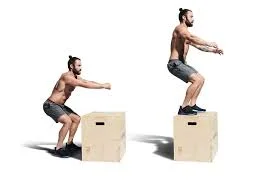
Box Jump Exercise
Introduction
A box jump involves jumping from the floor to a box or other elevated object. They are a great method to build your lower body strength, increase your explosive power, raise your vertical jump, and generally boost your athletic performance.
You should be aware that box jumps are a more difficult workout and should be done carefully. You should be able to perform box jumps with a low step or box once you have a solid foundation of leg strength and have practiced more beginner-friendly jumping routines.
Strength- or power-focused exercises can include box jumps, which should be included at the start of the routine following a thorough warm-up. This makes the exercise safer to do by preventing the muscles they target from becoming overly tired.
Box Jump Exercise Video
The muscle worked during the box jump
- Quadriceps
- Gluteal Muscles
- Hamstring Muscles
- Calf Muscles
Benefits
Increases Explosive Power
The fast-twitch muscle fibers that produce explosive movements are the main goal of box jumps. They are, therefore, a great workout for athletes or anybody wishing to increase their strength and quickness.
Boosts Cardiovascular Health
Box jumps are a high-intensity exercise that strengthens your lower body and increases your heart rate.
Enhances Coordination and Balance
Over time, improving balance and coordination is facilitated by the accuracy and control needed to jump onto a box.
Burns Fat and Calories
Box jumps are a calorie-burning workout that works several muscle groups at once, which makes it a great way to lose weight.
Enhances Sports Performance
This plyometric exercise enhances overall athletic performance by simulating the explosive movements needed in a variety of sports, including track & field, basketball, and soccer.
Minimum equipment required
Box jumps are a simple addition to any exercise routine, whether at home or at the gym, because all you need is a stable box or platform.
How to Do Box Jumps?
A commercially supplied plyo box, a solid bench, a chair, or another stable raised platform are all you need to do box jumps. Before attempting to progress to taller boxes, if you’re just starting out, feel familiar with a smaller box or surface. Make sure your shoes provide the right amount of stability, support, and cushioning.
To get used to the action, it’s important to start with a low box. Depending on your strength and confidence level, choose a box that is between 12 and 24 inches tall.
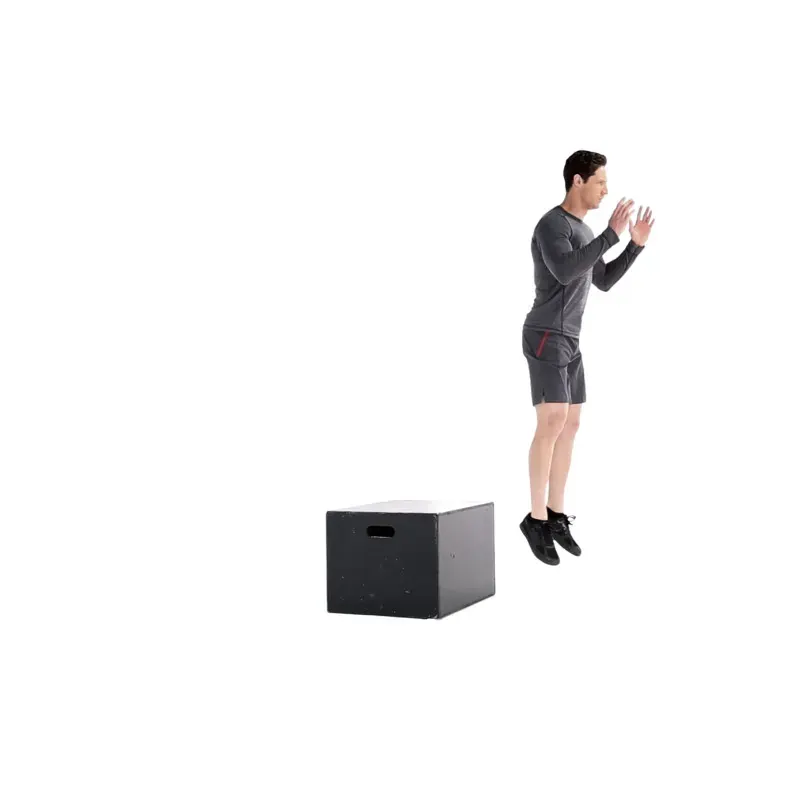
In principle, the activity itself is straightforward. The entire objective is to simply stand facing the box, jump smoothly from the floor to the top of the box, and land both feet simultaneously. Even though the short jump may seem easy, it’s crucial to acquire the correct form as you learn the exercise, since it will help you execute the exercise safely and successfully as your box jump height increases.
For box jumps to be performed correctly, the lower body and core must be heavily engaged, and coordination and focus are also necessary.
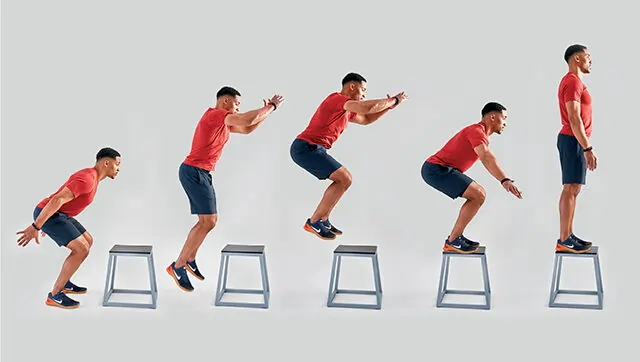
- Place your feet about six inches from the box’s side as you face it. Your knees and hips should be slightly bent in an athletic posture, and your feet should be around hip-distance apart.
- As you smoothly move your arms behind you, bend your knees and push your hips back.
- Jump as high as you can with your jump by exploding into the balls of your feet, springing straight into the air, and swinging your arms forward and upward while completely extending your knees and hips.
- Bend your hips and knees to bring them forward at the peak of your jump so that you may land on top of the box.
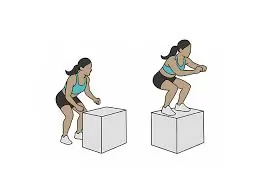
- Land both feet simultaneously on top of the box, starting with the heels of your feet and ending with your heels. Try to do this “softly,” letting your hips and knees bow organically to lessen the impact of the landing.
- When standing on top of the box, make sure your feet are about hip-distance apart.
- Carefully step out of the box, without jumping, and then start over for the following repetition.
Can you add weight?
A box jump, which is already a difficult maneuver, will become significantly more difficult when weight is added. If a standard box jump makes you feel sturdy, think about including:
A weighted vest or ankle weights: The mechanics of the box jump action will remain the same if you secure weight to yourself, making it a suitable progression from a standard box jump.
A dumbbell in each hand: Jump into this technique while holding a dumbbell in each hand.
A kettlebell: After dumbbells, perform the box jump while holding a kettlebell at chest level with both hands.
Variations:
Lateral Box Jumps:
Instead of approaching the box squarely, jump laterally onto it. This variant improves lateral stability by using your oblique muscles.
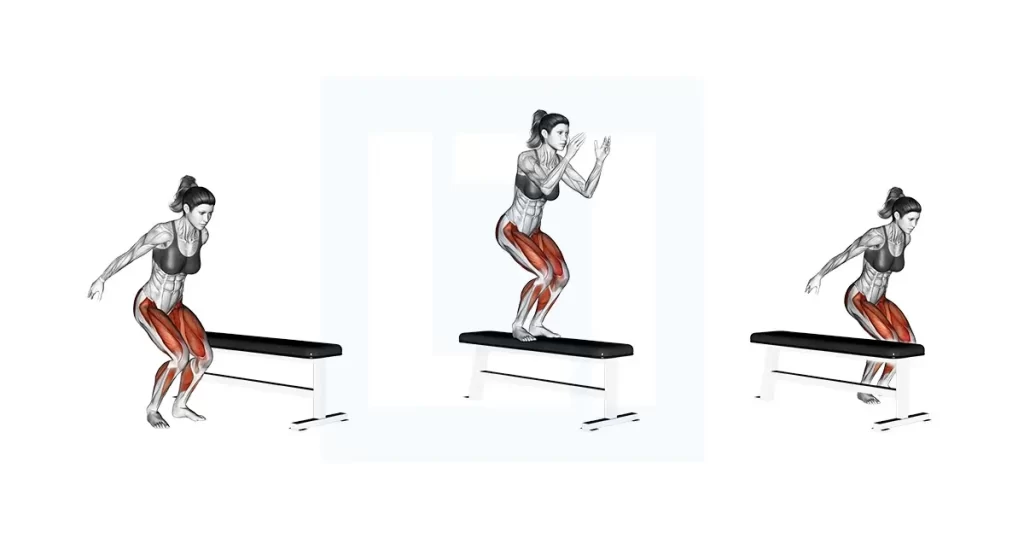
Single-Leg Box Jumps:
Use one leg to execute the jump, switching sides. In addition to improving unilateral strength and balance, this ups the ante.
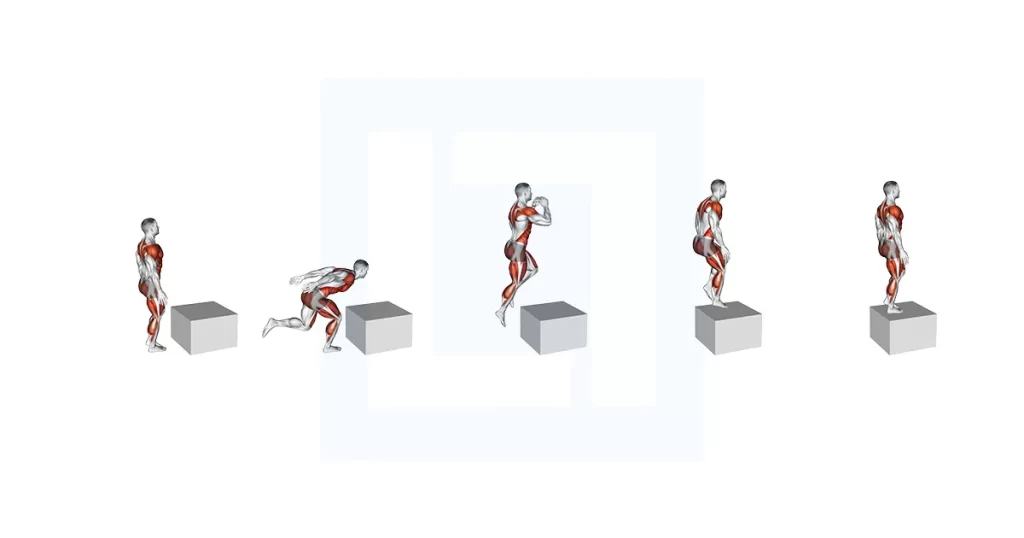
Weighted Box Jumps:
To increase difficulty and develop strength, use light dumbbells or a weighted vest.
Depth Jumps:
Begin on the box, jump to the ground, and then return to the box right away. Reactive strength may be greatly increased with this variant.
High Box Jumps:
Take on a taller box as a challenge. To avoid injury, make sure your form doesn’t change.
Common Mistakes
Choosing an Excessively High Box
One of the most frequent errors is to begin with a box that is too high. First of all, if you are unable to complete the workout, it is an excellent method to lose confidence. Additionally, you run the risk of tripping or kicking the box, falling, or scraping your shins.
In order to feel comfortable and ensure that you are performing the exercise correctly, start with a short platform, such as 12 to 24 inches, if you have never done it before. If you think the jumps are too simple, you may simply level up to the next box height.
Jumping Off the Box
Jumping off the box to reset or rebound for their next repetition is a pretty typical behavior. However, it’s crucial to realize that, although it might appear simpler than jumping up onto a high platform, jumping off a raised surface really puts a lot of strain on your joints, and if you’re not careful, this is when injuries are most likely to happen.
It’s still a good idea to be cautious and step off the box slowly rather than jump off, even if you’ve done a lot of plyometric training and feel comfortable performing “depth jumps” (jumping from an elevated surface). This is true for everyone, but it’s particularly true for novices and those moving up to greater jumps.
Inadequate Landing Foot or Knee Alignment
The key to avoiding injury, especially to the knee, is landing the box jump correctly. Common errors include landing with one foot ahead of the other, landing with both feet together, or landing with knee valgus, which is the “caving in” of the knees toward one another. To check for undesired knee movement, do the exercise in front of a mirror or have a friend watch you.
Jumping Without Complete Hip Extension
Increasing vertical jumping height and explosive strength are two of the main objectives of box jumps. However, in order to accomplish these two objectives successfully, you must jump with complete hip extension, launching yourself as high as you can before bending your hips and pulling your knees forward to make the landing. People frequently make the error of “hopping” from point A to point B, foregoing the vertical jump with complete hip extension, and just acquiring enough air to draw the knees forward in time for landing. To check if you’re feeling full hip extension as you jump, try performing the exercise in front of a mirror.
Performing Box Jumps After a Workout
For box jumps to work best, you need new legs. You won’t be able to do box jumps to your full potential if you put them off until the conclusion of your exercise, since you will be exhausted. As a result, you won’t experience the kind of gradual development you’re hoping for.
Safety and Precautions
- Add lower-key plyometrics to your warm-up for a few weeks before you begin, such as skipping exercises or jumping rope. Before you try box jumps, these workouts will help your muscles become used to higher-impact, power-producing motions.
- It’s essential to wear appropriate sportswear, such as a sports bra for large breasts, to assist in reducing bounce, just like with most high-impact workouts.
- Additionally, as said before, begin with a low box. It’s a safer choice for beginners and lessens the chance of suffering from a variety of possible ailments, such as ACL tears, falls, and shin scrapes.
- Box jumps are normally safe for athletes in good shape, but wait to try them until your back discomfort or lower-extremity issues have subsided.
- Women who are pregnant should see a doctor before trying box jumps. If you have been doing box jumps and exercising frequently while pregnant, your doctor may give you the all-clear to continue in the early stages of your pregnancy, but will likely advise you to stop as your pregnancy goes on.
- If you haven’t been working out or doing box jumps while pregnant, you should definitely wait until after the baby is born and your body has had some time to recover before doing this activity.
- If you’re concentrating on form and peak performance, limit the number of repetitions to two or three sets of three to five reps.
Conclusion:
Box jumps are an intense, full-body workout with several advantages, such as increasing explosive strength and burning calories. You will be well on your way to reaching your fitness and health objectives if you use the right form, include it in your workout, and vary it up to keep things interesting.
Don’t hesitate; begin including box jumps in your training regimen right now to reap their full-body advantages and advance your level of fitness.
FAQs
What are the benefits of box jumps?
Box jumps also work your core muscles since they involve balance, stability, and control to ensure a safe and proper landing, while swinging your arms for momentum might work certain upper-body muscles.
Which workouts enhance box jumps?
Box jumps may be improved by strengthening your legs, especially your glutes. You may increase your jump strength by doing hip thrusters and other hip hinge exercises, such as deadlifts. Also, squats are fantastic. Do calf-strengthening activities as well, such as jump rope and calf lifts.
Which muscles are used in box jumps?
As you bend into a squat, jump high into the air, land gently on the box in a squat, and then step down one foot at a time, box jumps are essentially a lower-body workout that works your quadriceps, calves, hamstrings, and glutes.
Do box jumps help to strengthen your legs?
The box jump helps build balance and core strength, but it also works the largest muscular groups in the legs, including the quadriceps and glutes. You will need to rely on strong core abdominal muscle activation to ensure that you land gently after finishing the jump-up.
What is the ideal duration for box jumps?
Most of the time, you should use the following approach to practice box jumps using a box that is 24 to 30 inches high. For power improvements, three to five sets of three to five repetitions are a decent general recommendation; however, you should stop each set as soon as you start to slow down or lose control of your landing.
How high can someone box jump?
Box Height: 24 to 32 inches. High intensity/near maximum effort for every jump, 1-2 times per week. To truly highlight the power production for each jump, the reps are lower.
Do box jumps make you faster?
Box jump is a plyometric exercise that has several advantages. Your customer gains increased lower-body strength as a result. Their vertical leap is enhanced, and their explosive power and speed are increased. A calorie-burning aerobic exercise regimen can also include box jumping if you perform enough repetitions.
References:
- Ascm-Cep, L. W. M. (2023, June 16). How to do box jumps: proper form, variations, and common mistakes. Verywell Fit. https://www.verywellfit.com/how-to-do-box-jumps-4588131
- https://www.netmeds.com/c/health-library/post/box-jumps-full-body-workout-benefits-variations-and-step-by-step-guide-to-mastering-them?srsltid=AfmBOorFXmVZEagQUWGsltLcE5-LOuG4rMMsfan6XOTgkrSelhC5OHqW
- Davis, N. (2020, July 24). How to do box jumps the right way — and why you should. Healthline. https://www.healthline.com/health/fitness-exercise/box-jump#takeaway