
Dead Bug Exercise
Introduction
- The Dead Bug Exercise works the deep abdominal muscles while supporting the lower back, making it a simple yet very powerful core training exercise. The Dead Bug is a popular exercise in physiotherapy, fitness training, and rehabilitation because it targets the core stability system and places an emphasis on coordination and controlled movement, unlike crunches or sit-ups, which frequently cause discomfort in the spine.
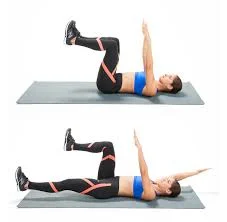
- The Dead Bug involves lying on your back with your arms and legs raised, then slowly and deliberately moving the opposite arm and leg while keeping your lower back pressed into the mat.
What gives it the name “Dead Bug”?
- It gets its name from the position’s appearance. You look like a bug that has been flipped over and is waving its legs in the air while you are lying flat on your back with your limbs up.
- The name ‘Dead Bug’ is amusing and easy to remember. but don’t let the name trick you. Although it looks simple, many people find it challenging. Still, it is one of the best exercises for building a strong and stable core.
Dead Bug Exercise Video
How to Perform the Dead Bug Exercise
- Place yourself on an exercise mat, lying on your back.
- Your thighs should be pointing straight up, perpendicular to the floor, and your shins should be parallel to the floor as you bend your knees to a 90-degree angle.
- You should raise your arms straight over your shoulders in the air.
- The lower back should be gently pressed onto the floor while the head is relaxed.
- Lower your left leg toward the floor while you slowly raise your fully extended right arm overhead.
- Don’t allow your lower back to lift off the mat as you move gently and deliberately.
- Lower your leg and arm back to the beginning position.
- Repeat with the left arm and right leg, or the opposite arm and leg.
- Keep switching sides until you complete the desired number of repetitions.
- As you relax into the starting position, take a deep, calm breath.
- As you extend your arm and opposite leg, let it out.
- As you step back into the starting position, take a deep breath.
- Breathing should be steady and slow throughout.
Progression
- Start with 2 sets of 5–8 reps per side, and gradually increase to 10–12 as you gain control.
- Once you’ve mastered the dead bug and can easily do a few sets, you can progress to more advanced variations. Alternatively, you may create a lengthier program with progressively harder versions.
Variations
To make the dead bug exercise more or less difficult, there are a number of changes and variants.
Among the variations are:
- Heel tapping. Lower one foot at a time while maintaining a bent knee, then tap the floor with your heel.
- Extensions of the legs. Hover your leg above the floor by pressing one foot away from your body.
- Lifting your legs. Lower one leg at a time after straightening your legs so that your feet face the ceiling.
- Palms up against the wall. With your legs over your hips, raise your arms upward and push your hands on the wall. This is excellent for beginners.
- To make it more challenging: make use of dumbbells, kettlebells, or ankle weights.
Lower your legs and arms simultaneously. - For added benefit, you can gently contract your pelvic floor muscles (Kegels) while performing the exercise.
Benefits of Dead Bug Exercise
- Your back, spine, and core muscles may all be strengthened and stabilized with the dead bug exercise. This helps prevent and treat low back discomfort while also improving your posture.
- Additionally, your coordination and balance will improve. You could discover that you have the stability and strength to move more effectively when engaging in everyday and sporting activities.
- Experts of all stripes agree that the dead bug has advantages. It is among the workouts that are advised for:
- Older adults with arthritis who want to improve muscle function.
- Chronic pain sufferers.
- Swimmers are looking to enhance their body alignment.
- Patients with Parkinson’s disease, as it helps with daily tasks and reduces the risk of falls.
Common Mistakes to Avoid in Dead Bug
- The lumbar spine should be gently pressed into the floor, not arched.
- Do not rush through the activity; instead, move the Dead Bug in a deliberate, steady motion. Holding your breath: Breathing activates the muscles in your core.
- Letting your arms and legs go too low: only extend them as far as you can keep your back in contact with the ground.
- Strain on the neck
- Moving without using the core
“Sit-ups vs. Dead Bugs”
- Sit-ups and dead bugs are very different. Sit-ups mainly target the rectus abdominis with quick contractions, while Dead Bugs emphasize controlled, slow core activation.
- The dead bug position, which involves lying on your back, is a great starting point for many people learning to do proper core exercises while maintaining good spine posture.” For instance, those who frequently arch their lower backs during core workouts (an anterior pelvic tilt) might utilize the floor as feedback.
Dead Bug Exercise in Physiotherapy and Rehab
- Because it strengthens the deep core while reducing excessive compression stresses on the spinal segments, the dead bug exercise is utilized extensively in physiotherapy and rehabilitation training and goes beyond simple fitness.
In post-operative rehabilitation,
Regaining core strength is crucial for healing following surgeries such as stomach surgery, spinal stabilization, or herniated disc repair.
- Dead Bug is a low-impact, safe method of activating the muscles that stabilize the spine and core.
- Dead Bug is essential for helping patients restore stability and coordination without putting undue strain on their mending tissues.
- Physiotherapists may recommend the dead bug exercise as a first step in rehabilitation before moving on to more difficult exercises.
In Programs for Disc Bulge, Sciatica, and Posture Correction
- Disc Bulge & Sciatica: dead bug aims to reduce excessive pressure on discs and nerves by strengthening the transverse abdominis and spinal stabilizers. The frequency and intensity of discomfort can be reduced with optimal core stability.
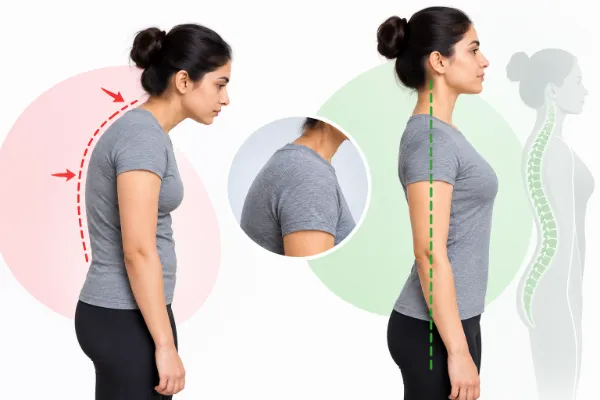
- Posture Correction: A weak core and hyperactive back muscles are the cause of many posture problems. Dead bug teaches the body to use the core correctly, which limits back slouching and arching and strengthens a neutral spine.
- Rehabilitation programs: To assist in creating a comprehensive core stability training regimen, the dead bug is frequently combined with other physiotherapy-based exercises like bridges, bird-dogs, and planks.
Conclusion
- The dead bug exercise helps build core strength, which can aid with low back problems and general stability. It can be performed alone, in conjunction with other exercises, or as a component of a core building regimen.
- Finding the workouts that suit your demands is made simple by its extensive range of adjustments. Additionally, you can avoid boredom by varying your routine. It’s simple to perform alone or in conjunction with your regular exercise regimen at home.
- Before beginning a fitness regimen, always consult your doctor, particularly if you are new to fitness or have any health issues.
FAQs
Can beginners perform the Dead Bug every day?
Yes. The dead bug is a low-impact, spine-friendly exercise that beginners can safely perform daily.
How long does it take to see results?
Improved stability of the core in two to three weeks. Depending on lifestyle, body fat percentage, and general fitness, it could take longer to see noticeable muscle tone.
Does it lessen fat around the belly?
Not exactly. However, it doesn’t specifically burn belly fat; the Dead Bug exercise tones and strengthens the core muscles. Strength training, cardio, regular exercise, and a balanced diet all contribute to fat loss.
Can people with back pain safely use Dead Bug?
Yes, usually. Because it tones the core without straining the back, the dead bug is known as healthy for the spine.
How many sets and repetitions should I do?
Beginners can begin with two sets of five to eight repetitions on each side. Aim for three sets of 10–12 repetitions per side as you advance.
Should I keep my head up or down on the ground?
Keep your head resting comfortably on the ground. For beginners in particular, lifting it can result in neck strain.
References
- Ascm-Cep, L. W. M. (2024, May 28). Dead Bug exercise: techniques and variations. Verywell Fit. https://www.verywellfit.com/how-to-do-the-dead-bug-exercise-4685852
- Cronkleton, E. (2024, January 25). How to do the Dead Bug exercise. Healthline. https://www.healthline.com/health/exercise-fitness/dead-bug-exercise
- Neudecker, K. (2024a, August 15). How to do the Dead Bug exercise to hit every inch of your core. Men’s Health. https://www.menshealth.com/uk/how-tos/a61885316/dead-bug-exercise/
- 3Fit, C. (2022, July 25). Dead Bug Exercise: Step-By-Step Guide, Benefits, Techniques & More. blog.cult.fit. https://blog.cult.fit/articles/dead-bug-exercise-meaning-benefits-techniques-and-more
- Vkim, & Vkim. (2022, June 9). Get Movin’ in all the Right Directions by Playin’ ‘Dead’ Muscle & Fitness. https://www.muscleandfitness.com/workouts/full-body-exercises/the-deadbug-exercise-how-to-benefits-variations





3 Comments