
Orthopaedic Doctor or Physiotherapist? Understanding Who to Consult for Joint and Muscle Pain
The short answer: See a doctor first if your pain follows a fall or injury, comes with swelling, numbness, weakness, or fever, keeps coming back, or has lasted more than a few days. Start with a physiotherapist if it is a mild strain, stiffness from desk work or posture, or a problem a doctor has already diagnosed and advised rehabilitation for. If you can’t tell which one applies, a short talk with a doctor is the safest first step. In many cases, you will end up needing both.
A knee that aches on the stairs, a shoulder that has been stiff for two weeks, a lower back that complains after a long day at the desk: it is hard to know who to see.
Many people simply guess, and sometimes they guess wrong. They end up doing weeks of exercises when they actually needed a scan. Others rush to a bone specialist when a few simple sessions of physiotherapy would have done the job.
Here is how to tell who you need, and when, starting with what each of them does.
What does an orthopaedic doctor do?
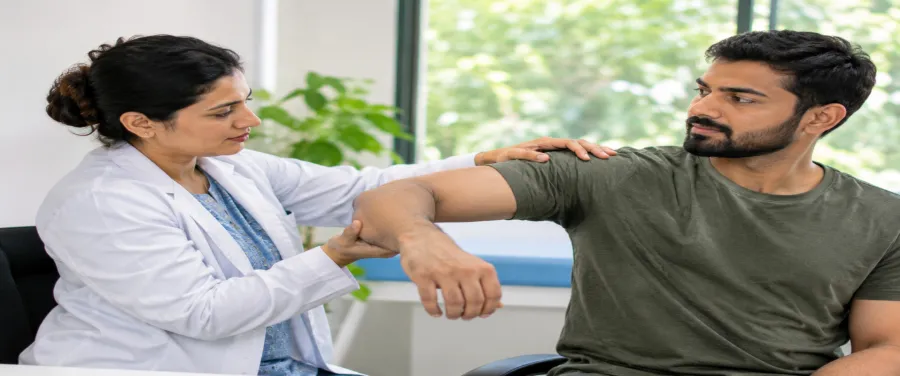
An orthopaedic doctor is a medical doctor who specialises in bones, joints, ligaments, tendons and muscles. They examine you, ask for tests like an X-ray, ultrasound or MRI when needed, find out what is wrong, and plan the treatment. That may be medicines, an injection, a brace, a referral to physiotherapy, or surgery.
Many orthopaedic doctors focus on one area, such as the knee, hip, shoulder or spine. An orthopaedic surgeon is the best choice once you have a clear diagnosis, especially if a joint replacement or other surgery is being considered.
When the cause of your pain is unclear, it is best to start with a general or sports medicine doctor who can examine you, order an X-ray and point you in the right direction.
What does a physiotherapist do?
A physiotherapist is trained in movement and recovery. They use exercises, stretching, hands-on techniques and posture advice to reduce pain, bring back movement and rebuild strength. They also play an important role in restoring function and mobility following an injury or surgical procedure.
A simple way to remember the difference: The doctor works out what is wrong and whether you need medicines or surgery. The physiotherapist helps your body recover and teaches you how to keep the problem from coming back.
See a doctor first
Some situations call for a proper medical examination before any exercise starts.
- You have severe pain after a fall or injury, you can’t walk or put weight on the joint, or the joint looks out of place. The NHS treats these as emergencies, along with tingling or loss of feeling around the joint after an injury.
- The joint is hot, red and swollen, or you have a fever or feel generally unwell. This needs urgent medical attention.
- The pain has lasted more than three days, or comes with swelling or bruising, or you can hardly move the joint.
- The pain keeps coming back.
- You have tried home care for two weeks, and it has not helped.
- You feel numbness, tingling, or weakness in an arm or leg.
In case of morning stiffness
If your joints stay stiff for more than 30 minutes after you wake up, it is advised to see a doctor. This kind of stiffness, especially with swelling in several joints, pain that moves from joint to joint, or unusual tiredness, can point to an inflammatory condition such as rheumatoid arthritis.
Under these circumstances, consulting a rheumatologist may be the most appropriate choice. Orthopaedics mostly deals with the surgical side of bones and joints, while rheumatology focuses on non-surgical, medical treatment and looks for the inflammation or immune problem behind the pain. Only a doctor can confirm a diagnosis, so don’t try to label it yourself.
In case of back pain
Many people seek medical advice and treatment because of persistent or recurring back discomfort. The good news is that most back pain improves within 6 to 8 weeks and is not caused by a serious illness. Gentle movement and walking work better than bed rest, and physiotherapy exercises can strengthen and support the back.
There are warning signs that should never be ignored. Go to an emergency department if you lose control of your bladder or bowels, have numbness around your groin or inner thighs, feel weakness or numbness in both legs, or have sudden severe back pain with leg symptoms. Also get checked promptly if back pain comes with fever, unexplained weight loss, or a past history of cancer.
When physiotherapy is a good place to start
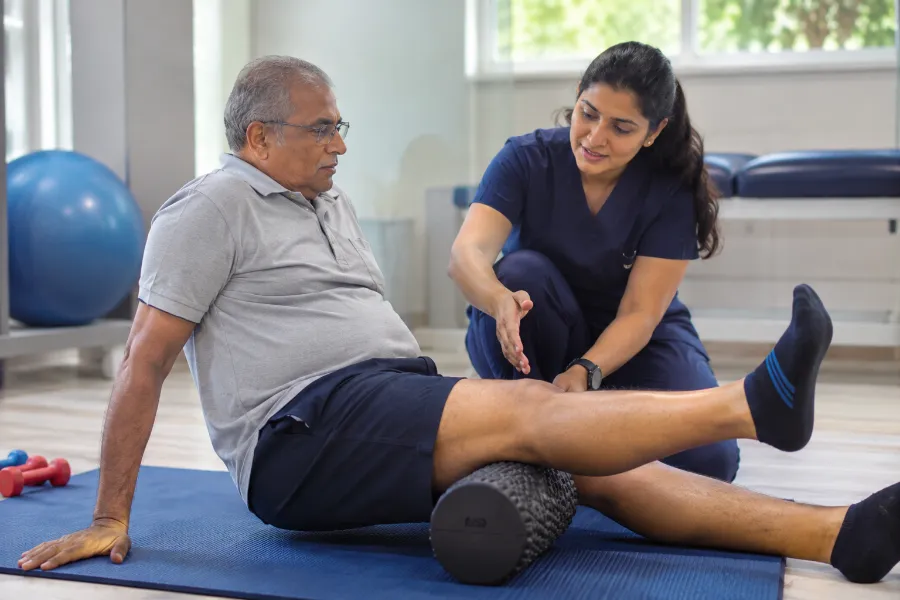
Physiotherapy often makes sense when:
- You have a mild muscle strain after a workout, lifting something heavy or playing a sport.
- Prolonged desk work has left you with neck stiffness or discomfort around your shoulders.
- A doctor has already diagnosed the problem and advised rehabilitation, for example after a fracture, a ligament sprain or a knee replacement.
- You want to build strength to stop the same pain from returning.
For a fresh mild strain, the P.R.I.C.E. method is suggested in the first few days:
- P – Protect the area
- R – Rest from painful activity
- I – Ice for 15 to 20 minutes every 2 to 3 hours (with a thin cloth between the ice and your skin)
- C – Compress with an elastic bandage that is snug but not tight
- E – Elevate the area above heart level. Light movement is fine if it does not make the pain worse.
If the pain is not easing after a week or two, or it is getting worse, stop self-managing and see a doctor.
It is teamwork
It is rarely a choice of one or the other. A common path looks like this: the doctor examines you, orders an X-ray or MRI, finds the cause and starts treatment. Then the physiotherapist takes over to restore movement and strength, while the doctor checks your progress at follow-up visits. After surgery, too, recovery usually depends on both.
A quick guide:
| Situation | What should be done |
| Injury, fall, or a joint that looks out of shape | Doctor (emergency care if you can’t bear weight) |
| Hot, red, swollen joint with fever | Doctor, urgently |
| Stiffness over 30 minutes every morning, several joints swollen | Doctor, who may refer you to a rheumatologist |
| Pain lasting more than a few days with swelling | Orthopaedic or general doctor |
| Mild strain after exercise or lifting | Home care first, then physiotherapy |
| Aches from posture or desk work | Physiotherapy, after a doctor has ruled out a bigger cause |
| Recovering after a fracture or surgery | Physiotherapy, as advised by your doctor |
| Numbness, tingling or weakness | Doctor |
Not sure? Begin with a conversation.
If you can’t tell which category your pain falls into, a short talk with a doctor is the safest first step. In one consultation, a doctor can listen to your history, tell you whether you need a scan, physiotherapy or an orthopaedic specialist, and warn you if something needs urgent attention.
You can go to your family doctor, visit a clinic or hospital, or use a platform such as MediBuddy to book a doctor consultation, whichever feels right for you and your pain. Some problems need a physical examination, and emergencies need emergency care, so follow the doctor’s advice on the next step.
Make the most of your appointment.
- Note which movements cause pain, and when it started.
- Mention anything that helps or makes it worse, including medicines you have tried.
- Keep earlier reports, X-rays or prescriptions ready.
- Tell the doctor about your work, exercise routine and any past injuries.
Joint and muscle pain is common, and most of it can be treated well. What matters is getting to the right person at the right time, and now you know how to do that.