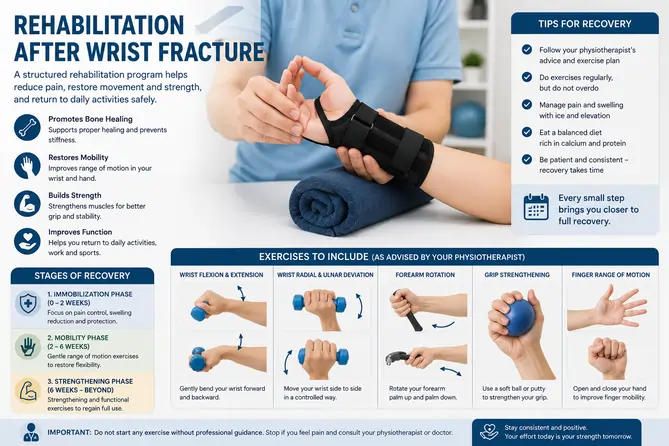
Rehabilitation After Wrist Fracture
Introduction
A wrist fracture is a common injury that can lead to pain, stiffness, swelling, and reduced hand function if not managed properly. Rehabilitation after a wrist fracture focuses on restoring range of motion, strength, flexibility, and coordination while reducing pain and preventing long-term complications.
Most people can safely restore normal wrist function and resume their regular activities with an organized physiotherapy program and a progressive development of exercises.
What is a Wrist Fracture?
A wrist fracture occurs when one or more of the wrist’s bones shatter. Falls, athletic accidents, and other types of injuries can cause it. Colles’ fracture, distal radius fracture, and proximal radius fracture are the most prevalent kinds. In order to rebuild strength and range of motion following a wrist injury, wrist fracture rehabilitation is frequently part of the recovery process.
Types of Wrist Fractures
There are several wrist fractures, but we’ll focus on a few of the most frequent ones.
- Colle’s fracture
This form of fractured wrist occurs when you fall and the bigger bone in your forearm, known as the radius, fractures. It causes the wrist to bend backwards.
This is the opposite of a Colles fracture. When the radius bone cracks, your wrist flexes forward rather than backward.
- Scaphoid Fracture
This sort of break differs from the first two. A violent twist or fall causes one of your wrist’s little bones, known as the scaphoid, to fracture or shatter.
- Comminuted Fracture
This happens when one of the bones in your wrist dislocates and fractures into many fragments. Maybe even shatter some bone tissue.
- Galeazzi Fracture
A Galeazzi fracture involves shattering the radius bone, dislocating or cracking the ulna bone (the smaller bone in the forearm), and shredding tendons and ligaments.
Initial Treatment for a Fractured Wrist
- Pain relief
- You may be offered over-the-counter (OTC) drugs to help ease the severe pain caused by a cracked or fractured wrist.
- Reduction
- Your doctor may attempt to realign the shattered bones into their natural position, a technique known as “reduction.” The decrease may be open or closed.
- An open reduction is a surgical operation that shifts your bones back into position. A closed reduction occurs when the doctor realigns the bones without surgery.
- You may be given local anesthetics to reduce pain during the treatment.
- Immobilization
- This is when your hand is placed in a cast or splint to hold it in place, reducing the risk of additional injury and allowing it to recover correctly.
- Ice
- Ice helps to reduce swelling, relax muscles, and reduce the likelihood of your hand getting irritated. So, keep your hand close to your chest and apply ice.
- X-ray
- An X-ray is used to determine the severity of the wrist fracture, the appropriate therapy, and to monitor the healing process.
When to Start Physical Therapy For a Fractured Wrist
A fractured wrist takes around 4-6 weeks to heal, cease experiencing pain in the area, and allow you to move it somewhat without difficulty.
When you see that you have recovered sufficiently, it is time to seek the services of a physical therapist.
If you begin therapy earlier than necessary, you risk a rebound, and if you wait too long, your hand may stiffen and become difficult to flex.
You may even have pain months later when you apply pressure to the hand or use it to lift heavy weights.
That being stated, after your doctor allows you to try simple hand motions, it’s time to start physical therapy exercises for your fractured wrist.
Benefits of Physical Therapy for a Fractured Wrist
To avoid recurrence
Following recovery, your motions may be less synchronized than they were before the injury. Your grasp may also be weaker, causing strain if you attempt to utilize the hand without first seeking therapy.
To keep your wrist from becoming stiff
If you place your hand in a cast, it will stiffen. A physical therapist will help you regain flexibility by guiding your hands through range-of-motion exercises.
To eliminate future pain and distress
Physical therapy for a fractured wrist helps to prevent sudden pain months later when you apply pressure to the hand.
For smooth blood circulation
Physical therapy promotes the flow of blood and oxygen to the damaged area(s), accelerating the recovery process.
To Regain Strength
Physical therapy helps you gain strength so you may go about your regular activities without pain.
Goals of Therapy
- Managing pain and swelling
- Restoring wrist range of motion.
- Restoring wrist strength.
- Reducing the formation of scar tissue
While the fracture should heal completely between six to eight weeks, most people don’t fully recover until the 12th to 16th week. During this period, dedication to physical therapy can accelerate healing and avoid the loss of wrist strength, flexibility, and function.
Modalities in Wrist Fracture Rehabilitation
Ultrasound Therapy
Ultrasound treatment sends sound waves deep into tissues. This stimulates cell healing without the need for surgery or medications such as nonsteroidal anti-inflammatory drugs. It is typically included in tailored rehabilitation treatment regimens that attempt to accelerate recovery while minimizing discomfort during physical activity restoration efforts.
Electrical Stimulation for Pain and Muscular Function
Electrical stimulation can assist with muscular weakness following a wrist injury. It employs regulated electrical impulses on muscles around the forearm to aid with grip strength workouts. Over time, this increases muscular contractions, resulting in improved performance when typical activities resume following recovery.
Cryotherapy, often known as cold treatment, can relieve pain and swelling by narrowing blood vessels (which lowers inflammation). This can be accomplished with ice packs, coolant sprays, ice massage, whirlpools, or ice baths.
Paraffin wax: This is a type of heat therapy in which you place your hand and wrist in a vat of temperature-controlled wax. Heat causes blood vessels to widen, allowing immune cells, oxygen, and nutrients to get closer to the site of the damage and help in healing.
Manual Therapy Techniques
Manual therapy is essential for wrist rehabilitation. This comprises joint mobilization and soft tissue massage. Both treatments help to restore function and reduce pain.
Joint mobilization is the manipulation of joints in particular ways to enhance their movement. It’s ideal for people who feel stiff after an injury. The muscles surrounding the wrist are the main focus of soft tissue massage. This helps to release stress and increase blood flow, both of which are necessary for a successful recovery.
Hand treatment techniques can also be used in manual therapy. They do specific workouts to increase grip strength and hand function.
Joint Mobilization
Wrist mobility exercises are critical for restoring complete movement following a fracture. Physiotherapists utilize moderate joint mobilization techniques to promote flexibility without generating further discomfort. These techniques are frequently used in physiotherapy to break up scar tissue generated after recovery and improve general wrist function.
Soft Tissue Massage
Soft tissue massage is another helpful method for treating wrist injury pain. It reduces inflammation by improving blood flow to the region, resulting in speedier healing periods. Regular massage treatments can alleviate pain and make it simpler for people to resume their normal activities.
Fractured Wrist Rehab Exercises
To guarantee a healthy recovery, you should avoid doing too little or too much. Too little, and you won’t improve. You don’t want to go too far or risk causing injury. Exercise only to your comfort level. If you experience pain while exercising, stop and get medical attention. It is common to have moderate pain. It should settle during the day.
After your cast comes off, you can begin the mild exercises listed below. To improve mobility, practice them lightly throughout the day. Before you begin exercising, immerse your arm in warm water to help relax the muscles.
Range of Motion Exercises
Wrist Flexion and Extension
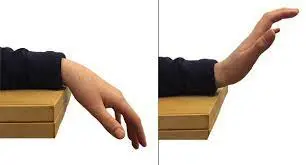
- With your hand and wrist hanging over the edge, place your forearm flat on a table, palm down.
- Flex your wrist upward, forming a fist. Hold for six seconds.
- Extend your wrist downward and relax it. Hold for six seconds.
- Repeat 8-12 times.
Hand Flips
- Sit on a chair with your forearm and wrist resting comfortably on your thigh, palms facing down.
- Turn your hand so that the palm is facing up while keeping your forearm on your lap.
- Switch between palm-up and palm-down positions while maintaining smooth, controlled motions.
- Repeat 8-12 times.
Wrist Circles
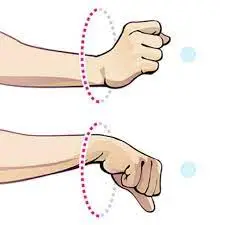
- With the injured wrist extended, place your arm by your side at a 90-degree angle.
- Make a big circle with your wrist while maintaining the stability of your arm and forearm.
- Repeat the action 5–10 times, both clockwise and counterclockwise.
Wrist Radial and Ulnar Deviation
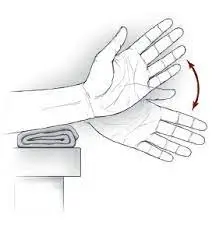
- With the palm facing down, extend the injured hand in front of you.
- As much as you can, bend your wrist from side to side.
- Hold each posture for around six seconds.
- Repeat this motion 8-12 times.
Intrinsic Flexion
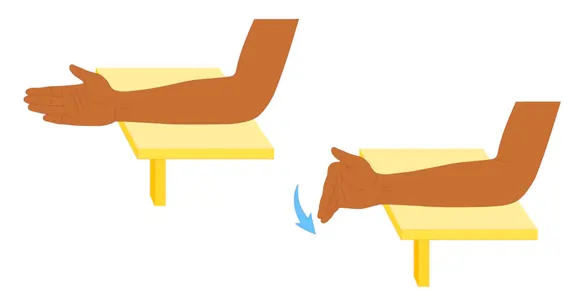
- Bend the joints where your fingers meet while resting your hand on a table. Maintain proper alignment of your thumb and other finger joints.
- Straighten your fingers carefully. Trace the path of your thumb and fingers while relaxing your wrist.
- Return to the beginning position with your hand bent.
- Repeat this motion 8-12 times.
MP Extension
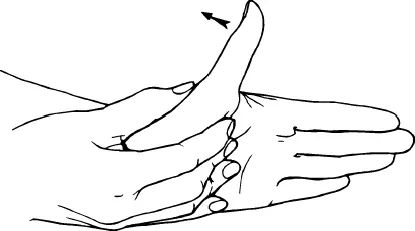
- With your palm facing up, place the uninjured hand on a table. Tightly wrap your fingers around your wrist and place the injured hand over the good hand.
- Only the top two finger joints should be bent as you gradually straighten your hand’s finger joints. It will end up looking like a hook.
- With your fingers wrapped around your thumb, return to your starting position.
- Repeat 8 to 12 times.
Stretching for Improved Flexibility
Wrist Extensor Stretch
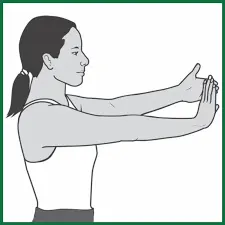
- With the affected wrist in front of your body, stretch your arm and point your fingers downward.
- Bend your wrist slightly with your other hand until you feel a mild tension.
- Stretch for 15 to 30 seconds.
- Do these two to four times.
Wrist Flexor Stretch

- Stretch the arm with the affected wrist in front of your body, palm facing away.
- With your palm facing up, bend your wrist.
- Using the other hand, bend your wrist back to a moderate stretch.
- Stretch for 15 to 30 seconds.
- Do these two to four times.
Forearm Muscle Stretches

- Place your palms at chest level, then push outward while maintaining your elbows tight until you experience resistance in both arms.
- Before easing back into the beginning position, hold that stretch for a short while.
Strengthening the Wrist and Forearm
Tendon Gliding
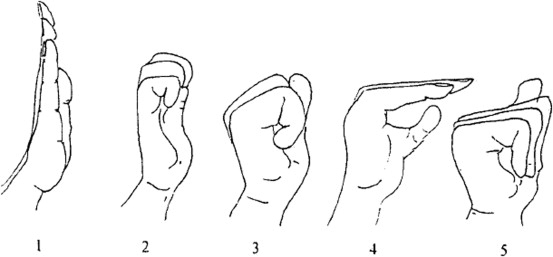
- With your elbows bent at a 90-degree angle and spaced 12 to 18 inches apart, extend your hands in front of you.
- Allow your thumbs to settle into a comfortable position as you curl your fingers into your palm.
- Go back to the position where you were.
- Bend your thumb over your fingers to form a fist.
- Go back to the position you were.
- At the third knuckle down, bend your hands. With your thumbs pointing up on the outside of your hand, your hand should resemble an inverted “L.”
- Go back to the position you were.
- Make an inverted “U” with your fingers by bending your hand.
- Go back to where you were.
Isometric Exercises for Early Stages
Put one hand up against the wall.
Use your wrist and finger muscles to gently press on it without making any other movements.
Wall Push-Ups
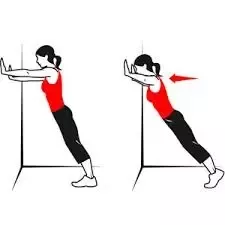
Put your hand on a wall, bend your wrist slightly, and then push back. Ten times over, repeat.
Dumbbell Twists
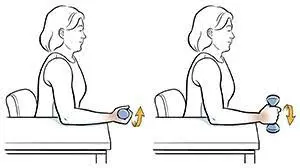
Rotate your forearm such that the palm faces up and down while holding a hammer or dumbbell with your elbow bent at a 90-degree angle. Do ten repetitions in each direction.
Towel Wringing
In this practice, a towel is wrung. It develops your forearm muscles and checks the range of motion in your wrists.
Finger Extension with Band
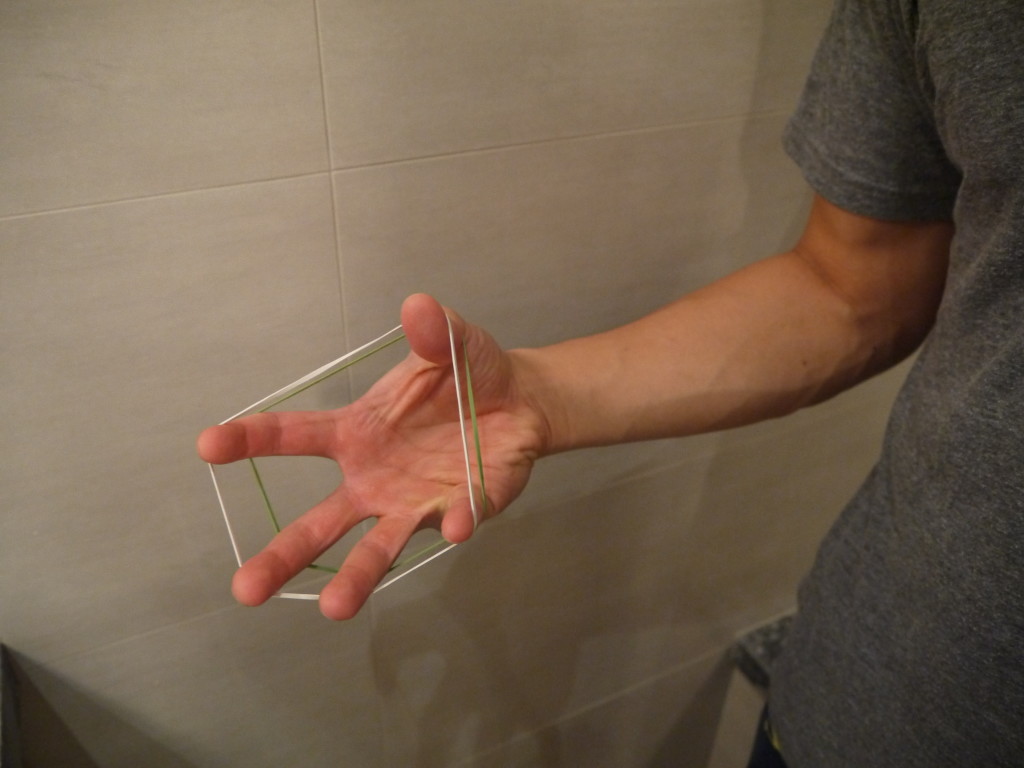
Put a rubber band under the tips of your fingers, then open your hand ten times against the resistance of the band.
Resistance Band Techniques
Put one end of a resistance band under your foot or another point of stability.
With your hands facing up, hold the other end securely. Pull gently until you feel a complete stretch, then easily return to the beginning!
Grip strengthening
Ball Squeezes
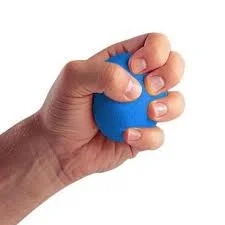
A tennis or stress ball should be tightly squeezed for five seconds, followed by a five-second release. To regain grip strength, repeat ten times.
Hand Therapy Putty Exercises
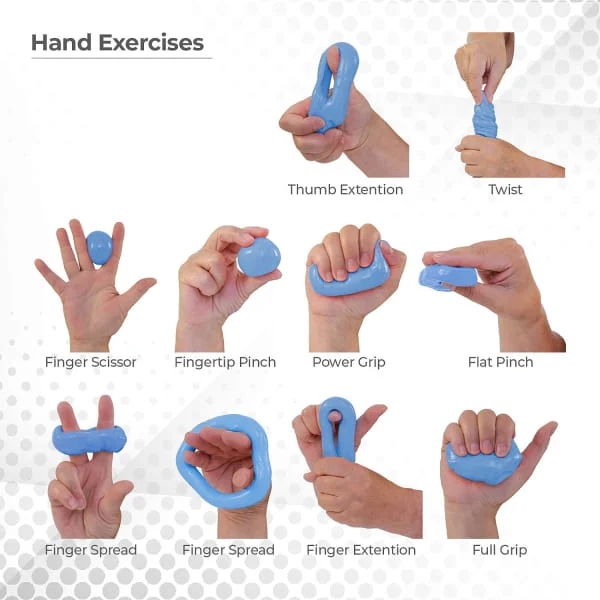
Using putty helps because it’s soft and lets users shape things easily while offering different resistances based on thickness!
To improve intrinsic hand treatment techniques over time, you might try rolling small pieces into balls between your fingers and continuously pressing or pinching them together.
Tips for a Successful Recovery
- Relax. Following a wrist fracture, rehabilitation requires enough rest. If you have a fractured wrist, do not try to force yourself to work.
- Exercise should be done carefully. Keep your doctor’s or therapist’s visits and take your medicine as prescribed.
- As soon as you see any slight changes, let your healthcare professional know.
- To give your body the nutrition it needs to mend, consume more meals that promote muscle growth and repair.
- Ask your loved ones for help and accept it. Don’t attempt to do everything by yourself.
- It will take some time for you to recover, but once you do, you may resume your regular activities
How to Prevent Future Wrist Injuries
- Even though it may be uncomfortable, always use protective gear when working to avoid another fractured wrist.
- Avoid the temptation to take off your safety gear. Overcoming short-term discomfort is preferable to enduring the agony associated with a wrist fracture.
- Maintain your exercise regimen and eat wholesome foods.
- A healthy diet maintains the strength of your muscles, and exercise is your body’s best line of defense against disease and injury.
- Pay attention to your body. Inform your therapist if your hands feel tight or numb, and lessen the pressure you put on them.
- To improve your balance and coordination, try strength training exercises like yoga.
- Use the right techniques, whether you lift weights or participate in sports, to prevent injuring your wrist by placing it in an uncomfortable posture.
Conclusion
A fractured wrist can cause too much pain, and the healing process might take weeks or months, affecting day-to-day tasks.
Take the precautions listed below to avoid breaking your wrist.
Additionally, if you already have a fractured wrist, stick to your therapist’s recommendations and instructions and be consistent with your workouts.
Even though it could take some time, healing ultimately occurs.
Try to move other areas of your body as much as you can throughout the procedure, and carry out the daily tasks that your situation allows.
FAQS:
After breaking my wrist, when should I begin physical therapy?
When your fracture has partially healed, your doctor will advise you to begin moving your wrist. This can take four to six weeks; some people may need more time. It all depends on how well your body heals and how serious the fracture is.
How Much Time Does Physical Therapy Take After a Fractured Wrist?
Physical treatment should ideally last up to three months. It may take less time at times or more time at others. Once more, it depends on the severity of your fracture and how you react to therapy.
Can a fractured wrist heal completely?
Yes, most people can recover totally from a fractured wrist. Regaining full strength, flexibility, and comfort can take anywhere from six months to a year, depending on the severity of the break and your age, even though the bones usually heal in six to twelve weeks.
What is the duration of stiffness with a fractured wrist?
It is normal to feel weaker and stiffer once the cast is taken off, but if the fracture is simple, this should go away in a few weeks. Occupational therapy may be necessary to restore complete function and resume sports if a wrist is still sore, weak, or stiff.
Does your wrist get stronger when you squeeze a ball?
Yes, but there’s an important distinction. Squeezing a stress ball on a regular basis does activate the hand and finger flexor muscles, which, over time, can lessen stiffness and increase grip endurance.
References:
- Clinic, A. P. (n.d.). Physiotherapy in Jaipur | Best Physio Clinic – AQ Health Care. AQ Physio Clinic. https://www.aqhealthcare.in/physiotherapy-for-broken-wrist
- Hoth, H. W. P. S., & Hoth, H. W. P. S. (2025, May 16). 17 Effective wrist fracture exercises to aid recovery. HSST –. https://carpaltunnelpros.com/2024/11/04/17-effective-wrist-fracture-exercises-to-aid-recovery/
- DeMatas, K., & DeMatas, K. (2025, April 2). 10 simple broken wrist rehab exercises for a quick recovery. Sporty Doctor – Sports Medicine Advice for Weekend Warriors. https://sportydoctor.com/broken-wrist-rehab-exercises/
- Clinic, M. R. (2024, August 23). Physical therapy for a broken wrist: treatment and exercises. Miracle Rehab Clinic. https://www.miraclerehabclinic.com/blog/physical-therapy-for-a-broken-wrist