
Exercises For Ankle Instability
Introduction
Ankle instability often results from recurrent ankle sprains. It may be defined as when the ankle gives way while walking or performing other tasks. While ankle instability is defined by its instability, pain is frequently experienced as a symptom.
An unstable ankle typically feels shaky and unstable, increasing the patient’s chances of spraining it again. An ankle sprain occurs when the ankle is twisted, rolled, or rotated in an unnatural position. Sprains occur when this action rips or strains the ankle’s ligaments. When an ankle is injured, muscle reaction time and joint strength are often reduced. If these issues are not effectively addressed, they might impair ankle stability.
Furthermore, if a sprain is not adequately treated and is allowed to heal on its own, the strained or torn ligaments may not repair properly, resulting in ankle instability. If an ankle sprain is not adequately recovered, scar tissue can form and cause the joint to stiffen. An ankle sprain requires proper treatment and rehabilitation.
Acute ankle instability is described as a fresh occurrence of ankle instability, whereas chronic ankle instability is a problem that has developed over time.
Anatomy
The ankle has many ligaments. Ligaments, in general, are the structures that link bones and behave as rubber bands. Tendons, on the other hand, link muscle to bone, allowing muscles to apply force on their respective bones. An ankle sprain often involves numerous damaged (torn) ligaments. The two most significant are the following:
- The anterior talofibular ligament (ATFL) joins the talus and fibula on the exterior of the ankle.
- The calcaneal fibular ligament (CFL) joins the fibula to the calcaneus.
- The third ligament is less often ruptured. It runs more in the rear of the ankle and is known as the posterior talofibular ligament (PTFL).
These injuries are sometimes referred to as low ankle sprains. This is different from different which is a more severe kind of ankle sprain affecting ligaments connecting the tibia (long bone on the inside of the leg) to the fibula (bone on the outside of the leg).
Patients with a high-arched (“cavovarus”) foot are more likely to get ankle sprains. Furthermore, this foot form puts the peroneal tendons, which support the ankle ligaments, at risk of tearing and weakening.
CAUSES OF ANKLE INSTABILITY
- Ligament damage – Repeated sprains strain and weaken the ankle’s ligaments, making them less effective at supporting the joint.
- Muscle weakness – A lack of strength in the muscles around the ankle might raise the risk of instability.
- Poor proprioception – Multiple sprains can affect the body’s capacity to detect joint position and movement, making it difficult to maintain balance.
- Scar tissue creation – The healing process following an ankle injury can result in scar tissue growth, which can impair joint mobility and function.
- Structural abnormalities – Some people have naturally looser ligaments or misplaced joints, which contribute to ankle instability.
Common symptoms of ankle instability
- An ankle that rolls inwards or outwards without notice
- An ankle that gives way all of a sudden
- The inability to bear weight on your affected leg
- Pain in the ankle
- Tenderness in the ankle
- Swelling in the ankle
Diagnosis
- A foot and ankle orthopedic surgeon can identify ankle instability after reviewing your medical history and doing a physical examination. During the assessment, your surgeon will assess the strength and mobility of your joint. They will do tests to determine how loose your ankle is.
- X-rays to look for ankle arthritis or changes in bone alignment caused by the instability. Stress X-rays can be used to determine the amount of looseness present.
- MRI does not reveal ankle looseness; it can help rule out other potential issues such as cartilage damage and tendon tears.
Treatment
Non-Surgical Treatment
- Physical therapy (PT)
- Strengthening activities to provide muscular support around the ankle
- Balance and proprioception training can improve stability.
- Stretching exercises for maintaining flexibility
- Bracing & Support
- Ankle braces or taping techniques can give external support, lowering the likelihood of future sprains.
- Medicine and Injections
- Anti-inflammatory drugs can assist to reduce pain and swelling.
- Platelet-Rich Plasma (PRP) treatment or corticosteroid injections may be used to treat pain and promote tissue repair.
- Lifestyle Modifications
- Wear appropriate footwear with ankle support.
- Avoid high-impact activities until strength and stability are restored.
- Implementing a Personalized Rehabilitation Plan
Surgical Treatment
- Ankle Ligament Repair (Broström Procedure): Damaged ligaments are tightened or repaired to restore stability.
- Tendon Grafting: If the ligaments are significantly injured, a tendon from another region of the body can be utilized to strengthen the ankle.
- Arthroscopy: It is a minimally invasive surgery that removes loose cartilage, scar tissue, or bone spurs that may be causing instability.
Exercises For Ankle Instability
Before starting an exercise program, keep the following safety precautions in mind:
To maximize the advantages of any workout plan, a few precautions should be followed before performing. Consult your doctor or physical therapist to determine which exercises are most effective for your specific disorder.
It’s critical to listen to your body and avoid injuring yourself while in pain. Prolonged or serious pain may suggest overworking, even if soreness is a common side effect of exercise.
Maintaining proper posture and technique can help prevent repetitive injuries. If you’re unsure how to correctly do an exercise regimen, consider visiting a doctor. Warming up before you start exercising can help your muscles and joints prepare for the activity.
Exercises:
Ankle Dorsiflexion
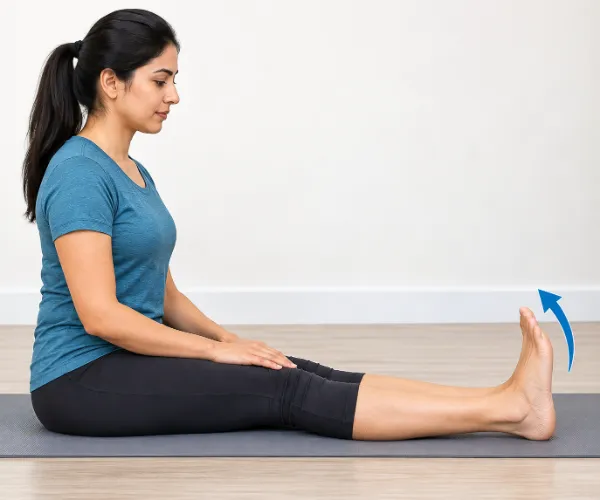
- Place yourself on the ground and start by sitting.
- Straighten your knees.
- When you bring your foot back up to your nose, focus on your ankle.
- Tilt it back till it’s comfortable.
- Hold your position for a few seconds.
- Then return to the neutral position.
- Then relax.
- Repeat the exercise five to 10 times.
Ankle Plantarflexion
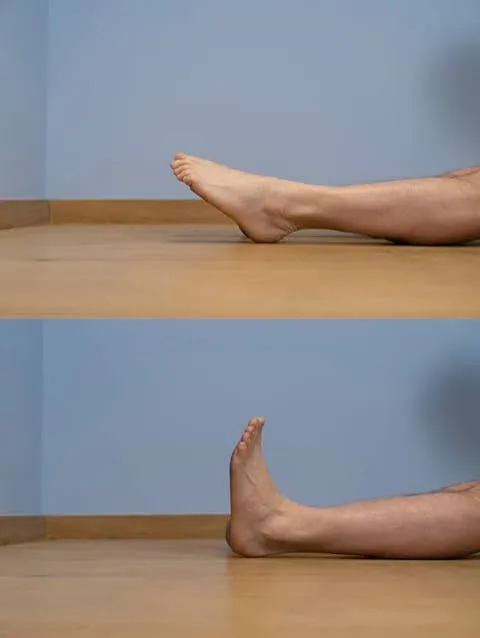
- Start by taking a seat on the ground.
- Set your knee straight.
- Simply move your ankle and then step forward.
- Continue to push it back until it feels comfortable.
- Hold your position for a few seconds.
- Then return to the neutral position.
- Then relax.
- Repeat the exercise five to 10 times.
Inversion and Eversion
For eversion,
- Begin this exercise by putting your affected foot firmly on the ground.
- After moving the outside of your foot and the tips of your toes, take a step back to your previous position.
- To prevent overreacting, make sure your leg moves differently than your foot and ankle.
- Then return to the neutral position.
- Then relax.
- Repeat the exercise five to 10 times.
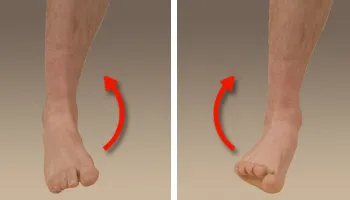
For inversion,
- Start this exercise by putting your affected foot firmly on the ground.
- The ankle inversion is completed by sliding the inside edge of your foot toward the center of your body.
- Next, move it once again.
- Then return to the neutral position.
- Then relax.
- Repeat the exercise five to 10 times.
Single-leg Balance

- You can maintain balance by holding onto a chair or countertop while standing with both feet flat on the ground.
- To maintain balance, lift your right foot off the ground and bend it at the knee while holding your left hand.
- You can stand on your tiptoes by lifting your heel off the floor and applying pressure to your foot’s heel.
- Hold your position for a few seconds.
- Then return to the neutral position.
- Then relax.
- Repeat the exercise five to 10 times.
Walking Lunges

- Keep your feet shoulder-width apart.
- Maintain a straight posture.
- Keep your hands on your hips or at your sides.
- Move forward with your right leg, sending weight to your heel.
- When lowering yourself into a lunge stance, bend your right knee so that it meets the floor.
- Hold for a second.
- Step forward with your left foot while holding the same stance with your right leg.
- When lunging, maintain your left leg level with the ground.
- Switch legs and “walk” forward as you lunge; repeat the exercise.
- Then return to the neutral position.
- Then relax.
- Repeat the exercise five to 10 times.
Seated Calf Raises

- Your feet should be hip-width apart while sitting straight in your chair.
- Then, raise your heels off the floor.
- Hold your position for a few seconds.
- Return your heels to the floor with care.
- Then return to the neutral position.
- Then relax.
- Repeat the exercise five to 10 times.
Standing Calf Raises
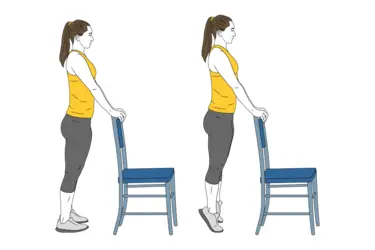
- Begin in a comfortable standing position on the ground.
- Put your hands on your hips or grab something solid to help you stay balanced.
- Your toes should stay on the ground while you elevate your heels as high as possible.
- Hold your position for a few seconds.
- Next, lower your heels to the ground.
- Then return to the neutral position.
- Then relax.
- Repeat the exercise five to 10 times.
Drawing the alphabet
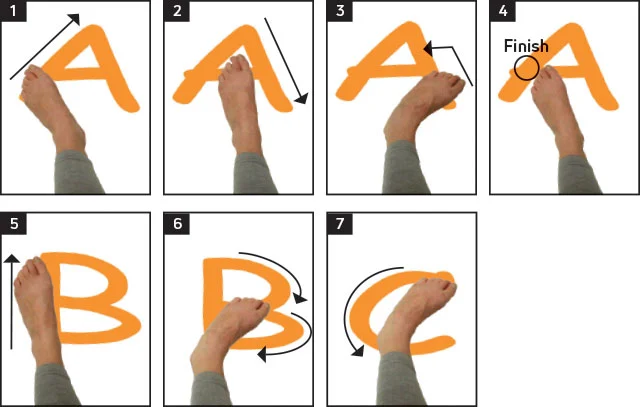
- Choose a sitting or standing position that feels comfortable.
- Lift your foot a few inches and write the alphabet on your big toe, starting with capital letters.
- Your motions should be shorter.
- After you’ve finished the alphabet, write in lowercase letters.
- Then return to the neutral position.
- Then relax.
- Repeat the exercise five to 10 times.
Toe-Heel Walking
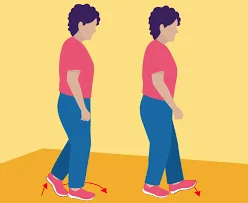
- This efficient strategy can help you strengthen the ligaments and muscles in your feet, ankles, and toes.
- It also strengthens stability.
- It is simple to do five to ten rounds of toe walking in a single session.
- Walking on tiptoe helps to improve the ankle joint’s balance muscles.
- Then return to the neutral position.
- Then relax.
- Repeat the exercise five to 10 times.
Single-leg Roman Deadlifts

- Begin from a standing position on the ground.
- Apply equal pressure to your toes and heel to push your right foot into the ground.
- Bend your right knee slightly.
- Make a fist with your right arm extended out to the side.
- This allows you to retain pressure in your upper body, stay balanced throughout the workout, and keep your shoulders neutral.
- Stretch your glutes toward the wall behind you and slowly descend your hips.
- Drop your body forward and then downward as you bend your hips, taking care not to cross the parallel with the floor.
- Maintain a neutral spine and raise your left leg only as far as it feels comfortable.
- To stand again, exhale and straighten your hips, pushing your right foot into the ground.
- Then return to the neutral position.
- Then relax.
- Repeat the exercise five to 10 times.
Step Up (Bosu)

- Place your feet shoulder-width apart just behind the Bosu.
- Keeping your breathing consistent, place your right foot on the Bosu first, then your left.
- The core should be strengthened to provide stability.
- Step down first with your right foot, then slowly with your left.
- Then return to the neutral position.
- Then relax.
- Repeat the exercise five to 10 times.
- This time, start with the opposite foot and repeat.
Ankle circle
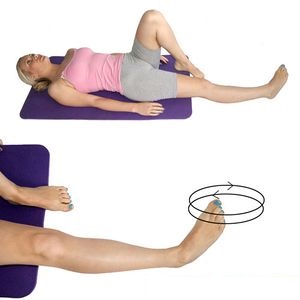
- First, choose a comfortable spot to sit on the ground.
- Slowly move your ankle 10 times in either a clockwise or counterclockwise direction.
- Avoid twisting your entire leg by moving your foot and ankle softly.
- Try circling the letters with your big toe to provide some variety.
- Then return to the neutral position.
- Then relax.
- Repeat the exercise five to 10 times.
Heel drops
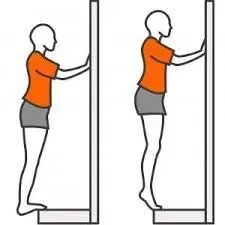
- Place your workout step against a wall.
- Place yourself on the step, upper body straight and feet level.
- Your right foot needs to move toward the back of the step, placing its heel on the step’s edge.
- Allow your right heel to descend to the floor.
- Feel the pressure on your right calf while maintaining your right knee straight for a few seconds.
- Then return to the neutral position.
- Then relax.
- Repeat the exercise five to 10 times.
Towel stretch
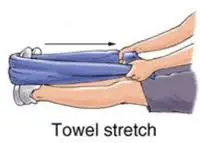
- Sit on the ground first.
- Wrap a towel from one end to the other around your heels.
- Maintain a straight knee and slowly pull the towel in your direction.
- Hold your position for a few seconds.
- Then return to the neutral position.
- Then relax.
- Repeat the exercise five to 10 times.
Benefits Of Exercises For Ankle Instability
- Injury prevention: Strengthening the muscles surrounding the ankle joint can assist in reducing strain on the joint and help prevent injuries.
- Increase the ankle joint’s range of motion.
- Strong ankle muscles are a good approach to enhance balance. Many exercises and sports demand good balance. It will also reduce the risk of falls.
- It allows you to have increased movement and flexibility.
- Ankle stability exercises help improve bone density, lowering the risk of developing degenerative bone diseases such as osteoarthritis.
What precautions should be taken when exercising?
- Warm up and stretch before and after your exercise session.
- When doing workouts, make sure to maintain proper posture.
- Take a pause between each workout session. Perform gentle bends and stretches. The regimen includes stretches before and after sets, as well as the appropriate number of repetitions for each exercise.
- Avoid challenging activities.
- To get the most out of your workout, dress comfortably and loosely so you can move freely. Avoid wearing clothes that are too tight or stylish.
- When exercising, avoid making jerky or forceful movements.
- Stretching the tight muscles in your joint is natural and important, but it can be challenging. Stretching and exercising are terrible for you and aggravate your illness; therefore, they shouldn’t hurt or make you feel like someone is stabbing you.
- If the pain becomes severe, stop immediately.
Tips to Prevent Ankle Instability
- Always do ankle sprain rehabilitation activities correctly.
- If you’ve sprained your ankle in the past and had it correctly treated, you’ve certainly been given a list of strengthening exercises, balancing exercises, and stretches to do to help it heal. Many individuals believe that once their ankle feels better, they don’t need to do the exercises anymore, but this couldn’t be further from the truth. Completing the exercises prescribed by your doctor or physiotherapist is crucial to ensuring that the ankle has complete range of motion and does not develop further issues, such as ankle instability.
- Do not ignore ankle pain.
- While you should never overlook any ankle pain, it is especially important not to ignore ankle pain that develops quickly as a result of an accident. If an acute ankle sprain is overlooked and not appropriately treated, the ligament may rupture further. This makes treatment and rehabilitation more difficult. It will also make you more likely to develop ankle instability. So, if you have an ankle injury, you should consult a doctor or podiatrist as soon as possible.
- Brace your ankles while practicing sports.
- Ankle braces can be used not only to treat ankle injuries, but also to prevent them. High-contact sports with frequent stops and starts, such as hockey, soccer, and basketball, increase the risk of ankle sprains. To avoid this, strap your ankle before playing sports to ensure that it is supported and does not twist into an unusual position that might result in an injury. Furthermore, a brace will teach the body to avoid moving the ankle in ways that might cause harm. You can support your ankle by using an ankle brace or strapping it with tape.
- Always warm up before exercise.
- To avoid developing ankle instability, it is best to avoid ankle sprains and other ankle injuries altogether. Making sure you warm up before exercising can assist in elevating the temperature of your muscles, allowing for more flexibility. This reduces tension on the ligaments, tendons, and joints, perhaps preventing sprains. To warm up, engage in a modest to moderate endurance activity for 5-10 minutes. This might be a jog, star jumps, or walking lunges.
Conclusion
Ankle instability may affect your balance, walking, athletic performance, and daily activities, but the appropriate workouts can help you regain strength and stability. A well-rounded rehabilitation program should incorporate range-of-motion, strengthening, balance, proprioception, and functional activities to enhance ankle control and lower the risk of recurrent sprains.
Consistency is essential to healing. Begin with simple workouts and progressively increase your ankle’s strength and stability. If you are experiencing prolonged pain, swelling, or frequent ankle sprains, see a physiotherapist for a specific treatment plan. With regular exercise and good coaching, you may restore trust in your ankle and safely resume daily activities.
FAQS
How do you strengthen ankle instability?
To improve hypermobile ankles, concentrate on gentle, controlled stability training and resistance exercises that increase muscle tone around the joint without overstretching the ligaments. Focus on active engagement, balance, and proprioception rather than deep passive stretching.
Can ankle instability be fixed?
Yes, ankle instability can be effectively repaired using non-surgical means or surgery, depending on the severity of the issue.
How long does ankle instability take to solve?
Ankle instability normally takes 6 to 12 weeks of specialized physical therapy to resolve, while serious cases needing surgery can take 4 to 9 months to recover completely.
What are the primary causes of ankle instability?
The main cause of ankle instability is an untreated or inadequately healed ankle sprain that leaves the supporting ligaments strained, torn, or weak.
How to manage ankle instability?
Chronic ankle sprain and instability injections and treatments—Treatment for ankle instability generally begins with non-surgical measures like physical therapy and bracing to strengthen the joint and improve balance.
Does walking improve your ankles?
You can boost your cardiovascular fitness and strengthen your ankle, leg, and foot muscles, giving you more stability in everyday tasks. Walking also helps to maintain bone density.
References:
- Best ankle instability exercises & stretches. (2025, August 28). The Feet People. https://www.thefeetpeople.com.au/learning-hub/best-ankle-instability-exercises-and-stretches/
- CB Physiotherapy. (n.d.-b). CB Physiotherapy. https://cbphysiotherapy.in/exercise/top-5-exercises-for-ankle-instability
- O’Malley, M. J., MD. (2024, December 4). Ankle instability: Causes, diagnosis and treatment. Hospital for Special Surgery. https://www.hss.edu/health-library/conditions-and-treatments/ankle-instability
- Doctormmdev, & Doctormmdev. (2025, March 21). Chronic ankle instability: causes, symptoms, and treatment options. Pearl Foot and Ankle. https://pearlfootandankle.com/chronic-ankle-instability-causes-symptoms-and-treatment-options/
- August 29, 2022: Cheditor. Nine Exercises for Ankle Stability Suggested by Experts | Human Performance and Rehabilitation Centers, Inc. Here are nine ankle stability exercises that experts recommend: https://hprc.net/blog/