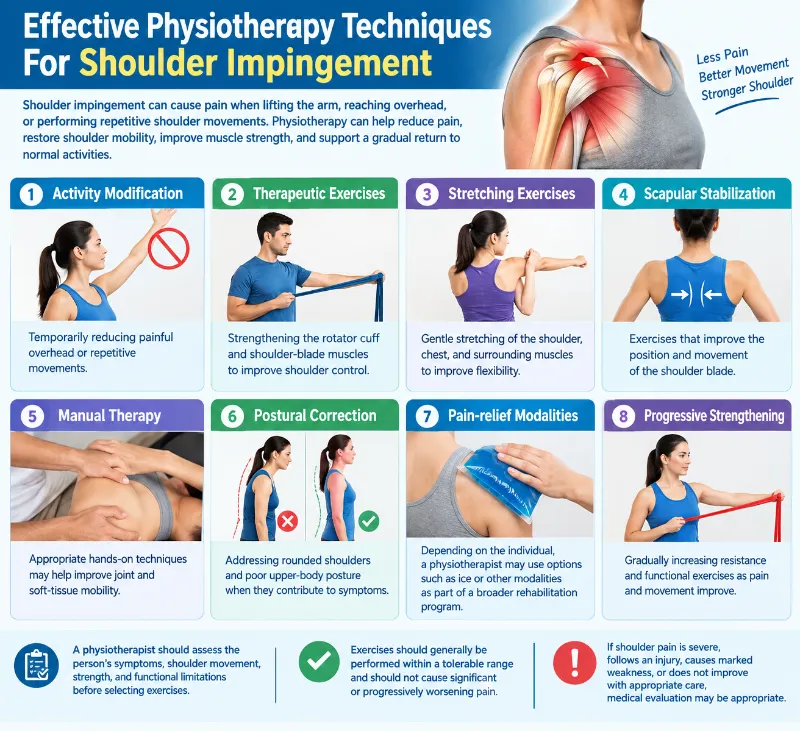
Effective Physiotherapy Techniques For Shoulder Impingement
Introduction
Shoulder impingement syndrome is a common cause of shoulder pain, caused by pressure on the rotator cuff tendons (two soft tissue structures) inside the shoulder as a result of compression or pinching from the upper arm bone and the shoulder blades or flat bones of the body.
Pain, discomfort, and inflammation are often present from the continual pressure being placed on these structures, with the most severe pain/burning discomfort noted when a person raises their arm over their head, reaches behind them, or performs normal activities such as dressing themselves or brushing their hair.
Causes of Shoulder Impingement
Shoulder impingement syndrome has many causes. For example, people who repeatedly lift something over their heads or reach upwards develop shoulder impingement because the irritation develops when the tendons rub against the bony structures of the shoulder. Also, people who have hooked acromions along with weak rotator cuff muscles are at greater risk of getting shoulder impingement.
In addition, shoulder impingement might occur as people get older, when they have previous traumatic injuries that result in degenerative changes in their joints, or when they develop degenerative joint disease as they age.
Symptoms of Shoulder Impingement
Many individuals with shoulder impingement report shoulder pain while performing such activities. The pain can range from a mild ache to a severe ache or a sharp pain that radiates down into the arm.
Pain in the shoulder will also limit the amount of range of motion you have in your shoulder, cause weakness in the shoulder, and result in stiffness in the shoulder. This type of pain can greatly impact your quality of life.
Impact of Shoulder Impingement on Daily Life
Restrictions in Daily Tasks
Shoulder impingement syndrome can severely limit the ability of an individual to do their daily routines or tasks. Shoulder impingement syndrome (SIS) can have serious consequences for the large number of people diagnosed with this condition and ultimately prevent them from doing simple tasks such as dressing, eating, and driving to work.
Many individuals experience pain when performing these daily activities, and it will have an impact on how they interact with others on a day-to-day basis (i.e., their behaviours) as well as at work or socially.
Also, those suffering from shoulder impingement syndrome may develop chronic pain and limited range of motion in the affected shoulder joint and are less likely to participate in physical sports, leisure activities, or any form of health-promoting activity due to the limitations caused by this condition.
Impacts on performance at work
Shoulder impingement can negatively impact the productivity of both office employees and individuals used in heavy labor occupations. The prolonged sitting of office workers and repetitive overhead motion can cause increased levels of shoulder pain, resulting in a decrease in their ability to concentrate on and finish tasks quickly.
Emotional and Psychological Effects
Chronic pain and trouble moving around can really mess with your head. You might feel more anxious, annoyed, or just have crazy mood swings because you can’t do what you used to. If you’re dealing with chronic pain, it can seriously mess up your ability to do everyday stuff. Plus, managing that pain and being stuck not moving so well can really hit your relationships, how you feel, and just your general happiness. So, when you’re trying to treat chronic pain and mobility issues, you’ve got to check out both the physical and emotional sides of things to get people feeling better.
Long-Term Effects
Untreated shoulder impingement syndrome has the potential to develop compounded chronic pain and/or complications (i.e., torn rotator cuff, etc.) that may have severe effects on an individual’s ability to perform any typical activity of daily living.
Pain caused by untreated shoulder impingement syndrome can also contribute to a decrease in an individual’s quality of life by creating a perceived long -term disability due to pain and restriction of range of motion. The longer they wait to receive proper therapy, the greater risk they have of developing chronic pain and an inability to use their joints’ full range of movement for the rest of their lives. Therefore, the best way to avoid developing these chronic conditions is through Timely intervention and effective treatment.
Diagnosis and Management
To evaluate the degree of shoulder injury, a physical therapist will utilize both imaging modalities (e.g., MRI or X-ray) and a thorough physical examination. A successful outcome in terms of managing shoulder pain, its associated problems, and ultimately the potential for developing issues requires that a diagnosis be made as soon as possible.
The use of a tailored physical therapy treatment programme to alleviate your current shoulder pain and restore normal shoulder movement is also very important to the rehabilitation process. The focus of a therapist’s plan of action will include manual therapy as well as targeted exercise, along with providing guidance regarding changing your posture in order to return your shoulder to full functionality.
By understanding shoulder impingement and its causes, you can reduce your pain and get treatment sooner.
Role of Physiotherapy in Managing the Condition
If you’ve got shoulder pain from impingement, a physical therapist can figure out why it’s happening. Then, they’ll put together a plan to ease the pain, get your shoulder moving better, and build up those muscles so it doesn’t come back. Shoulder impingement can happen for a few reasons, like tight muscles, a weak rotator cuff, or just bad posture. So, the therapist will first find out what’s causing your specific issue before making a treatment plan.
Manual therapy can help reduce muscle tension. Postural correction exercises, stability exercises for the shoulder, and pain management methods like TENS (transcutaneous electrical nerve stimulation) and ultrasound are likely to be part of your rehabilitation program. Regular physical therapy visits can not only help with pain, but they can also make your shoulder stronger and more flexible, which will help you get back to your normal activities safely and with confidence.
Benefits of Physiotherapy for Shoulder Impingement
Physiotherapy is a successful treatment for shoulder impingement for a variety of reasons. To start with, physiotherapy has many benefits over surgery or other invasive treatments, as physiotherapy is a non-invasive treatment alternative.
Another advantage of physiotherapy is that, in addition to treating the symptoms of shoulder impingement, it also assists the patient in identifying the underlying causes of the condition, such as muscle imbalances and posture, allowing them to regain full function and get rid of pain.
Physiotherapy teaches individuals self-management regarding their shoulder impingement. By learning about their condition through physiotherapy, individuals can become aware of how to manage their condition. Physiotherapists will instruct patients on how to avoid further injuries, maintain good posture, and make lifestyle decisions that impact their recuperation from shoulder impingement.
When to Seek Physiotherapy
You should start physiotherapy right away if your shoulder is painful, you can’t move it freely, or it feels tight. This will help ease any of these symptoms and stop them from getting worse. So, it’s important to start physiotherapy right away if you have symptoms.
Techniques Used in Physiotherapy
Therapeutic exercise is a form of physiotherapy for shoulder impingement that is intended to alleviate pain and improve function in the shoulder by using various therapeutic approaches. The predominant approach to gaining mobility and movement of the shoulder joint and surrounding tissues is through the use of manual therapy. Manual therapy decreases stiffness, increases the alignment of the shoulder joint, and relieves pressure from the impinged structures.
Therapeutic exercises to strengthen and increase the flexibility of the surrounding musculature are another effective means of treating shoulder impingement. To reduce the number of times an individual experiences an impingement due to pressure, the rotator cuff muscles and scapular stabilizers must be strengthened.
Correcting posture is a major component of physiotherapy treatment. Bad postural habits might increase the chance of getting shoulder impingement through extended sitting and overusing the shoulders when undertaking repetitive overhead movements. Physiotherapy helps patients with the skills necessary to lessen their shoulder pain and improve their functional capacities by assisting in maintaining appropriate posture. In order to help patients attain long-term comfort and prevent shoulder pain recurrences, our treatment strategy incorporates ergonomic advice and educational initiatives.
Manual Therapy Techniques
A crucial part of treating shoulder impingement is manual therapy. This useful approach treats joint and soft tissue issues using a variety of techniques. Physiotherapists utilise joint mobilization to assist with restoring motion in the shoulder. This technique works by gradually increasing the shoulder’s ability to move through its full range of motion, ultimately providing pain relief and restoring normal motion patterns.
Physiotherapists also utilise a technique called soft tissue mobilization (STM) as an additional form of manual therapy. STM focuses on the muscles, tendons, and ligaments of the shoulder area. STM is performed via application of movement and pressure to release muscle tension and destroy adhesions. STM improves blood flow and decreases inflammation; therefore, it will alleviate the shoulder impingement pain.
Exercise Therapy
An important component of physiotherapy to treat shoulder impingement is exercise therapy. The specific training programs physiotherapists offer help to “stabilise and strengthen” your rotator cuff muscles (including rotator cuff repairs). Exercises that are effective in strengthening your rotator cuff are very important.
We use targeted exercises to increase their strength and endurance, which protect and support the shoulder joint.
External Rotation with Resistance Band:

A resistance band should be attached to a fixed spot at waist height. Hold the band with the affected arm at the side and the elbow bent at a 90-degree angle. Turn your forearm outward against the band’s resistance. Perform two sets of fifteen repetitions of this.
Scapular Stabilization: To adequately care for the shoulder, the muscles responsible for regulating the shoulder blade must be strengthened. Scapular exercises help promote better overall shoulder mechanics and reduce stress on the shoulder joint.
Scapular Retraction Exercises:
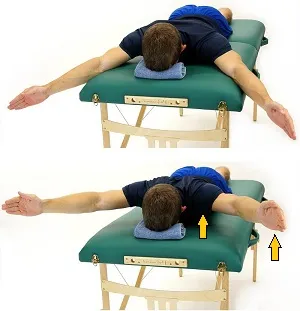
- To do scapula retractions, pull the shoulder blades back towards the center of the back. Hold for a few seconds and release. Start with three sets of twelve to fifteen repetitions.
Exercises for Range of Motion: One way to treat impingement problems is by keeping your shoulder flexible and then improving upon it by using a combination of both stretches and range of motion exercises, which allow for full and pain-free movement of the shoulder joint.
Lying External Rotation
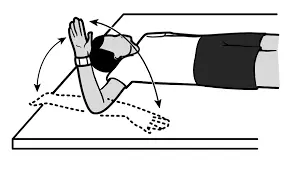
Lie on your good side. Bend your top arm at the elbow, making a 90-degree angle, with your hand out in front of you, palm up. Keeping your arm like this, slowly lift the back of your hand toward the ceiling. You can hold a light weight, or even a can of soup, if you don’t have weights. Do this 10-15 times.
Lying Internal Rotation
Lying on your side, place your affected shoulder under your body. Maintaining a 90-degree bend, turn your elbow toward your stomach with a small amount of weight until your hand points to the ceiling. Perform ten to fifteen repetitions.
Stretching Techniques
Posterior Capsule Stretch
- To keep good posture, stand or sit up straight. Grab your bad arm and bring it across your chest, keeping it up around shoulder level. Then, use your other hand to gently pull it a bit more until you feel a stretch in your shoulder. Hold that stretch for 20-30 seconds, and do it 3-5 times. Just keep your shoulders relaxed and don’t twist or shrug while you’re stretching.
Chest (Pectoralis) Stretch

- Stand in front of a wall or door, keeping about one arm’s length away. Put your forearm against the wall, making sure your shoulder’s up at shoulder height, and your elbow’s bent at a right angle. Then, bit by bit, lean away from the wall until you feel a stretch in your shoulder and chest. Hold that stretch for 20 to 30 seconds, then go back to where you started. Do this stretch two or three times on each side.
Training for Posture and Ergonomics
Fixing your posture and workspace setup is super important for dealing with shoulder pain. Bad posture and a messy workspace can really make things worse.
Here’s what to do:
- Desk and Chair: Adjust your desk and chair so you’re not hunching over while working.
- Monitor: Put your monitor at eye level, so you’re not straining your neck and shoulders.
- Repeated Movements: Try to avoid doing the same shoulder movements over and over. Switch tasks or take breaks.
Other Modalities and Dry Needling
Besides hands-on therapy and exercise, dry needling could help with those knots in your shoulder muscles. We use thin needles in specific spots to ease pain and loosen things up.
Heat and cold can also help with pain and swelling. Heat can relax tight muscles, and cold can reduce swelling and numb pain.
Tips for Managing Shoulder Impingement at Home
Keep Your Posture Correct
To help with your shoulder impingement at home, try to keep good posture. Bad posture can make it worse, especially if you’re doing things for a long time, like sitting at a computer. Set up your desk so you have good posture; sit with a straight back, feet flat, and relaxed shoulders. Also, put your screen at eye level, so you aren’t straining.
Do Strengthening and Stretching Exercises Regularly
Doing some stretches and strength exercises each day can really help your shoulders stay in good shape. Easy stretches can make them less stiff and easier to move. For example, you can stretch by leaning into a doorway with your arm on the frame. Also, doing strength exercises like rotator cuff and scapular stabilization workouts can help keep you from getting hurt and support your shoulder joint. Working out regularly to keep your shoulder muscles strong helps lower the chance of impingement.
Apply Heat and Ice Therapy
Ice packs can help with soreness and swelling after you’ve done too much. Heat can relax tight muscles and get the blood flowing. Try a heating pad or a warm towel to chill out those tense muscles and ease the pain.
Avoid Repetitive Strain
To deal with shoulder pain, try not to do the same arm movements over and over. Avoid lifting your arms above your head a lot and doing stuff that strains your shoulders. If you have to do the same things every day, try to do something different sometimes and take pauses so your shoulders can rest. You can also prevent this from getting worse if you are aware of how you move your body when you do things.
Use Proper Lifting Techniques
To protect your shoulder when lifting, lift with your legs. Bend your knees, keep your back straight, and avoid putting too much stress on your shoulders. Using safe lifting helps prevent injuries. Don’t lift heavy stuff over your head because that puts you at greater risk.
To take care of shoulder impingement at home, keep good posture. Exercise often, use heat or cold when you need it, and don’t do repetitive actions. Doing these things can lessen pain and help you heal. You should talk to a physical therapist. They can give you advice.
FAQs
Is it possible for shoulder impingement to cure itself?
For mild cases, relaxation, posture correction, and simple at-home exercises may be helpful. However, the majority of patients benefit from physiotherapy by regaining a full range of motion and preventing recurrent problems.
How does physiotherapy help shoulder impingement?
Physiotherapy helps with posture correction, joint mobility, scapular and shoulder muscle strengthening, pain relief, and teaching proper movement patterns to avoid further pain.
What exercises should I avoid with shoulder impingement?
Avoid heavy lifting, fast arm movements, and uncomfortable overhead lifting. Any exercise that exacerbates your pain or pinching should be discontinued until your physiotherapist instructs you otherwise.
Does shoulder impingement require surgery?
Surgery is rarely required. Most patients recover completely with conservative physiotherapy care that focuses on strengthening, pain relief, and posture correction.
What first leads to shoulder impingement?
Common causes include poor posture, bone spurs, stiffness in the shoulder capsule and chest muscles, overuse from repeated overhead movements, and muscular weakness, especially in the scapular and rotator cuff muscles.
References
- Precision Physio. (2024, August 6). Effective shoulder impingement physiotherapy treatment near Hebersham. https://www.precisionphysio.com.au/shoulder-impingement-physiotherapy-near-hebersham/
- Farotech. (2023, October 21). 9 Shoulder impingement exercises to relieve pain. EmergeOrtho. https://emergeortho.com/news/shoulder-impingement-exercises/
- (n.d.). A4ShoulderImpingeAppendix5.pdf. ouh.nhs.uk. https://www.ouh.nhs.uk/shoulderandelbow/information/documents/A4ShoulderImpingeAppendix5.pdf